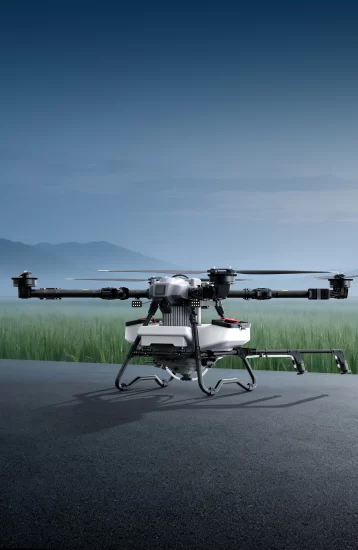


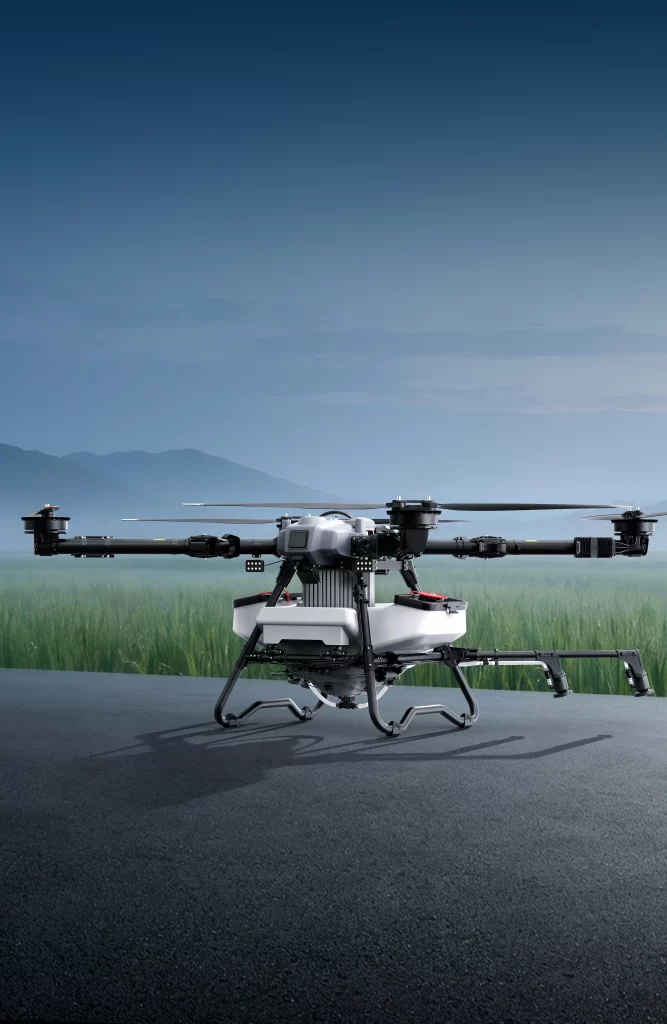
Buying a 100KG agricultural spraying drone is a significant investment for large farms, agricultural contractors, distributors, and equipment dealers. A drone with a high payload capacity can improve field productivity, but only when the aircraft, spraying system, batteries, navigation technology, and support services are properly matched to the intended application.
Many buyers focus on the advertised payload and price. However, these are only two parts of the purchasing decision.
Before placing an order, you should evaluate the drone’s real working payload, flight time, spraying performance, battery system, navigation accuracy, safety features, durability, spare parts, warranty, and total operating cost.
This guide provides a practical checklist for evaluating a 100KG-class agricultural spraying drone.
1. Check the Actual Working Payload
The first specification to verify is payload capacity.
Do not assume that a manufacturer’s “100KG payload” automatically means the drone should continuously fly with 100KG under all conditions.
Ask the manufacturer to clearly distinguish between:
- Maximum payload
- Recommended working payload
- Maximum takeoff weight
- Empty aircraft weight
- Spray tank capacity
- Hopper capacity
- Payload under different battery configurations
The practical payload can be affected by wind, temperature, altitude, battery condition, flight speed, and terrain.
For commercial farming, stable payload performance is more important than a theoretical maximum.
Questions to Ask
Ask the supplier:
What is the recommended working payload for normal agricultural operations?
Also ask:
How long can the drone fly with the recommended payload?
These two answers are more useful than the maximum payload number alone.
2. Check the Spray Tank Capacity
If the drone will primarily be used for liquid spraying, examine the tank carefully.
Important specifications include:
- Tank capacity
- Tank material
- Tank weight
- Filling method
- Drainage system
- Cleaning access
- Chemical compatibility
- Leak protection
A large tank can reduce the number of refilling operations, but it also increases the overall weight of the aircraft.
The best configuration is not necessarily the largest tank. It should provide a reasonable balance between payload, flight time, spraying efficiency, and battery consumption.
3. Check Pump Flow Rate
Pump performance directly affects spraying productivity.
Ask the manufacturer for the actual pump flow rate and determine whether it can support the required application volume.
Important specifications include:
- Maximum flow rate
- Normal operating flow rate
- Pump pressure
- Number of pumps
- Pump type
- Flow-control accuracy
- Pump durability
A drone with a large tank but an undersized pump may not provide the expected field performance.
4. Check Spray Width
Spray width affects how quickly the drone can cover a field.
For example, a wider effective spraying width can potentially reduce the number of flight passes required.
However, the advertised width should not automatically be treated as the actual effective coverage.
Ask for information about:
- Effective spray width
- Nozzle arrangement
- Droplet distribution
- Overlap requirements
- Flight altitude
- Flight speed
The manufacturer should ideally provide test data rather than only a marketing specification.
5. Check Droplet Size
Droplet size is an important factor in agricultural spraying.
Different agricultural applications may require different droplet characteristics.
Ask whether the drone allows adjustment of:
- Droplet size
- Spray pressure
- Flow rate
- Nozzle type
- Flight speed
The objective is not simply to produce the smallest droplets possible.
The appropriate spray characteristics depend on the crop, product, weather conditions, application target, and local agricultural requirements.
6. Check the Battery Capacity
A 100KG-class drone requires considerable power.
Battery specifications should therefore receive close attention.
Check:
- Battery voltage
- Battery capacity
- Battery weight
- Battery chemistry
- Cycle life
- Charging time
- Operating temperature
- Battery-management system
- Replacement cost
Do not compare batteries only by capacity.
A battery with higher capacity may also be heavier, which can affect the drone’s payload and flight performance.
7. Test Flight Time With a Real Payload
This is one of the most important checks.
Manufacturers often publish a maximum flight time measured under specific conditions.
The actual flight time during agricultural work can be different.
Request flight-time information under conditions close to your intended operation.
For example:
Flight time with 80–100KG working payload
is much more useful than:
Maximum flight time without payload.
Ask the supplier to provide test conditions such as:
- Payload
- Battery configuration
- Wind speed
- Flight speed
- Temperature
- Altitude
This makes different manufacturers easier to compare.
8. Check the Motors and Propellers
Heavy agricultural drones place significant loads on their propulsion systems.
Inspect:
- Motor specifications
- Motor manufacturer
- Maximum thrust
- Motor cooling
- Motor protection
- Propeller size
- Propeller material
- Propeller replacement cost
Also ask how easily motors and propellers can be replaced.
For commercial operators, quick maintenance can reduce downtime during critical spraying periods.
9. Check Flight Controller Reliability
The flight controller manages the aircraft’s core flight functions.
A professional system should provide stable control and appropriate safety responses.
Look for functions such as:
- Automatic takeoff
- Automatic landing
- Return-to-home
- Low-battery protection
- Signal-loss protection
- Flight-path planning
- Altitude control
- Position holding
- Emergency procedures
Ask the manufacturer what happens if the drone experiences:
- Communication loss
- Low battery
- GPS problems
- Motor abnormalities
- Sensor failures
A reliable supplier should be able to explain these procedures clearly.
10. Check RTK and Navigation
For large farms, accurate navigation can improve route repeatability and field coverage.
Ask whether the drone supports:
- GNSS
- RTK
- Automatic route planning
- Point-to-point missions
- Boundary mapping
- Terrain following
- Return-to-home
RTK can be particularly useful when precise flight paths are required.
However, buyers should evaluate the complete navigation system rather than paying for features they do not actually need.
11. Check Obstacle Detection
Agricultural fields are not always open spaces.
There may be:
- Trees
- Poles
- Buildings
- Power lines
- Hills
- Other equipment
Obstacle-detection systems can improve operational safety.
Depending on the drone, the system may use:
- Radar
- Optical sensors
- Ultrasonic sensors
- Terrain sensors
Ask the manufacturer about the detection range and operating limitations.
Do not assume that obstacle detection can identify every type of obstacle.
12. Check Weather Resistance
Agricultural drones frequently operate in demanding environments.
Before purchasing, check the manufacturer’s environmental specifications.
Ask about:
- Water resistance
- Dust resistance
- Operating temperature
- Wind resistance
- Humidity
- Corrosion protection
Chemical spraying can also expose components to agricultural chemicals.
The supplier should provide appropriate cleaning and maintenance procedures.
13. Check the Frame and Materials
A 100KG-class drone needs a strong structure.
Inspect the materials used for:
- Main frame
- Arms
- Landing gear
- Tank
- Motor mounts
- Battery mounts
Common structural materials may include aluminum alloys, carbon fiber composites, engineering plastics, or combinations of these materials.
The important factor is not simply the material name but the overall structural design and durability.
14. Check Maintenance Requirements
A professional agricultural drone needs regular maintenance.
Ask the manufacturer how frequently you should inspect:
- Motors
- Propellers
- Pumps
- Nozzles
- Batteries
- Wiring
- Landing gear
- Sensors
- Flight-control components
Also ask whether the manufacturer provides a maintenance manual.
A clear maintenance schedule can help reduce unexpected failures.
15. Check Spare Parts Availability
Spare parts are critical for commercial operators.
Before ordering, request a spare-parts list.
Common replacement parts include:
- Propellers
- Motors
- Pumps
- Nozzles
- ESCs
- Batteries
- Chargers
- Radar units
- Flight controllers
- Landing gear
- Wiring harnesses
Ask:
How quickly can replacement parts be supplied?
A manufacturer with a stable spare-parts supply can help minimize downtime.
16. Check the Warranty
Before signing a purchase contract, carefully review the warranty.
Ask about the warranty period for:
- Drone frame
- Motors
- Flight controller
- Pumps
- Batteries
- Chargers
- Electronic components
Battery warranty terms can be different from the warranty for the aircraft itself.
Make sure the warranty terms clearly explain:
- Covered failures
- Exclusions
- Replacement procedures
- Shipping responsibility
- Repair procedures
17. Check Training and Technical Support
A sophisticated agricultural drone may require operator training.
Ask whether the supplier provides:
- Operator training
- Flight tutorials
- Maintenance training
- Software training
- Remote technical support
- User manuals
- Troubleshooting guides
For overseas buyers, multilingual documentation can also be useful.
18. Check Software
The software can have a major impact on field productivity.
Check whether the control software supports:
- Automatic route planning
- Field mapping
- Mission storage
- Flight records
- Spray-rate control
- Battery monitoring
- Aircraft status monitoring
- Remote-controller telemetry
Also ask whether software updates are included and whether there are any subscription fees.
19. Check Data and Connectivity
Modern agricultural drones can generate useful operational data.
Depending on the system, information may include:
- Flight routes
- Spray area
- Flight time
- Battery condition
- Agricultural task records
- GPS information
For commercial farms, this information can help monitor productivity and maintain operational records.
Before buying, check what data the system records and how the data can be exported.
20. Check the Total Cost
Never compare agricultural drones based only on the initial purchase price.
Calculate:
Total Cost = Drone + Batteries + Chargers + Spare Parts + Shipping + Taxes + Maintenance + Labor + Energy
A lower-priced drone may require more frequent battery replacement or maintenance.
A higher-priced drone may offer better productivity and lower operating costs.
The correct comparison is therefore the total cost of ownership.
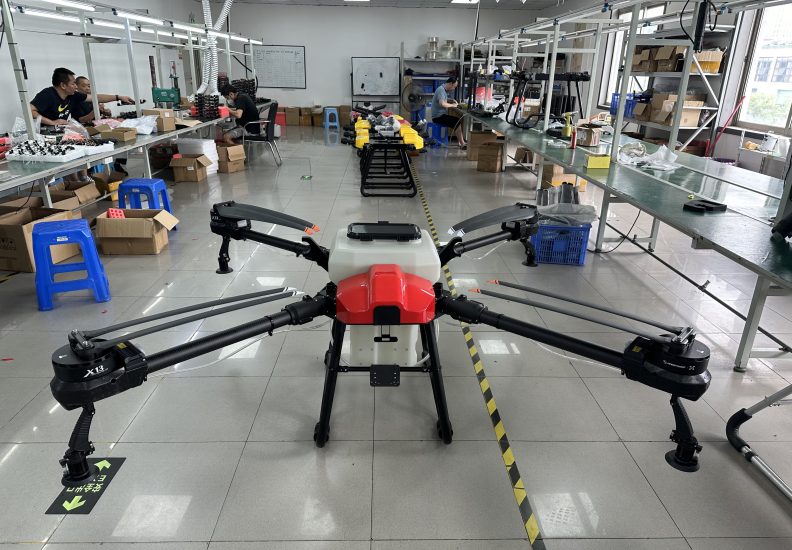
21. Check the Manufacturer’s Production Capability
If you are buying directly from a manufacturer, evaluate its production capability.
Useful information includes:
- Factory location
- Production capacity
- Quality-control process
- Product testing
- R&D capability
- Export experience
- Spare-parts inventory
If you are planning a large order, ask whether the manufacturer can maintain consistent quality across multiple units.
22. Request a Product Demonstration
A product demonstration can reveal problems that are difficult to identify from a specification sheet.
During a demonstration, observe:
- Takeoff stability
- Hovering
- Payload handling
- Spray consistency
- Battery performance
- Route accuracy
- Obstacle detection
- Landing behavior
- Controller response
Ideally, the demonstration should use a realistic payload and operating environment.
23. Check Local Regulations
Before importing or operating a 100KG agricultural drone, buyers should verify the regulations in the destination country.
Requirements may involve:
- Drone registration
- Pilot/operator certification
- Flight permissions
- Agricultural chemical regulations
- Radio-frequency requirements
- Insurance
- Operational restrictions
- Battery transportation regulations
Regulations vary by country, so buyers should confirm the current local requirements before placing an order.
24. Recommended Pre-Purchase Checklist
Use this checklist when comparing suppliers.
| Item | What to Check |
|---|---|
| Payload | Maximum and recommended working payload |
| Tank | Actual liquid capacity |
| Pump | Flow rate and pressure |
| Spray width | Effective field coverage |
| Flight time | Flight time with working payload |
| Battery | Capacity, cycle life and replacement cost |
| Charger | Charging time and power requirements |
| Navigation | GNSS/RTK and route planning |
| Sensors | Radar and obstacle detection |
| Motors | Thrust and reliability |
| Software | Mission planning and monitoring |
| Weather resistance | Environmental specifications |
| Spare parts | Availability and delivery time |
| Warranty | Coverage and duration |
| Training | Operator and maintenance training |
| Regulations | Local compliance |
| Price | Complete landed cost |
| Support | Technical and after-sales service |
How to Compare Two 100KG Agricultural Drones
Suppose you are comparing two models.
Model A
- Lower purchase price
- Basic navigation
- Fewer sensors
- Smaller battery package
- Limited spare parts
Model B
- Higher purchase price
- RTK navigation
- More advanced sensing
- Larger battery package
- Better software
- Stronger after-sales support
Model A may look better when comparing only the initial price.
But if Model B completes more hectares per day, has fewer interruptions, and provides easier maintenance, it may offer better value over several years.
Therefore, the purchasing decision should be based on:
Productivity + Reliability + Maintenance + Support + Total Cost
rather than purchase price alone.
Final Recommendation
Before buying a 100KG agricultural spraying drone, focus on the real-world operating performance rather than marketing specifications.
At minimum, verify:
- Recommended working payload
- Flight time with actual payload
- Spray tank capacity
- Pump flow rate
- Effective spray width
- Battery specifications
- RTK and navigation
- Safety systems
- Weather resistance
- Spare-parts availability
- Warranty
- Technical support
- Local regulatory requirements
- Total cost of ownership
If possible, conduct a field demonstration before placing a large order.
The ideal 100KG agricultural drone is not simply the one with the highest payload or lowest price. It is the system that can reliably complete your required agricultural work, maintain consistent spraying performance, minimize downtime, and deliver an acceptable cost per hectare.
FAQ
What is the most important specification when buying a 100KG agricultural drone?
The recommended working payload and flight time under that payload are among the most important specifications. Maximum payload alone does not show how efficiently the drone performs during normal agricultural operations.
Should I choose a drone with a larger tank?
Not necessarily. A larger tank can reduce refilling frequency, but it also increases weight and energy consumption. The best tank capacity depends on your crop, application rate, field size, and required productivity.
How should I test the advertised flight time?
Ask the manufacturer for flight-time data using the intended working payload. Ideally, the test should specify battery configuration, wind conditions, temperature, flight speed, and other relevant factors.
Is RTK necessary for agricultural spraying?
RTK is not mandatory for every operation, but it can improve positioning accuracy and repeatability. It can be especially useful for large commercial farms and precision agriculture.
What spare parts should I buy with the drone?
At minimum, consider spare propellers, nozzles, pumps, motors, wiring components, and other parts recommended by the manufacturer. Additional batteries can also be important for maintaining continuous operations.
How much does a 100KG agricultural spraying drone cost?
A broad international equipment price range may be approximately US$15,000–60,000+, depending on the configuration. The final landed cost can be higher after batteries, chargers, freight, taxes, and other expenses.
Can the drone be used for both spraying and spreading?
Some 100KG-class agricultural drones support both liquid spraying and granular spreading. Confirm the specific model’s tank, hopper, pump, and spreading-system specifications before purchasing.
Should I buy directly from a manufacturer?
Buying directly from a manufacturer can provide advantages such as factory pricing, customization, and direct technical communication. However, buyers should verify production capability, product quality, warranty, spare-parts availability, and export experience before placing an order.





No comments yet