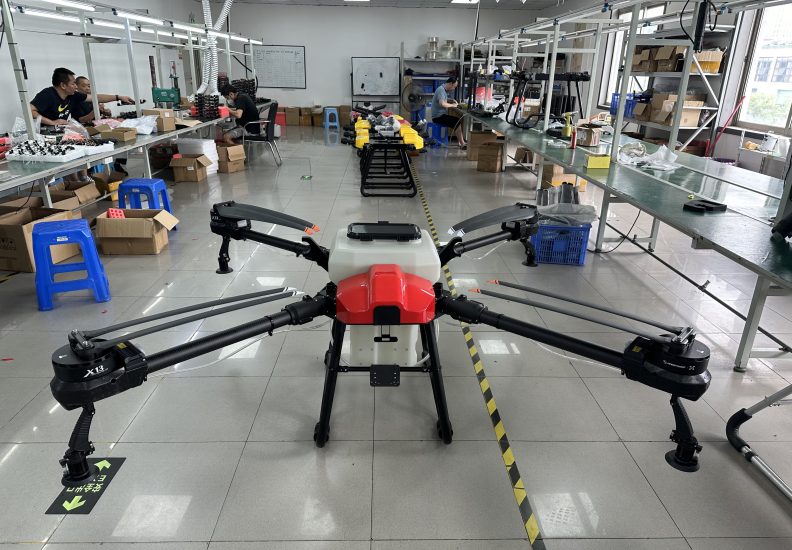


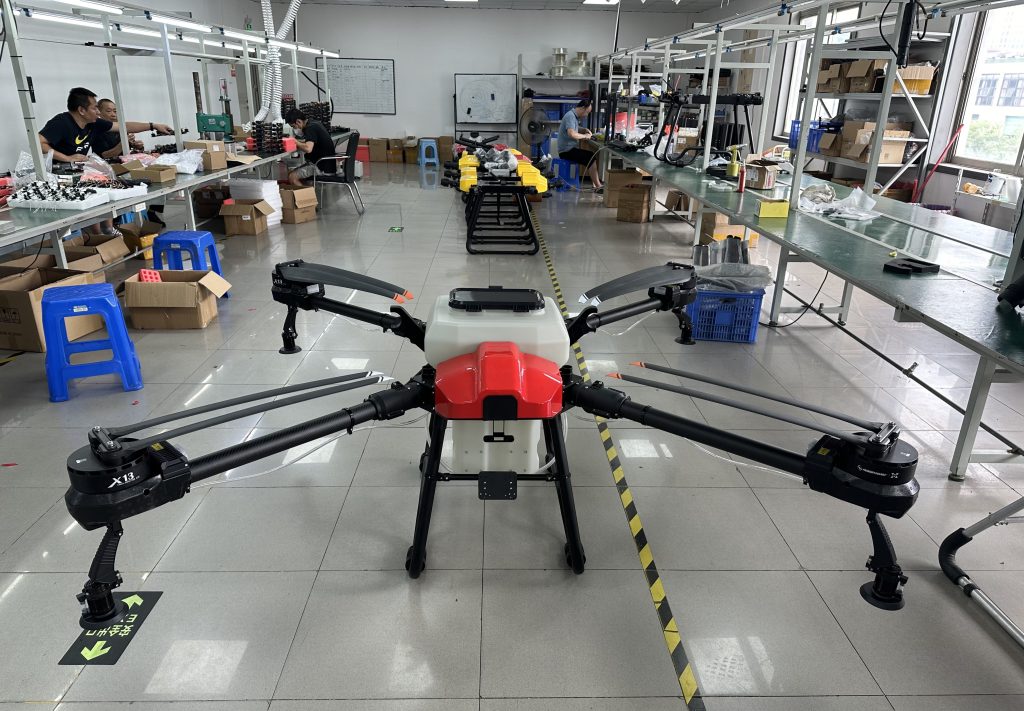
For orchard owners, the purchase price of a spraying drone is only one part of the investment. A more important question is:
How much does it actually cost to spray one acre of orchard with a drone?
Understanding the cost per acre can help farmers compare drone spraying with manual labor, tractor spraying, and professional spraying services.
The actual cost varies by country, orchard type, drone configuration, labor costs, pesticide requirements, terrain, and operating efficiency. Therefore, the figures below should be treated as planning ranges rather than fixed market prices.
1. What Is Included in Drone Spraying Cost?
The total operating cost can include:
- Drone depreciation
- Battery depreciation
- Electricity
- Maintenance
- Spare parts
- Operator labor
- Transportation
- Water and mixing equipment
- Refilling
- Pesticides
For a meaningful comparison, it is useful to separate drone operating costs from pesticide costs.
The pesticide itself can vary greatly depending on the crop and treatment.
2. How Much Does an Orchard Spraying Drone Cost?
A general equipment budget is:
| Drone Capacity | Indicative Price Range |
|---|---|
| 5–10 L | US$2,000–5,000 |
| 10–16 L | US$3,500–7,000 |
| 16–25 L | US$5,000–10,000 |
| 25–40 L | US$8,000–15,000+ |
| Professional/customized | US$15,000–25,000+ |
These are indicative ranges, not fixed quotations.
The final purchase price depends on:
- Drone configuration
- Number of batteries
- Charger
- Spray system
- Sensors
- Remote controller
- Spare parts
- OEM customization
- Shipping
- Import duties
- Local taxes
- Certification requirements
3. Drone Depreciation Per Acre
Suppose a drone system costs:
US$8,000
If the equipment is used for five years and sprays approximately:
2,000 acres per year
the total operating area would be:
2,000 × 5 = 10,000 acres
Ignoring residual value and financing:
US$8,000 ÷ 10,000 = US$0.80 per acre
This means the initial equipment investment contributes approximately US$0.80 per acre under this example.
Actual depreciation will depend on equipment lifespan, utilization, maintenance, and resale value.
4. Battery Cost Per Acre
Agricultural drone batteries are consumable operating components.
Battery costs depend on:
- Battery capacity
- Purchase price
- Number of cycles
- Charging conditions
- Operating temperature
- Payload
- Maintenance
If a battery costs US$1,000 and is effectively used for 500 spraying cycles, the simple battery cost would be:
US$1,000 ÷ 500 = US$2 per cycle
But one flight cycle does not necessarily equal one acre.
If one cycle covers four acres:
US$2 ÷ 4 = US$0.50 per acre
This is only an example. Actual battery economics should be calculated using real field data.
5. Electricity Cost
Electricity is usually easier to calculate.
Record how much electricity is consumed during a working day and divide it by the total area sprayed.
For example:
US$12 electricity cost ÷ 40 acres = US$0.30 per acre
This method gives a more realistic result than calculating electricity consumption from battery capacity alone.
6. Maintenance Cost
Maintenance should not be ignored.
Potential replacement items include:
- Propellers
- Pumps
- Nozzles
- Filters
- Hoses
- Motors
- Landing components
- Batteries
- Electronic components
A simple calculation is:
Annual maintenance cost ÷ annual acres sprayed
For example, if annual maintenance costs US$1,000 and the drone sprays 2,000 acres:
US$1,000 ÷ 2,000 = US$0.50 per acre
7. Operator Labor
Drone spraying still requires an operator.
The operator may need to:
- Prepare the drone
- Mix the spraying solution
- Plan routes
- Fly the drone
- Monitor operations
- Refill the tank
- Change batteries
- Clean equipment
- Perform inspections
However, the labor requirement can be significantly different from manual backpack spraying.
For example, if one operator costs US$80 per working day and the operation covers 80 acres:
US$80 ÷ 80 = US$1 per acre
Again, this is an example rather than a universal labor cost.
8. Transportation Cost
Transportation can become important for contractors who operate across multiple orchards.
Costs may include:
- Vehicle fuel
- Vehicle maintenance
- Equipment transportation
- Battery transportation
- Operator travel
If transportation costs US$50 per day and the team sprays 100 acres:
US$50 ÷ 100 = US$0.50 per acre
Large farms located close to the charging and mixing area may have much lower transportation costs.
9. Example: Total Drone Operating Cost
Consider an illustrative scenario:
| Cost Item | Cost Per Acre |
|---|---|
| Drone depreciation | US$0.80 |
| Battery | US$0.50 |
| Electricity | US$0.20 |
| Maintenance | US$0.40 |
| Labor | US$1.00 |
| Transportation | US$0.30 |
| Total | US$3.20/acre |
This example gives an estimated drone operating cost of:
US$3.20 per acre
But this is not a universal spraying price.
Actual results can be significantly different depending on equipment utilization, orchard productivity, local wages, energy costs, and terrain.
10. Pesticide Costs Should Be Calculated Separately
Suppose the drone operating cost is:
US$3.20 per acre
The pesticide cost could be calculated separately.
For example:
Drone operation: US$3.20/acre
Pesticide: US$X/acre
Total treatment cost: US$3.20 + US$X per acre
This makes it easier to compare different spraying methods.
The appropriate pesticide and application rate must always follow the product label and applicable agricultural regulations.
11. Drone Spraying vs. Manual Spraying
Manual spraying can involve:
- Multiple workers
- Backpack equipment
- Fuel or electricity
- Long working hours
- Difficult terrain
- Physical labor
- Transportation
Drone spraying may reduce some of these costs.
For example, steep mountain orchards can be particularly difficult for workers and tractors.
A drone can fly over the trees without requiring heavy equipment to travel between every row.
However, the drone still requires trained personnel and ground support.
12. Orchard Size Has a Major Effect on Cost
The larger the annual spraying area, the more opportunities there are to distribute equipment costs.
For example:
Small Orchard
100 acres × 5 spraying operations = 500 acres/year
Medium Orchard
500 acres × 5 operations = 2,500 acres/year
Large Orchard
2,000 acres × 5 operations = 10,000 acres/year
A high-utilization drone can therefore have a lower equipment cost per acre than the same drone used only occasionally.
13. Terrain Changes the Cost Per Acre
Flat orchards are generally easier to operate.
Mountain orchards may require:
- Slower flight
- Terrain following
- More careful route planning
- Additional battery usage
- More complicated transportation
- More operator attention
This can increase the operating cost per acre.
However, if traditional equipment is extremely difficult or expensive to use on steep slopes, drone spraying can still be economically attractive.
14. How to Reduce the Cost Per Acre
Several strategies can improve economics.
Increase Annual Utilization
The more area the drone sprays, the more widely the equipment investment can be distributed.
Use Multiple Batteries
This can reduce downtime between flights.
Improve Refilling Efficiency
Fast liquid preparation and refilling can increase daily productivity.
Plan Routes Carefully
Efficient routes reduce unnecessary flight time.
Maintain the Drone
Regular maintenance can prevent expensive downtime.
Train Operators
An experienced operator can improve productivity and reduce avoidable errors.
15. What Is a Reasonable Payback Period?
A simple calculation is:
Payback period = Total drone investment ÷ Annual savings
For example:
Drone investment:
US$8,000
Estimated annual savings:
US$4,000
Estimated payback:
US$8,000 ÷ US$4,000 = 2 years
This is only a simplified example.
A real ROI calculation should also consider:
- Financing
- Maintenance
- Battery replacement
- Equipment depreciation
- Labor
- Insurance
- Downtime
- Resale value
- Annual spraying workload
FAQ
How much does it cost to spray one acre with a drone?
There is no universal price. An illustrative operating calculation can be around US$2–5 per acre before pesticide costs, but actual costs vary substantially by country, equipment, labor, terrain, and productivity.
Does the US$2–5 per acre include pesticides?
Normally, a calculation of drone operating cost should exclude the pesticide itself. Chemical costs should be calculated separately because they vary significantly by crop and treatment.
How much does an orchard spraying drone cost?
Depending on capacity and configuration, a general equipment budget can range from approximately US$2,000 to more than US$25,000.
Is drone spraying cheaper than manual spraying?
It can be, particularly where labor costs are high or terrain is difficult. Farmers should compare their actual labor, equipment, chemical, and operating costs.
Does a larger drone always have a lower cost per acre?
No. A larger drone can improve productivity, but it also has a higher purchase price and may require more expensive batteries and support equipment.
How can I calculate my actual cost per acre?
Record total annual costs and divide them by the actual acres sprayed:
Annual drone costs ÷ annual spraying area = cost per acre
For greater accuracy, track depreciation, batteries, electricity, maintenance, labor, and transportation separately.
Conclusion
The cost of spraying an orchard with a drone depends on much more than the drone’s purchase price.
A realistic calculation should include:
Depreciation + batteries + electricity + maintenance + labor + transportation
Then calculate the cost per acre based on actual annual spraying area.
As an illustrative planning figure, drone operating costs may fall around US$2–5 per acre before pesticide costs, but farms should not use this as a guaranteed market price.
For buyers comparing different agricultural drones, the most useful information is not simply the lowest purchase price. Instead, ask manufacturers for:
- Actual acres/hectares covered per hour
- Flight time under full payload
- Battery cycle life
- Refilling time
- Maintenance requirements
- Spare-parts costs
- Real orchard test data
A drone with a higher initial price can ultimately be more economical if it provides higher productivity, better reliability, lower downtime, and a lower total cost per acre.





No comments yet