


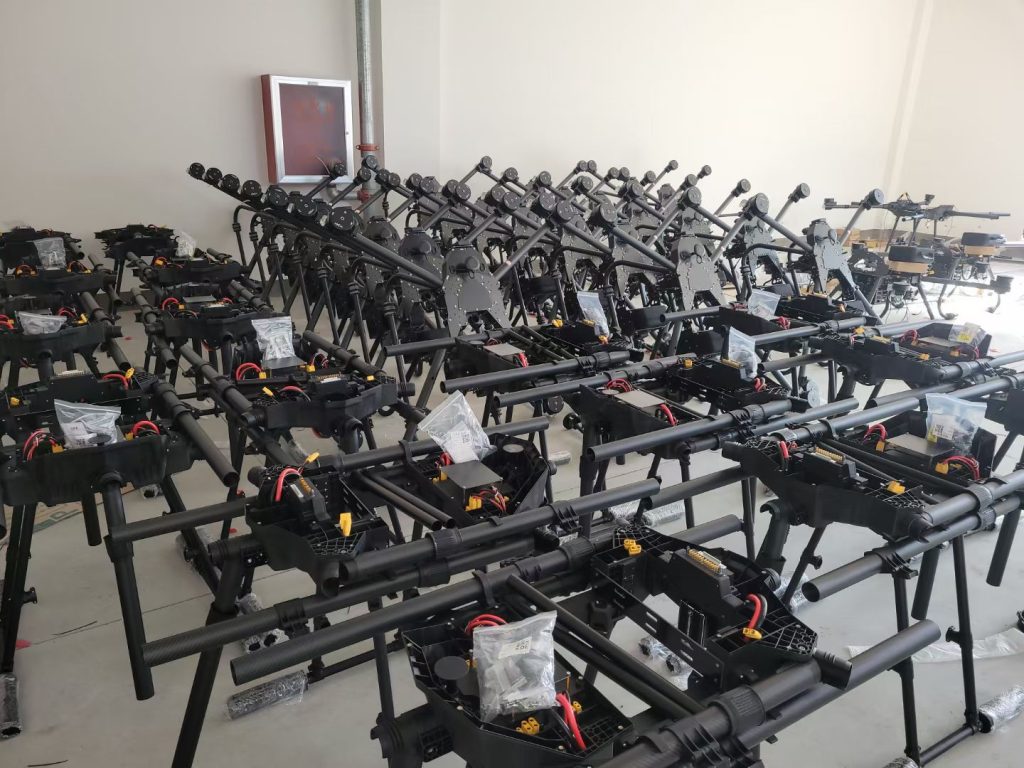
Agricultural pesticide application is one of the most important and labor-intensive tasks in commercial farming. Traditional spraying methods can require significant labor, fuel, water, and agricultural machinery, especially when farms cover hundreds or thousands of hectares.
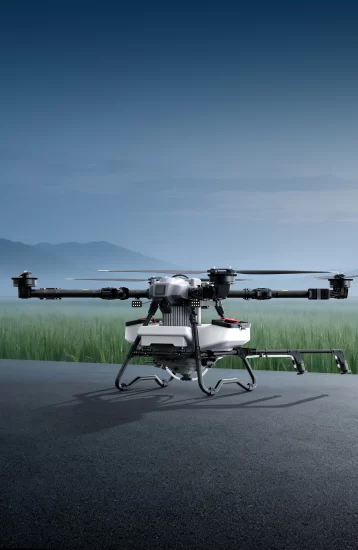
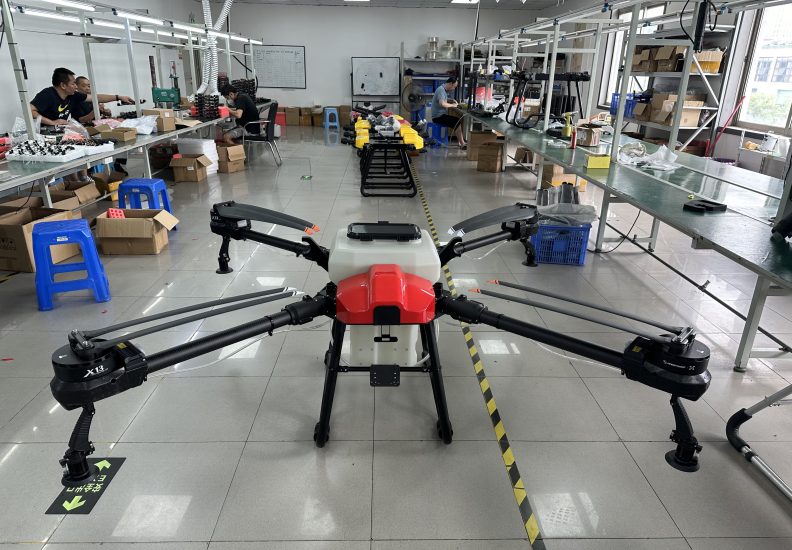
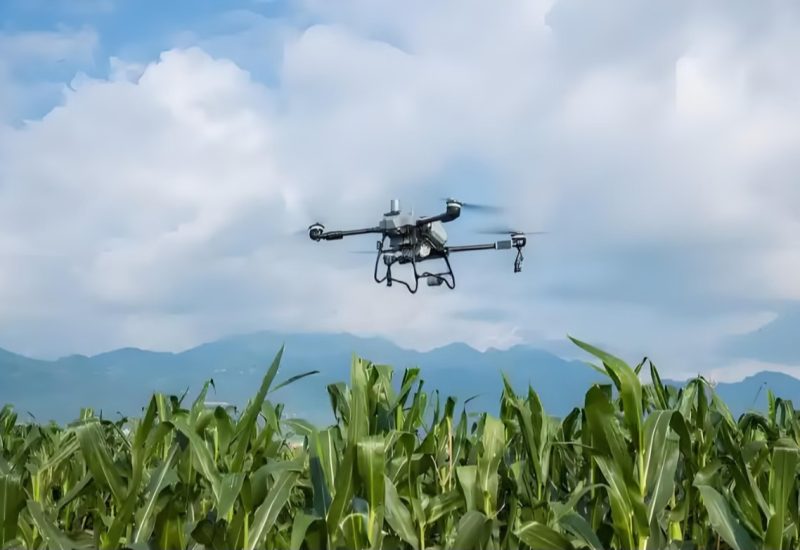
A 50KG agricultural spraying drone provides an alternative approach for farms, agricultural contractors, and crop protection companies looking to improve spraying efficiency.
By combining a large liquid payload, automated flight routes, precision positioning, and an intelligent spraying system, a 50KG drone can reduce unnecessary movement and improve the productivity of agricultural spraying operations.
However, actual efficiency depends on much more than the tank capacity. Payload, spray width, flight speed, battery endurance, refill logistics, crop type, terrain, and operator experience all affect the final result.
This guide explains how a 50KG agricultural spraying drone can improve pesticide application efficiency and what buyers should consider before purchasing one.
What Does Agricultural Spraying Efficiency Mean?
Agricultural spraying efficiency is not simply the number of liters sprayed per minute.
For commercial farming, several factors determine overall productivity:
- Area treated per hour
- Liquid application rate
- Spray width
- Flight speed
- Battery endurance
- Refilling time
- Battery replacement time
- Route-planning efficiency
- Operator productivity
- Weather conditions
- Field layout
A useful basic calculation is:
Theoretical coverage = Spray width × Flight speed × Operating time
However, actual field productivity is lower because operators must account for turning, refilling, battery replacement, transportation, inspection, and other interruptions.
Therefore, buyers should evaluate real field productivity, not only laboratory specifications.
1. A 50KG Payload Can Reduce Refilling Frequency
One of the biggest advantages of a high-capacity agricultural spraying drone is its larger liquid payload.
A smaller drone may need to return for refilling more frequently.
A 50KG-class drone can carry significantly more spraying liquid per flight, potentially reducing the number of trips between the field and the refill station.
For large farms, this can save operational time.
For example, suppose a spraying operation requires a total of 500KG of liquid.
A drone carrying 25KG would theoretically require:
500 ÷ 25 = 20 loads
A 50KG drone would require:
500 ÷ 50 = 10 loads
This simplified example assumes the entire payload can be used during each operation and does not account for operational limitations.
The main point is that increasing payload capacity can reduce the number of refilling cycles.
2. Less Time Spent Refilling
Refilling is often one of the hidden sources of downtime in agricultural spraying.
The actual operation includes:
- Drone returns
- Landing
- Battery replacement
- Liquid refilling
- System inspection
- Takeoff
- Route continuation
A high-capacity drone can reduce the number of these cycles.
This can be especially valuable when:
- Water sources are far away
- Fields are very large
- Multiple fields must be treated
- The spraying window is limited
- Weather conditions require rapid operation
The efficiency of the entire refill process is therefore just as important as the drone’s tank capacity.
3. Automated Flight Routes Improve Productivity
Modern agricultural spraying drones can use automated route planning.
Instead of manually controlling every movement, the operator can define an operating area and allow the flight system to follow a planned route.
Potential advantages include:
- More consistent flight paths
- Reduced unnecessary movement
- Better field coverage
- Easier operation
- Repeatable routes
- Reduced operator workload
For large farms, route planning can become increasingly valuable because even small inefficiencies can accumulate over hundreds of hectares.
4. RTK Can Improve Route Accuracy
RTK positioning can provide high-accuracy positioning for agricultural operations.
This can help the drone follow planned routes more precisely.
Potential benefits include:
- More accurate route planning
- Better repeatability
- Reduced unnecessary overlap
- More consistent operating paths
- Improved field boundary management
For large commercial farms, accurate positioning can be particularly useful when the same area needs to be treated multiple times during a growing season.
5. Adjustable Flow Rate Helps Control Application
Efficient pesticide application is not simply about spraying as much liquid as possible.
The objective is to apply the appropriate amount of product according to the crop, chemical label, target pest or disease, and local agricultural recommendations.
An intelligent spraying system can help control:
- Flow rate
- Application rate
- Spray timing
- Spray start and stop
- Spray coverage
A flow-control system can also reduce unnecessary spraying when the drone changes speed or reaches the end of a route.
Why Flow Control Matters
If the drone changes speed but the spraying output remains unchanged, the amount applied per unit area can vary.
An intelligent control system can adjust the spraying output according to operating conditions.
This can improve consistency and help reduce unnecessary chemical use.
Actual application settings should always follow the pesticide label and applicable agricultural regulations.
6. Wide Spray Coverage Can Increase Field Productivity
Spray width is another important factor.
A wider effective spray width means the drone can potentially cover more ground during each flight.
However, buyers should distinguish between:
Theoretical spray width
and
Effective field spray width.
The actual width depends on:
- Nozzle type
- Droplet characteristics
- Flight altitude
- Wind
- Crop structure
- Liquid properties
- Flight speed
Therefore, buyers should request test data rather than selecting a drone solely based on the largest advertised spray width.
7. High Flight Speed Can Reduce Operation Time
Flight speed also affects productivity.
A drone flying faster can theoretically cover more area per hour.
However, maximum speed is not necessarily the ideal spraying speed.
The appropriate speed depends on:
- Crop type
- Spray system
- Application rate
- Wind
- Terrain
- Droplet requirements
- Desired coverage
A professional manufacturer should provide recommended operating speeds instead of only advertising the maximum flight speed.
8. Multiple Batteries Can Support Continuous Operations
Battery management can have a major impact on daily productivity.
If the drone has only one battery, the operator may need to wait for charging after every flight.
A commercial operation can use multiple batteries so that one battery is being used while another is charging.
A typical workflow may look like:
Flight → Land → Replace Battery → Refill → Continue Flight
This can reduce downtime.
For large farms, buyers should evaluate the complete battery system rather than the drone alone.
9. Fast Charging Can Improve Daily Productivity
Charging speed is another important factor.
A fast charger can reduce the time between flights.
However, buyers should check the required electrical infrastructure.
Questions to ask the manufacturer include:
- How long does a full charge take?
- Can multiple batteries be charged simultaneously?
- What input voltage is required?
- What power supply is recommended?
- Is a fast charger available?
- Does the charger support the destination country’s electrical system?
The answer is particularly important for overseas buyers.
10. Reduce Crop Damage From Ground Machinery
Traditional agricultural equipment may need to travel through fields.
This can create potential problems such as:
- Crop trampling
- Soil compaction
- Difficulty operating in wet fields
- Damage to plants
- Limited access after rainfall
An agricultural spraying drone operates from above, eliminating the need for heavy spraying machinery to drive directly through the crop.
This can be particularly useful during later crop growth stages when plants are tall and vulnerable to mechanical damage.
11. Improve Access to Difficult Terrain
Aerial spraying can provide access to locations that may be difficult for conventional equipment.
Examples include:
- Mountain farms
- Hills
- Slopes
- Wet fields
- Narrow fields
- Orchards
- Areas without suitable roads
A 50KG drone can provide high payload capacity while retaining the flexibility of an aerial platform.
For farms with difficult terrain, buyers should also consider terrain-following and obstacle-avoidance capabilities.
12. Reduce Manual Labor Requirements
Traditional spraying can require operators to handle heavy equipment and spend long periods moving through agricultural fields.
An agricultural drone allows the operator to control the equipment from the ground.
This can potentially reduce:
- Manual carrying
- Physical workload
- Tractor operation
- Repetitive field movement
However, agricultural drone operations still require trained personnel.
Operators must understand:
- Flight procedures
- Spraying parameters
- Battery management
- Equipment inspection
- Agricultural chemical safety
- Local UAV regulations
The drone reduces certain types of labor but does not eliminate the need for skilled operators.
13. Improve Productivity During Short Spraying Windows
Agricultural spraying is often time-sensitive.
Weather conditions, crop growth stages, pest pressure, and agricultural schedules can create narrow windows for application.
If a farm needs to treat a large area within a short period, higher-capacity equipment can be valuable.
A 50KG agricultural spraying drone can help by combining:
- Large liquid payload
- Automated routes
- High operating speed
- Multiple batteries
- Efficient refilling
- Precision positioning
The actual productivity will depend on the complete field operation.
14. Example of a Field Efficiency Calculation
Consider a simplified example.
Suppose a drone operates with:
- Effective spraying width: 8 meters
- Operating speed: 6 m/s
Theoretical area coverage can be estimated as:
8 × 6 × 3,600 ÷ 10,000 = 17.28 hectares/hour
However, this is a theoretical figure.
Actual field productivity will be lower because of:
- Turning
- Refilling
- Battery replacement
- Route changes
- Obstacles
- Field boundaries
- Wind
- Operator procedures
Therefore, buyers should ask manufacturers for real-world field test results whenever possible.
15. The Refill Station Is Part of the Spraying System
A common mistake is to focus entirely on the drone.
For large farms, the refill infrastructure can significantly influence productivity.
A professional operation may require:
- Water tanks
- Mixing tanks
- Pumps
- Battery charging stations
- Transport vehicles
- Spare batteries
- Spare parts
- Cleaning equipment
If the refill station is poorly organized, even a high-performance drone can experience significant downtime.
Therefore, the drone and field-support system should be planned together.
16. Maintenance Also Affects Efficiency
Equipment downtime can significantly reduce productivity during the agricultural season.
Routine maintenance should include inspection of:
- Motors
- Propellers
- Spray pumps
- Nozzles
- Pipes
- Valves
- Batteries
- Sensors
- Landing gear
- Flight-control components
A manufacturer should provide maintenance instructions and recommended replacement intervals.
Keeping commonly used spare parts available can reduce unexpected downtime.
17. Choose the Right Configuration for Your Crop
There is no single configuration that is perfect for every agricultural operation.
For Large Rice Fields
Important factors may include:
- Large payload
- Efficient route planning
- Stable spraying
- Long operating endurance
For Orchards
Consider:
- Obstacle avoidance
- Terrain following
- Accurate positioning
- Appropriate spray configuration
For Hilly Farms
Consider:
- Terrain following
- Positioning accuracy
- Flight stability
- Obstacle detection
For Agricultural Contractors
Consider:
- Battery quantity
- Fast charging
- Spare parts
- Easy transportation
- Durability
- Technical support
The best drone configuration depends on the intended application.
18. How to Measure Real Agricultural Spraying Efficiency
When testing a 50KG spraying drone, do not measure only the flight time.
Track:
Area treated per hour
Liquid used per hectare
Number of refills
Number of battery changes
Average turnaround time
Operator working hours
Downtime
These measurements provide a much more realistic picture of productivity.
A Practical Field Test
A manufacturer or buyer can test the drone on a known agricultural area.
Record:
- Start time
- Takeoff time
- Flight time
- Area covered
- Liquid consumed
- Battery changes
- Refilling time
- Landing frequency
- Weather conditions
- Final operating time
The results can then be compared with other agricultural spraying equipment.
19. What Should Buyers Ask a Manufacturer?
Before purchasing, ask the factory:
- What is the actual liquid payload?
- What is the full-load flight time?
- What is the recommended spraying speed?
- What is the effective spray width?
- What is the maximum flow rate?
- Does the drone support RTK?
- Does it support automatic route planning?
- Does it have obstacle avoidance?
- Does it support terrain following?
- How many batteries are included?
- How long does charging take?
- What spare parts are available?
- What is the warranty?
- Can the factory provide technical training?
- Can the product be customized for different markets?
The answers should be provided in a detailed technical specification.
20. How a 50KG Drone Can Improve Overall Farm Economics
The economic benefit of an agricultural spraying drone is not simply the purchase price.
Potential savings may come from:
- Reduced labor requirements
- Lower tractor usage
- Reduced crop trampling
- Reduced field access problems
- More efficient route planning
- Reduced refill frequency
- Better equipment utilization
At the same time, farms must consider:
- Drone purchase cost
- Battery replacement
- Maintenance
- Spare parts
- Operator training
- Electricity
- Insurance
- Regulatory compliance
A complete cost analysis is therefore necessary before making a purchasing decision.
Conclusion
A 50KG agricultural spraying drone can improve agricultural pesticide application efficiency by combining a high liquid payload with automated flight planning, precision positioning, efficient spraying systems, and flexible aerial operation.
The biggest potential advantage of a 50KG payload is the ability to carry more liquid per flight, which can reduce refilling frequency. When combined with multiple batteries, efficient charging, accurate navigation, and a well-designed refill station, the drone can support large-scale agricultural operations.
However, actual field productivity depends on many variables, including crop type, terrain, weather, spray width, flight speed, application rate, battery performance, and operator procedures.
For international buyers, the best approach is to compare real field performance rather than marketing specifications. Request full-load flight tests, spraying data, battery information, complete configuration lists, spare-parts support, and technical documentation before placing an order.
For farms, distributors, and agricultural contractors seeking a high-capacity spraying solution, selecting the right 50KG agricultural spraying drone manufacturer can be just as important as selecting the drone itself.
FAQ
Can a 50KG spraying drone cover a large farm?
Yes, it is designed for high-capacity agricultural spraying operations. Actual coverage depends on spray width, flight speed, application rate, battery endurance, field conditions, and refill efficiency.
Does a larger tank always mean higher efficiency?
Not necessarily. A larger payload can reduce refilling frequency, but overall productivity also depends on battery endurance, charging speed, spraying performance, and field logistics.
How can a spraying drone reduce labor requirements?
The drone automates flight routes and allows the operator to control spraying from the ground, reducing the need for workers to carry or operate ground-based spraying equipment directly in the field.
Is RTK important for agricultural spraying?
RTK can provide higher positioning accuracy and improve route repeatability. It can be especially useful for large fields and repeated agricultural operations.
How many batteries should I buy?
The appropriate number depends on daily operating hours, flight time, charging speed, and the desired level of continuous operation. Commercial users may benefit from having additional batteries available.
What is the most important efficiency indicator?
For commercial farming, actual hectares treated per hour is often more meaningful than maximum flight time or theoretical spray width.
How can I compare two 50KG spraying drones?
Compare their actual liquid payload, full-load flight time, spray width, flow rate, battery system, charging time, navigation functions, spare parts, warranty, technical support, and real-world field test results.
Can a 50KG agricultural spraying drone be used for orchards?
Potentially, yes. However, orchard operations can require additional capabilities such as obstacle avoidance, terrain following, accurate positioning, and a spraying configuration suitable for the specific crop and canopy structure.




No comments yet