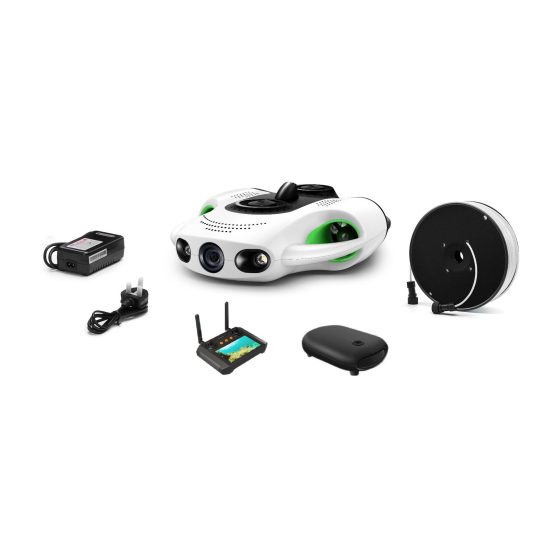


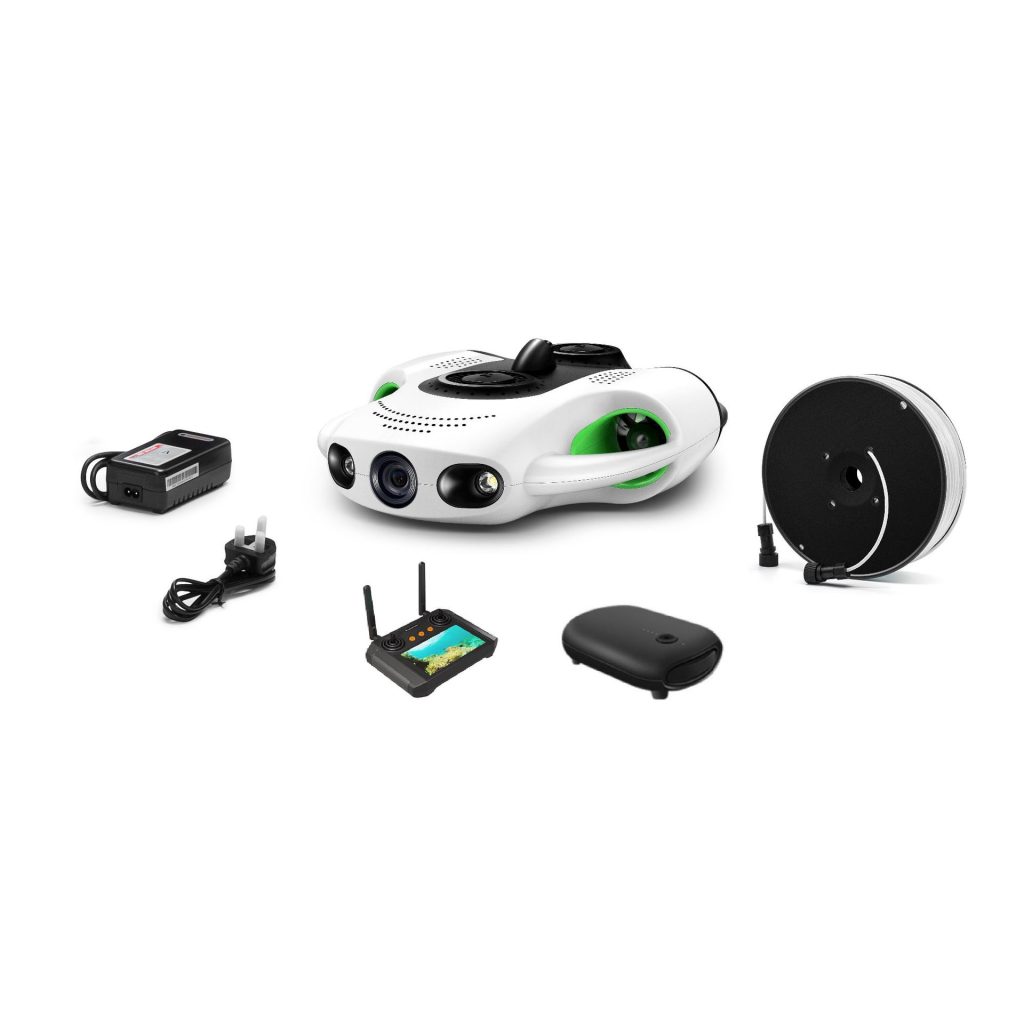

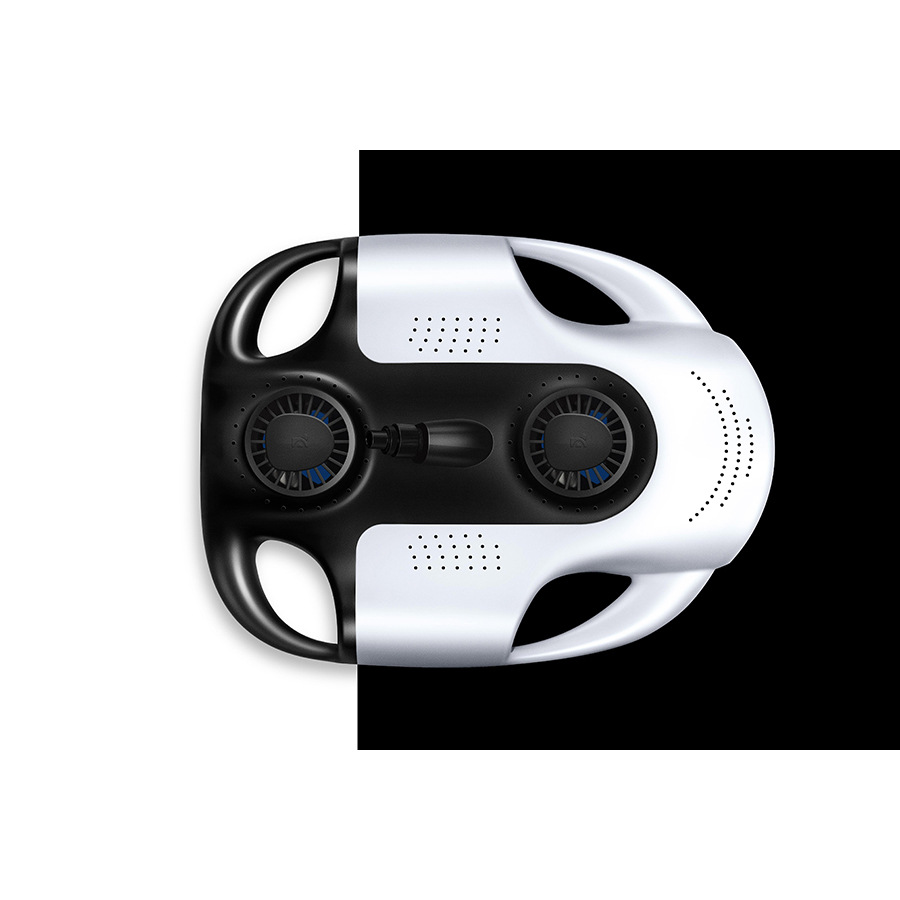

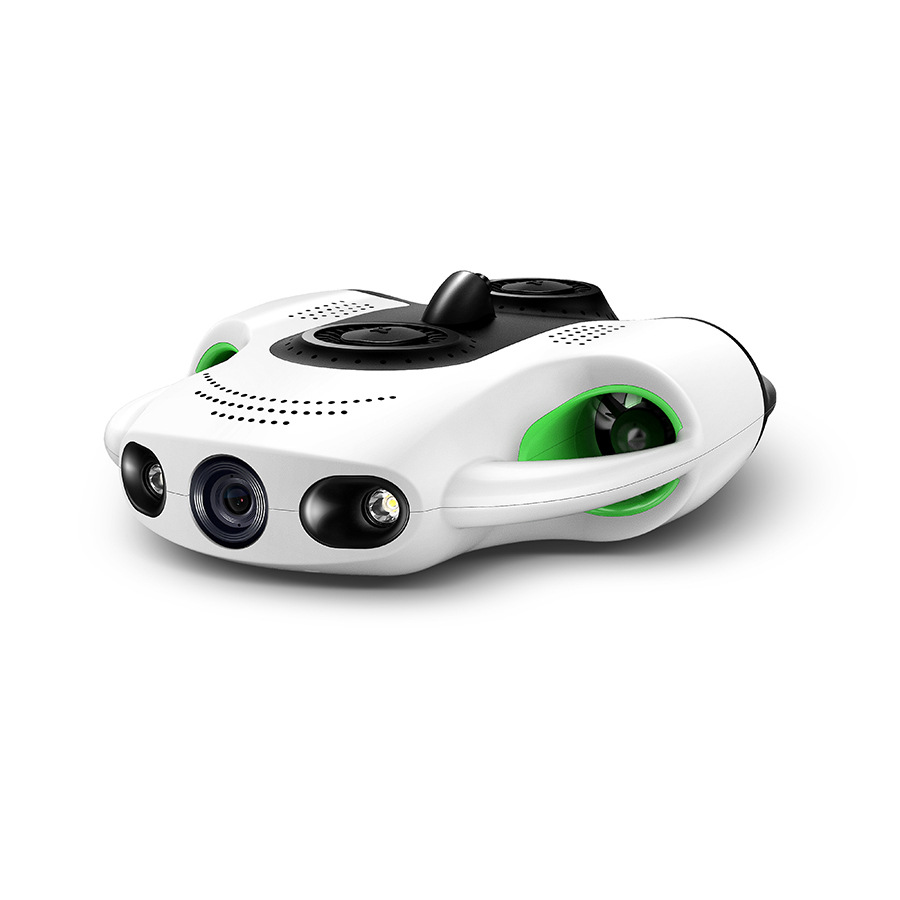
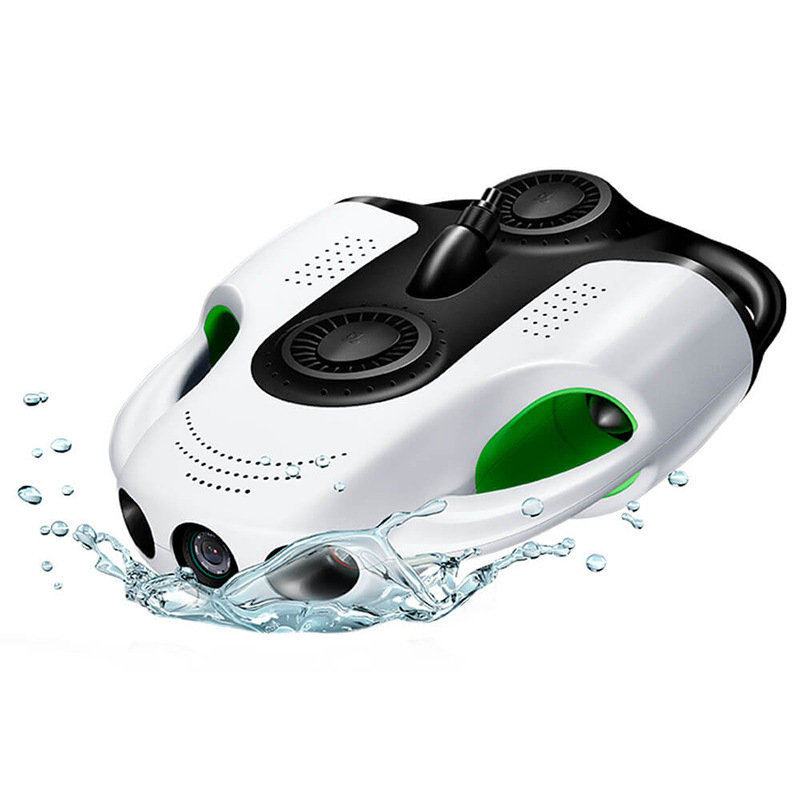
This underwater drone defies 10MPa water pressure (100m depth) with titanium alloy hull and composite seals. 8-hour endurance, 4K imaging, and AI navigation enable safe inspections of pipelines, aquaculture cages, and archaeological sites—cutting costs by 50% vs. manned dives. 🌊⚙️🔍🛡️🔋📸
(Small Icons: Pressure Gauge📊, Titanium Alloy⚙️, Sealing Ring🔍, Depth Meter📏, Drone🚁, Coral🐠, Pipeline⛽, Anchor⚓, Shield🛡️, Battery🔋, Camera📸, Globe🌍)
Introduction: The 100-Meter Barrier and the Pressure-Resistant Breakthrough
The 100-meter depth mark has long been a “no-go zone” for conventional underwater tools: standard ROVs (Remotely Operated Vehicles) fail at 50m due to hull deformation, while manned dives become risky beyond 60m. At 100m, water pressure hits 10MPa (1MPa ≈ 10m depth)—enough to crush steel hulls and disable electronics. Enter this underwater drone: engineered with titanium alloy construction and multi-layer sealing technology to resist 10MPa pressure, it unlocks safe, efficient operations at 100m. This article explores how its pressure-resistant design, combined with smart features, is transforming shallow-to-mid-depth marine tasks.
Technical Deep Dive: How It Withstands 10MPa Pressure
The drone’s core innovation lies in its pressure-resistant architecture, integrating material science, structural engineering, and electronic protection.
1. Core Technical Modules
| Module | Key Features | Innovation Highlights |
|---|---|---|
| Pressure-Resistant Hull | Titanium alloy (Grade 5) frame + carbon fiber composite skin; tested to 15MPa (50% above 10MPa requirement). | Honeycomb internal structure (absorbs pressure evenly); O-ring seals with fluorocarbon rubber (resists corrosion). |
| Power System | Lithium-ion battery (8-hour endurance); voltage regulator (stabilizes output under pressure). | Pressure-compensated battery compartment (prevents electrolyte leakage at 10MPa). |
| Sensing & Imaging | 4K HD camera (low-light mode); side-scan sonar (100m range); pH/temperature sensors. | Wide-angle lens (120°) with anti-fog coating; sonar frequency adjustable (500kHz-2MHz for different resolutions). |
| Navigation & Control | IMU + DVL + AI path planning; acoustic modem (5km range); auto-hover at set depth. | Terrain-following mode (maintains 0.5-2m above seabed); emergency surfacing if pressure exceeds 10.5MPa. |
2. Standardized Operation Workflow
Take a 100m-deep offshore pipeline inspection as an example:
-
Pre-Mission Check: Test hull integrity (pressure chamber simulation at 10MPa for 24h); calibrate sensors.
-
Deployment: Launch from vessel; acoustic modem confirms connection (signal strength: 90% at 100m).
-
Descent & Navigation: Drone descends at 0.3m/s, AI avoiding obstacles (e.g., rocks, marine life). Auto-stops at 100m depth.
-
Inspection: 4K camera captures pipeline welds (0.1mm crack detection); sonar maps 50m of pipeline length.
-
Data Collection: Sensors log water temperature (12°C) and pH (8.1); stores 500+ high-res images.
-
Recovery: Auto-returns to vessel after 6 hours; downloads data to cloud for analysis.
3. R&D Focus: Pushing Pressure Limits
Developers are advancing two areas:
-
Material Upgrades: Testing graphene-reinforced composites (target: 20MPa resistance for 200m depth by 2026).
-
Electronic Shielding: Hermetically sealed circuit boards (prevents short circuits under pressure).
Core Advantages: Why 10MPa Resistance Matters
1. Unlocked Depth: From 50m to 100m
-
Traditional Limit: Most consumer/prosumer drones max out at 50m (5MPa), failing structurally at 100m.
-
Drone Edge: 10MPa resistance enables access to 100m—critical for inspecting offshore wind foundations, deep aquaculture cages, and mid-depth wrecks.
2. Safety: No Risk of Hull Collapse
-
Titanium Alloy Strength: Withstands 10MPa without deformation (tested via hydrostatic pressure chamber).
-
Redundant Seals: Dual O-rings + pressure-activated backup seal (prevents leaks even if primary seal fails).
3. Cost-Effectiveness
-
Manned Dive: $20k-$30k per 100m dive (diver training, safety gear, vessel time).
-
Drone Mission: $5k-$8k per mission (drone + data plan), 70% cost reduction.
4. Versatility
-
Shallow to Mid-Depth: Operates from 5m (lakes) to 100m (coastal waters), replacing multiple specialized tools.
Application Scenarios: Solving 100m-Depth Challenges
1. Offshore Engineering: Pipeline & Foundation Inspection
-
Pain Point: Oil/gas pipelines at 80-100m corrode; manual inspection requires risky dives.
-
Solution: Drone’s 4K camera detects weld cracks (0.1mm resolution); sonar maps pipeline alignment.
2. Aquaculture: Cage & Fish Health Monitoring
-
Pain Point: Salmon cages at 50-100m need regular checks for net damage/fish density.
-
Solution: 4K counts fish (accuracy: 95%); sensors monitor oxygen levels (critical for fish survival).
3. Underwater Archaeology: Shallow Wreck Surveys
-
Pain Point: 100m-deep wrecks (e.g., WWII aircraft) are hard to document without disturbing artifacts.
-
Solution: Non-invasive 4K 3D modeling preserves wreck integrity; sonar avoids fragile sections.
4. Environmental Monitoring: Coral Reef & Water Quality
-
Pain Point: Coral bleaching at 30-100m depth requires frequent surveys.
-
Solution: Low-light camera captures bioluminescence; pH sensors track ocean acidification.
Innovation Trends: Beyond 10MPa
1. Smart Pressure Adaptation
-
Auto-Pressure Adjustment: AI adjusts buoyancy (via ballast tanks) to counteract pressure changes during ascent/descent.
-
Leak Detection: Sensors alert operators if pressure inside hull rises by 5% (early leak warning).
2. Green Energy Integration
-
Solar Buoy Assist: Surface buoy with solar panels recharges drone batteries during mid-mission breaks (extends endurance to 12h).
-
Kinetic Energy Harvesting: Turbines generate power from water flow (experimental phase).
3. Modular Payloads
-
Swappable Tools: Attach water samplers (for pollutant testing), claw arms (light object retrieval), or extra lights (for caves).
-
Depth Customization: Upgrade hull to 15MPa resistance (150m depth) via bolt-on modules.
Procurement Guide: Choosing a 10MPa-Resistant Drone
-
Verify Pressure Rating: Ensure vendor provides hydrostatic test reports (10MPa for 24h minimum).
-
Check Material Certifications: Titanium alloy Grade 5 (ASTM B348) + fluorocarbon seals (FDA-compliant for aquaculture).
-
Test Maneuverability: Request demo at 50m depth (simulate 100m conditions with weighted frame).
-
Evaluate Support: Opt for vendors offering 2-year warranty + 48h global repair service.
Quality Assurance: Reliability Under Pressure
-
Certifications: ISO 13628 (offshore equipment), IP69K (waterproof/dustproof), CE/FCC compliance.
-
Risk Control:
-
Pressure Damage Insurance: Covers hull failure ($15k deductible).
-
Emergency Floatation: Automatic airbag deployment if drone drifts below 120m (prevents loss).
-
Case Study: Inspecting a 100m Offshore Wind Foundation
Client: European Offshore Wind Farm Operator
Challenge: Inspect 100m-deep turbine foundation for erosion (annual cost of undetected damage: $500k).
Solution: Deployed 10MPa-resistant drone with 4K camera and sonar.
Results:
-
Detected 3 erosion spots (2mm depth) missed by annual diver checks.
-
Reduced inspection time from 3 days (diver team) to 8 hours (drone).
-
Saved $250k in repair costs within 6 months.
FAQ: Common Questions About 10MPa-Resistant Drones
Q1: What does 10MPa water pressure mean in terms of depth?
A: 1MPa ≈ 10m of seawater, so 10MPa = 100m depth. This drone is designed to operate safely at 100m.
Q2: How is the hull tested for 10MPa resistance?
A: In a hydrostatic pressure chamber, the hull is submerged in water and pressurized to 10MPa for 24h. Post-test, engineers check for deformation (<0.1mm allowed).
Q3: Can it work in freshwater (lower pressure)?
A: Yes—its 10MPa rating works in both freshwater (e.g., lakes) and seawater. Lower pressure actually extends battery life.
Q4: What happens if pressure exceeds 10MPa?
A: The drone’s pressure sensor triggers an emergency surfacing sequence (ascends at 0.5m/s) and alerts operators via acoustic modem.
Q5: Is 4K imaging useful at 100m?
A: Absolutely—4K captures details (e.g., pipeline welds, fish scales) that 1080p misses, even in low light (0.1 lux at 100m).
Conclusion: Unlocking the 100-Meter Frontier
This underwater drone’s 10MPa pressure resistance is more than a spec—it’s a key to the 100-meter depth zone, once a high-risk, high-cost barrier. By combining robust engineering with smart features (4K imaging, AI navigation), it enables safe, affordable inspections for industries from energy to archaeology. As material science advances (e.g., graphene hulls), 100m will become the new “shallow end”—and this drone is leading the charge.
⭐ User Reviews
Lars Jensen 🇩🇰
Offshore Engineer, Danish Wind Power Co.
⭐⭐⭐⭐⭐
“Inspected 5 turbine foundations at 100m—drone’s 10MPa hull held up perfectly! 4K found a 2mm crack we’d have missed. 8-hour battery covered all sites in one day. Game-changer!”
Sofia Rossi 🇮🇹
Aquaculture Manager, Italian Salmon Farm
⭐⭐⭐⭐⭐
“Monitors 20 cages at 80m depth weekly. 4K counts fish accurately, sensors track oxygen. No more diver risks—saved $30k in 6 months. Italian support team is responsive too!”
Hiroshi Tanaka 🇯🇵
Archaeology Professor, University of Tokyo
⭐⭐⭐⭐☆
“Surveyed a 100m-deep WWII plane wreck—4K 3D model preserved artifacts. Pressure resistance was flawless, but wish it had a laser scanner for finer details.”
Maria Garcia 🇪🇸
Environmental Scientist, Spanish Marine Institute
⭐⭐⭐⭐⭐
“Tracked coral bleaching at 60m—low-light 4K captured bioluminescence. 10MPa rating let us go deeper than ever. Data syncs to our lab in real time. Highly recommend!”
John Miller 🇬🇧
Pipeline Inspector, UK Oil & Gas
⭐⭐⭐⭐⭐
“Replaced diver teams with this drone for 100m pipeline checks. 8-hour endurance, 4K crack detection—cut costs by 70%. Emergency surfacing feature gave me peace of mind.”
THE END


No comments yet