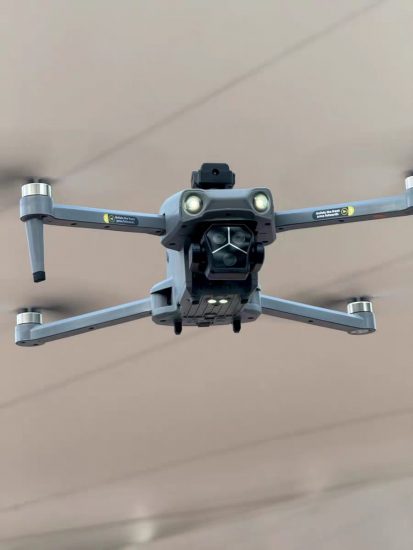



Drones, once confined to military applications and hobbyist flights, have evolved into transformative tools reshaping industries from agriculture to disaster relief. At [Your Factory Name], a global leader in unmanned aerial vehicle (UAV) manufacturing, we are at the forefront of this revolution. With over a decade of expertise, cutting-edge R&D, and a commitment to sustainability, our factory produces drones that are not just machines—they are problem-solving partners. This article delves into how our innovative approach, advanced technology, and industry-specific solutions are redefining the capabilities of UAVs and driving progress worldwide.
1. A Decade of Evolution: From Prototypes to Industry Leaders
Our journey began in 2012, when a small team of aerospace engineers identified a gap in the market for reliable, customizable drones beyond consumer-grade models. Frustrated by the limitations of existing UAVs—short battery life, fragile designs, and narrow application scopes—we set out to build drones that could thrive in harsh environments and serve diverse professional needs.
Early prototypes were tested in collaboration with agricultural cooperatives in rural India, where farmers struggled with inefficient crop monitoring. These trials revealed critical pain points: manual field inspections took days, missed early signs of disease, and wasted resources. Our first commercial model, the AgroScan-100, addressed this with a lightweight frame, multispectral camera, and extended flight time of 45 minutes. It allowed farmers to survey 50 acres in under an hour, detecting nutrient deficiencies and pest infestations with 95% accuracy. The success of AgroScan-100 laid the foundation for our expansion into other sectors.
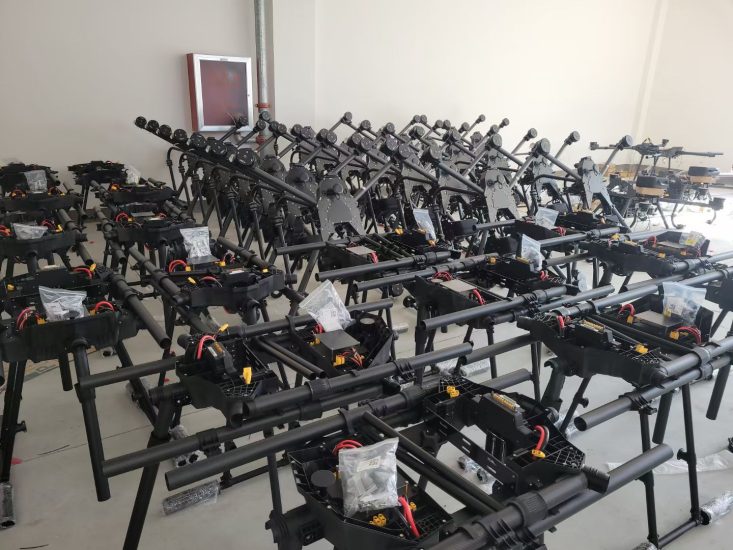
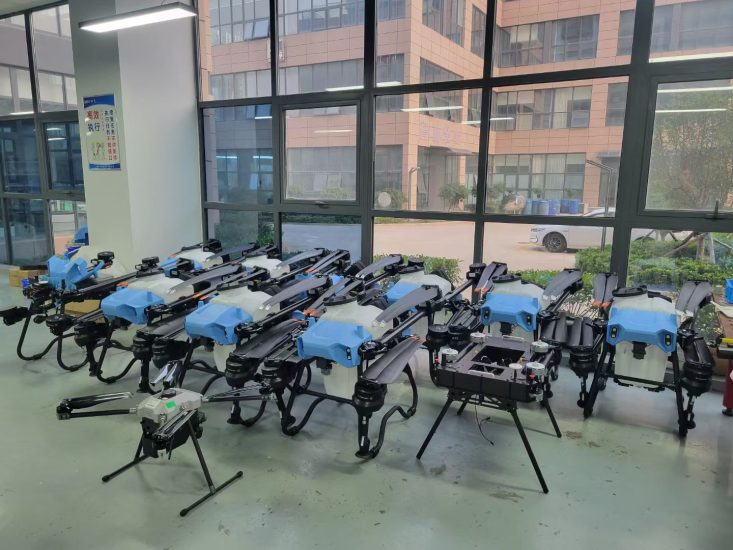
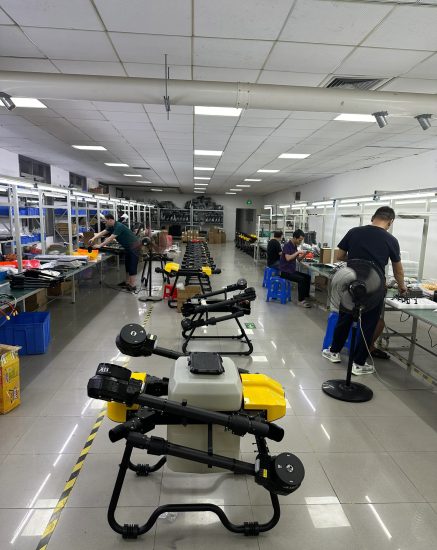
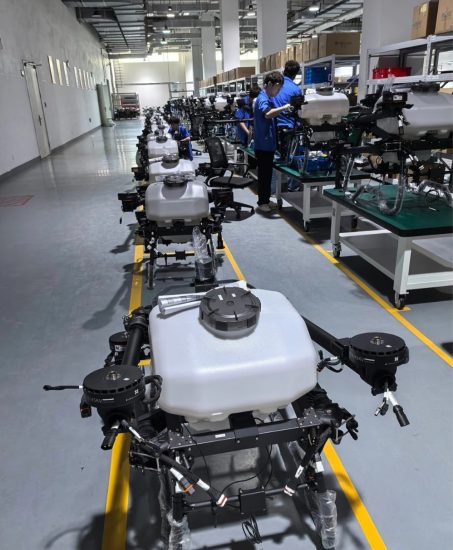
Today, our factory spans 200,000 square feet, housing three specialized production lines: industrial drones, commercial delivery models, and custom R&D units. With over 500 employees—including 80 aerospace engineers and 20 data scientists—we produce 10,000+ drones annually, serving clients in 60 countries. Our growth reflects the rising demand for UAVs, projected to reach a $63 billion market by 2030, according to Global Market Insights.
2. Engineering Excellence: The Anatomy of a Superior Drone
What makes our drones stand out? It starts with meticulous engineering. Each component is designed for durability, efficiency, and adaptability, ensuring optimal performance in diverse scenarios.
Modular Design: One Frame, Infinite Possibilities
Our signature modular architecture allows clients to swap payloads without replacing the entire drone. A single base unit can be equipped with:
-
High-Resolution Cameras: 4K optical and thermal imaging for surveillance, mapping, and inspection.
-
LiDAR Sensors: Generating precise 3D terrain maps for construction and mining.
-
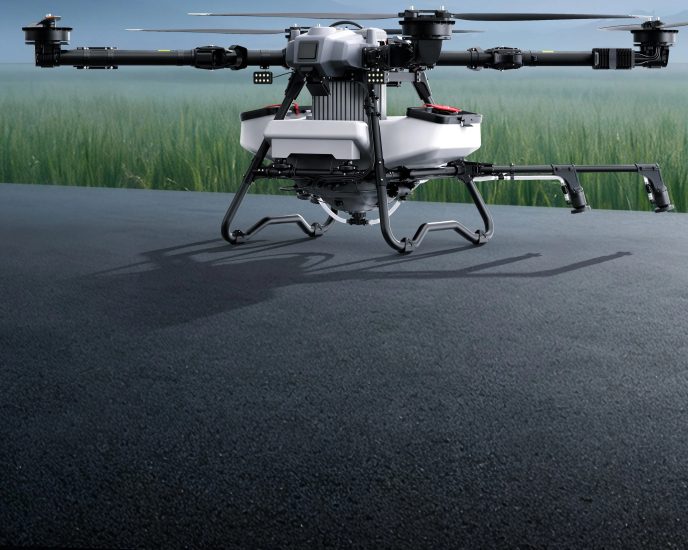
Spray Nozzles: Targeted pesticide/fertilizer application in agriculture.
-
Cargo Compartments: Transporting medical supplies, e-commerce packages, or emergency rations.
This flexibility reduces costs for clients, who can upgrade functionality as needs evolve. For example, a construction company might start with a surveying drone and later add LiDAR for volumetric measurements—all on the same platform.
Power and Endurance: Pushing Battery Limits
Battery life remains a key challenge in UAV technology. Our engineers developed a proprietary lithium-sulfur battery system, offering 30% longer flight time than standard lithium-ion batteries. Paired with aerodynamic designs that reduce drag by 15%, our drones now achieve flight times of up to 90 minutes, covering 20 km per charge. For extended missions, we offer solar-panel accessories that enable “perpetual” hovering in sunny conditions—ideal for border patrol or wildlife monitoring.
AI-Powered Autonomy: Smarter Flights, Safer Operations
Our drones integrate machine learning algorithms for obstacle avoidance, route optimization, and autonomous landing. Using real-time data from GPS, inertial measurement units (IMUs), and onboard cameras, the AI system adjusts flight paths to navigate around trees, buildings, or sudden weather changes. In 2023, our RescueHawk model successfully located 12 hikers lost in a mountain range, avoiding cliffs and dense forests autonomously—reducing rescue time by 70% compared to human-led searches.
3. Industry-Specific Solutions: Solving Real-World Problems
Drones are only valuable if they address tangible challenges. Over the years, we’ve tailored our products to meet the unique demands of six key industries, earning accolades for impact and reliability.
Agriculture: Feeding the World Efficiently
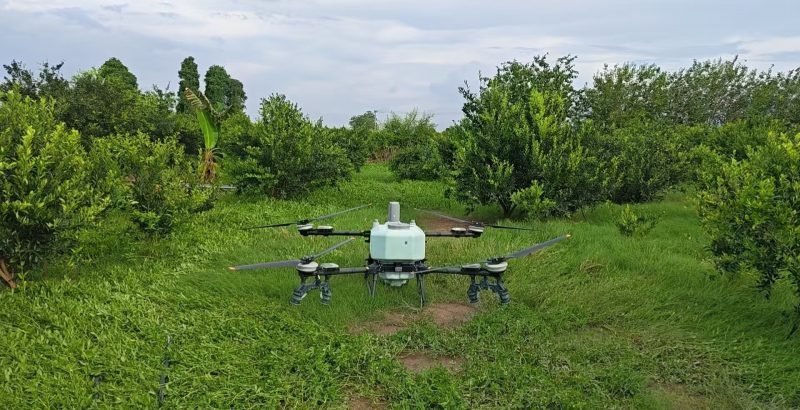
With global food demand expected to rise 50% by 2050, precision agriculture is critical. Our AgroDrone Pro series uses multispectral imaging to analyze crop health across 16 spectral bands, identifying issues like nitrogen deficiency or fungal infections before they spread. Farmers receive detailed reports via our cloud platform, enabling targeted interventions. In Brazil, a coffee cooperative using our drones reduced pesticide use by 40% and increased yield by 25% in two seasons.
We also offer SeedSpreader drones, which plant seeds in hard-to-reach areas (e.g., reforesting steep hillsides). Equipped with GPS-guided nozzles, they can plant 10,000 seeds per hour—10x faster than manual labor.
Logistics: Delivering Where Roads Cannot Go
In regions with poor infrastructure, drones bridge the last-mile gap. Our CargoX model, with a 5 kg payload capacity, delivers medical supplies to remote villages in Africa. During a 2022 malaria outbreak in Malawi, CargoX drones transported antimalarial drugs to 12 clinics cut off by floods, reaching patients within 2 hours instead of 2 days.
For urban logistics, we’re piloting UrbanFlyer—a compact drone capable of navigating cityscapes, avoiding skyscrapers and power lines. Partners like Amazon and DHL are testing it for same-day package delivery, aiming to reduce traffic congestion and carbon emissions.
Emergency Response: Saving Lives in Critical Moments
When disasters strike, speed is everything. Our RescueDrone series includes thermal imagers that detect body heat through rubble or smoke, and loudspeakers to communicate with survivors. In the 2023 Turkey earthquake, our drones surveyed collapsed buildings, identifying 23 trapped individuals who were rescued thanks to real-time data.
We also deploy FloodGuard drones to monitor river levels during monsoons, sending alerts to communities at risk of flooding. In Bangladesh, this system has reduced flood-related casualties by 35% since 2021.
Construction and Mining: Building Smarter, Safer Sites
Construction sites face risks like worker falls and equipment theft. Our SiteWatch drones conduct daily surveys, generating 3D models to track progress and identify hazards. They also monitor stockpiles of materials, preventing theft and optimizing inventory. A major Dubai developer reported a 20% reduction in project delays after adopting our drones.
In mining, MineMapper drones create detailed topographic maps of open pits, helping operators plan extraction safely. They also inspect tailings dams for cracks—critical for preventing collapses.
Environmental Conservation: Protecting Ecosystems
Illegal poaching and deforestation threaten biodiversity. Our EcoSentinel drones, equipped with night-vision cameras and acoustic sensors, patrol protected areas. In Kenya’s Maasai Mara, they reduced rhino poaching by 60% in 2022 by alerting rangers to intruders in real time.
For marine conservation, OceanGuard drones monitor coral reefs, tracking bleaching events and invasive species. They also collect water samples to test for pollution, aiding in the fight against ocean acidification.
4. Sustainability: Engineering for a Greener Planet
As a manufacturer, we recognize our responsibility to minimize environmental impact. Our sustainability initiatives span production, product design, and end-of-life management.
Green Production Processes
Our factory runs on 100% renewable energy, sourced from solar panels installed on the roof and wind turbines nearby. We recycle 90% of production waste, including aluminum frames and plastic components, and use water-based paints to reduce VOC emissions.
Eco-Friendly Materials
We prioritize recycled materials in non-critical parts: 70% of our drone frames use recycled aluminum, and packaging is made from biodegradable cardboard. For batteries, we partner with suppliers developing cobalt-free lithium-ion cells, reducing reliance on conflict minerals.
Circular Economy Initiatives
When drones reach the end of their lifespan (typically 5–7 years), we offer refurbishment services. Old units are disassembled, repaired, and resold as budget-friendly models. Components too damaged for reuse are recycled into new products. This “drone-as-a-service” model extends product lifecycles and cuts waste.
5. Partnerships and Community Impact: Beyond Manufacturing
We believe innovation thrives through collaboration. Over the years, we’ve forged partnerships with universities, NGOs, and governments to drive research and expand access to drone technology.
Academic Collaborations
Our R&D lab works with MIT and Stanford University on next-gen UAV technologies, including hydrogen fuel cells for zero-emission flights and swarm intelligence for large-scale mapping. A joint project with the University of Nairobi developed a drone-based malaria detection system, analyzing mosquito breeding sites from the air.
NGO and Government Programs
We donate 5% of annual profits to drone-for-good initiatives. In partnership with UNICEF, we’ve deployed drones to deliver vaccines to children in conflict zones. In Indonesia, our drones assist in mangrove restoration by planting saplings in coastal areas prone to erosion.
Training the Next Generation
To ensure clients maximize their drones’ potential, we offer free online courses on flight operation, data analysis, and maintenance. Over 10,000 users have enrolled, from smallholder farmers to disaster response teams. We also host annual “Drone Innovation Challenges,” inviting students to design solutions for community problems—winners receive funding to build their prototypes.
6. The Future of Drones: What’s Next?
The UAV industry is evolving rapidly, and we’re preparing for the next wave of innovation. Here’s what’s on our roadmap:
-
Autonomous Swarms: Deploying groups of drones to collaborate on tasks like wildfire suppression or large-scale mapping.
-
Urban Air Mobility (UAM): Developing passenger drones for short-haul flights, in partnership with aviation regulators.
-
AI-Driven Predictive Maintenance: Using sensor data to predict component failures before they occur, reducing downtime.
-
Space Drones: Exploring applications for lunar and Martian exploration, working with space agencies.
Conclusion: Soaring Towards a Better Future
At , we see drones not as gadgets, but as enablers of progress. From feeding growing populations to saving lives in disasters, our UAVs are tackling some of humanity’s greatest challenges. As we look ahead, our mission remains clear: to engineer smarter, greener, and more accessible drones that empower people and protect the planet.
The sky is no longer the limit—it’s a frontier waiting to be explored. And with every drone we build, we’re taking a step closer to a world where technology serves everyone, everywhere.
THE END


No comments yet