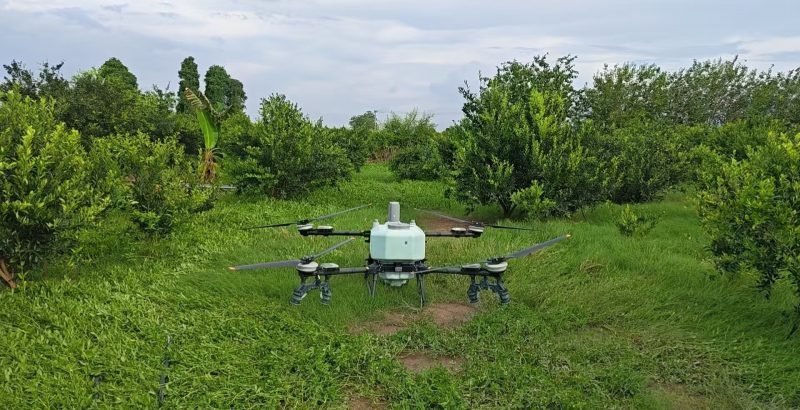



Strawberry production requires careful crop management because plants are relatively low to the ground, densely planted, and often grown in open fields, raised beds, tunnels, or protected cultivation systems. An agricultural spraying drone can provide a flexible option for certain crop-protection and foliar-application tasks when the equipment and application method are appropriate.
For growers evaluating an agricultural drone for spraying strawberry fields, the key considerations include spray coverage, flight height, droplet characteristics, wind conditions, application rate, battery endurance, field mapping, and compliance with local agricultural regulations.
Why Use an Agricultural Drone for Strawberry Fields?
Traditional ground spraying equipment can be difficult to operate in some strawberry fields, particularly when plants are grown on raised beds or when the soil is wet.
A drone does not need to drive directly over the crop, which can help reduce physical disturbance to the field.
Potential advantages include:
- Reduced crop and soil disturbance
- Access to wet or difficult terrain
- Flexible treatment of different field sections
- Automated flight-route planning
- Reduced dependence on ground vehicles
- Efficient treatment of larger open-field areas
- Convenient operation where conventional equipment has limited access
However, drones are not suitable for every strawberry application. Growers should evaluate the crop layout, canopy structure, weather, product label, and local regulations before operation.
How Does a Spraying Drone Work in Strawberry Fields?
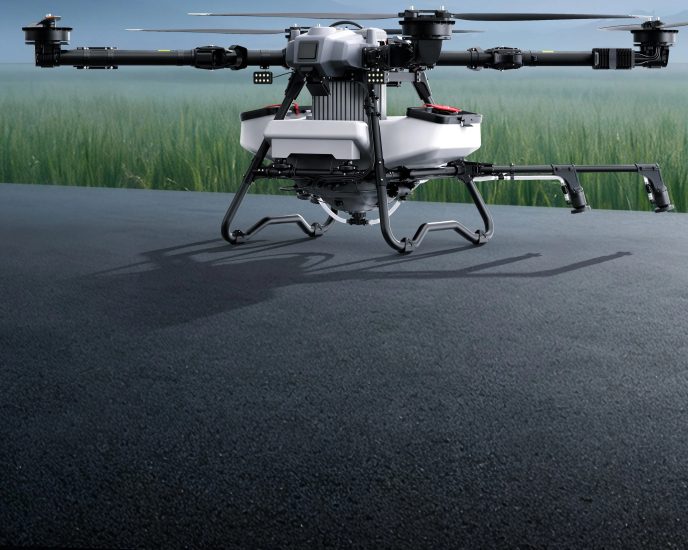
An agricultural spraying drone normally includes a liquid tank, pump, spray lines, nozzles, batteries, flight-control technology, positioning systems, and a remote controller.
The operator first establishes the treatment boundary and identifies obstacles. The drone can then follow a planned route while the spraying system applies the liquid.
Because strawberries are low-growing crops, flight altitude and spray distribution require particular attention. Excessive altitude can increase drift, while an unsuitable flight path may result in uneven application.
Important variables include:
- Flight altitude
- Flight speed
- Spray volume
- Droplet size
- Nozzle type
- Pump pressure
- Crop density
- Planting pattern
- Wind speed
- Weather conditions
Field testing is recommended before applying a treatment to a large production area.
Choosing the Right Drone Capacity
Strawberry farms vary significantly in size, so there is no single tank capacity that works for every grower.
Smaller drones may be easier to maneuver around small fields or complex layouts. Larger drones can carry more liquid and potentially reduce refill frequency on large open fields.
However, tank capacity should be evaluated together with:
Tank capacity + application rate + flight time + refill time + battery turnaround + field size
A larger tank also means a heavier payload, which can increase energy consumption. The best drone is therefore the one that provides a practical balance between payload, endurance and operating efficiency.
Spray Coverage Is Critical for Strawberries
Strawberry plants have relatively low foliage, so operators should avoid assuming that simply flying higher will provide better coverage.
Flight Altitude
The correct altitude depends on the drone, nozzle configuration, crop structure, weather and application requirements.
Flying too high can increase spray drift and reduce deposition. Flying too low may produce uneven distribution or excessive airflow effects.
Flight Speed
The drone’s speed influences the amount of spray delivered to each area.
A faster flight may increase theoretical productivity, but excessive speed can affect coverage if the spraying system is not properly calibrated.
Droplet Size
Droplet size affects both coverage and drift.
Smaller droplets may provide greater surface coverage but can be more sensitive to wind. Larger droplets may have different deposition characteristics.
The correct settings should be determined according to the product label, application objective and local requirements.
Mapping Strawberry Fields
Mapping can help operators create repeatable flight routes and avoid unnecessary spraying outside the target area.
Before operation, the field can be mapped to identify:
- Field boundaries
- Raised beds
- Irrigation equipment
- Greenhouses
- Poles
- Buildings
- Roads
- Trees
- Other obstacles
Dividing a large strawberry farm into smaller treatment zones can also simplify flight planning and battery management.
Battery Management and Productivity
Battery management has a direct impact on agricultural drone productivity.
Actual flight time varies according to:
- Payload
- Battery capacity
- Wind
- Temperature
- Flight speed
- Terrain
- Drone configuration
- Battery condition
A commercial operation should have enough batteries and charging capacity to minimize downtime.
A practical workflow may be:
- Inspect the drone.
- Prepare charged batteries.
- Check the spray system.
- Fill the tank.
- Confirm the field boundary.
- Start the planned flight.
- Replace the battery when necessary.
- Refill the tank.
- Continue the route.
- Inspect the treated area.
Efficient refilling and battery management can significantly influence the actual hectares treated per day.
Weather Conditions Matter
Weather is particularly important for aerial spraying.
Wind can move droplets away from the target area, while unsuitable conditions can reduce deposition consistency.
Before spraying, operators should consider:
- Wind speed
- Wind direction
- Temperature
- Humidity
- Rain forecast
- Local weather changes
Operations should follow the agricultural product label and applicable local requirements rather than relying on a universal weather threshold.
Can Spraying Drones Be Used in Greenhouse Strawberries?
Potentially, but greenhouse environments require additional consideration.
Structures, ventilation systems, cables, irrigation equipment and limited flying space can create additional risks. The drone’s size, obstacle-avoidance capability and flight-control system must be suitable for the environment.
Operators should conduct a risk assessment before using a drone inside or around protected cultivation structures.
Safety and Compliance
Agricultural spraying drones should be operated by trained personnel and according to applicable aviation and agricultural regulations.
Before each flight, inspect:
- Propellers
- Motors
- Batteries
- Tank
- Pump
- Pipes
- Filters
- Nozzles
- Positioning system
- Flight-control system
- Obstacle sensors
- Emergency functions
Operators should maintain appropriate separation from workers, animals, buildings, roads and other aircraft.
Only agricultural products legally approved for strawberries and the intended application method should be used. Product labels and local regulations always take priority.
Can a Drone Replace Traditional Strawberry Sprayers?
Not necessarily.
Ground equipment can remain useful for many strawberry operations, especially where fields have good access and suitable soil conditions.
A drone may be particularly useful where:
- Fields are wet
- Soil compaction is a concern
- Raised beds make ground access difficult
- Labor is limited
- Large areas need flexible treatment
- Ground vehicles could damage plants or beds
The best approach depends on the farm’s production system and application requirements.
What Should Strawberry Growers Look for When Buying a Drone?
| Feature | Why It Matters |
|---|---|
| Tank capacity | Determines liquid carried per flight |
| Pump performance | Influences spray consistency |
| Nozzle system | Affects spray distribution |
| Flight endurance | Influences daily productivity |
| Battery system | Determines operating turnaround |
| Positioning accuracy | Helps maintain planned routes |
| Obstacle avoidance | Useful around field infrastructure |
| Route planning | Improves repeatability |
| Controller | Affects ease of operation |
| Spare parts | Helps reduce downtime |
| Technical support | Supports long-term operation |
Buyers should also ask the manufacturer about actual operating parameters, training, maintenance, spare parts, warranty, and technical support.
Frequently Asked Questions
Can agricultural drones spray strawberries?
Yes. Agricultural spraying drones can be used for certain agricultural applications in strawberry fields when the equipment, product and application method comply with applicable local requirements.
Are spraying drones suitable for low-growing strawberries?
They can be, but the application parameters need to be carefully tested because strawberries are close to the ground. Flight altitude, speed, nozzle configuration and weather conditions can significantly influence coverage.
What tank size is best for strawberry farms?
The appropriate tank size depends on field area, application rate, refill facilities, battery capacity and desired productivity. Bigger is not always better.
Can drones operate over raised strawberry beds?
Yes, drones can potentially operate over raised-bed systems, but operators must account for irrigation lines, structures, workers, wind and other obstacles.
Can drone spraying eliminate drift?
No. Drift remains a potential risk during aerial application. Operators must consider weather, droplet size, flight parameters and product requirements.
Conclusion
An agricultural drone for spraying strawberry fields can provide growers with a flexible alternative for certain crop-protection and foliar-application tasks. Its main advantages can include reduced ground disturbance, flexible field access and automated flight planning.
However, successful operation requires more than simply flying a drone over the crop. Proper calibration, suitable flight parameters, weather monitoring, battery management, equipment maintenance and trained operation are essential.
For commercial strawberry growers, the most reliable approach is to conduct controlled field trials and compare spray coverage, operating efficiency and total costs before adopting drone spraying on a large scale.


No comments yet