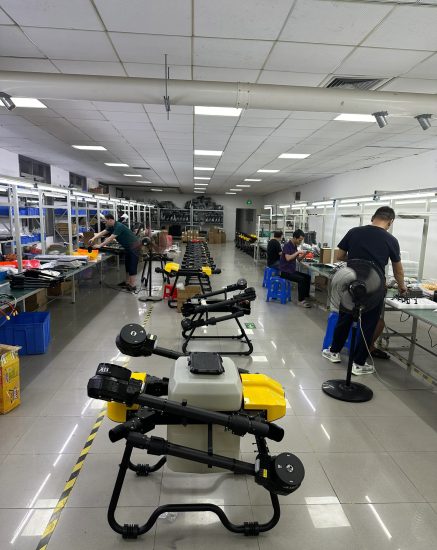


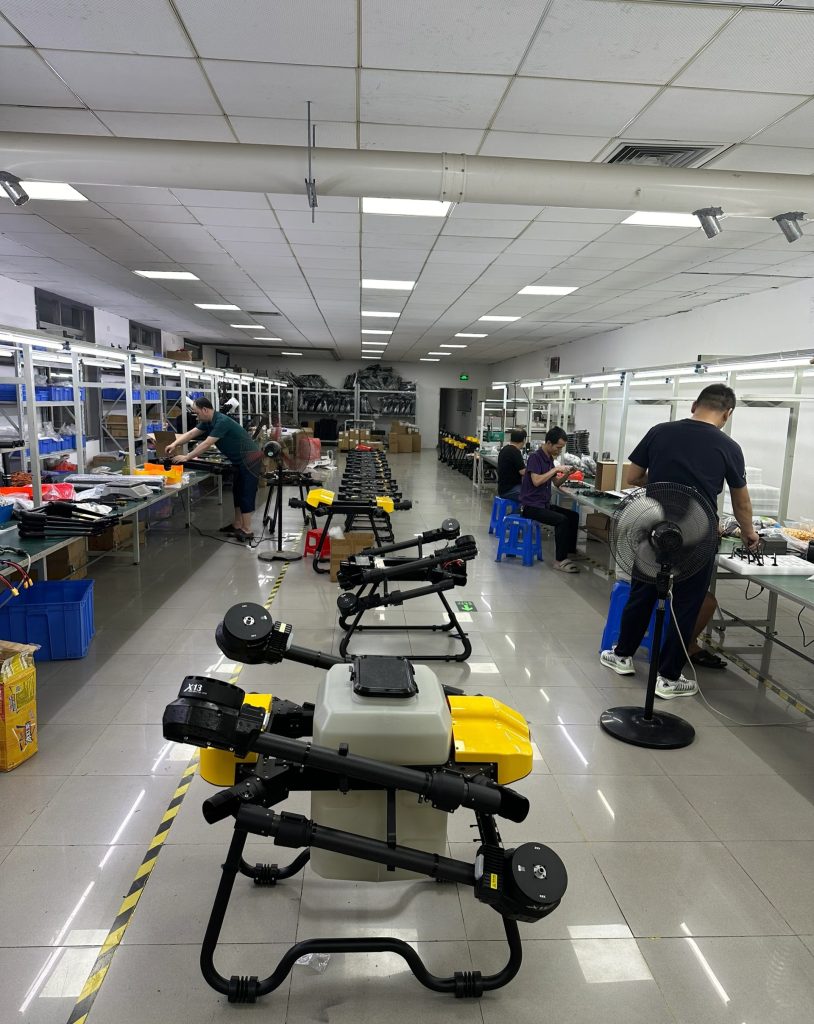
Mango orchards can be challenging to manage with conventional ground spraying equipment. Mature mango trees often have tall, wide and dense canopies, while orchard terrain may include slopes, narrow access areas and uneven ground. An agricultural spraying drone can provide a flexible solution for certain crop-protection, foliar fertilizer and other approved agricultural applications.
For growers looking for an agricultural drone for spraying mango orchards, the most important factors are spray coverage, flight stability, canopy conditions, tank capacity, battery performance, route planning and safe operation.
Why Use a Spraying Drone in Mango Orchards?
Mango trees can develop large canopies that make ground-based spraying more difficult, particularly when trees are widely spaced or planted on uneven terrain.
A spraying drone can fly over the orchard and treat designated areas without requiring a tractor to travel directly between every tree.
Potential advantages include:
- Access to difficult terrain
- Reduced soil compaction
- Less dependence on tractors
- Flexible flight-path planning
- Efficient treatment of selected orchard areas
- Reduced ground disturbance
- Convenient operation in wet or difficult-to-access areas
- Repeatable application routes
However, drone spraying is not automatically suitable for every application. Growers should evaluate canopy density, crop stage, weather, product requirements and local regulations before choosing a spraying method.
How Does an Agricultural Drone Spray Mango Trees?
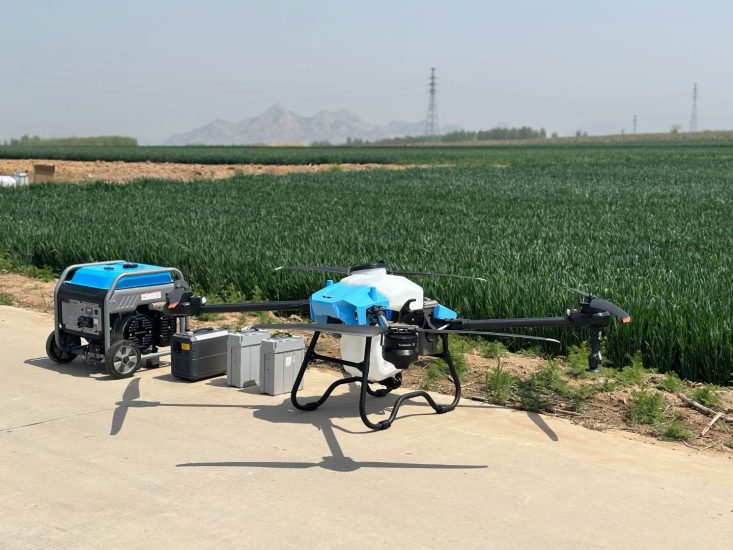
A typical agricultural spraying drone contains a liquid tank, pump, spray pipes, nozzles, batteries, flight-control systems and positioning technology.
The operator first identifies the orchard boundaries and potential obstacles. The drone can then follow a planned route while the spraying system applies the liquid.
Rotor airflow may influence spray movement around the canopy, but it should not be assumed that airflow alone provides complete penetration into dense mango foliage.
Actual spray performance depends on:
- Flight altitude
- Flight speed
- Spray volume
- Nozzle configuration
- Droplet size
- Pump pressure
- Tree height
- Canopy density
- Wind conditions
- Product formulation
A small-scale test is recommended before treating a large commercial orchard.
Choosing the Right Tank Capacity
Agricultural drones come with different tank sizes, and the right capacity depends on the orchard rather than simply choosing the largest available model.
For mango orchards, buyers should evaluate:
Tank capacity + spray rate + flight time + refill time + battery turnaround + daily treatment area
A larger tank can reduce the number of refills, but carrying a heavier payload can also increase energy consumption.
Therefore, the best drone is one that provides a practical balance between payload, flight endurance and operating efficiency.
Spray Coverage in Dense Mango Canopies
Mango trees can have thick foliage, especially during periods of vigorous growth. Spray coverage therefore deserves particular attention.
Flight Height
The operating height should be selected according to tree height, canopy structure, terrain and the spraying system.
Flying too high can increase drift and reduce deposition. Flying too low may create uneven distribution or increase the risk of contacting branches.
Flight Speed
Flight speed affects spray deposition.
If the drone moves too quickly, insufficient spray may reach the target area. If it moves too slowly, productivity can decrease.
Operators should determine suitable parameters through calibration and field testing.
Droplet Size
Droplet size influences both coverage and drift.
Fine droplets can provide extensive surface coverage but may be more easily carried by wind. Larger droplets generally behave differently during flight and deposition.
The appropriate droplet characteristics should always be selected according to the agricultural product label and local application requirements.
Mapping Mango Orchards Before Spraying
Mapping can make drone operations more efficient and consistent.
Before flying, the operator can identify:
- Orchard boundaries
- Tree rows
- Individual treatment zones
- Buildings
- Roads
- Power lines
- Poles
- Water sources
- Other obstacles
The orchard can then be divided into manageable sections.
For large mango farms, this approach can make flight planning easier and help prevent unnecessary overlap or missed areas.
Battery Management for Commercial Operations
Battery management is essential for maintaining productivity.
Actual flight time depends on payload, battery capacity, weather, wind, terrain and aircraft configuration.
Commercial operators should normally prepare multiple batteries and establish an efficient charging or battery-swapping workflow.
A typical operating process can include:
- Inspect the drone before operation.
- Prepare charged batteries.
- Check the spray system.
- Fill the tank.
- Confirm the flight route.
- Conduct the spraying operation.
- Replace the battery when necessary.
- Refill the tank.
- Continue the planned route.
- Inspect the treated area.
Reducing downtime between flights can significantly improve overall operating efficiency.
Can a Spraying Drone Reach Tall Mango Trees?
A drone can operate above or around mango canopies, but the ability to achieve effective spray coverage depends on the aircraft, nozzle system, flight altitude, canopy structure and application parameters.
Tall trees should not simply be sprayed from excessive altitude. Higher flight can increase drift and reduce deposition.
The operating parameters should be tested under actual orchard conditions.
Safety During Mango Orchard Spraying
Agricultural spraying drones should be operated by trained personnel and in accordance with applicable aviation and agricultural regulations.
Before each flight, operators should inspect:
- Propellers
- Motors
- Batteries
- Tank
- Pump
- Spray pipes
- Nozzles
- Positioning system
- Flight-control system
- Obstacle-detection functions
- Emergency procedures
Operators should also maintain appropriate separation from workers, animals, buildings, roads and other aircraft.
Only products approved for the intended crop and application method should be used. Always follow the product label and applicable local requirements.
Drone Spraying vs. Traditional Mango Orchard Equipment
A spraying drone should not automatically be considered a complete replacement for traditional orchard equipment.
Ground sprayers can remain effective where farms have good road access and suitable terrain.
Drones may provide additional advantages where:
- Orchards are located on slopes
- Ground access is difficult
- Soil is wet
- Tractor operation could damage the ground
- Orchard blocks are difficult to reach
- Labor availability is limited
- Flexible treatment is required
Some growers may use both ground equipment and drones depending on the crop stage and field conditions.
How to Improve Drone Spraying Efficiency
Optimize Flight Routes
Plan routes according to orchard boundaries and tree locations to reduce unnecessary flight time.
Calibrate the Spraying System
Check the actual flow rate of the nozzles before operation.
Monitor Weather Conditions
Wind and other environmental conditions can significantly affect aerial spraying.
Maintain the Equipment
Regularly inspect pumps, pipes, filters, nozzles, batteries and motors.
Organize Water and Refilling Areas
A well-designed field operation can reduce the time spent between flights.
Record Application Data
Maintain records of field location, date, product, application rate, weather and operating parameters where required.
What Should Mango Growers Consider When Buying a Drone?
| Feature | Why It Matters |
|---|---|
| Tank capacity | Determines liquid carried per flight |
| Pump system | Influences application consistency |
| Nozzle design | Affects spray distribution |
| Flight endurance | Determines operating time |
| Battery capacity | Influences payload and flight duration |
| Positioning system | Helps maintain accurate routes |
| Obstacle avoidance | Useful around trees and structures |
| Route planning | Improves operational consistency |
| Terrain-following capability | Useful on sloped orchards |
| Controller | Affects ease of operation |
| Spare parts | Helps reduce downtime |
| Technical support | Important for long-term use |
Buyers should request practical specifications, field-test information, training, maintenance instructions and after-sales support before purchasing.
Frequently Asked Questions
Can agricultural drones be used for mango orchards?
Yes. Agricultural spraying drones can be used for certain crop-protection and agricultural applications in mango orchards, subject to local regulations and product-label requirements.
What tank size is best for mango spraying?
There is no single ideal tank size. The correct capacity depends on orchard size, tree density, terrain, application rate, refill infrastructure and battery capacity.
Can drones spray tall mango trees?
They can operate around tall mango canopies, but achieving effective coverage requires appropriate flight altitude, spray configuration, droplet characteristics and operating parameters.
Can a spraying drone operate on sloped mango farms?
Many agricultural drones are designed to handle varying terrain, but actual performance depends on the specific model and its flight-control capabilities. Operators should assess the terrain before commercial operation.
Does drone spraying eliminate the need for traditional sprayers?
Not necessarily. Drones and ground sprayers have different strengths. The most suitable solution depends on the orchard, crop stage, terrain and application requirements.
Conclusion
An agricultural drone for spraying mango orchards can offer growers a flexible way to manage certain agricultural applications, especially in orchards where traditional ground equipment has difficulty accessing the crop.
The most important factors are not simply tank capacity or advertised flight time. Proper spray calibration, flight planning, battery management, weather monitoring, equipment maintenance and operator training all contribute to successful operation.
For commercial mango growers, conducting a field trial under real orchard conditions is one of the best ways to determine whether a particular agricultural spraying drone can deliver the required coverage, efficiency and operating cost.


No comments yet