



Introduction: Why Underwater Search Needs a New Perspective
Underwater search has always been constrained by human limitations. Poor visibility, extreme pressure, strong currents, and unpredictable environments make underwater operations among the most challenging tasks in engineering and rescue work.
For decades, traditional underwater search relied heavily on human divers, sonar boats, and static cameras. While effective in limited conditions, these methods suffer from slow response times, safety risks, and incomplete situational awareness.
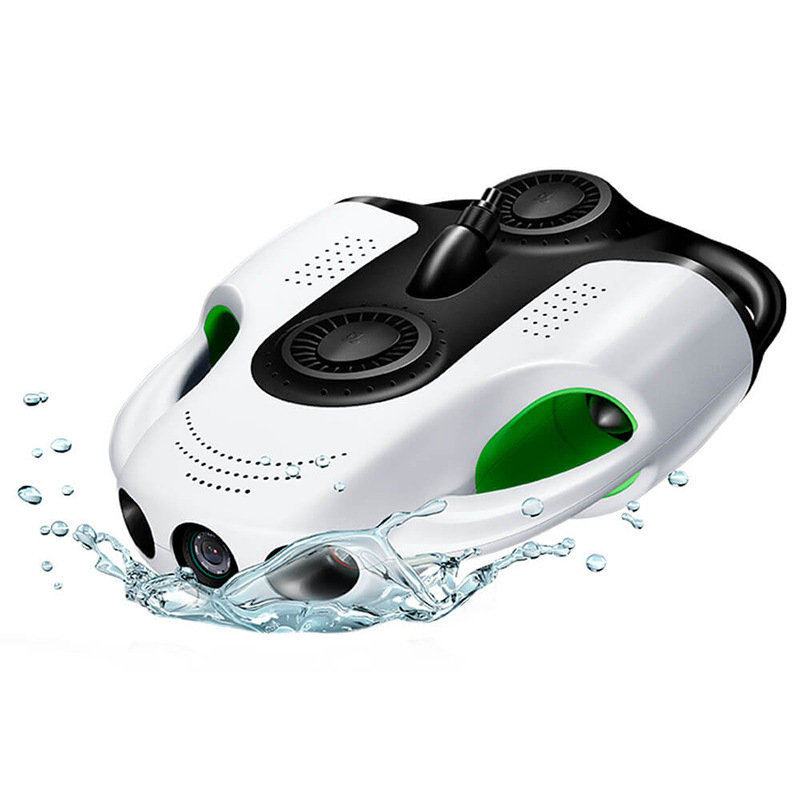
The emergence of MSOEN underwater drones introduces what many professionals describe as a “God’s-eye view” beneath the surface—a real-time, comprehensive, and controllable perspective that fundamentally changes how underwater search and inspection are performed.
This article explores how MSOEN underwater drones are transforming traditional underwater search models through advanced imaging, real-time transmission, and precise maneuverability.
Understanding the Concept of a “God’s-Eye View” Underwater
A “God’s-eye view” does not imply omniscience—it represents complete situational awareness in an environment where visibility and orientation are traditionally limited.
In underwater search operations, this means:
- Real-time visual feedback from multiple angles
- Precise depth and position awareness
- Stable hovering over points of interest
- Continuous data recording for post-analysis
MSOEN underwater drones are engineered to deliver this level of control and visibility, allowing operators to observe underwater environments as if viewing them from above—clearly, safely, and continuously.
Limitations of Traditional Underwater Search Methods
Human Divers
Human divers remain valuable but face inherent constraints:
- Limited depth and bottom time
- High physical risk
- Reduced effectiveness in low visibility
- High operational cost for repeated missions
Fatigue and safety considerations often restrict search duration and coverage area.
Surface-Based Sonar and Towed Systems
While sonar provides broad detection capabilities, it lacks:
- Fine visual detail
- Real-time confirmation
- Precise object identification
Sonar alone often requires follow-up inspections, increasing time and cost.
Static Underwater Cameras
Fixed cameras offer limited fields of view and require pre-installed infrastructure, making them unsuitable for dynamic or emergency search scenarios.
How MSOEN Underwater Drones Change the Equation
Mobile, Real-Time, Operator-Controlled Vision
MSOEN underwater drones combine:
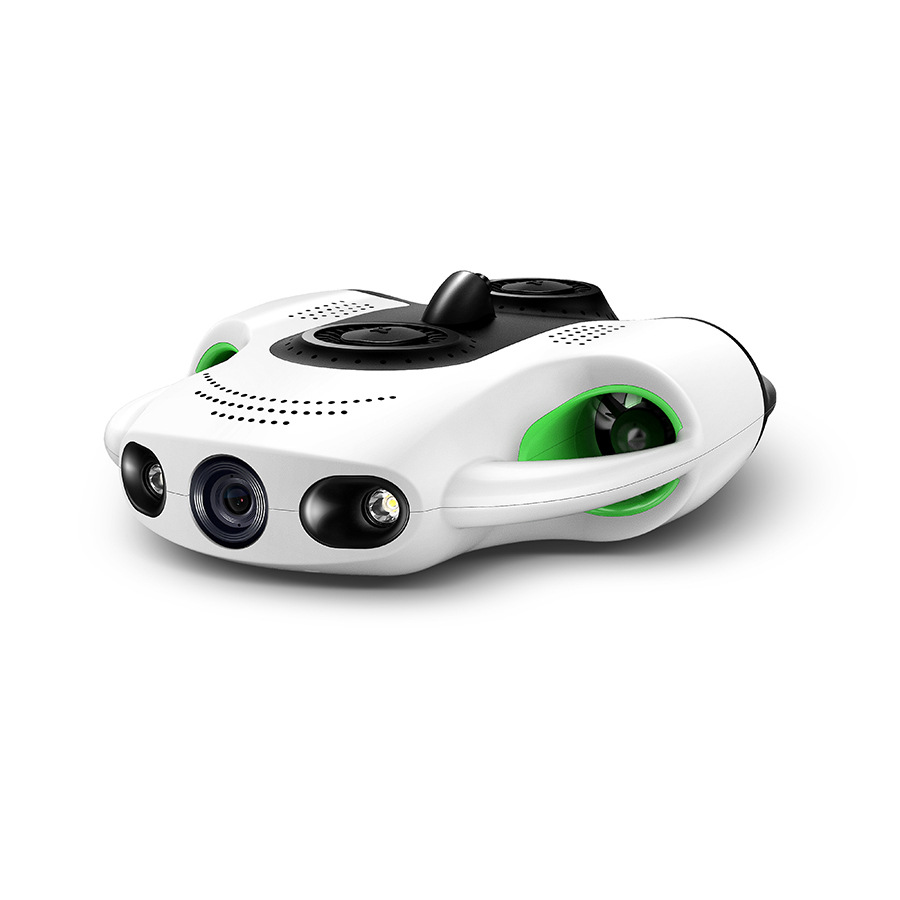
- High-resolution cameras
- Real-time low-latency transmission
- Precise motion control
This allows operators to actively explore underwater environments instead of passively waiting for data.
Engineering Philosophy: Search-First Design
MSOEN systems are designed around search efficiency, not just mobility. Every component—from thrusters to imaging sensors—is optimized to support fast, accurate underwater detection and identification.
Core Technologies Behind MSOEN’s “God’s-Eye View”
High-Resolution Optical Imaging
Visual clarity is critical for underwater search. MSOEN underwater drones integrate:
- Low-light optimized CMOS sensors
- Wide dynamic range imaging
- High signal-to-noise ratio (SNR)
These features enable clear imaging in turbid water, shadowed structures, and deep environments.
Advanced Lighting Systems
MSOEN lighting systems are engineered to complement high-resolution cameras:
- Adjustable LED arrays
- High Color Rendering Index (CRI)
- Optimized beam angles to reduce backscatter
Proper illumination geometry is essential for identifying objects, debris, or victims underwater.
Imaging Sonar Integration
In environments where visibility is near zero, MSOEN drones support imaging sonar modules. Sonar provides shape recognition and spatial awareness, while optical cameras confirm details once targets are located.
Zero-Latency Control and Feedback
Using tethered high-bandwidth transmission, MSOEN underwater drones deliver:
- Near-instant video feedback
- Synchronized control response
- Stable real-time maneuvering
This is crucial when navigating tight spaces or performing detailed search sweeps.
Precision Motion Control and Stability
Thruster Vectoring System
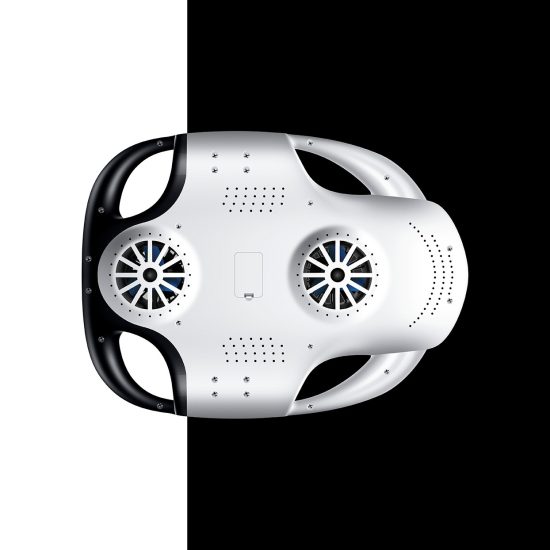
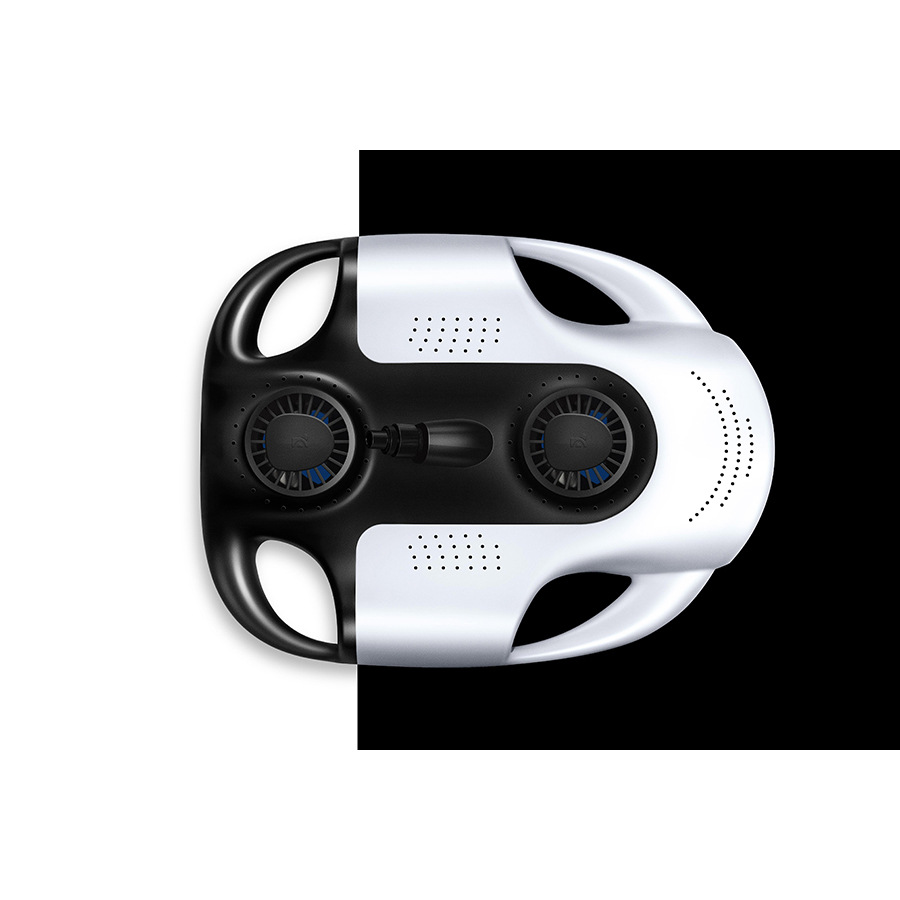
MSOEN underwater drones typically use a 6-thruster vectored configuration, enabling:
- Forward / backward motion
- Vertical ascent and descent
- Yaw and lateral adjustments
This allows precise positioning and controlled scanning patterns.
Hydrodynamic Optimization
Streamlined hull design reduces drag and turbulence, improving:
- Energy efficiency
- Stability near structures
- Accuracy during slow-speed searches
Stable hovering is essential when inspecting or documenting findings.
Technical Specification Table (Reference Configuration)
| Parameter | Specification |
|---|---|
| Maximum Depth Rating | 300 m |
| Thruster Configuration | 6 brushless vectored thrusters |
| Maximum Speed | 2.0 m/s |
| Camera Resolution | 4K UHD |
| Sensor Type | Low-light CMOS |
| Lighting Output | 8000 lumens (adjustable) |
| Sonar Support | Optional imaging sonar |
| Transmission Method | Tethered Ethernet |
| Latency | Near-zero |
| Runtime | Up to 4 hours |
| Operating Temperature | −5°C to 45°C |
| Deployment Time | ≤ 10 minutes |
Application Scenarios: Where the “God’s-Eye View” Matters Most
Search and Rescue Operations
In missing person cases or submerged vehicle searches, MSOEN underwater drones provide immediate visual confirmation without risking diver safety.
Evidence Recovery and Public Safety
Law enforcement agencies use underwater drones to locate and document submerged objects with full video records, ensuring chain-of-custody integrity.
Infrastructure and Environmental Search
From debris detection near dams to obstruction identification in water intake systems, drones provide a comprehensive overview quickly and safely.
Post-Disaster Assessment
After floods or structural incidents, MSOEN underwater drones enable rapid underwater assessment when human access is unsafe or impossible.
Performance Comparison: Traditional Search vs MSOEN Underwater Drone
| Aspect | Traditional Methods | MSOEN Underwater Drone |
|---|---|---|
| Visibility | Limited | High-resolution real-time |
| Safety | High risk | Low risk |
| Search Coverage | Slow | Fast and systematic |
| Data Recording | Limited | Continuous |
| Deployment Speed | Slow | Rapid |
| Cost Efficiency | Low | High |
This comparison illustrates why underwater drones are increasingly replacing traditional search models.
Reliability, Trust, and Operational Confidence
Engineering Validation
Each MSOEN underwater drone undergoes:
- Pressure testing
- Electrical insulation testing
- Thruster endurance testing
- Seal integrity verification
These procedures ensure dependable performance in real-world missions.
Designed for Mission-Critical Use
Corrosion-resistant materials, redundant sealing, and modular components support long-term reliability and ease of maintenance.
Future of Underwater Search with MSOEN
MSOEN continues to develop technologies such as:
- AI-assisted target recognition
- Automated search pattern navigation
- Real-time mapping and data fusion
These advancements will further enhance underwater situational awareness.
Frequently Asked Questions (FAQ)
Q1: Why is an underwater drone better than divers for search operations?
Underwater drones eliminate human risk, operate longer, and provide continuous real-time visual data.
Q2: Can MSOEN underwater drones operate in zero visibility?
Yes. With imaging sonar and high-power lighting, they remain effective in turbid or dark environments.
Q3: How quickly can a search mission begin?
Typical deployment takes less than 10 minutes from arrival on site.
Q4: Are MSOEN drones difficult to operate?
No. The control system is designed for intuitive operation with minimal training.
Q5: Is data recorded for later analysis?
Yes. Video and sensor data can be recorded for documentation and review.
Conclusion: Seeing the Underwater World from Above
The true transformation brought by MSOEN underwater drones is not just technological—it is conceptual. By providing a “God’s-eye view” beneath the surface, these systems allow operators to see more, understand faster, and act with confidence.
Traditional underwater search is reactive and constrained. MSOEN underwater drones make it proactive, precise, and safe.
In environments where visibility is limited and risks are high, seeing clearly changes everything.
{
  "@context": "https://schema.org",
  "@type": "FAQPage",
  "mainEntity": [
    {
      "@type": "Question",
      "name": "How do MSOEN underwater drones improve underwater search operations?",
      "acceptedAnswer": {
        "@type": "Answer",
        "text": "MSOEN underwater drones provide real-time high-resolution imaging, precise maneuverability, and low-latency control, enabling safer and more efficient underwater search operations compared to traditional methods."
      }
    },
    {
      "@type": "Question",
      "name": "Can MSOEN underwater drones replace human divers?",
      "acceptedAnswer": {
        "@type": "Answer",
        "text": "For most search and inspection tasks, MSOEN underwater drones can significantly reduce or fully replace the need for human divers, improving safety and efficiency."
      }
    }
  ]
}







No comments yet