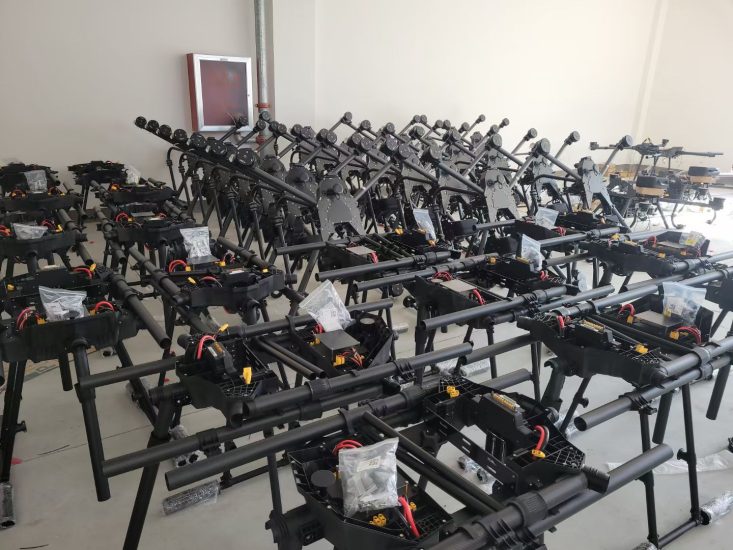


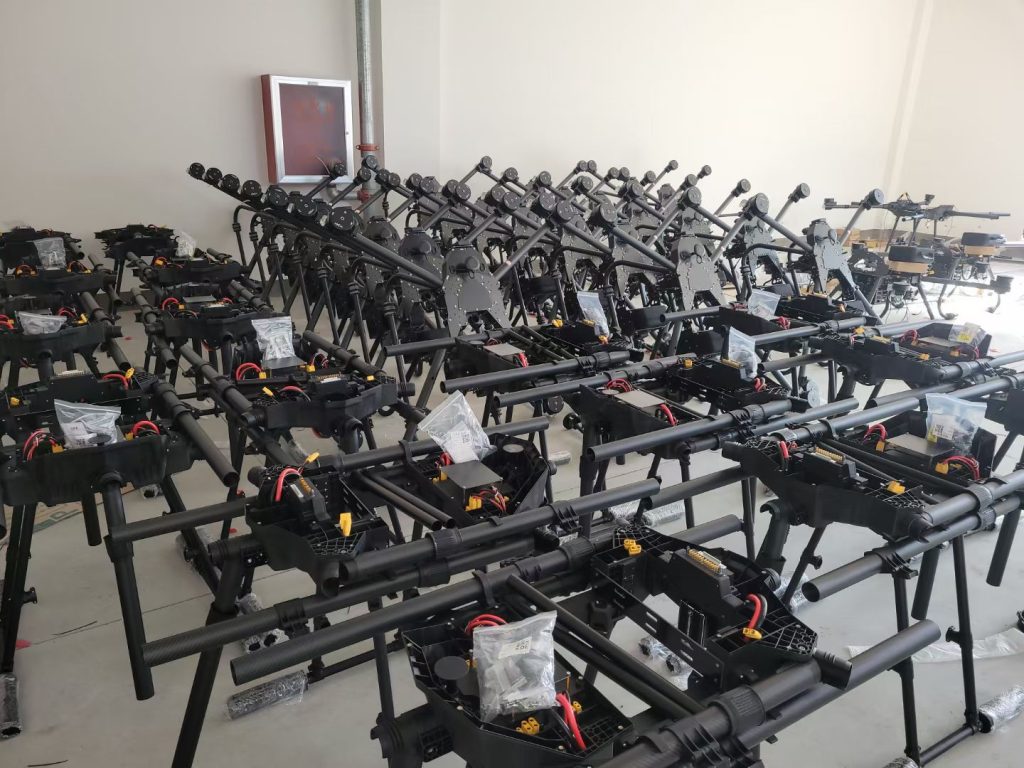
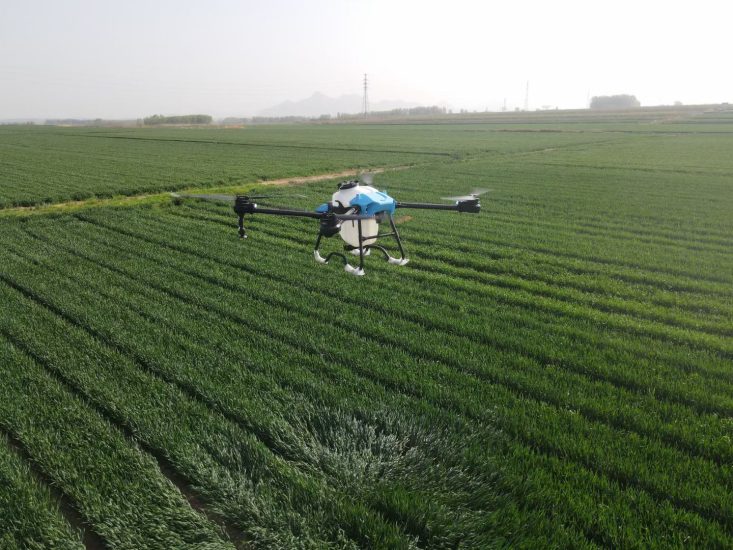
A 30L agricultural drone is designed for buyers who need a larger spraying capacity and higher operating efficiency for commercial agricultural applications.
For large farms, agricultural service providers, distributors, and international buyers, one of the first questions is:
How much does a 30L agricultural drone cost?
A general factory-level reference price can be around US$5,000–US$10,000, depending on the aircraft configuration, battery system, spraying equipment, navigation technology, controller, accessories, order quantity, and OEM requirements.
This is only a general purchasing reference. The actual quotation should always be based on a specific configuration.
For a broader overview, see How Much Does an Agricultural Drone Cost? A Complete Price Guide.
What Is a 30L Agricultural Drone?
A 30L agricultural drone generally refers to a spraying drone equipped with an approximately 30-liter tank.
The larger tank allows the drone to carry more liquid per flight compared with smaller models.
This can reduce refill frequency and potentially improve operational efficiency when working on larger agricultural areas.
However, tank capacity is only one part of the system.
Buyers should also evaluate:
- Maximum payload
- Recommended operating payload
- Flight time
- Spray width
- Flow rate
- Battery capacity
- Charging system
- Pump
- Nozzles
- Navigation system
- Remote controller
- Obstacle detection
- Spare parts
How Much Does a 30L Agricultural Drone Cost?
A general factory-level reference range is approximately:
US$5,000–US$10,000
The final price can vary significantly.
A standard configuration may cost less, while a more advanced commercial system can cost more because of:
- Larger battery systems
- Additional batteries
- Higher-performance motors
- Advanced flight control
- RTK positioning
- Radar or obstacle detection
- Higher-capacity pumps
- Intelligent charging systems
- Additional spare parts
- OEM customization
For this reason, buyers should request a detailed quotation instead of relying on a generic online price.
Why Is a 30L Agricultural Drone More Expensive?
A 30L drone needs to carry substantially more liquid than a smaller agricultural drone.
This can require a larger and stronger aircraft platform.
Manufacturers may need to use:
- Higher-power motors
- Larger propellers
- Stronger frames
- Higher-capacity batteries
- More powerful pumps
- Larger spray systems
- More robust landing structures
These components can increase both manufacturing cost and operating requirements.
1. Payload Capacity
One of the first specifications to confirm is the drone’s actual payload.
A 30L tank does not necessarily mean that the drone should always operate with a full 30L payload under every condition.
Ask the manufacturer for:
- Tank capacity
- Recommended working payload
- Maximum takeoff weight
- Empty aircraft weight
- Recommended flight speed
- Operating limitations
This information is more useful than looking only at the “30L” product name.
2. Battery Requirements
A larger aircraft generally requires a more substantial battery system.
When comparing suppliers, ask:
- What battery capacity is used?
- How many batteries are included?
- What is the charging time?
- What charger is included?
- How many batteries are recommended for continuous operation?
- What is the expected battery cycle life?
- Are replacement batteries available?
For commercial agricultural operations, battery availability can have a major effect on daily productivity.
3. Spraying System
A 30L tank can carry more liquid, but the spraying system must also be capable of delivering the required application rate.
Check:
- Flow rate
- Spray width
- Number of nozzles
- Pump type
- Droplet characteristics
- Spray control
- Application rate
The ideal spraying system depends on the crop, agricultural treatment, operating speed, and field conditions.
4. Flight Time
Flight time is another important specification.
However, buyers should ask about flight time under working conditions, not only an unloaded laboratory figure.
Ask the manufacturer:
What is the expected flight time with a working payload?
Also ask whether the stated flight time assumes:
- Empty tank
- Full tank
- Specific battery
- Specific weather conditions
- Specific flight mode
This makes supplier comparisons more meaningful.
5. Navigation and Positioning
Commercial agricultural drones may use different positioning and flight-control systems.
Depending on the model, buyers may consider:
- GNSS
- RTK
- Obstacle detection
- Terrain following
- Route planning
- Automatic return
- Flight monitoring
- Remote-control functions
If accurate route planning or repeatable field operations are important, ask the supplier exactly which navigation technologies are included.
6. Remote Controller and Software
A complete agricultural drone package should clearly specify the controller and software.
Ask whether the quotation includes:
- Remote controller
- Display
- Flight-control software
- Mapping functions
- Automatic route planning
- Agricultural operation functions
- Software updates
Different manufacturers may package these items differently.
7. Spare Parts
For a commercial 30L drone, spare-parts planning is particularly important.
Potential replacement components include:
- Propellers
- Motors
- Pumps
- Nozzles
- Pipes
- Batteries
- Sensors
- Landing components
- Electronic components
Ask for a recommended spare-parts package when requesting your initial quotation.
This can help reduce downtime after the equipment arrives.
30L vs 20L Agricultural Drone
The 30L model generally provides greater carrying capacity, but it also requires a larger aircraft system.
| Feature | 20L | 30L |
|---|---|---|
| Tank capacity | Approx. 20L | Approx. 30L |
| Purchase cost | Generally lower | Generally higher |
| Refill frequency | Higher | Lower |
| Payload requirement | Lower | Higher |
| Battery demand | Generally lower | Generally higher |
| Transport | Easier | More demanding |
| Large commercial operations | Suitable | Often more suitable |
A 30L drone is not automatically the better choice.
If your operation has limited charging facilities, difficult transportation, small fields, or frequent changes between locations, a smaller drone may be more practical.
30L vs 10L Agricultural Drone
The difference becomes more significant when comparing a 30L model with a 10L model.
A 30L drone can carry approximately three times the tank volume of a 10L configuration, but it can also require substantially more investment and infrastructure.
Before choosing a model, evaluate:
- Daily working area
- Crop type
- Refill distance
- Battery charging
- Transportation
- Number of operators
- Field conditions
- Budget
You can compare the three common capacity categories here:
10L vs 20L vs 30L Agricultural Drone: Which One Should You Choose?
Is a 30L Agricultural Drone Suitable for Large Farms?
A 30L agricultural drone can be suitable for:
- Large farms
- Agricultural service companies
- Crop spraying contractors
- Commercial farming operations
- Agricultural distributors
- Professional drone operators
However, the right model depends on the complete operating environment.
A large farm may benefit from higher tank capacity, but productivity will also depend on:
- Flight speed
- Spray width
- Flow rate
- Battery turnaround
- Charging capacity
- Water or chemical refill availability
- Operator efficiency
The best purchasing decision should therefore be based on the required daily workload rather than tank capacity alone.
What Is Included in a 30L Agricultural Drone Package?
Always ask the manufacturer for a complete list of included equipment.
The package may include:
- 30L drone
- Spray tank
- Pump
- Nozzles
- Remote controller
- Flight batteries
- Charger
- Standard spare parts
- User manual
- Packaging
However, the exact contents vary between suppliers.
A “30L agricultural drone” quotation from one supplier may include several batteries and a charger, while another quotation may include only the aircraft.
This is why complete quotation comparisons are essential.
How to Request a 30L Agricultural Drone Quote
A professional inquiry should include your intended application and purchasing requirements.
For example:
We are looking for a 30L agricultural spraying drone for commercial farming operations. Please provide the complete specifications, including maximum and recommended payload, flight time under working conditions, spray width, flow rate, battery configuration, charger, controller, navigation system, spare parts, MOQ, warranty, production lead time, OEM options, and shipping terms.
This gives the manufacturer enough information to prepare a meaningful quotation.
How Order Quantity Affects 30L Drone Pricing
Wholesale quantity can affect the commercial quotation.
You can ask for separate prices for:
- 1 unit
- 5 units
- 10 units
- 20 units
- Larger quantities
If you are a distributor, provide an estimated annual purchasing volume.
Manufacturers may also have different pricing structures for standard products and OEM projects.
For MOQ information, see:
What Is the MOQ for Agricultural Drones From China?
OEM and Private-Label 30L Agricultural Drones
A distributor or brand owner may want to sell a 30L agricultural drone under its own brand.
Potential OEM requirements can include:
- Logo
- Product color
- Packaging
- Labels
- Manuals
- Accessories
- Software
- Hardware configuration
Before beginning an OEM project, confirm:
- MOQ
- Sample requirements
- Development costs
- Production lead time
- Customization scope
- Warranty
- Spare-parts support
For more information:
OEM Agricultural Drone Manufacturer: How to Build Your Own Drone Brand
Additional Costs When Importing a 30L Agricultural Drone
The factory price is not necessarily the final landed cost.
International buyers may need to consider:
- Packaging
- Inland transportation
- International freight
- Insurance
- Customs clearance
- Import duties
- Taxes
- Destination charges
- Local delivery
Battery transportation may also require specific shipping arrangements.
Before purchasing, check the applicable import and transportation requirements for the destination market.
See:
How to Import Agricultural Drones From China to Your Country
How to Compare 30L Agricultural Drone Suppliers
Use the same requirements when requesting quotations from multiple manufacturers.
| Specification | Supplier A | Supplier B | Supplier C |
|---|---|---|---|
| Tank capacity | |||
| Recommended payload | |||
| Maximum payload | |||
| Flight time | |||
| Spray width | |||
| Flow rate | |||
| Battery | |||
| Charger | |||
| Controller | |||
| Navigation | |||
| Spare parts | |||
| Warranty | |||
| MOQ | |||
| OEM | |||
| Production lead time | |||
| Shipping |
This helps you compare the actual value of each quotation instead of choosing the supplier with the lowest headline price.
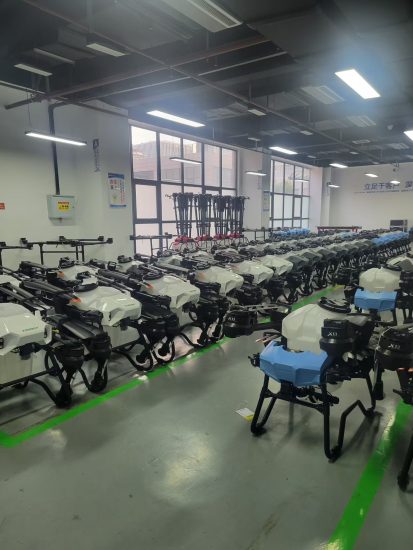
Factory or Trading Company?
International buyers may receive 30L agricultural drone quotations from both factories and trading companies.
The key factors to evaluate include:
- Product source
- Production capability
- Technical support
- Product specifications
- Spare parts
- Warranty
- OEM capability
- MOQ
- Export experience
For more information, see:
Agricultural Drone Factory vs Trading Company: What International Buyers Should Know
FAQ
How much does a 30L agricultural drone cost?
A general factory-level reference range is approximately US$5,000–US$10,000. The actual price depends on the aircraft, battery system, spraying equipment, navigation technology, accessories, order quantity, and customization.
Is a 30L agricultural drone better than a 20L model?
Not necessarily. A 30L drone can reduce refill frequency and may be more suitable for larger operations, but it generally requires greater investment, battery capacity, transportation capability, and operating infrastructure.
How many batteries does a 30L agricultural drone need?
There is no universal number. The requirement depends on battery capacity, flight time, charging speed, working schedule, and the manufacturer’s recommended operating configuration.
Does a 30L drone include the battery and charger?
This depends on the supplier. Always request a complete quotation showing the number and specifications of batteries and the charger.
Can a 30L agricultural drone be customized?
Some manufacturers provide OEM and ODM services. The available customization depends on the manufacturer, product design, MOQ, and project requirements.
What should I compare when buying a 30L agricultural drone?
Compare payload, flight time, spray width, flow rate, battery configuration, charging system, navigation, controller, spare parts, warranty, MOQ, OEM capability, lead time, and total landed cost.
Conclusion
A 30L agricultural drone can be a suitable option for buyers who need greater spraying capacity and fewer refilling operations.
A general factory-level reference price is around US$5,000–US$10,000, but the final quotation depends on the exact configuration and purchasing requirements.
Before placing an order, compare the complete operating package rather than the drone price alone.
The right 30L agricultural drone should match your required workload, crop application, battery infrastructure, transportation conditions, budget, and long-term supplier-support requirements.


No comments yet