



Introduction: When Deployment Speed Becomes the Real Bottleneck
In underwater inspection, technology is often judged by depth rating, camera resolution, or sensor payload. However, for many real-world operations, the true bottleneck lies elsewhere: deployment complexity.
Traditional underwater inspection systems frequently require:
- Multiple trained operators
- Heavy launch-and-recovery equipment
- Lengthy setup and calibration procedures
These factors significantly increase operational costs and response time—especially in time-sensitive scenarios such as emergency inspections, routine maintenance, or remote site assessments.
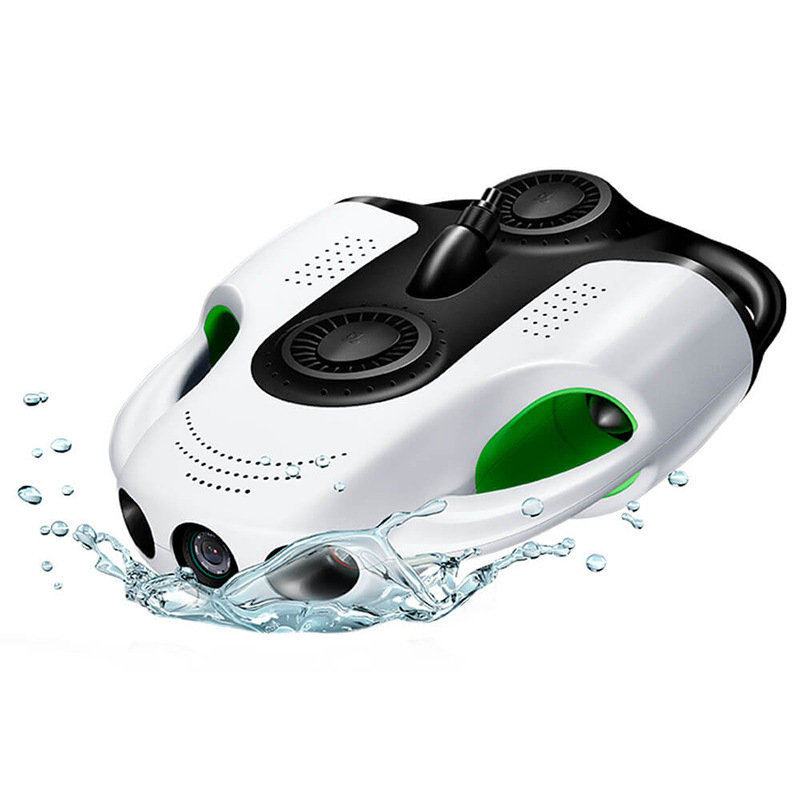
A new generation of lightweight underwater robots designed for single-operator, five-minute deployment is changing this reality. By combining compact mechanical design, simplified control architecture, and professional-grade performance, these systems make complex underwater inspections faster, safer, and more accessible.
This article provides a comprehensive, engineering-focused analysis of how lightweight underwater robots enable rapid deployment without compromising inspection accuracy or reliability.
Understanding Lightweight Underwater Robotics
What Defines a Lightweight Underwater Robot?
A lightweight underwater robot is not simply a smaller ROV. It is a system engineered around mobility, portability, and operational efficiency, while still meeting professional inspection standards.
Key defining characteristics include:
- Reduced dry weight and compact form factor
- Neutral buoyancy with minimal trim adjustment
- Integrated all-in-one control systems
- Tool-free or low-tool assembly
The result is a platform that can be deployed by a single operator from shore, dock, small vessel, or confined industrial site.
Why Single-Operator Deployment Matters in Practice
Operational Efficiency and Cost Reduction
Single-operator deployment directly translates into:
- Lower labor requirements
- Reduced training overhead
- Faster inspection turnaround
In many inspection projects, labor costs exceed equipment costs over time. A system that can be deployed and recovered by one person dramatically improves return on investment.
Faster Response in Critical Scenarios
In emergency inspections—such as suspected structural damage, pipeline leaks, or post-storm assessments—time is critical. A robot that can be operational within five minutes allows decision-makers to access visual data immediately, rather than waiting hours for full deployment logistics.
Engineering Design Behind 5-Minute Deployment
Lightweight Structural Architecture
The structural frame of a rapid-deployment underwater robot typically uses:
- High-strength polymer composites
- Marine-grade aluminum or magnesium alloys
- Modular internal mounting rails
These materials offer an optimal balance between strength, corrosion resistance, and weight reduction.
Dry weight for professional lightweight systems typically ranges between 6–12 kg, allowing manual handling without lifting equipment.
Buoyancy and Trim Optimization
Achieving neutral buoyancy is essential for easy deployment and stable operation.
Advanced designs use:
- Precision-molded buoyancy blocks
- Adjustable ballast modules
- Factory-calibrated buoyancy trim
This minimizes pre-dive adjustments and ensures predictable underwater behavior immediately after launch.
Integrated Tether and Control System
Rapid deployment is enabled by simplified tether architecture:
- Slim, neutrally buoyant tether cables
- Integrated power and data lines
- Quick-connect or fixed tether interfaces
Many systems eliminate external control boxes by integrating processing and power management directly into a compact surface controller.
Mobility and Stability in a Compact Platform
Thruster Layout and Power-to-Weight Ratio
Despite their lightweight form, these robots maintain strong maneuverability through:
- Efficient brushless DC thrusters
- Optimized thrust vector alignment
- High power-to-weight ratio
A typical configuration includes 4 to 6 thrusters, enabling precise forward, vertical, and yaw control.
Hydrodynamic Efficiency
Compact underwater robots benefit from:
- Reduced frontal area
- Smooth hull contours
- Lower hydrodynamic drag coefficient
These factors improve energy efficiency, extend runtime, and enhance controllability in mild currents.
Imaging and Sensor Capabilities
Lightweight does not mean limited. Modern compact underwater robots commonly integrate:
- Full HD or 4K low-light cameras
- High-output LED lighting arrays (4000–8000 lumens)
- Depth and temperature sensors
- Digital compass and IMU
These capabilities support professional-grade visual inspection across a wide range of environments.
Technical Specification Table (Reference Configuration)
| Parameter | Specification |
|---|---|
| Deployment Time | ≤ 5 minutes |
| Operator Requirement | Single operator |
| Dry Weight | 8.5 kg |
| Maximum Depth Rating | 150 m |
| Thruster Configuration | 4–6 brushless thrusters |
| Maximum Speed | 1.8 m/s |
| Camera Resolution | 4K UHD |
| Lighting Output | 6000 lumens |
| Tether Length | 100–200 m |
| Power System | Integrated lithium battery |
| Runtime | Up to 3 hours |
| Operating Temperature | −5°C to 40°C |
Application Scenarios for Rapid-Deployment Underwater Robots
Infrastructure and Asset Inspection
Lightweight robots are ideal for:
- Bridge pier inspections
- Dam face surveys
- Harbor wall assessments
Quick setup allows frequent inspections without disrupting operations.
Aquaculture and Fisheries
Single-operator systems enable farm managers to:
- Inspect nets and cages daily
- Monitor fish behavior
- Detect damage early
This improves biosecurity while reducing labor costs.
Emergency Response and Public Safety
In search, rescue, or hazard assessment scenarios, rapid deployment allows responders to obtain underwater visuals without delay, improving situational awareness and safety.
Industrial Maintenance and Utilities
Water intake structures, cooling channels, and confined underwater spaces benefit from compact robots that can operate where larger systems cannot.
Performance Comparison: Traditional Systems vs Lightweight Rapid-Deployment Robots
| Aspect | Traditional ROV | Lightweight Rapid-Deployment Robot |
|---|---|---|
| Operators Required | 2–4 | 1 |
| Deployment Time | 30–60 min | ≤ 5 min |
| Equipment Size | Large | Compact |
| Portability | Limited | High |
| Operational Cost | High | Low |
| Inspection Flexibility | Moderate | High |
This comparison highlights how lightweight systems significantly improve inspection agility.
Reliability, Durability, and Trust Factors
Professional lightweight underwater robots are designed with:
- Sealed pressure housings
- Corrosion-resistant connectors
- Redundant sealing systems
- Field-proven components
Extensive factory testing and standardized quality control processes ensure consistent performance over repeated deployments.
Future Trends in Lightweight Underwater Robotics
The next evolution of rapid-deployment systems will focus on:
- AI-assisted visual inspection
- Automated defect tagging
- Extended battery efficiency
- Modular payload expansion
As technology matures, lightweight platforms will increasingly replace bulky systems for routine inspections.
Frequently Asked Questions (FAQ)
Q1: Can a lightweight underwater robot perform professional inspections?
Yes. Modern lightweight robots are engineered with professional-grade cameras, lighting, and navigation systems suitable for most inspection tasks.
Q2: Is single-operator deployment realistic in field conditions?
Yes. These systems are specifically designed to be handled, launched, and recovered by one trained operator without additional equipment.
Q3: How long does it really take to deploy?
From transport case to operational status, deployment typically takes less than five minutes.
Q4: Are lightweight robots stable in currents?
They are optimized for calm to moderate currents. Thruster efficiency and hydrodynamic design provide stable control in typical inspection environments.
Q5: What maintenance is required?
Routine maintenance includes seal inspection, battery checks, tether cleaning, and firmware updates.
Conclusion: Simplicity as a Force Multiplier
Single-operator, five-minute deployment transforms underwater inspection from a logistical challenge into a routine task. By removing unnecessary complexity while preserving professional performance, lightweight underwater robots empower operators to inspect more frequently, respond faster, and operate more safely.
In an industry where time, accuracy, and reliability define success, simplicity is not a compromise—it is a competitive advantage.







No comments yet