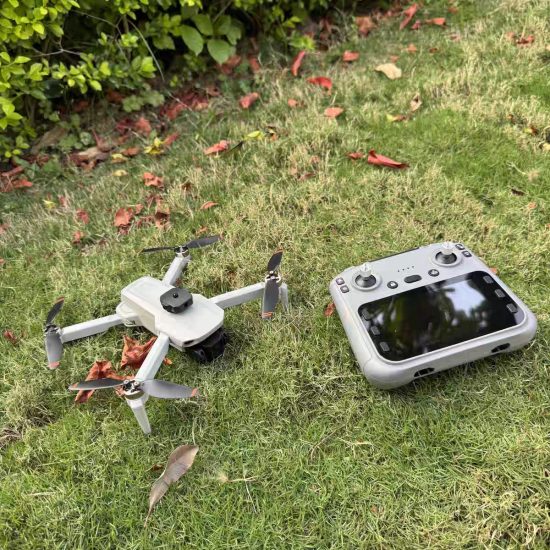




Photography has always evolved alongside technology. From film to digital sensors, from tripods to handheld stabilizers, each innovation has expanded how stories are told through images. Photography drones represent one of the most profound shifts in this evolution. Rather than simply adding height to a camera, drones introduce an entirely new visual language—one defined by motion, geometry, and spatial awareness. This article explores photography drones from an artistic and practical perspective, focusing on how they influence visual storytelling, creative thinking, and professional workflows.
1. A New Point of View in Photography
Traditional photography is limited by human height and physical access. Even with ladders or buildings, the photographer’s viewpoint remains constrained. Photography drones remove this limitation entirely.
By lifting the camera into the air, drones allow photographers to:
- Reveal hidden patterns and symmetry
- Show relationships between subjects and environments
- Capture scale in a way ground photography cannot
From above, cities become grids, coastlines turn into flowing lines, and everyday scenes transform into abstract compositions.
2. Photography Drones as Creative Tools, Not Gadgets
While drones are often marketed based on camera resolution or flight time, their true value lies in creative control. A photography drone is best understood as a moving tripod in three-dimensional space.
Key creative advantages include:
- Smooth vertical movement for reveal shots
- Controlled lateral motion for cinematic framing
- Precise hovering for long-exposure aerial photos
These capabilities encourage photographers to think spatially, composing images not just within a frame, but within an environment.
3. The Role of Motion in Aerial Storytelling
Motion is central to drone photography and videography. Even still images benefit from the photographer’s ability to reposition freely in the air.
Subtle changes in altitude or angle can:
- Alter light reflection and shadow direction
- Change background context dramatically
- Shift the emotional tone of an image
In video work, slow and deliberate drone movement often communicates calm, scale, and elegance, while faster motion conveys energy and urgency.
4. Light, Shadow, and Time from Above
Photography drones offer a unique relationship with natural light. From the air, shadows become compositional elements rather than obstacles.
Aerial photographers often plan shoots around:
- Early morning or late afternoon for long shadows
- Overcast conditions for even lighting
- Seasonal sun angles to emphasize terrain
Understanding how light behaves across landscapes is essential for impactful drone imagery.
5. Professional Use Cases Beyond Aesthetics
While photography drones are widely associated with art and media, their value extends far beyond visual beauty.
In professional contexts, drone photography supports:
- Real estate marketing with contextual visuals
- Tourism branding through immersive perspectives
- Documentation of construction and development
- Environmental observation and conservation storytelling
In these cases, clarity and accuracy are as important as artistic quality.
6. Workflow and Planning in Drone Photography
Successful drone photography relies heavily on preparation. Unlike ground photography, mistakes in planning can result in missed opportunities or unsafe conditions.
A professional workflow often includes:
- Location research and airspace checks
- Weather and wind assessment
- Shot list and flight path planning
- Battery and equipment management
This structured approach allows photographers to focus on creativity once the drone is airborne.
7. Post-Processing and Visual Consistency
Aerial images often require thoughtful post-processing to reach their full potential. Differences in altitude, atmospheric haze, and lighting can affect image quality.
Common post-processing goals include:
- Correcting color cast caused by altitude or haze
- Enhancing contrast and texture
- Maintaining consistency across image sets
- Preserving natural tones to avoid over-editing
Professional drone photographers treat post-processing as an extension of the creative process, not a correction step.
8. Ethical and Responsible Aerial Photography
With greater freedom comes greater responsibility. Photography drones raise important ethical considerations related to privacy, wildlife disturbance, and public safety.
Responsible aerial photographers:
- Respect local laws and restricted areas
- Avoid flying near people or private spaces
- Minimize noise and environmental impact
- Prioritize safety over creative ambition
Ethical operation protects both the photographer and the future of drone photography as a whole.
9. Skill Development in Aerial Photography
Flying a drone does not automatically make someone a photographer. Strong aerial imagery requires the same fundamentals as traditional photography: composition, timing, and storytelling.
Key skills to develop include:
- Visualizing scenes from above before takeoff
- Understanding spatial composition
- Controlling movement smoothly and intentionally
- Knowing when not to fly
Experience and restraint often matter more than technical specifications.
10. The Future Direction of Photography Drones
Photography drones will continue to evolve, but their future impact lies less in higher resolution and more in creative assistance.
Emerging trends include:
- AI-supported composition suggestions
- Smarter obstacle awareness for complex environments
- Improved low-light performance
- Quieter and more energy-efficient flight
As these technologies mature, drones will become more intuitive extensions of the photographer’s vision.
Conclusion
Photography drones are not simply tools for capturing images from above—they are instruments that reshape how photographers see and interpret the world. By offering freedom of movement, new compositional possibilities, and a deeper connection between subject and space, drones expand the boundaries of visual expression.
In the hands of thoughtful creators, photography drones become more than machines. They become silent observers, revealing stories that could only be told from the sky.


No comments yet