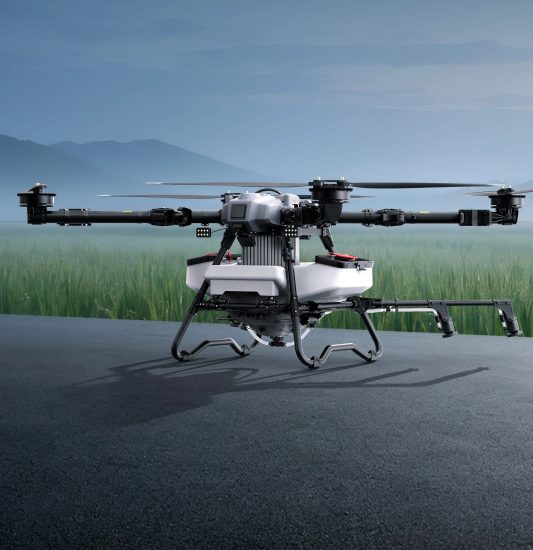


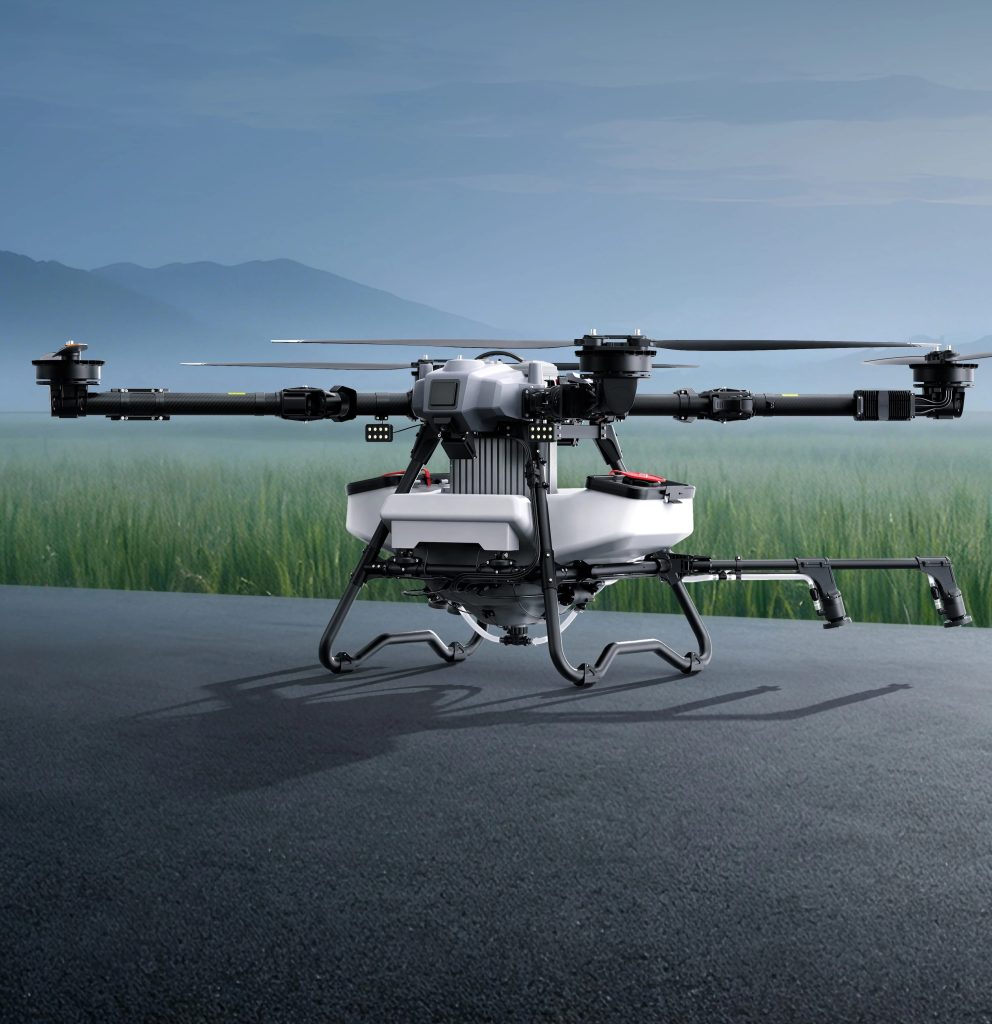
Rice farming requires timely crop protection, accurate application, and reliable equipment. In many rice-growing regions, fields are large, wet, and difficult for conventional ground machinery to enter, especially after irrigation or during periods of heavy crop growth. A rice spraying drone provides an aerial solution that can operate above the crop without driving through the field.
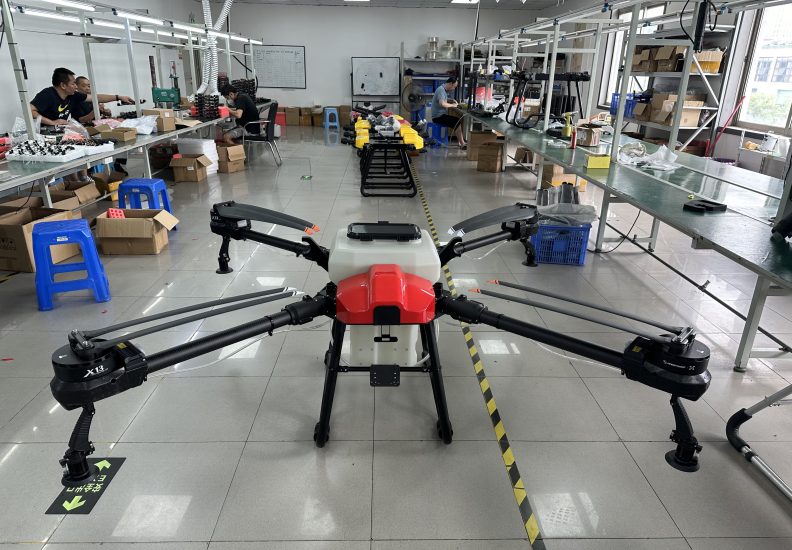
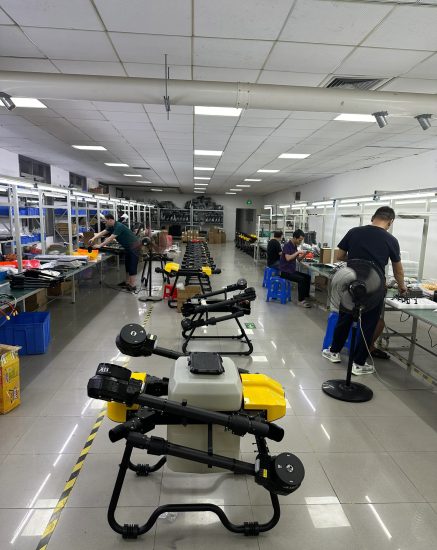
As a professional rice spraying drone manufacturer, we focus on developing agricultural UAV systems that combine a stable flight platform, precision spraying equipment, intelligent route planning, efficient liquid delivery, and practical field maintenance. The objective is not simply to build a drone that can carry a spray tank, but to provide a complete agricultural spraying system that can deliver consistent application performance under real field conditions.
What Is a Rice Spraying Drone?
A rice spraying drone is an unmanned aerial vehicle specifically configured for crop protection and liquid application in rice fields.
Unlike consumer camera drones, agricultural spraying drones are designed around several demanding requirements:
-
Higher payload capacity
-
Large-capacity chemical tanks
-
Reliable liquid pumps
-
Precision flow control
-
Agricultural spray nozzles
-
Automatic flight planning
-
Obstacle detection
-
Positioning and navigation systems
-
Long-duration battery operation
-
Easy tank and nozzle maintenance
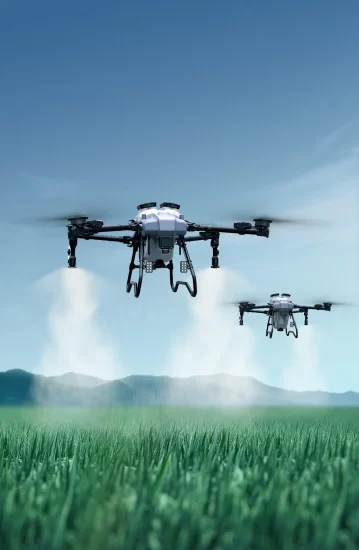
The drone flies along predefined routes while its spraying system delivers liquid through calibrated nozzles. Depending on the application, the system can be configured for different spray widths, flow rates, droplet characteristics, and operating speeds.
A good rice spraying drone therefore needs to be considered as an integrated agricultural machine rather than simply an aircraft with a tank attached.
Why Use Drones for Rice Spraying?
Rice fields present several practical challenges for traditional spraying.
Ground equipment can cause crop damage when moving between rows, while workers using backpack sprayers have to physically enter wet fields. Large rice-growing areas can also require considerable labor during short treatment windows.
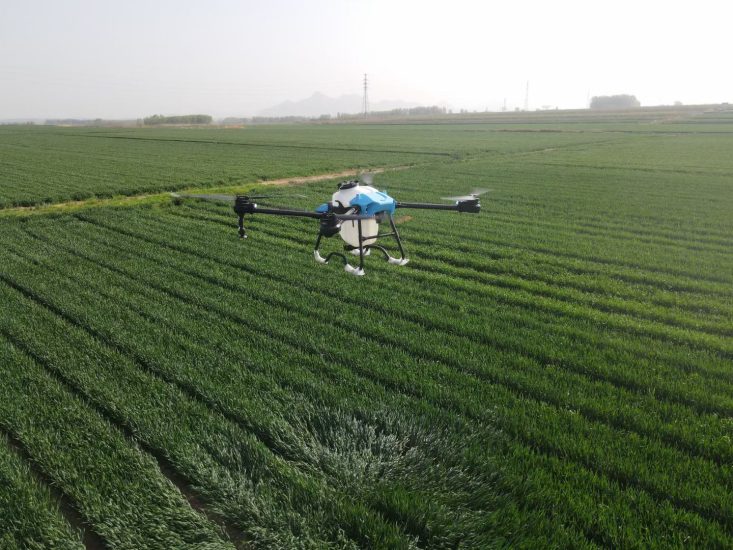
Aerial spraying avoids direct contact between wheels or workers and the crop. The operator can remain outside the treated area while the drone performs the application.
The main advantages include:
1. Reduced Crop Contact
The drone flies above the rice canopy instead of driving through the field. This can be particularly useful when rice plants are tall or when the field is wet.
2. Faster Field Coverage
A properly configured agricultural drone can cover large areas without requiring a tractor or operator to walk through the crop.
Actual productivity depends on tank capacity, spray width, flight speed, field shape, battery changes, refilling time, weather, and the required application rate. Manufacturers should therefore avoid quoting a single universal hectares-per-hour figure without defining the operating conditions.
3. Flexible Operation
Rice spraying drones can be used for different crop protection applications when the selected pesticide or agricultural product is legally approved for aerial application and the application parameters are appropriate.
The same platform can potentially support different nozzles, pumps, spray rates, and operating configurations.
4. Less Dependence on Field Accessibility
A wet rice field may be difficult for tractors and other ground equipment. An aerial platform does not require conventional ground access, making it useful when soil or water conditions restrict machinery movement.
5. Precision Route Planning
Modern agricultural drones can create automated flight routes based on the field boundary.
The operator can define the working area, route spacing, flight altitude, speed, and other parameters before starting the application. Accurate positioning is important because uneven route spacing can lead to untreated areas or excessive overlap.
Key Components of a Professional Rice Spraying Drone
The performance of a spraying drone depends on the complete system rather than one individual component.
Flight Platform
The frame and propulsion system must provide sufficient lifting capacity for the drone, battery, liquid tank, pumps, spray equipment, and remaining payload.
The platform should also maintain stable flight when the liquid level changes during spraying.
A poorly balanced system can affect flight stability and spraying consistency.
Spray Tank
Tank capacity is one of the most important specifications for commercial users.
Larger tanks can reduce the number of refilling operations, but increasing payload also affects flight endurance and energy consumption.
The correct tank size should therefore be selected according to the target field size, required spray volume, battery capacity, and available water or chemical mixing facilities.
Pumps
The pump controls the movement of liquid from the tank to the spray system.
A professional system should provide stable flow rather than simply maximizing pump output. Excessive flow can result in an incorrect application rate, while insufficient flow may reduce coverage.
A reliable pump system should also be easy to inspect and clean after operation.
Nozzles
Nozzles are critical to spray quality.
Different nozzles can generate different droplet characteristics and spray patterns. The appropriate nozzle depends on the crop, product, target pest, environmental conditions, desired application rate, and equipment configuration.
For this reason, nozzle selection should never be based solely on the largest possible spray width.
Flow Control
Electronic flow control allows the spraying system to maintain a more consistent application rate as operating conditions change.
The actual application rate is influenced by factors including:
-
Flow rate
-
Flight speed
-
Spray width
-
Tank concentration
-
Nozzle configuration
-
Route spacing
Before commercial operation, the spraying system should be calibrated according to the manufacturer’s instructions and the agricultural product label.
Flight Parameters Matter More Than Many Buyers Expect
Buying a high-capacity drone does not automatically guarantee good spraying results.
Spray quality depends on the interaction between the aircraft, rotor airflow, nozzle system, flight altitude, flight speed, weather, crop structure, and liquid formulation.
For example, flying too high can increase the distance that droplets travel before reaching the crop. Flying too low can also create problems because rotor airflow and ground or canopy effects can alter the spray pattern.
Research and industry guidance have repeatedly identified flight height, speed, nozzle selection, droplet size, spray volume, and rotor airflow as important variables in rice spraying.
Therefore, professional manufacturers should provide more than a specification sheet. Buyers need practical operating guidance and calibration procedures.
Spray Width and Flight Speed
Spray width and flight speed work together.
If the drone flies faster while maintaining the same liquid flow, the amount applied per unit area decreases. If the drone slows down without adjusting the flow rate, the application rate can increase.
A simplified relationship can be expressed as:
Application Rate ≈ Flow Rate ÷ (Flight Speed × Effective Spray Width)
This is only a simplified engineering relationship. Actual field calibration must also consider nozzle distribution, overlap, droplet characteristics, route spacing, and the specific spraying system.
This is why professional agricultural drone operation requires calibration rather than simply selecting a number on the remote controller.
Managing Spray Drift
Spray drift is one of the most important issues in aerial crop protection.
Very small droplets can be carried away by wind before reaching the target crop. At the same time, droplets that are too large may not provide the desired coverage.
The objective is to find an appropriate balance between coverage, deposition, biological effectiveness, and drift risk.
Rotor airflow adds another variable because the propellers generate a downward airflow that interacts with the droplets and rice canopy. Recent research continues to examine how rotor airflow affects droplet deposition and crop penetration in rice fields.
For commercial users, spraying should always follow local pesticide regulations, product labels, environmental requirements, and weather restrictions.
Choosing the Right Rice Spraying Drone
Buyers should evaluate more than tank capacity.
Important questions include:
Payload Capacity
Does the aircraft have sufficient payload capacity for the intended liquid load while maintaining safe flight performance?
Battery System
How long can the drone operate under the customer’s actual payload conditions?
Battery endurance should be evaluated under realistic conditions rather than under an unloaded laboratory configuration.
Charging
A commercial spraying operation may require multiple batteries and an appropriate charging system.
The charging infrastructure should match the customer’s electricity supply and daily operating schedule.
Pump Reliability
The pump should maintain stable flow and be easy to inspect.
Nozzle Availability
Replacement nozzles should be readily available, and the manufacturer should provide information about compatible nozzle specifications.
Navigation
Accurate positioning and reliable route planning are important for maintaining consistent coverage.
Obstacle Detection
Rice fields may contain trees, poles, buildings, power lines, irrigation infrastructure, and other obstacles. Obstacle detection can improve operational safety, but it should never replace responsible human supervision.
Maintenance
A spraying drone operates in an environment containing water, fertilizer, agricultural chemicals, dust, and mud. Components that contact liquid require regular cleaning and inspection.
A good agricultural drone should therefore be designed for maintenance rather than only for initial performance.
OEM and Custom Rice Spraying Drone Manufacturing
Different agricultural markets have different requirements.
Some buyers need a compact drone for small farms, while commercial agricultural contractors may require a larger payload platform for extensive field operations.
OEM customers may request:
-
Custom branding
-
Customized tank capacity
-
Different battery configurations
-
Customized spray systems
-
Different nozzle arrangements
-
Remote controller customization
-
Software localization
-
Packaging customization
-
User manuals in different languages
-
Spare parts packages
-
Technical training
A professional manufacturer should be able to discuss the complete application rather than simply offering one standard model.
Quality Control Before Delivery
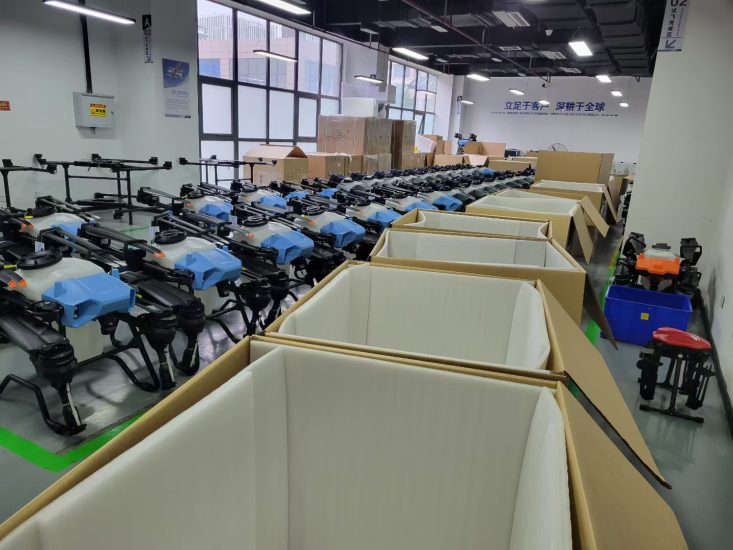
Agricultural drones should undergo systematic testing before shipment.
Important inspection points can include:
Aircraft inspection:
Frame structure, motors, propellers, landing gear, wiring, connectors, and protective components.
Spraying inspection:
Tank sealing, pump operation, flow rate, nozzle performance, pipe connections, and spray distribution.
Electrical inspection:
Battery communication, charging performance, power connections, and protection systems.
Flight inspection:
Takeoff, hovering, maneuvering, route control, return-to-home functions, and safety systems.
Packaging inspection:
Battery protection, aircraft protection, spare parts organization, and export packaging.
Testing should be documented so that distributors and end users can understand the equipment configuration they are receiving.
Maintenance of a Rice Spraying Drone
Regular maintenance has a direct effect on equipment reliability.
After spraying, the tank and liquid delivery system should be cleaned according to the product and equipment instructions. Nozzles should be inspected for blockage or damage. Filters should be checked regularly.
The motors, propellers, frame, landing gear, and electrical connectors should also be inspected.
Battery maintenance is equally important. Batteries should be charged, stored, transported, and inspected according to the manufacturer’s instructions.
A simple maintenance routine can prevent many expensive problems during the busy rice-growing season.
Safety Is Part of the Product
A spraying drone should never be treated as a toy.
Operators need appropriate training in:
-
Aircraft operation
-
Flight planning
-
Agricultural chemical handling
-
Weather assessment
-
Spray calibration
-
Emergency procedures
-
Battery safety
-
Local aviation regulations
-
Pesticide regulations
The operator must also keep people and animals away from the application area and follow the legal requirements of the country or region where the drone is being used.
The drone manufacturer provides the equipment and technical guidance, but safe agricultural application also depends on the operator, agricultural professional, chemical product label, and local regulations.
What Makes a Professional Rice Spraying Drone Manufacturer?
A reliable manufacturer should be able to answer practical questions before the purchase.
Instead of only discussing price and payload, buyers should ask about:
-
Spray system specifications
-
Pump flow range
-
Nozzle options
-
Recommended operating parameters
-
Battery configuration
-
Charging system
-
Spare parts availability
-
Warranty terms
-
Operator training
-
Technical support
-
OEM capability
-
Export packaging
-
Replacement component availability
-
Software and controller support
The best manufacturer is not necessarily the company offering the lowest initial price. For commercial agricultural users, long-term reliability, spare parts, technical support, and consistent spraying performance can have a greater effect on total operating cost.
Final Thoughts
Rice spraying drones are becoming an important tool for modern crop protection because they can operate above wet fields, reduce dependence on manual field entry, and provide programmable aerial application.
However, good results depend on much more than aircraft payload.
The complete spraying system—including the tank, pump, nozzle, flow control, flight parameters, route planning, rotor airflow, weather conditions, and operator training—must work together.
For buyers looking for a rice spraying drone manufacturer, the right approach is to evaluate the aircraft as a complete agricultural solution. A professional manufacturer should provide not only a reliable drone, but also technical documentation, calibration guidance, spare parts, training, and after-sales support.
FAQ
1. What is a rice spraying drone?
A rice spraying drone is an agricultural UAV equipped with a liquid tank, pump, piping, nozzles, flight-control system, and navigation equipment for applying approved agricultural products over rice fields.
2. Can a spraying drone work in wet rice fields?
Yes. One major advantage of aerial spraying is that the drone does not need to drive through the field. However, operation must still consider wind, rain, obstacles, crop conditions, and local regulations.
3. What tank capacity should I choose?
It depends on the farm size, required application volume, operating conditions, battery capacity, and available refilling facilities. A larger tank is not automatically better because additional payload increases energy consumption.
4. How far can a rice spraying drone fly?
The practical operating distance depends on the communication system, terrain, regulatory restrictions, battery condition, payload, weather, and safety requirements. Commercial operations should follow the manufacturer’s operating limits and local aviation regulations.
5. How many hectares can one drone spray per hour?
There is no single reliable number for every model. Productivity depends on spray width, flight speed, application rate, tank capacity, field shape, battery changes, and refilling time.
A manufacturer should provide productivity figures under clearly defined operating conditions rather than presenting an unsupported maximum number.
6. Can the same drone spray other crops?
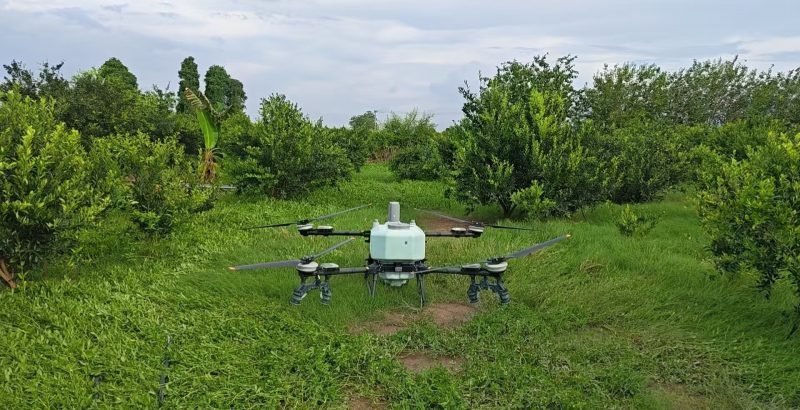
Many agricultural spraying platforms can be used for crops such as wheat, corn, cotton, vegetables, and orchards, provided the aircraft configuration and application requirements are suitable.
7. Does the drone spray pesticide automatically?
The aircraft can automatically follow a programmed flight route and control the spraying system, but the operator remains responsible for supervising the operation, selecting legal agricultural products, setting appropriate parameters, and responding to changing field conditions.
8. How often should the spray system be calibrated?
Calibration should be performed before operation and whenever important variables change, such as nozzle type, flow configuration, spray formulation, or operating parameters. Proper calibration is especially important for low-volume aerial spraying.
9. What causes uneven spraying?
Common causes include incorrect flight speed, unsuitable altitude, incorrect route spacing, blocked nozzles, inconsistent pump flow, poor calibration, wind, unsuitable droplet characteristics, and changes in crop canopy conditions.
10. What should I check before purchasing a rice spraying drone?
At minimum, check payload capacity, tank capacity, pump performance, nozzle configuration, battery endurance, charging system, navigation, safety functions, spare parts, warranty, training, technical support, and compliance with the regulations of your target market.
11. Can you provide OEM rice spraying drones?
OEM configuration can be considered depending on the required model and order quantity. Typical customization may include branding, color, packaging, tank configuration, controller language, documentation, and selected spraying components.
12. What information should I provide when requesting a quotation?
For an accurate quotation, provide your target country, expected order quantity, preferred tank capacity, crop type, intended application, battery requirements, OEM requirements, and destination port or delivery address.
This allows the manufacturer to recommend a configuration rather than simply quoting a generic drone model.
THE END


No comments yet