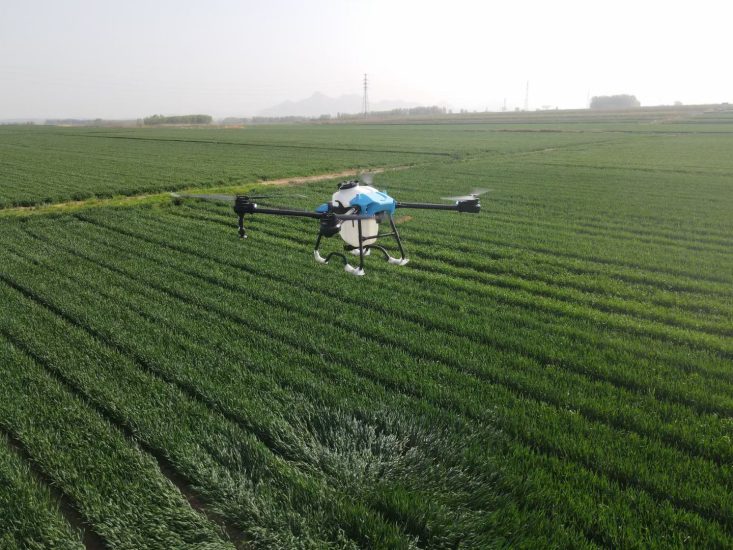


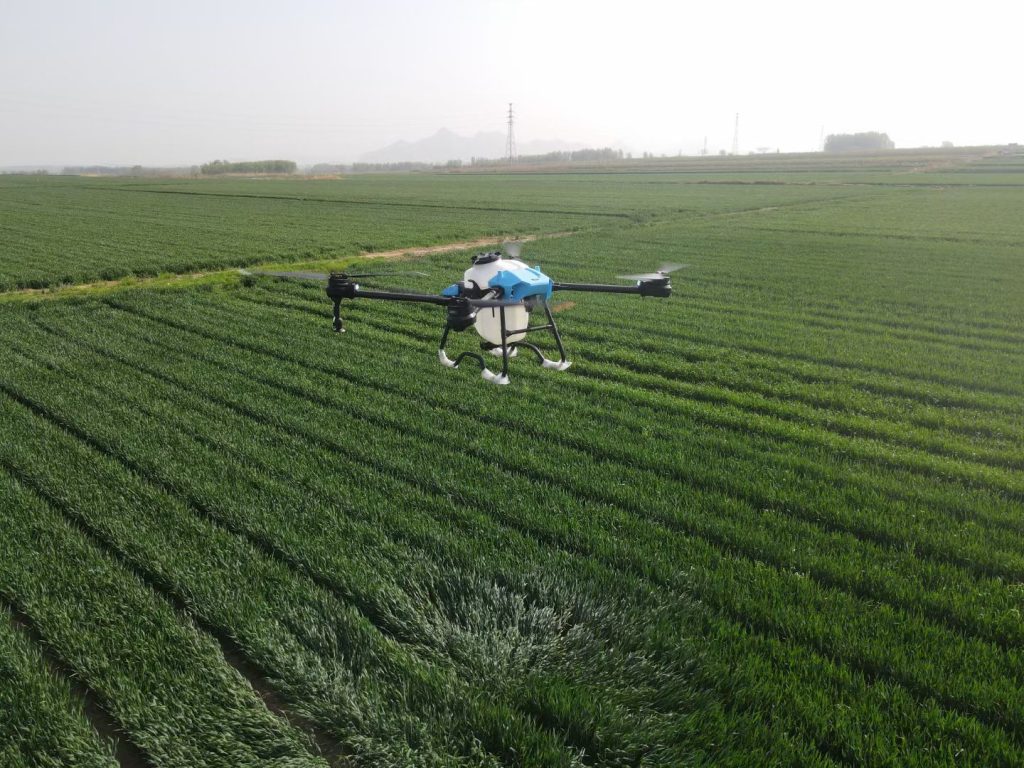
Buying an agricultural fertilizer drone is not simply a matter of choosing the aircraft with the largest hopper or the longest advertised flight time.
A fertilizer drone is part aircraft, part spreading machine, and part agricultural workflow. If any one of these components is poorly matched to the farm, the investment may not deliver the expected productivity.
A drone that works well on a rice farm may not be the best choice for a large dryland operation. Likewise, a 50 kg model is not automatically a better investment than a 30 kg model if the smaller aircraft fits the field layout and fertilizer application rate more efficiently.
For farmers, agricultural contractors, distributors, and overseas buyers sourcing equipment from China, the best approach is to evaluate the complete operating system rather than a single specification.
Start With the Farm, Not the Drone
Before contacting manufacturers, define the actual job the drone needs to perform.
At minimum, determine:
-
Total farmland area
-
Average field size
-
Crop type
-
Terrain
-
Soil conditions
-
Fertilizer type
-
Fertilizer application rate
-
Number of applications per season
-
Average distance between fields
-
Available labor
-
Electricity availability
-
Expected daily workload
These details make it much easier to determine what type of aircraft is appropriate.
For example, a farmer managing 20 hectares of fragmented rice fields has very different requirements from a contractor responsible for 2,000 hectares of commercial farmland.
The first operation may value portability and simple loading.
The second may prioritize payload, battery turnaround, spare batteries, charging infrastructure, and continuous daily productivity.
1. Choose the Payload Carefully
Payload is one of the first specifications buyers notice.
Commercial fertilizer drones are available in different payload classes, including approximately 20 kg, 30 kg, 40 kg, and 50 kg configurations, depending on the manufacturer.
A larger payload can reduce the number of refill cycles.
For example, suppose the application rate is 25 kg/ha.
A 30 kg drone theoretically carries enough fertilizer for:
30 ÷ 25 = 1.2 hectares
A 50 kg drone carries enough for:
50 ÷ 25 = 2 hectares
This means the larger drone can reduce the number of loading operations.
But there is a catch.
A larger payload generally means a larger and heavier aircraft, greater power requirements, more expensive batteries, and potentially higher transportation and maintenance costs.
Therefore:
Bigger does not automatically mean better.
The correct payload is the one that matches the farm’s workload.
2. Understand Hopper Capacity
Payload and hopper volume are related but not identical.
A hopper may have a particular volume in liters, while the fertilizer is measured by weight in kilograms.
Different fertilizers have different bulk densities.
Therefore, the same hopper volume can contain different weights of fertilizer depending on the material.
Before purchasing, ask the manufacturer:
-
What is the hopper volume?
-
What is the maximum fertilizer payload?
-
What bulk density was used for the rated payload?
-
What fertilizer types have been tested?
-
Does the hopper have an agitator or anti-bridging design?
This is especially important for fertilizers that do not flow easily.
3. Examine the Spreading System
The spreading mechanism may be more important than the drone itself.
A powerful aircraft cannot compensate for a poor fertilizer spreading system.
The spreading system determines how fertilizer leaves the hopper and how evenly it is distributed.
Important questions include:
-
What type of spreading mechanism is used?
-
Is the application rate adjustable?
-
Can the output be changed during flight?
-
What is the recommended working width?
-
How is material flow controlled?
-
Is there an agitator?
-
How easy is the system to clean?
-
Can spreading components be replaced separately?
A buyer should ask for actual field data rather than relying only on a manufacturer’s maximum spreading width.
Working Width vs. Effective Working Width
Suppose a manufacturer claims that a drone can spread fertilizer over 8 meters.
That does not automatically mean the drone should always operate with an 8-meter working width.
The important measurement is the width at which fertilizer distribution remains sufficiently uniform.
This is the effective working width.
Wind, particle size, fertilizer density, flight altitude, rotor airflow, and spreading speed can all affect the actual distribution pattern.
A professional field test is therefore much more valuable than a single number in a brochure.
4. Check Application Rate Control
Different crops and fertilizer programs require different application rates.
The drone should allow the operator to control material output appropriately.
A good system should coordinate:
Flight speed + fertilizer output + working width
If the aircraft flies faster without increasing fertilizer output, the application rate per hectare can decrease.
If the aircraft slows down without reducing output, the application rate can increase.
This means application control should be evaluated as a complete system.
Ask the manufacturer:
What is the minimum and maximum application rate, and under what conditions were these values measured?
Also ask how the system is calibrated.
5. Test the Actual Fertilizer You Will Use
This is one of the most overlooked steps when purchasing agricultural drones.
Do not assume that every granular fertilizer behaves the same way.
Different products can have different:
-
Particle sizes
-
Shapes
-
Densities
-
Moisture levels
-
Flow characteristics
A spreading system calibrated for one fertilizer may not deliver exactly the same output with another.
If possible, provide the manufacturer with a sample or detailed specifications of the fertilizer.
Ask them to test it before finalizing a large order.
This is particularly important for commercial distributors who will sell the drone to customers using different fertilizer products.
6. Consider Battery Performance Under Real Conditions
Battery specifications can be confusing.
A manufacturer may advertise a maximum flight time, but that number does not necessarily represent the flight time during fertilizer application.
Flight endurance can change with:
-
Payload
-
Wind
-
Temperature
-
Flight speed
-
Battery age
-
Takeoff and landing frequency
-
Terrain
-
Operating altitude
For a fertilizer drone, ask for at least three types of information:
Flight time without payload
Flight time at partial payload
Flight time at rated payload
The third figure is often the most useful for commercial buyers.
7. Battery Quantity Matters
Buying the drone without considering battery logistics can create unnecessary downtime.
Suppose the drone can fly for 12 minutes but the battery requires a much longer time to recharge.
If there is only one battery, the aircraft may spend more time on the ground than expected.
A commercial operation may therefore require multiple batteries.
A typical workflow could be:
Battery A — flying
Battery B — charging
Battery C — ready
The actual number depends on the aircraft, charger, operating schedule, and farm requirements.
When requesting a quotation, ask for the price of:
-
Additional batteries
-
Fast charger
-
Charging station
-
Battery transport case
-
Replacement battery after its service life
This provides a more realistic equipment budget.
8. Do Not Ignore Charging Infrastructure
Electricity availability can become a serious issue in remote agricultural areas.
Before purchasing, determine:
-
Available power supply
-
Charging voltage
-
Charging current
-
Charger power requirement
-
Charging time
-
Generator compatibility
-
Number of batteries that can be charged simultaneously
A drone that is technically capable of high productivity may not achieve it if the charging infrastructure cannot keep up.
For commercial operations, the charger is part of the productivity system.
9. Consider Field Size and Shape
Field geometry has a surprisingly large impact on drone efficiency.
A large rectangular field is relatively simple.
A small irregular field with trees, buildings, power lines, ponds, and other obstacles is much more complicated.
The drone may need:
-
More turns
-
More takeoffs and landings
-
More route adjustments
-
More battery consumption
-
More operator attention
Therefore, advertised hectares-per-hour figures should be interpreted carefully.
Ask whether the manufacturer’s productivity figure was measured on:
-
A large open field
-
A small fragmented field
-
Flat terrain
-
Sloped terrain
-
Full payload
-
Partial payload
These conditions can produce very different results.
10. Navigation and Route Planning
For regular agricultural operations, automated route planning can significantly reduce operator workload.
Useful functions may include:
-
Field boundary mapping
-
Automatic route generation
-
Return-to-home
-
Waypoint navigation
-
Route storage
-
Obstacle awareness
-
Positioning assistance
The exact functions differ between models.
The purpose of these systems is not simply convenience.
A properly planned route can help reduce:
-
Unnecessary overlap
-
Missed areas
-
Excessive turning
-
Operator workload
However, automation does not remove the need for supervision.
The operator still needs to monitor the aircraft and respond to unexpected conditions.
11. Obstacle Avoidance Is Important, But Not Magic
Agricultural fields may contain:
-
Trees
-
Utility poles
-
Buildings
-
Irrigation equipment
-
Fences
-
Greenhouses
Obstacle detection can reduce risk, but buyers should not assume that the drone can automatically avoid every object.
Small wires, branches, reflective surfaces, and other difficult-to-detect obstacles can still present hazards.
Before buying, ask:
-
What sensors are used?
-
In what directions can obstacles be detected?
-
What is the detection range?
-
Does obstacle sensing work during automatic flight?
-
What happens if positioning signals are lost?
The answers should be included in the technical documentation.
12. Wind Resistance Matters
A fertilizer drone operates close to the ground, but it is still affected by wind.
Wind can influence:
-
Flight stability
-
Battery consumption
-
Fertilizer distribution
-
Effective spreading width
-
Drift
A drone may remain airborne in relatively strong wind but still produce poor fertilizer distribution.
Therefore, maximum wind resistance and recommended operating wind conditions are not necessarily the same thing.
For fertilizer application, spreading quality matters as much as flight stability.
13. Choose the Right Drone for Terrain
Flat farmland
Flat fields generally provide the easiest operating environment.
Larger drones can be practical where access roads and loading areas are available.
Rice fields
Wet conditions make aerial application particularly attractive because the drone does not need to drive through the field.
Mountain farms
A drone can eliminate much of the physical work associated with carrying fertilizer up slopes.
However, wind and obstacles require additional attention.
Fragmented farmland
Compact drones can be convenient when operators need to move frequently between small plots.
The best model depends on the balance between payload and portability.
14. Check the Aircraft’s Protection Against Agricultural Conditions
Agricultural environments are very different from indoor or consumer drone use.
The aircraft may be exposed to:
-
Fertilizer dust
-
Moisture
-
Mud
-
Chemical residue
-
High temperatures
-
Frequent takeoffs and landings
Ask the manufacturer about the aircraft’s environmental protection rating and recommended cleaning procedures.
Do not assume that a water-resistant specification means the drone can be washed with high-pressure water.
Follow the manufacturer’s cleaning instructions.
15. Maintenance Should Be Simple
A commercial agricultural drone should be designed for field maintenance.
Important components include:
-
Motors
-
Propellers
-
Battery connectors
-
Wiring
-
Spreading motor
-
Hopper
-
Sensors
-
Landing components
Ask the supplier which parts are considered consumables.
For example:
-
Propellers
-
Spreading discs
-
Bearings
-
Seals
-
Connectors
A buyer should consider purchasing common spare parts together with the initial order.
Waiting weeks for a small replacement component during the farming season can be much more expensive than keeping basic parts in stock.
16. After-Sales Support Is Critical
Agricultural drones are not ordinary consumer electronics.
If the aircraft stops working during a critical fertilization period, the problem can affect the farm’s entire schedule.
Before purchasing, ask:
-
Is remote technical support available?
-
Are manuals provided in English?
-
Are spare parts available?
-
How long is the warranty?
-
Where are replacement parts shipped from?
-
Is operator training included?
-
Can the supplier provide troubleshooting videos?
-
Is firmware support available?
For international buyers, time-zone differences and language support should also be considered.
A low purchase price is not necessarily a good deal if technical support is poor.
17. Buy From a Manufacturer or Distributor?
Both options can make sense.
Direct manufacturer
Advantages may include:
-
More competitive factory pricing
-
Customization possibilities
-
Direct technical communication
-
OEM/ODM options
Potential disadvantages include:
-
Larger minimum order quantities
-
More responsibility for import logistics
-
Need for stronger technical evaluation
Local distributor
Advantages may include:
-
Local service
-
Easier communication
-
Faster spare parts access
-
Local training
Potential disadvantages may include:
-
Higher purchase price
-
Limited customization
-
Smaller product selection
For distributors and importers, direct sourcing from a Chinese manufacturer can be attractive, but supplier verification becomes more important.
18. How to Evaluate a Chinese Fertilizer Drone Manufacturer
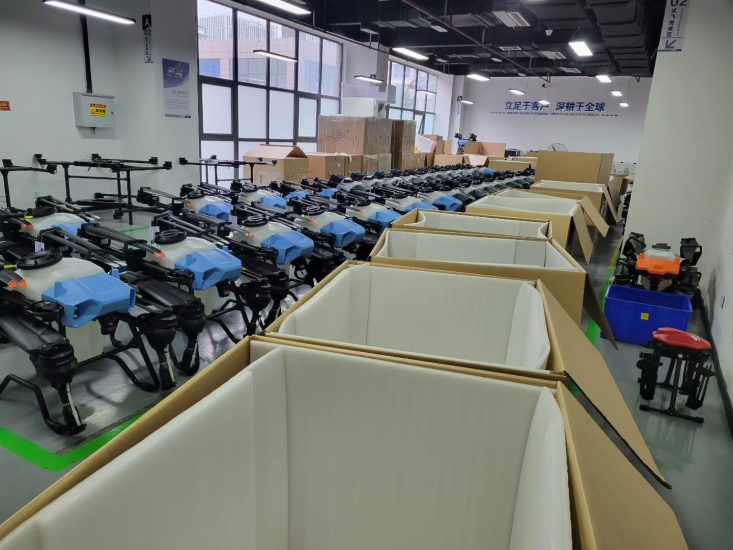
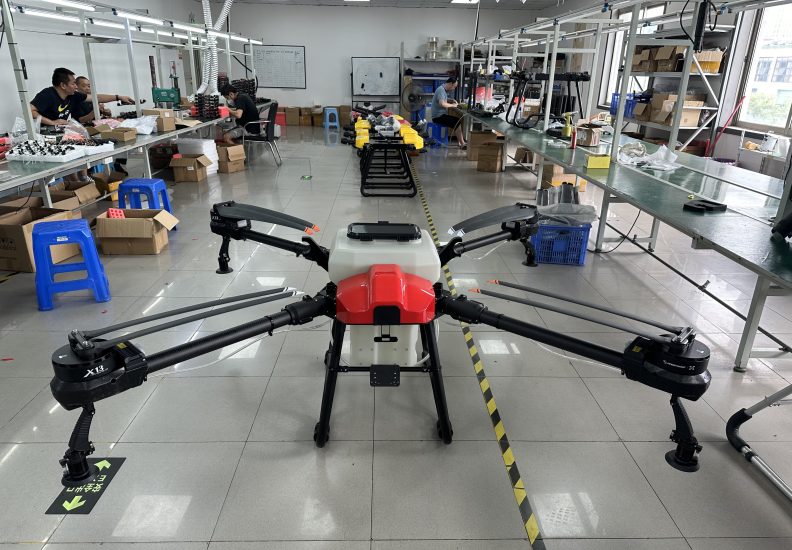
China has many agricultural drone suppliers, but product quality and technical support can vary.
Before placing an order, verify:
-
Company registration
-
Factory location
-
Production capability
-
Product documentation
-
Previous export experience
-
Quality-control procedures
-
Warranty policy
-
Spare parts availability
-
Actual field demonstrations
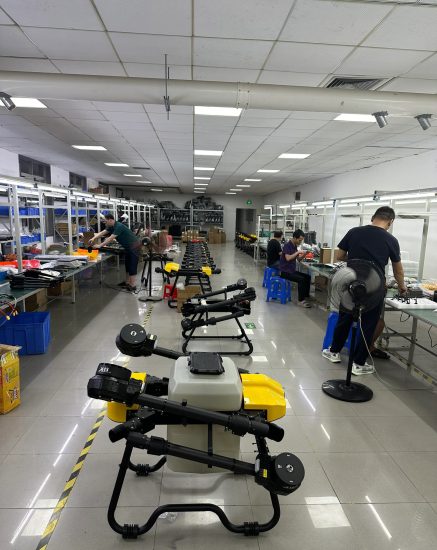
Do not judge a factory solely by its website.
Ask for recent product photographs, factory videos, technical documents, and operation videos showing the actual model.
For a larger order, a factory inspection or third-party inspection can be worthwhile.
19. Request a Complete Quotation
A professional quotation should clearly identify what is included.
Ask the supplier to separate:
Aircraft
Fertilizer spreading system
Battery
Charger
Remote controller
Navigation equipment
Spare parts
Training
Packaging
Shipping
This prevents the common problem of comparing a low headline price from one supplier with a complete package from another.
A drone priced at $X may look cheaper until you discover that batteries and chargers are sold separately.
20. Ask About OEM and Branding
For agricultural equipment distributors, OEM capability may be important.
Potential customization can include:
-
Logo
-
Product color
-
Packaging
-
User manual
-
Remote-control interface
-
Product labels
-
Spare-parts packaging
However, buyers should distinguish between simple branding and genuine technical customization.
A supplier that can print a logo is not necessarily an OEM manufacturer.
If technical customization is required, ask what components can actually be modified.
21. Consider Export and Import Requirements
Agricultural drones are aircraft and electronic equipment, so international buyers should verify the destination country’s requirements before ordering.
Depending on the country, requirements may involve:
-
Drone registration
-
Operator licensing
-
Radio-frequency compliance
-
Import documentation
-
Battery transportation rules
-
Agricultural application regulations
-
Insurance
-
Flight restrictions
The manufacturer can provide technical documents, but the buyer should confirm local operating requirements before importing.
22. How to Compare Three Suppliers
Suppose you receive quotations from three factories.
Do not compare only the price.
Create a table such as:
Item |
Supplier A |
Supplier B |
Supplier C |
|---|---|---|---|
Payload |
30 kg |
40 kg |
50 kg |
Hopper |
Check |
Check |
Check |
Loaded flight time |
Check |
Check |
Check |
Batteries included |
Check |
Check |
Check |
Charger |
Check |
Check |
Check |
Practical spreading width |
Check |
Check |
Check |
Application control |
Check |
Check |
Check |
Warranty |
Check |
Check |
Check |
Spare parts |
Check |
Check |
Check |
Training |
Check |
Check |
Check |
Technical support |
Check |
Check |
Check |
Price |
Check |
Check |
Check |
This makes it easier to identify the real value of each quotation.
23. Do a Field Test Before a Large Purchase
For commercial buyers, field testing is one of the best ways to reduce risk.
Test the drone with the fertilizer that will actually be used.
Record:
-
Loading time
-
Flight time
-
Battery consumption
-
Fertilizer output
-
Spreading width
-
Application rate
-
Distribution uniformity
-
Refill time
-
Battery replacement time
Do not rely entirely on promotional videos.
A five-minute field test can reveal problems that are impossible to see in a product brochure.
24. Calculate Cost Per Hectare
The purchase price is only the beginning.
A better calculation is:
Total annual cost ÷ hectares treated = approximate equipment cost per hectare
Annual cost may include:
-
Equipment depreciation
-
Battery depreciation
-
Electricity
-
Labor
-
Maintenance
-
Spare parts
-
Transportation
-
Insurance where applicable
If the drone is used only a few days per year, the economic case may be weaker.
If it is used continuously throughout the agricultural season, the equipment may generate much more value.
25. Calculate Your Daily Requirement
Suppose you need to fertilize 200 hectares in five working days.
That means:
200 ÷ 5 = 40 hectares per day
Now determine how much fertilizer is needed.
At 25 kg/ha:
40 × 25 = 1,000 kg per day
The drone system must therefore handle approximately 1,000 kg of fertilizer each day.
Now consider:
-
Payload
-
Number of loads
-
Battery cycles
-
Charging capacity
-
Loading time
-
Field transportation
This calculation gives you a realistic basis for selecting the aircraft.
26. Don’t Confuse Theoretical Capacity With Commercial Productivity
A drone may technically be capable of covering a large area under ideal conditions.
Real farms are different.
The aircraft has to:
-
Take off
-
Fly
-
Spread fertilizer
-
Return
-
Land
-
Replace battery
-
Refill fertilizer
-
Take off again
There may also be:
-
Wind
-
Uneven fields
-
Obstacles
-
Transportation
-
Battery charging
-
Operator breaks
Therefore, actual daily productivity is always more useful than a theoretical maximum.
When comparing suppliers, ask for:
Actual hectares per hour
under defined conditions.
27. The Right Drone Is Different for Every Buyer
There is no single agricultural fertilizer drone that is best for everyone.
A small farmer may prioritize:
-
Low purchase cost
-
Simple operation
-
Easy transportation
An agricultural contractor may prioritize:
-
High payload
-
Fast battery turnaround
-
Reliable spare parts
-
Continuous operation
A distributor may prioritize:
-
Stable factory supply
-
OEM support
-
Competitive pricing
-
Technical documentation
-
Warranty
-
After-sales support
Understanding the intended use is therefore the first step in choosing the right product.
Final Recommendation
Choosing an agricultural fertilizer drone should be treated as an equipment investment, not an impulse purchase based on payload or price.
Start by calculating the farm’s fertilizer requirements.
Then evaluate:
Payload → hopper → spreading system → application rate → battery → charging → navigation → field conditions → maintenance → support
Only after these factors have been evaluated should price become the deciding factor.
For overseas buyers sourcing from China, supplier verification is equally important. Request complete specifications, test the actual fertilizer where possible, confirm loaded flight performance, and make sure batteries, chargers, spare parts, manuals, and warranty terms are clearly included in the quotation.
The best fertilizer drone is not necessarily the largest or cheapest model.
It is the system that can reliably deliver the required fertilizer rate, cover the required acreage, minimize downtime, and remain practical to operate throughout the agricultural season.
FAQ
What size fertilizer drone should I buy?
The correct size depends on farmland area, fertilizer application rate, field layout, labor availability, and daily workload. Common commercial payload classes include approximately 20 kg, 30 kg, 40 kg, and 50 kg.
Is a 50 kg fertilizer drone always better?
No. A larger payload can reduce refill cycles, but the aircraft may require more expensive batteries, chargers, transportation, and maintenance. The right size depends on the operation.
What is more important, payload or spreading width?
Both are important. Payload determines how much fertilizer can be carried, while spreading width affects how efficiently the material can be distributed. Neither specification should be evaluated alone.
Can fertilizer drones spread different types of granular fertilizer?
Many can, but fertilizer characteristics differ. Particle size, density, moisture, and flowability can affect performance. The actual fertilizer should be tested or confirmed with the manufacturer.
How long does a fertilizer drone battery last?
There is no single answer. Payload, battery capacity, weather, speed, terrain, and operating conditions all affect flight time. Ask the manufacturer for loaded flight-time data.
How many batteries do I need?
The number depends on flight time, charging speed, daily workload, and whether continuous operation is required. Commercial operations generally need more than one battery.
How important is the fertilizer spreading system?
Extremely important. A high-capacity aircraft is not useful if the spreading system cannot deliver fertilizer consistently at the required rate.
Should I buy directly from a Chinese manufacturer?
Direct factory sourcing can provide competitive pricing and customization options, but buyers should verify the factory, technical specifications, warranty, spare parts, and export experience before placing a significant order.
What should I test before purchasing?
Test the actual fertilizer whenever possible. Measure application rate, spreading uniformity, working width, flight time, battery consumption, loading time, refill time, and overall operator workload.
What is the most important question to ask a supplier?
Ask for practical productivity under realistic operating conditions, rather than only asking for maximum payload or maximum flight time.
For example:
“How many hectares per hour can this model practically fertilize when carrying the rated payload and applying my specified fertilizer at my target application rate?”
That answer will tell you much more about the drone’s real commercial value than a headline specification.
THE END


No comments yet