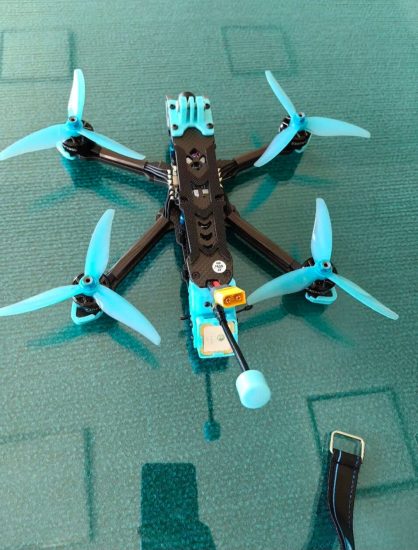


![Image [1]-Real-Time Drone Video Transmission-msoen](https://www.msoen.com/wp-content/uploads/2026/03/20260315020015725-Screenshot_20260314_192152_JDCOM-778x1024.jpg)
![Image [2]-Real-Time Drone Video Transmission-msoen](https://www.msoen.com/wp-content/uploads/2026/03/20260313111526655-1688_image_share_d09362d916e8050b97769b098f22801f.jpg)

![Image [4]-Real-Time Drone Video Transmission-msoen](https://www.msoen.com/wp-content/uploads/2026/03/20260312061519935-1000021247-768x1024.jpg)
![Image [5]-Real-Time Drone Video Transmission-msoen](https://www.msoen.com/wp-content/uploads/2026/03/20260313111522166-1688_image_share_c9b2514d2a9d7d17200461d88cea0a8f.jpg)
![Image [6]-Real-Time Drone Video Transmission-msoen](https://www.msoen.com/wp-content/uploads/2026/03/20260312061518363-1000021249-576x1024.jpg)
📦 Quick Overview
Real-time drone video transmission allows operators to view live aerial footage instantly during flight. It is essential for agriculture, surveillance, inspection, and mapping—helping users make fast, accurate decisions with zero delay.
What Is Real-Time Drone Video Transmission?
Real-time drone video transmission refers to the continuous streaming of live video from a drone camera to a ground controller or remote device.
This system typically includes:
- 🎥 Onboard camera
- 📡 Video transmitter module
- 📺 Ground receiver or control screen
- 🔗 Data link system
The goal is simple: see exactly what the drone sees in real time.
Why Real-Time Video Transmission Is Critical
🚀 1. Instant Visual Feedback
Operators can:
- Adjust flight paths immediately
- Identify targets or issues
- Improve mission accuracy
⚡ 2. Increased Operational Efficiency
Live video reduces:
- Repeated flights
- Manual inspections
- Time-consuming data downloads
🛡️ 3. Enhanced Safety
With real-time visuals, you can:
- Avoid obstacles
- Monitor surroundings
- Respond quickly to unexpected situations
Core Technologies Behind Real-Time Video Transmission
📶 1. Digital HD Transmission
Modern drones use digital systems for:
- High-definition (HD / 4K) video
- Stable signal quality
- Strong anti-interference performance
🌐 2. 4G / 5G Live Streaming
Using cellular networks enables:
- Ultra-long-distance transmission
- Remote control beyond line of sight
- Cloud-based live monitoring
📡 3. Dual-Frequency Communication
Supports switching between:
- 2.4GHz
- 5.8GHz
This improves stability in complex environments.
🛰️ 4. Hybrid Transmission Systems
Combining RF + cellular networks ensures:
- Backup communication
- More reliable long-range operations
Key Features of a High-Quality Video Transmission System
When selecting a drone, focus on these factors:
✔ Low Latency
- Critical for real-time control
- Ideal latency: under 200ms
✔ Long Transmission Range
- Short-range: 1–5 km
- Industrial range: 10–30 km+
✔ High Resolution
- 1080p / 2K / 4K video
- Clear image for detailed inspections
✔ Signal Stability
- Anti-interference technology
- Strong performance in urban or rural areas
✔ Encryption & Security
- Protects sensitive video data
- Prevents signal interception
Common Challenges and Solutions
⚠️ Signal Interference
Problem: Buildings, towers, or other signals disrupt transmission
Solution: Use dual-frequency or adaptive channel switching
🌧️ Weather Impact
Problem: Rain and fog reduce signal quality
Solution: Choose high-power transmission modules
🔋 Power Consumption
Problem: Video transmission drains battery
Solution: Optimize system efficiency and battery capacity
Application Scenarios
🌾 Agriculture
- Monitor crop conditions in real time
- Guide precise spraying operations
- Detect pests and irrigation issues
🏗️ Industrial Inspection
- Inspect power lines and towers
- Monitor construction sites
- Check pipelines and infrastructure
🚓 Security & Surveillance
- Live aerial monitoring
- Emergency response support
- Crowd and traffic observation
🗺️ Surveying & Mapping
- Real-time field visualization
- Faster decision-making during mapping missions
Future Trends in Real-Time Drone Video Transmission
- 🚀 Ultra-low latency with 5G networks
- ☁️ Cloud-based live streaming platforms
- 🤖 AI-powered real-time image recognition
- 📡 Longer range with stronger signal penetration
These innovations will make drones smarter and more autonomous.
Why Choose a Professional Real-Time Video Drone System?
A professional solution provides:
- Stable long-distance HD video transmission
- Ultra-low latency performance
- Strong anti-interference capability
- Secure encrypted communication
- Customizable modules for different industries
This ensures reliable performance in demanding environments.
📩 Get Your Custom Drone Solution
Looking for a drone with advanced real-time video transmission?
We offer:
- Agricultural drones with live monitoring
- Industrial inspection drone systems
- Long-range HD video transmission solutions
- OEM/ODM customization services
👉 Contact us now to receive a tailored quote and improve your operational efficiency.
FAQ
1. What is the typical latency of real-time drone video?
Most professional systems offer 100–200ms latency, enabling smooth real-time control.
2. How far can real-time video transmission reach?
Depending on the system, it can range from a few kilometers to over 30 km.
3. Does video quality affect transmission distance?
Yes. Higher resolution requires more bandwidth, which can reduce transmission range.
4. Can drones stream video over the internet?
Yes. With 4G/5G modules, drones can stream live video to remote devices worldwide.
5. Is real-time video transmission secure?
Professional systems use encrypted communication to ensure data security.
Upgrade your drone operations with powerful real-time video transmission technology and unlock smarter, faster, and safer aerial performance. 🚀


No comments yet