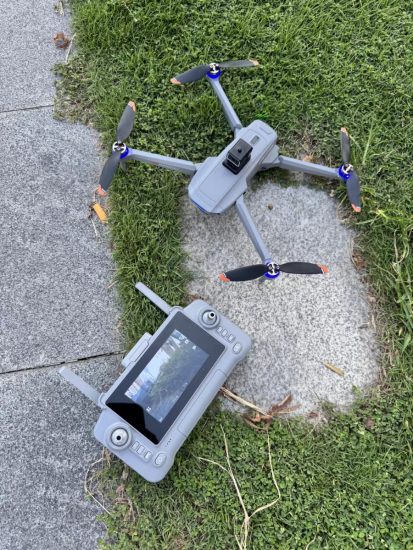




(A personal diary and technical evaluation based on real-world use of MSOEN photography drones)
Introduction — When Photography Depends on the Air
Professional photography changes the moment the camera leaves the ground.
Unlike handheld or tripod-based shooting, aerial photography introduces variables that photographers cannot physically control: wind, altitude, signal interference, vibration, and timing. In this environment, image quality is no longer determined only by the camera — it is determined by drone technology as a system.
This article is not written as a product launch or a short-term review.
It is based on long-term personal use of MSOEN photography drones, documented through daily operation, technical observation, and repeated evaluation in real working conditions.
The goal is simple:
to explain how photography drone technology earns trust when professional imaging is at stake.
Day 1 — First Contact With a Photography Drone System
My first interaction with the MSOEN photography drone did not begin with flight.
It began with setup.
Before any aerial imaging task, I look for early indicators of engineering discipline:
- Clear system initialization
- Logical calibration order
- Consistent sensor detection
- Predictable firmware behavior
From the first power-on, the system behaved exactly as documented. No unnecessary prompts. No vague warnings. Everything pointed toward a design philosophy focused on operational clarity rather than visual excitement.
For professional imaging, this matters.
Confidence begins before the drone ever takes off.
Day 6 — Stability Is the Foundation of Image Quality
In photography drones, stability is not a feature — it is the foundation.
During the first week of flights, I deliberately avoided complex maneuvers. I focused on:
- Static hovering
- Slow lateral movement
- Controlled ascent and descent
What I noticed immediately was how calm the aircraft felt in the air.
Minor wind corrections were smooth and continuous, not sudden. The drone never felt like it was “fighting” the environment. This directly translated into cleaner raw footage and reduced reliance on digital stabilization.
In professional aerial imaging, every correction leaves a signature in the image.
MSOEN’s flight behavior minimized those signatures.
Day 14 — Photography Drone Technology Is About Decision Timing
After two weeks, I stopped paying attention to visible performance and started observing decision timing.
A photography drone is constantly making decisions:
- How much correction is enough
- When to prioritize smoothness over speed
- How to balance responsiveness and inertia
MSOEN consistently favored measured responses.
Instead of aggressive corrections, the system applied gradual adjustments that preserved framing and composition. This approach benefits photographers who care more about continuity and framing accuracy than rapid movement.
This behavior reflects mature flight-control logic, not experimental tuning.
Day 27 — Signal Stability and Image Confidence
Aerial photography is impossible without reliable communication.
In environments with moderate interference, I evaluated MSOEN not by maximum range, but by signal behavior under stress.
What stood out was the system’s ability to communicate its limits:
- Early signal quality indicators
- Gradual image quality adjustment
- Clear feedback before critical thresholds
Rather than sudden image loss, the system gave the operator time to react. This is a critical aspect of professional photography drone technology: predictability under imperfect conditions.
Day 41 — Power Management and Its Impact on Photography
Many photography drones advertise long flight times.
Few behave well at the end of a flight.
I evaluated MSOEN based on:
- Throttle response below mid-charge
- Hover stability during voltage drop
- Return behavior near low-battery thresholds
The results were consistent. Even as battery levels decreased, image stability remained intact. There was no sudden degradation in control authority or stabilization quality.
This indicates strong integration between the power system and flight-control algorithms — a key requirement for professional imaging reliability.
Day 58 — Vibration Control: The Invisible Technology
Vibration is often underestimated in photography drone design.
Over time, poor vibration control leads to:
- Micro-jitter in footage
- Sensor drift
- Increased calibration frequency
After extended use, MSOEN showed none of these symptoms.
IMU data remained clean, and image output required minimal correction. This suggests that structural design, motor isolation, and component placement were treated as core engineering priorities.
Good aerial images start with mechanical stability.
A Practical Comparison: Specification vs. Usability
Rather than comparing marketing numbers, I compare practical outcomes.
| Aspect | Typical Focus | MSOEN Photography Drone Approach |
|---|---|---|
| Stability | Short-term hover | Long-term consistency |
| Control | Aggressive response | Smooth proportional input |
| Signal | Maximum distance | Predictable degradation |
| Power | Advertised flight time | End-of-flight stability |
| Image Quality | Post-processing | Mechanical + control stability |
This philosophy favors repeatable professional results, not impressive demonstrations.
Technical Specification Overview (Reference)
| Parameter | Description |
|---|---|
| Drone Type | Professional photography drone |
| Flight Control | Multi-sensor fusion system |
| Stabilization | Advanced real-time stabilization |
| Positioning | Satellite + inertial coordination |
| Communication | Digital long-range transmission |
| Power System | Intelligent battery management |
| Frame Structure | Lightweight reinforced composite |
| Design Priority | Image stability and control |
(Exact specifications may vary by configuration)
Frequently Asked Questions (FAQ)
Q1: Is MSOEN designed specifically for photography?
Yes. The flight behavior, stabilization logic, and vibration control clearly prioritize image quality over speed or aggressive maneuvering.
Q2: Can it handle professional shooting schedules?
Based on long-term consistency, stable power behavior, and predictable maintenance, it is suitable for repeated professional use.
Q3: Does it rely heavily on digital stabilization?
No. Image quality benefits primarily from mechanical and flight-control stability, reducing the need for heavy post-processing.
Q4: How does it behave in non-ideal conditions?
It communicates limitations early and reacts gradually, giving photographers time to adjust framing or conclude shots safely.
Q5: What defines its photography drone technology most clearly?
Balance — between control, stability, power management, and operator feedback.
Closing Reflection — Trust Is Part of Image Quality
In professional aerial photography, trust directly affects results.
When the drone behaves predictably, the photographer focuses on composition.
When the system is stable, creativity increases.
When technology fades into the background, image quality improves.
Through long-term use, MSOEN photography drone technology proved that trust is not a feature — it is an outcome of consistent engineering decisions.
And in professional aerial imaging, that outcome matters more than anything else.


No comments yet