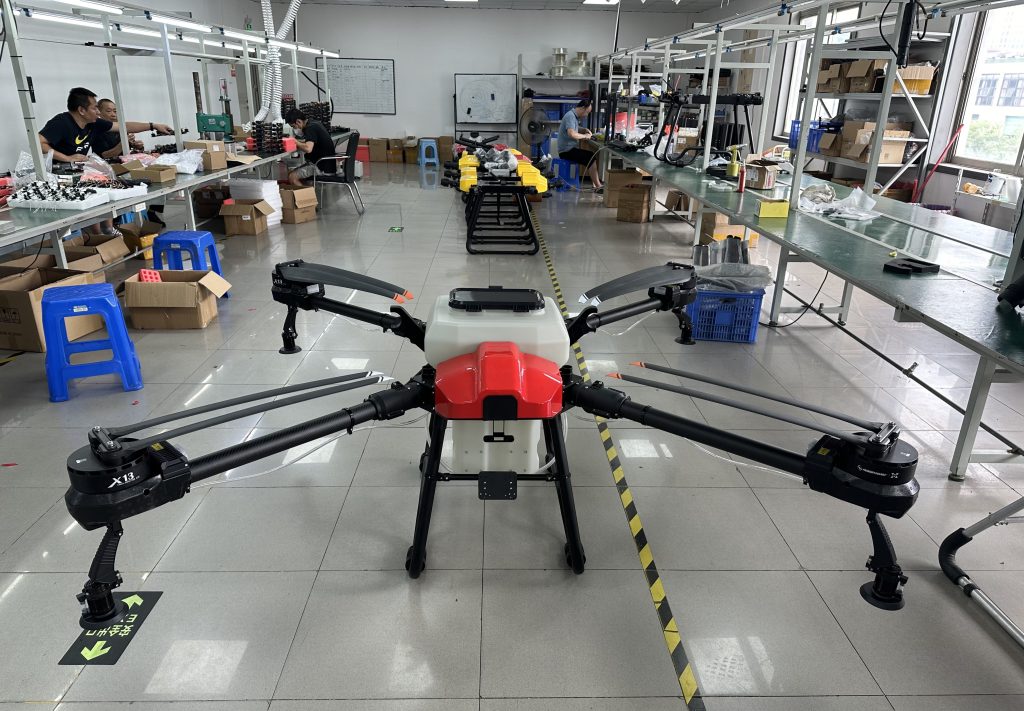
New Zealand farmers eyeing the productivity gains of agricultural spraying drones are confronted with a regulatory reality that catches many off guard: under the Civil Aviation Rules, aerial spraying, topdressing, and vertebrate toxic agent (VTA) application are explicitly prohibited under Part 101. The 2025–2026 aviation rule reforms have removed any lingering ambiguity—these activities now sit firmly within the Part 102 framework, regardless of the aircraft’s weight.
The CAA’s own guidance is unequivocal: “even if your drone weighs less than 25 kg fully loaded, you will still need a Part 102 Unmanned Aircraft Operator Certificate to perform this activity”. And if you import an agricultural or spray drone from overseas, the CAA will require that it is inspected before it is flown.
This article distils the compliance landscape into five actionable checklist items that every New Zealand farm owner must satisfy before committing capital to a Chinese-manufactured spraying drone. Tick every box, and your operation will be legal, insurable, and defensible. Miss even one, and you expose yourself to enforcement action, voided insurance, and potentially unlimited civil liability for chemical drift.
⚠️ The cardinal truth: Buying the drone is the easy 10%. The other 90% is satisfying a layered regulatory architecture spanning the CAA, MPI, Customs, Radio Spectrum Management, and your regional council. This checklist is your roadmap through that 90%.
Checklist Item 1: Confirm Part 102 Certification Is Your Only Lawful Pathway
1.1 Why Part 101 Is Off the Table
Part 101 governs low-risk drone operations: recreational flying, basic commercial photography, survey work within visual line of sight, and aircraft up to 25 kg. It expressly does not permit:
-
Spraying or dispersing any substance (including fertiliser, herbicide, or biological treatments)
-
Flying beyond visual line of sight (BVLOS)
-
Operating aircraft over 25 kg gross mass
The 2025–2026 rule amendments explicitly prohibited agricultural spraying, topdressing, and VTA application under Part 101 to “provide greater clarity”. The CAA’s advanced aviation reform Q&A confirms that operators wishing to conduct these activities must obtain a Part 102 certificate.
1.2 The Part 102 Unmanned Aircraft Operator Certificate (UAOC)
The UAOC is the foundational licence. It is issued to an organisation (your farm business, partnership, or sole-trader entity)—not to an individual pilot. Under Part 102, you must:
-
Conduct an adequate risk assessment of your proposed operation
-
Develop documented procedures to manage those risks
-
Compile these procedures into an exposition (your operations manual)
-
Apply to the CAA with the exposition and the details required for your operations specification
The current CAA processing time for new UAOC applications is 6–8 months. The CAA reads your exposition, assesses it, and either approves it or comes back with questions.
1.3 The Privilege Architecture Under Amended Part 102
The 2025–2026 reforms gave UAOC holders specific privileges that exempt them from complying with certain Civil Aviation Rules—unless their exposition says otherwise. These exemptions span:
-
Product certification requirements
-
Maintenance rules
-
Unmanned aircraft operator certification procedures
-
Agricultural aircraft operations
In practice, your exposition becomes your rulebook. Write it comprehensively, and you gain operational flexibility. Write it thinly, and you constrain your own business.
1.4 ✅ Pre-Import Action
Action
|
Why
|
Engage an exposition writer or aviation consultant
|
The exposition is the single most critical document; expert help avoids costly CAA review cycles
|
Submit your UAOC application before or concurrently with ordering the drone
|
CAA queue is 6–8 months; parallel processing saves capital idle time
|
Decide whether to operate under an existing UAOC initially
|
Legitimate pathway to generate revenue while your own certificate is pending
|
Checklist Item 2: Prepare for CAA Inspection and Operations Specification Listing
2.1 The Overseas Import Inspection Requirement
This is the checkpoint most specific to your situation: if you import an agricultural/spray drone from overseas, the CAA will require that it is inspected before it is flown. Unlike a drone purchased from a New Zealand supplier (which may already have a compliance pedigree), your Chinese-manufactured aircraft enters with no local CAA history. The inspector will verify:
-
The physical aircraft matches the specifications in your exposition
-
Safety-critical systems (emergency stop, payload release, fail-safe modes) function as documented
-
Build quality and component traceability meet CAA expectations
-
Maintenance documentation is adequate to support continued airworthiness
-
Software integrity can be verified
2.2 Specifications to Lock Down Before Manufacture
When placing your order with the Chinese manufacturer, specify and obtain documentary evidence for:
Parameter
|
Compliance Significance
|
Maximum takeoff weight (MTOW)
|
Determines CAA classification; most 20–40 L tank drones exceed 25 kg fully loaded
|
Tank capacity and material
|
Chemical compatibility; MSDS for tank/hose/seal materials required
|
Nozzle type and flow rate
|
Must permit compliance with spray drift management rules
|
RTK GPS accuracy
|
Precision application; expected near sensitive areas
|
Fail-safe behaviours
|
Documented emergency stop, payload release, return-to-home logic
|
Flight log export format
|
CAA and MPI record-keeping compliance
|
Component traceability
|
CAA inspector verification of motors, ESCs, flight controller
|
Software/firmware documentation
|
Version history, server independence (no reliance on China-only servers)
|
2.3 Documentation to Obtain from the Manufacturer in English
Before the drone leaves the factory, secure:
-
Certificate of Conformity declaring the drone meets the manufacturer’s published specifications
-
Full technical manual (maintenance schedules, wiring diagrams, component-level specifications)
-
Materials Safety Data Sheets (MSDS) for every component that contacts chemicals
-
Software/firmware documentation (version history, fail-safe logic, confirmation of functionality without dependency on overseas-only servers)
-
Commercial invoice and packing list with accurate valuations
-
UN 38.3 test summary for each lithium battery
2.4 Adding the Aircraft to Your Operations Specification
Your UAOC includes an Operations Specification document listing approved aircraft. Before you can legally fly your imported drone, it must be individually listed and inspected. Importing additional units later requires a separate CAA application to amend the Operations Specification.
2.5 Radio Spectrum Compliance
New Zealand’s radio spectrum is managed by Radio Spectrum Management (RSM) under the Ministry of Business, Innovation and Employment. Agricultural drones typically use 2.4 GHz and 5.8 GHz for control links. Confirm with your supplier that radio modules:
-
Operate within New Zealand’s legal power limits
-
Are frequency-configurable to New Zealand-legal channels
-
Hold FCC/CE markings as evidence of emissions compliance
2.6 ✅ Pre-Import Action
Action
|
Why
|
Send CAA’s inspection requirements to your manufacturer
|
Ensure the drone is built to a verifiable, documented standard
|
Request references of previous NZ Part 102 certifications
|
A manufacturer with a track record reduces inspection risk
|
Confirm radio module configurability to NZ spectrum
|
Non-compliant transmitters can be seized or require RSM licensing
|
Checklist Item 3: Satisfy MPI and ACVM Agrichemical Compliance
3.1 The ACVM Act Framework
While the CAA manages the skies, the Ministry for Primary Industries (MPI) focuses on what is being sprayed on the ground. Under the Agricultural Compounds and Veterinary Medicines (ACVM) Act 1997, every agrichemical product used in New Zealand must be authorised. There are four types of authorisation:
-
Registration — for a specific trade-name product (applies to most agrichemicals)
-
Provisional registration — for trial work
-
Exemption from registration — for certain product types or groups, subject to conditions
-
Approval for special circumstances — strict conditions without full registration
3.2 The Label Is the Law
When your product has been authorised, you must comply with any conditions on that authorisation. These instructions are not advisory—they are legal requirements. They cover:
-
Application rates
-
Withholding periods
-
Buffer zones
-
Critically, whether aerial application is permitted
Before importing your drone, verify that the agrichemicals you intend to spray are approved for aerial application and that their labels permit drone-based delivery. Many products registered for ground-based application are not labelled for aerial spraying.
3.3 Hazardous Substances Law Interaction
The Hazardous Substances (Hazardous Property Controls) Notice 2017 imposes a critical overlay: the aerial application of highly ecotoxic agrichemicals (class 9.1A, 9.2A, 9.3A, or 9.4A pesticides and certain plant growth regulators) by unmanned aircraft must be performed by “a person operating under the authority of, and in accordance with, a valid Part 102 UAOC”.
This means that for many common agricultural chemicals, the Part 102 certificate is not merely an aviation requirement—it is a statutory prerequisite under hazardous substances law.
3.4 Record-Keeping: Your Legal Audit Trail
Operators must maintain detailed records of every spraying operation:
-
Date, time, and location
-
Product name and batch number
-
Application rate and total volume
-
Weather conditions
-
Name of the applicator
Records must be retained for a minimum of three years and made available to MPI on request. Modern spraying drones with integrated flight logging substantially simplify this requirement—but you must ensure the data is backed up and retrievable in a format you control.
3.5 Regional Council Rules
Sixteen regional councils enforce their own agrichemical discharge rules under the Resource Management Act. Key considerations:
-
Canterbury: Strict rules near waterways; resource consent may be required for certain applications
-
Auckland: Specific buffer zones near residential areas and ecological sites
-
Waikato: Rules on spraying near roads and public spaces
Managing spray drift and buffer zones isn’t just best practice; it’s a core part of responsible drone application. Proper planning and real-time weather checks ensure the product hits the target and nowhere else, protecting neighbours, sensitive areas, and waterways.
3.6 ✅ Pre-Import Action
Action
|
Why
|
Verify label compliance for every agrichemical you intend to spray
|
Many registered products are not authorised for aerial application
|
Consult your regional council before first commercial flight
|
Local water regional plans and buffer requirements vary
|
Implement a record-keeping system aligned with drone flight logs
|
Three-year retention is mandatory; records protect you legally
|
Checklist Item 4: Secure the Four Pilot Qualifications
4.1 The Four-Certificate Chain
A fully certified UAOC organisation is necessary but not sufficient. Every pilot who operates your imported spraying drone must personally hold four qualifications:
Certificate 1: Advanced UAS Remote Pilot Certificate (Part 102 Pilot Certificate)
Your personal flying qualification. It covers theory and a practical flight test, including flying in ATTI mode—that’s with GPS and optical positioning turned off. The idea is to make sure you can handle the drone if positioning fails mid-job.
Certificate 2: Pilot Chemical Rating
This is the certificate that catches people out. A standard Growsafe Approved Handler or Registered Chemical Applicator (RCA) certificate alone is not sufficient. The Pilot Chemical Rating is specifically designed for aerial application. It covers:
-
How spray behaviour from a drone differs from ground-based application
-
Drift dynamics and management
-
Safe chemical handling in the air
Cost-saving note: If you already hold a Growsafe RCA, you may not need to do the full Pilot Chemical Certificate. Get advice on this before you enrol.
Certificate 3: Operational Competency Assessment (OCA)
A practical sign-off assessed against the specific procedures in the UAOC you operate under. Cannot occur until the UAOC exists. Proves to the examiner that you have the skills to operate the agricultural drone safely and understand the Standard Operating Procedures in your exposition.
Certificate 4: UAV Agricultural Rating
A spray and spreading-specific endorsement. Separate ratings are available for:
-
UAV Aerial Spraying
-
UAV Aerial Topdressing
-
UAV Aerial VTA
Pre-requisites to obtain a spraying or topdressing rating are:
-
An approved pilot qualification (such as the Advanced UAS Remote Pilot Certificate)
-
A current (within 12 months) flight test on the make and model of machine intended for spraying
-
A current Pilot Chemical Rating
For VTA, you will also need a Controlled Substance Licence, which you can apply for after completing the Pilot Chemical Rating course.
4.2 Timeline for Full Pilot Qualification
The Part 102 Pilot Certificate and Pilot Chemical Certificate can be worked on at the same time while your UAOC application is in progress. The Operational Competency Assessment requires the UAOC to be in place first. The full chain typically takes several months to complete.
4.3 Interim Solution: Operating Under an Existing UAOC
It’s perfectly legitimate to operate under an existing UAOC while your own application is being processed. A number of established operators in New Zealand can bring you on under their certificate so you can start taking on work while your paperwork sits in the queue. Once your own UAOC is approved, you transition across.
4.4 ✅ Pre-Import Action
Action
|
Why
|
Enrol in Part 102 Pilot Certificate and Pilot Chemical Rating courses immediately
|
These run concurrently with the 6–8 month UAOC wait
|
Confirm whether your existing Growsafe RCA exempts you from portions of the Chemical Rating
|
Could save significant time and cost
|
Schedule OCA and UAV Agricultural Rating after UAOC issuance
|
These require the certificate to be in place
|
Checklist Item 5: Clear Customs and Manage Lithium Battery Dangerous Goods
5.1 Customs Clearance Basics
When planning to bring a drone into New Zealand, it is crucial to ensure that your device complies with the country’s import regulations. Generally, personal drones do not require special permits for entry. However, customs officials may conduct checks, especially if your drone is high-value or appears to be intended for commercial use. To facilitate a smooth import process, keep receipts and packaging that demonstrate the drone’s purpose and value. It’s also prudent to verify any specific import duties or taxes that may apply.
5.2 The Lithium Battery Dangerous Goods Bottleneck
Spraying drones use high-capacity lithium-polymer batteries, classified as Dangerous Goods Class 9 for transport. Incorrect DG documentation is the single most common cause of import delays and shipment returns. Based on 2026 compliance requirements:
Class 9 Hazard Labels: You must use the updated version with the battery cluster and the number 9.
UN Number Size: Ensure the UN number is clearly marked in a font size of at least 12mm.
Emergency Contact: The Lithium Battery Mark must include a valid 24/7 phone number.
Local Language: Labels must be in English for hubs like Christchurch Airport.
State of Charge: A 30% State of Charge limit is now a mandatory law for batteries packed with equipment. If a battery exceeds this level, it will be rejected by the airline to reduce fire risks during flight.
UN 38.3 Test Summary: This is a document that proves a battery has passed eight specific safety tests (including altitude, thermal, and vibration tests). You must make this summary available to carriers and customs.
Documentation: Your declaration must explicitly state the battery chemistry. For standalone lithium-ion batteries, use UN 3480. For sodium-ion batteries (new for 2026), use UN 3551 for standalone batteries and UN 3552 for those packed with equipment.
💡 A single missing sticker can lead to a fine of NZ$8,500 or more. All commercial imports must be declared through the Integrated Cargo System (ICS), and incorrect labelling will lead to swift rejection.
5.3 Freight Forwarder Selection
Engage a freight forwarder with demonstrated experience in DG Class 9 lithium battery shipments on the China–New Zealand lane. Verify their track record before booking. A forwarder unfamiliar with current IATA/IMO lithium battery provisions can cause shipment rejection at origin, adding 3–6 weeks and significant cost to your timeline.
5.4 Insurance: Non-Negotiable
Standard farm policies exclude aviation liabilities. You need specialist aviation insurance covering:
-
Third-party liability: Damage to other people’s property or persons
-
Environmental liability: Chemical drift onto neighbouring properties or waterways
-
Hull insurance: Coverage for the drone itself against crash, theft, or damage
If offering spraying services to third parties, ensure your public liability policy explicitly covers aerial agrichemical application. Insurers often treat this as high-risk and may exclude it without a specific endorsement. Operating without appropriate coverage exposes the operator to substantial financial risk—a single drift incident can result in costs running into hundreds of thousands of dollars.
5.5 ✅ Pre-Import Action
Action
|
Why
|
Use a freight forwarder experienced in Class 9 DG battery shipments
|
Incorrect DG documentation is the #1 cause of import delays
|
Verify battery labels meet 2026 requirements (updated Class 9, 12mm UN number, English, 24/7 phone)
|
Non-compliant labelling leads to immediate grounding and fines up to NZ$8,500
|
Ensure batteries are at <30% state of charge for transport
|
Mandatory law for batteries packed with equipment
|
Secure aviation + public liability insurance explicitly covering aerial agrichemical application
|
Standard farm policies exclude aviation; operating without appropriate coverage voids your legal defence
|
The Complete Pre-Import Compliance Timeline
Phase
|
Duration
|
Checklist Items Addressed
|
1. Pre-order specification
|
2–4 weeks
|
Items 1, 2, 3: Lock down MTOW, obtain documentation commitments, confirm radio compliance, verify label compliance
|
2. Exposition writing & UAOC submission
|
4–6 weeks
|
Item 1: Submit to CAA early (6–8 month queue)
|
3. Pilot certification enrolment
|
Concurrent
|
Item 4: Part 102 Pilot Cert + Chemical Rating
|
4. Order & manufacture
|
2–6 weeks
|
Item 2: Production to agreed specifications
|
5. International shipping
|
2–5 weeks
|
Item 5: DG-compliant battery transport
|
6. Customs clearance
|
1–2 weeks
|
Item 5: Broker submission, GST payment
|
7. CAA UAOC review
|
6–8 months
|
Item 1: Application in CAA queue
|
8. CAA aircraft inspection
|
2–4 weeks
|
Item 2: Physical inspection; add to Operations Specification
|
9. OCA & UAV Agricultural Rating
|
2–4 weeks
|
Item 4: Complete after UAOC issuance
|
10. MPI/Council compliance setup
|
1–2 weeks
|
Item 3: Establish records, council consultation
|
11. Insurance binding
|
1 week
|
Item 5: Policy in force
|
12. First legal commercial flight
|
—
|
All 5 items complete
|
Total realistic timeline: 10–14 months from initial order to first legal commercial spray.
The 5-Point Checklist at a Glance
#
|
Checklist Item
|
Critical Question to Answer
|
1
|
Part 102 UAOC
|
Have you submitted your exposition to the CAA? (6–8 month queue)
|
2
|
CAA Inspection & Ops Spec
|
Will your imported drone pass physical inspection? Are components traceable and documented in English?
|
3
|
MPI/ACVM & Council
|
Are your agrichemicals labelled for aerial application? Have you consulted your regional council?
|
4
|
Four Pilot Certificates
|
Do you (and every pilot) hold Part 102 Pilot Cert, Chemical Rating, OCA, and UAV Agricultural Rating?
|
5
|
Customs & DG Logistics
|
Are your lithium batteries compliant with 2026 Class 9 DG rules? Is your insurance explicit for aerial agrichemical application?
|
Common Pitfalls: What Trips Up New Zealand Farmers
Pitfall 1: “I’ll Just Fly Under Part 101”
Not legal. Part 101 expressly prohibits aerial agrichemical application. Operating without Part 102 is an offense with penalties including fines, equipment confiscation, and prosecution.
Pitfall 2: Buying Without Verifying CAA Acceptability
Not every spray-capable drone is CAA-inspectable. Drones with undocumented flight controllers, no English maintenance manuals, or unverifiable components are highly likely to be rejected. Before purchasing, ask the manufacturer for references of previous New Zealand Part 102 certifications.
Pitfall 3: Ignoring Battery Shipping Regulations
Lithium batteries are Dangerous Goods. A single missing sticker can lead to a fine of NZ$8,500 or more. The 30% state-of-charge limit is now mandatory law. Verify your supplier’s DG compliance credentials before ordering.
Pitfall 4: Assuming Growsafe RCA Suffices
A standard Approved Handler certificate isn’t enough—you need the Pilot Chemical Rating specifically designed for aerial application. However, if you hold a Growsafe RCA, you may be exempt from portions. Get advice before enrolling.
Pitfall 5: Spraying a Product Not Labelled for Aerial Application
Just because an agrichemical is registered in New Zealand does not mean its label permits aerial application. Verify label compliance before importing the drone, as it affects your entire operating model.
Pitfall 6: Underestimating the Part 102 Timeline
6–8 months for CAA to approve a new UAOC. Ordering in October expecting to spray in November is unrealistic. Plan 10–14 months ahead minimum.
Pitfall 7: Operating Without Appropriate Insurance
Standard farm policies exclude aviation liabilities. A single drift incident without appropriate coverage can result in costs running into hundreds of thousands of dollars—and you’ll have no audit trail to defend yourself.
Strategic Recommendations
1. Initiate the UAOC Application Before Ordering
Because of the 6–8 month CAA queue, begin exposition writing before you place the drone order. You can specify the exact make and model once the purchase is finalised. This parallel processing saves months.
2. Engage Expert Help for the Exposition
The exposition is the single most critical document. A poorly prepared one triggers multiple CAA review cycles, each billed hourly. Engaging an experienced exposition writer substantially reduces rework risk.
3. Build the Safety Case for Your Imported Aircraft
Your exposition must make a compelling safety case around:
-
Component traceability and quality assurance
-
Maintenance sustainability (spare parts availability)
-
Software integrity and fail-safe behaviours
-
Calibration and chemical application precision
-
Emergency procedures specific to the aircraft’s design
4. Operate Under an Existing UAOC Initially
To generate revenue during the CAA wait, operate under an established operator’s UAOC. This is legitimate and common, allowing you to build flight hours and client relationships while your certificate is processed.
5. Maintain Dual Compliance Vigilance
CAA Part 102 certifies the operation; MPI ACVM certifies the product. A fully certified Part 102 operation spraying a non-authorised agrichemical is still illegal. Both chains must be continuously satisfied.
6. Document Everything, Retain for Three Years
Every flight, every chemical application, every maintenance action, every training certificate must be documented and retained for a minimum of three years. Your audit trail is your legal defence.
Conclusion
Importing a Chinese-manufactured agricultural spraying drone into New Zealand is a viable and often economically compelling project for farm owners—but only when approached as a structured compliance programme, not a simple purchase. The five-point checklist in this article represents the non-negotiable gates every importer must pass:
-
Part 102 UAOC — your organisational licence, with a 6–8 month CAA queue
-
CAA inspection and Operations Specification listing — your specific imported drone must be physically verified
-
MPI/ACVM and regional council compliance — the agrichemical and where you may legally release it
-
Four pilot certificates — personal qualifications for every operator
-
Customs clearance and lithium battery dangerous goods logistics — the border and transport compliance
Each checklist item is backed by specific New Zealand legislation: the Civil Aviation Act and Part 102 rules, the ACVM Act 1997, the Hazardous Substances (Hazardous Property Controls) Notice 2017, the Resource Management Act, and the dangerous goods transport framework.
The farmers who succeed are those who start early, document thoroughly, engage expert help where needed, and respect the multi-regulator architecture. Your Chinese-sourced spraying drone can become a productive, compliant, and profitable part of your farming operation—but only when every box in this five-point checklist is systematically ticked.
Your three immediate actions:
-
Initiate exposition writing for your Part 102 UAOC application today — this is the critical-path item, and the CAA queue is 6–8 months long.
-
Lock down technical specifications with your Chinese manufacturer — documentation, component traceability, MSDS, software server independence, and radio compliance determine whether your drone passes CAA inspection.
-
Verify agrichemical label compliance for every product you intend to spray — the label is the law, and not every registered agrichemical is authorised for aerial application.
With disciplined execution against this checklist, your investment will deliver precision application, reduced chemical use, and genuine efficiency gains for years to come.




No comments yet