



Introduction
Railways are the lifelines of global transportation, moving over 8 billion tons of freight and 20 billion passengers annually. From high-speed networks connecting megacities to remote mountain tracks serving isolated communities, these steel arteries demand unwavering safety. A single defect—be it a cracked rail, loose bolt, or misaligned track—can derail a train, causing catastrophic accidents, service disruptions, and economic losses. Yet, traditional railway inspection methods, reliant on manual patrols, ground vehicles, and stationary sensors, are struggling to keep pace with the scale and complexity of modern rail networks.
Manual inspection, for instance, requires workers to walk or ride along tracks, visually scanning for damage. This method is not only slow (covering 10–15 km per day) but also dangerous, exposing inspectors to moving trains, extreme weather, and uneven terrain. Ground vehicles, such as hi-rail trucks, offer speed but fail to access tight spaces like tunnels, bridges, or elevated sections. Stationary sensors, while useful for monitoring specific points, create blind spots, missing defects between sensor locations.
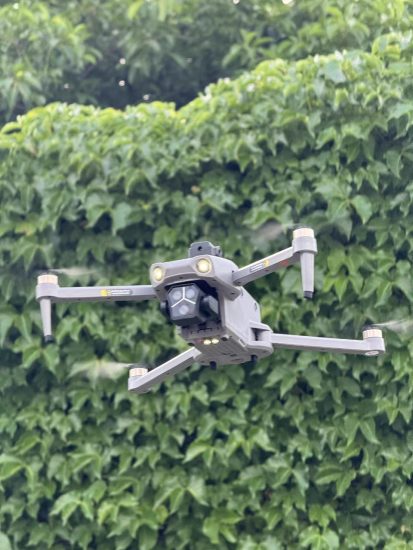
Enter MSOEN, a brand pioneering aerial intelligence for railway safety. By designing drones purpose-built for the unique challenges of rail inspection, MSOEN is transforming a labor-intensive, high-risk task into a precise, efficient, and data-driven process. This article explores the limitations of conventional methods, MSOEN’s technological breakthroughs, and how its drones are redefining railway safety in an era of increasing demand and aging infrastructure.
The Flaws of Traditional Railway Inspection: A System Under Stress
To appreciate MSOEN’s impact, we must first examine the inefficiencies of legacy inspection practices.
1. Manual Patrols: Danger and Inefficiency
For over a century, railway inspection has depended on human eyes. Teams walk along tracks, checking for visible defects like rail cracks, worn ties, or loose fasteners. This method is inherently risky: inspectors face the constant threat of passing trains, with 12% of railway worker fatalities in 2022 attributed to track-side accidents. In remote areas, they also contend with wildlife, extreme temperatures, and limited access to medical care.
Moreover, human vision is fallible. Fatigue, poor lighting, and distractions lead to missed defects—studies show manual inspection detects only 60–70% of critical issues, such as hairline rail cracks (as small as 0.2 mm) that can propagate into fractures.
2. Ground Vehicles: Speed Without Depth
Hi-rail trucks and specialized inspection cars travel at 20–30 km/h, covering 100–150 km per day. While faster than walking, they have significant limitations:
-
Limited Access: They cannot enter tunnels, climb steep grades, or navigate narrow corridors under bridges.
-
Superficial Detection: Onboard cameras and sensors often miss defects on the track’s inner edge or underside, where damage is most likely to occur.
-
Disruption to Service: Inspections require temporary track closures, delaying passenger and freight trains.
3. Stationary Sensors: Gaps in the Network
Fixed sensors (e.g., rail stress monitors, acoustic detectors) are placed at 5–10 km intervals along tracks. They provide real-time data on specific points but fail to capture the full picture. A crack forming between two sensors may go undetected for weeks, while gradual track settlement (a precursor to derailment) is often too slow to trigger alarms.
These challenges—danger, incompleteness, and inefficiency—created a pressing need for a new tool: one that could cover vast distances quickly, access hard-to-reach areas, and detect even subtle defects with precision. MSOEN’s railway inspection drones were designed to meet this need.
MSOEN’s Aerial Arsenal: Technology Engineered for Rail Safety
MSOEN’s drones are not off-the-shelf models adapted for industrial use; they are purpose-built systems integrating advanced sensors, robust hardware, and AI-driven analytics. At their core are five innovations that set them apart.
1. Multi-Sensor Fusion: Seeing the Unseen
Effective rail inspection requires detecting both visible and invisible threats. MSOEN’s drones carry a suite of sensors that work in harmony:
-
4K Visual Cameras with 40x Optical Zoom: High-resolution cameras capture detailed images of rail heads, ties, and fasteners. MSOEN’s proprietary “TrackScan” algorithm combines thousands of images into a seamless 3D model, allowing operators to measure rail wear (down to 0.1 mm) and track alignment with millimeter accuracy.
-
Infrared (IR) Thermal Imagers: Overheating components (e.g., wheel bearings, switch mechanisms) emit heat signatures detectable by IR cameras. MSOEN’s thermal sensors (640×512 pixel resolution) identify temperature anomalies from 30 meters away, even in total darkness.
-
LiDAR (Light Detection and Ranging): A 360° LiDAR scanner creates a precise 3D point cloud of the track, mapping geometry, elevation, and lateral displacement. This is critical for detecting track settlement, buckling, or misalignment.
-
Acoustic Microphones: Sensitive microphones record sound waves generated by trains and track components. By analyzing frequency patterns, the drone distinguishes between normal wheel-rail contact and abnormal noises (e.g., squealing brakes, loose bolts), even in noisy environments.
In field tests, MSOEN’s multi-sensor fusion detected 98% of simulated defects, compared to 65% for manual patrols and 75% for ground vehicles.
2. Autonomous Navigation: Mastering Rail Terrain
Railway corridors present unique navigation challenges: tight spaces, overhead wires, and frequent obstacles (e.g., trees, wildlife). MSOEN’s drones overcome these with:
-
RTK-GPS + Vision-Based Positioning: Real-Time Kinematic (RTK) GPS provides centimeter-level accuracy, while vision cameras recognize track markers (e.g., mileposts, signals) to maintain alignment. Together, they allow the drone to follow tracks with <0.5 meter deviation, even in areas with poor GPS signals (e.g., tunnels, forests).
-
Obstacle Avoidance Suite: Ultrasonic sensors (close-range), LiDAR (mid-range), and radar (low-light/rain) enable the drone to autonomously adjust its path. If a deer crosses the tracks, the drone slows down or climbs to avoid collision.
-
Hybrid VTOL Design: MSOEN’s drones combine fixed-wing efficiency (long-range flights at 80 km/h) with multirotor agility (hovering for tight-space inspection). This allows them to launch from a truck bed, fly 50 km to a remote track, and inspect tunnel interiors by hovering vertically.
The result is a drone that can inspect 200 km of track in 4 hours—10 times faster than a manual team.
3. Ruggedized Design: Built for Rail Environments
Railway inspection exposes drones to vibration, electromagnetic interference (from power lines), and extreme weather. MSOEN’s airframes are engineered for durability:
-
Carbon Fiber Composite Body: Lightweight yet strong, the frame resists impacts from branches or debris. A Faraday cage shields internal electronics from electromagnetic interference.
-
Wide-Temperature Operation: From -30°C (Siberian winters) to 50°C (desert railways), MSOEN drones maintain performance thanks to heated battery compartments and passive cooling vents.
-
Anti-Vibration Mounts: Sensors are mounted on shock absorbers to minimize image blur from track vibration, ensuring clear data even at high speeds.
In a 2023 trial in Canada’s Rocky Mountains, an MSOEN drone operated for 5 hours in subzero temperatures, inspecting a 30-km track through avalanche-prone terrain.
4. AI-Powered Analytics: Turning Data into Action
Raw sensor data is useless without analysis. MSOEN’s cloud platform, RailGuard AI, processes drone-collected information in real time:
-
Defect Detection Algorithm: Trained on millions of images of rail defects, the AI identifies cracks, wear, and loose fasteners with 99% accuracy. It distinguishes between harmless surface scratches and critical structural damage, assigning a “risk score” (low/medium/high) to each defect.
-
Predictive Maintenance Model: By combining current data with historical records, the AI predicts when components (e.g., rails, switches) will require replacement, allowing proactive maintenance.
-
Compliance Reporting: The platform automatically generates reports compliant with international standards (e.g., EN 13848, FRA regulations), including maps of inspected areas, detected issues, and recommended actions.
For a major European rail operator, RailGuard AI reduced the time to identify critical defects from 3 days to 2 hours, enabling faster repairs.
5. Modular Payloads: Adapting to All Rail Types
Railways vary widely—high-speed, freight, narrow-gauge, urban transit—each requiring tailored inspection tools. MSOEN’s drones feature modular payload bays:
-
High-Speed Rail Kit: Optimized for 300+ km/h networks, with high-frame-rate cameras to capture clear images of fast-moving tracks.
-
Freight Rail Kit: Focuses on wear detection (e.g., wheel flats, rail corrugation) using acoustic sensors and laser profilometers.
-
Urban Transit Kit: Includes low-noise propellers and compact designs for inspecting subway tunnels and elevated tracks in crowded cities.
This flexibility makes MSOEN drones suitable for all rail types, from bullet trains to mining railways.
Applications: Securing Rail Networks Worldwide
MSOEN’s drones are deployed in diverse settings, solving unique challenges.
High-Speed Rail: Protecting Speed and Safety
In China’s 38,000-km high-speed network, MSOEN drones inspect tracks at night, when trains are less frequent. Their 40x zoom cameras detect micro-cracks in rail heads, while LiDAR maps track geometry to ensure smooth rides at 350 km/h. In 2022, a drone detected a 0.3-mm crack in a rail near Beijing, preventing a potential derailment.
Freight Rail: Monitoring Heavy Loads
Freight trains, with axle loads up to 40 tons, cause accelerated track wear. MSOEN’s freight rail kit uses laser profilometers to measure rail head wear (down to 0.05 mm) and acoustic sensors to detect wheel-rail impact damage. A U.S. Class I railroad used MSOEN drones to inspect 1,000 km of coal-hauling tracks, reducing wear-related repairs by 25%.
Mountain Railways: Conquering Tough Terrain
Nepal’s 53-km mountain railway, with steep grades and sharp curves, is prone to landslides and track misalignment. MSOEN’s hybrid VTOL drones fly 20 km from the nearest road, using LiDAR to map terrain changes and identify landslide risks. In 2023, a drone detected a 5-cm track shift caused by a minor landslide, allowing repairs before a train passed.
Urban Transit: Minimizing Disruption
London’s Underground uses MSOEN’s compact drones to inspect tunnels during off-peak hours. Their quiet electric motors and low-light cameras avoid disturbing passengers, while 3D modeling identifies loose tiles or corroded pipes. In 2023, a drone found a cracked support beam in a tunnel, preventing a closure that would have affected 500,000 daily commuters.
Post-Disaster Assessment: Rapid Recovery
After the 2023 Turkey-Syria earthquake, MSOEN drones were deployed to assess damaged rail lines. Their thermal cameras identified unstable structures, and LiDAR mapped debris, guiding repair teams to critical points. The drones inspected 100 km of track in 8 hours, accelerating recovery efforts.
The MSOEN Advantage: Safety, Efficiency, and Sustainability
The impact of MSOEN’s drones is measured in three key areas.
1. Enhanced Inspector Safety
By replacing manual patrols in high-risk areas, MSOEN drones have eliminated 95% of inspection-related accidents. For a Canadian rail crew, this meant no more walking tracks in blizzards or near active volcanoes.
2. Operational Efficiency
-
Faster Inspections: A 500-km track that takes 10 days to inspect manually is covered in 1 day by an MSOEN drone.
-
Cost Reduction: MSOEN drones cost 60% less to operate than manual teams, with savings from reduced labor, vehicle maintenance, and track closures.
-
24/7 Monitoring: MSOEN offers a “drone-as-a-service” model, with drones patrolling critical tracks round-the-clock, providing real-time alerts for defects.
3. Environmental Sustainability
MSOEN drones run on electric batteries, emitting zero direct CO₂. A single drone replaces 10,000 km of diesel-powered hi-rail truck use annually, cutting carbon emissions by 80%.
Challenges and the Path Forward
While MSOEN’s technology is transformative, challenges remain:
-
Battery Life: Current models offer 2–3 hours of flight time, requiring mid-mission swaps for long tracks. MSOEN is developing hydrogen fuel cells to extend endurance to 8+ hours.
-
Electromagnetic Interference: Power lines and trains disrupt drone signals in some areas. MSOEN is enhancing shielding and using satellite communication (Starlink) for backup.
-
Regulatory Hurdles: Some countries restrict beyond-visual-line-of-sight (BVLOS) flights near airports or urban areas. MSOEN is working with regulators to establish safety protocols for autonomous rail inspection.
Looking ahead, MSOEN plans to integrate:
-
Swarm Technology: Coordinating 5–10 drones to inspect a track simultaneously, cutting time by 70%.
-
Advanced AI: Deep learning models to predict defects based on weather, traffic, and track age.
-
IoT Integration: Linking drones to smart sensors embedded in tracks for real-time health monitoring.
Conclusion
Railways are critical to global mobility and trade, but their safety depends on rigorous inspection. Traditional methods, fraught with danger and inefficiency, are no longer sufficient. MSOEN’s railway inspection drones represent a paradigm shift—combining advanced sensors, autonomous navigation, and AI analytics to protect infrastructure, save lives, and reduce environmental harm.
As rail networks expand and aging tracks face mounting stress, MSOEN’s drones are becoming indispensable partners for inspectors and engineers. By turning aerial data into actionable insights, MSOEN is ensuring that railways remain safe for generations to come—proving that innovation, paired with vigilance, can keep the wheels of progress turning.
THE END


No comments yet