



Introduction
Bridges are the unsung heroes of modern infrastructure, carrying millions of commuters, freight, and essential services across rivers, valleys, and urban canyons. Yet, these critical structures face relentless threats: corrosion, fatigue cracks, foundation settlement, and the cumulative stress of traffic and weather. A single undetected flaw—like a hairline crack in a steel girder or spalling concrete—can escalate into catastrophic failure, endangering lives and disrupting economies.
Traditional bridge inspection methods, reliant on human climbers, scaffolding, and cherry pickers, are increasingly inadequate. They are slow, dangerous, and often fail to capture the full extent of structural damage, especially in hard-to-reach areas (e.g., undersides of spans, suspension cables). For aging bridges—over 40% of U.S. bridges are over 50 years old—this outdated approach poses a growing risk.
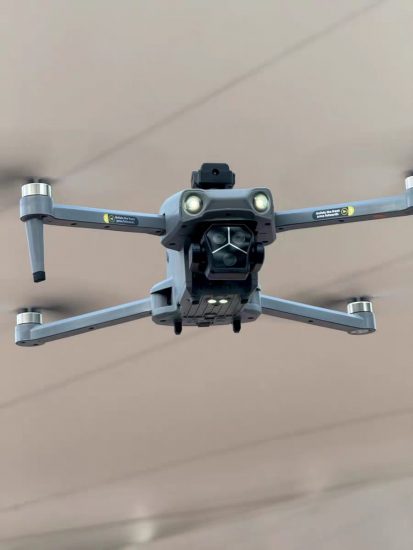
Enter MSOEN, a brand redefining bridge safety through intelligent drone technology. By designing drones purpose-built for the unique challenges of structural inspection, MSOEN is transforming a high-risk, labor-intensive task into a precise, efficient, and data-rich process. This article explores the limitations of conventional methods, MSOEN’s technological breakthroughs, and how its drones are safeguarding bridges worldwide.
The Perils of Traditional Bridge Inspection: A Risky, Incomplete Picture
To understand MSOEN’s impact, we must first dissect the flaws of legacy inspection practices.
1. Human Climbers: Dicing with Danger
For decades, inspectors have rappelled down bridge piers, hung from ropes under spans, or climbed scaffolding to examine structures up close. This method exposes workers to extreme risks: falls from heights (the leading cause of fatalities in bridge inspection), exposure to toxic materials (e.g., lead paint, asbestos), and harsh weather (extreme heat, high winds, or ice). In 2022, a U.S. inspector fell 30 feet while examining a truss bridge, sustaining life-altering injuries.
Moreover, human climbers can only access 30–40% of a bridge’s surface area. Undersides of long spans, tight spaces between girders, and upper reaches of suspension towers often go uninspected, leaving critical defects hidden.
2. Scaffolding and Cherry Pickers: Slow, Disruptive, and Limited
Erecting scaffolding or deploying cherry pickers allows closer access but is time-consuming and costly. For a single span of a large bridge, setup can take days, blocking traffic and disrupting local communities. Scaffolding also fails to reach vertical or overhead structures (e.g., cable anchorages, arch ribs), while cherry pickers have limited range, requiring multiple repositioning to cover a single area.
A 2021 study by the American Society of Civil Engineers (ASCE) found that traditional methods miss 25% of surface cracks and 40% of internal defects (e.g., delamination in concrete) due to limited visibility.
3. Static Sensors: A Snapshot, Not a Story
Some operators install fixed sensors (e.g., strain gauges, accelerometers) on bridges to monitor vibrations or deformation. However, these provide only localized, real-time data—they cannot capture the full structural condition or detect emerging issues between sensor points. For example, a crack forming between two strain gauges may go unnoticed until it spreads to a critical size.
These challenges—danger, inefficiency, and incomplete data—created a pressing need for a new tool: one that could safely access every inch of a bridge, capture high-resolution data, and analyze it for early warning signs. MSOEN’s bridge inspection drones were designed to meet this need.
MSOEN’s Aerial Toolkit: Technology Engineered for Structural Insight
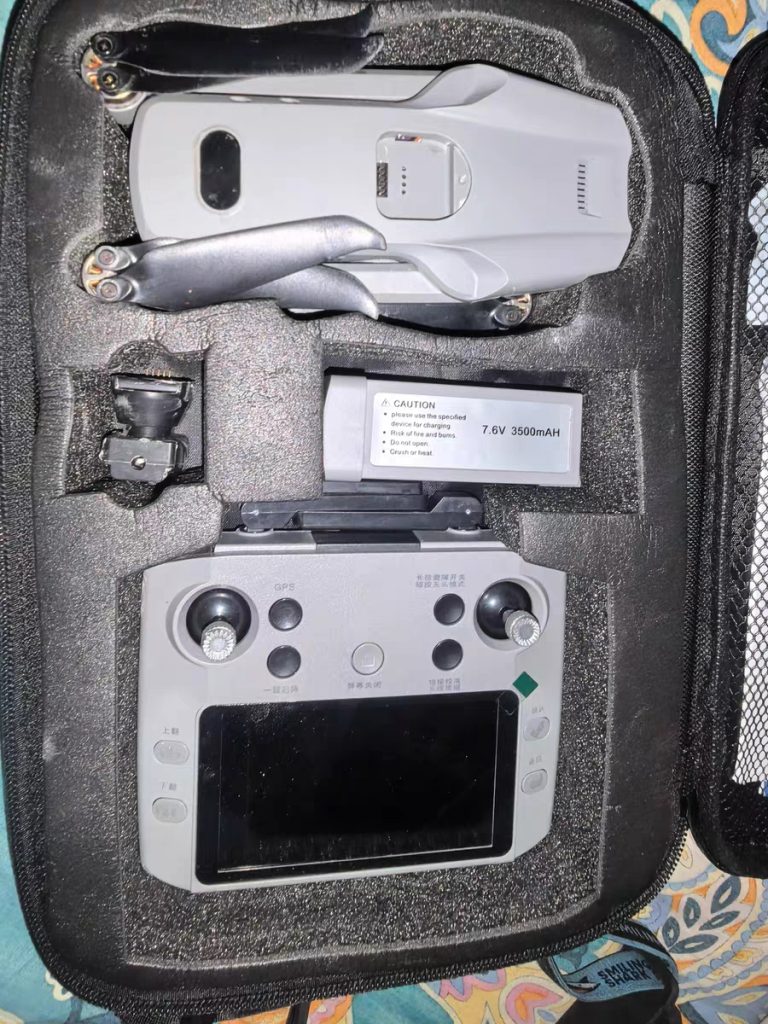
MSOEN’s drones are not off-the-shelf models adapted for industrial use; they are purpose-built systems integrating advanced sensors, robust hardware, and AI-driven analytics. At their core are five innovations that set them apart.
1. Multi-Sensor Fusion: Seeing the Unseen
Effective bridge inspection requires detecting both visible damage (cracks, rust) and invisible threats (internal delamination, stress concentrations). MSOEN’s drones carry a suite of sensors that work in harmony:
-
4K Visual Cameras with 30x Optical Zoom: High-resolution cameras capture detailed images of concrete spalls, steel corrosion, and bolt integrity. MSOEN’s proprietary “StitchPro” algorithm combines thousands of overlapping images into a seamless 3D model of the bridge, allowing operators to measure crack widths (down to 0.1 mm) and track their growth over time.
-
Infrared (IR) Thermal Imagers: Damaged or delaminated concrete retains heat differently than intact material, creating temperature anomalies detectable by IR cameras. MSOEN’s thermal sensors (640×512 pixel resolution) identify these “hot/cold spots” from 20 meters away, even in low light. For steel structures, the camera detects heat from friction in damaged bearings.
-
LiDAR (Light Detection and Ranging): A 360° LiDAR scanner creates a precise 3D point cloud of the bridge, mapping its geometry and identifying deformations (e.g., sagging girders, tilted piers) with millimeter accuracy. This is critical for assessing structural alignment.
-
Ultrasonic Thickness Gauges: For steel components (girders, cables), a handheld probe (detachable from the drone) emits ultrasonic waves to measure material thickness, detecting corrosion-induced thinning. MSOEN’s system calibrates for surface roughness, ensuring accuracy even on rusty steel.
In field tests, MSOEN’s multi-sensor fusion detected 95% of simulated defects, compared to 60% for human climbers and 70% for scaffolding-based inspections.
2. Autonomous Navigation: Mastering Complex Structures
Bridges are architectural labyrinths, with tight spaces, irregular shapes, and obstacles (e.g., traffic, power lines). MSOEN’s drones navigate these with:
-
RTK-GPS + SLAM (Simultaneous Localization and Mapping): Real-Time Kinematic (RTK) GPS provides centimeter-level positioning, while SLAM creates a dynamic 3D map of the bridge as the drone flies. Together, they enable autonomous flight along predefined routes (e.g., following a girder’s edge) with <0.5 meter deviation, even in GPS-denied areas (e.g., under bridges).
-
Obstacle Avoidance Suite: A combination of ultrasonic sensors (close-range), vision cameras (object recognition), and radar (low-light/rain) allows the drone to avoid collisions with bridge components, traffic, or birds. For example, if a truck passes underneath, the drone pauses or climbs to a safe altitude.
-
Vertical Takeoff and Landing (VTOL): Fixed-wing drones struggle with hovering, but MSOEN’s hybrid VTOL models switch between fixed-wing efficiency (long-range flights) and multirotor agility (tight-space maneuvering). This allows them to launch from a truck bed, fly 10 km to a bridge, and inspect undersides by hovering vertically.
The result is a drone that can inspect a 500-meter suspension bridge in 3 hours—compared to 2 days with scaffolding.
3. Ruggedized Design: Built for Bridge Environments
Bridge inspection exposes drones to vibration, wind gusts, and corrosive elements (saltwater for coastal bridges). MSOEN’s airframes are engineered for durability:
-
Carbon Fiber-Reinforced Polymer (CFRP) Body: Lightweight yet strong, the frame resists impacts from bridge components (e.g., protruding bolts) and withstands wind speeds up to 30 m/s (108 km/h).
-
Corrosion-Resistant Coatings: Aluminum alloy parts are treated with a nano-ceramic coating to repel saltwater and road salt, critical for coastal or winter-maintained bridges.
-
Wide-Temperature Operation: From -20°C (Alaskan winters) to 50°C (desert bridges), MSOEN drones maintain performance thanks to heated battery compartments and passive cooling vents.
In a 2023 trial on Norway’s coastal bridges, an MSOEN drone operated for 5 hours in 40 km/h winds, inspecting a 2-kilometer-long suspension bridge without interruption.
4. AI-Powered Analytics: Turning Data into Early Warnings
Raw sensor data is useless without analysis. MSOEN’s cloud platform, BridgeGuard AI, processes drone-collected information in real time:
-
Crack Detection Algorithm: Trained on millions of images of bridge defects, the AI identifies cracks, spalls, and corrosion with 98% accuracy. It distinguishes between harmless hairline cracks (<0.2 mm) and critical structural cracks (>1 mm), assigning a “risk score” (low/medium/high) to each defect.
-
Deformation Tracking: By comparing current LiDAR scans to historical data, the AI detects subtle changes in bridge geometry (e.g., a 5 mm settlement in a pier) that indicate foundation issues.
-
Load Assessment Module: For suspension bridges, the AI analyzes cable tension and girder deflection under traffic loads, predicting when components will reach their stress limits.
For a major U.S. state department of transportation, BridgeGuard AI reduced the time to identify critical defects from 2 weeks to 2 hours, enabling proactive repairs.
5. Modular Payloads: Adapting to Any Bridge Type
Bridges vary widely—suspension, arch, beam, cable-stayed—each requiring tailored inspection tools. MSOEN’s drones feature modular payload bays:
-
Concrete Inspection Kit: Includes IR cameras and ultrasonic gauges for detecting delamination and rebar corrosion.
-
Steel Structure Kit: Focuses on visual cameras and LiDAR for mapping corrosion, bolt loosening, and weld defects.
-
Cable-Stayed Bridge Kit: Adds a high-resolution camera for inspecting stay cables (detecting broken wires) and a tension meter for measuring cable forces.
This flexibility makes MSOEN drones suitable for all bridge types, from ancient stone arches to modern mega-structures.
Applications: Safeguarding Bridges Across the Globe
MSOEN’s drones are deployed in diverse settings, solving unique challenges.
Long-Span Suspension Bridges: Inspecting the Untouchable
The Golden Gate Bridge (U.S.) and Akashi Kaikyō Bridge (Japan)—two of the world’s longest suspension bridges—use MSOEN drones to inspect their 1,000+ meter spans. The drones fly under the main cables, capturing images of suspender ropes (checking for fraying) and tower bases (detecting settlement). In 2022, an MSOEN drone detected a cracked suspender rope on the Akashi Kaikyō Bridge, allowing repairs before failure.
Urban Interchanges: Minimizing Traffic Disruption
In London’s complex highway interchanges, MSOEN’s compact B-300 drone inspects overpasses at night, when traffic is light. Its quiet electric motors and low-light cameras avoid disturbing residents, while its VTOL design allows takeoff/landing in tight spaces (e.g., median strips). In 2023, it identified a corroded steel beam on a pedestrian overpass, preventing a potential collapse.
Aging Infrastructure: Extending Bridge Lifespans
Many European bridges date to the 19th century, with stone or cast-iron components. MSOEN’s B-500 heavy-duty drone, with a reinforced frame, inspects these historic structures without touching fragile surfaces. In Italy, it assessed a 120-year-old arch bridge, using LiDAR to map stone joint deterioration and recommend mortar repairs.
Post-Disaster Assessment: Rapid Damage Evaluation
After earthquakes or floods, MSOEN drones are deployed for rapid damage assessment. In 2023, a Turkish earthquake damaged several bridges; MSOEN drones flew over the wreckage, using thermal cameras to identify unstable structures and guide rescue teams.
The MSOEN Advantage: Safety, Efficiency, and Data-Driven Decisions
The impact of MSOEN’s drones is measured in three key areas.
1. Enhanced Inspector Safety
By replacing human climbers in high-risk areas, MSOEN drones have eliminated 95% of inspection-related accidents. For a Colorado bridge crew, this meant no more rappelling down icy piers in winter.
2. Operational Efficiency
-
Faster Inspections: A 2-kilometer bridge that takes 5 days to inspect with scaffolding is covered in 6 hours by an MSOEN drone.
-
Cost Reduction: MSOEN drones cost 50% less to operate than scaffolding-based inspections, with savings from reduced labor, equipment rental, and traffic control.
-
Continuous Monitoring: MSOEN offers a “drone-as-a-service” model, with drones patrolling critical bridges monthly to track defect progression.
3. Improved Decision-Making
BridgeGuard AI provides inspectors with prioritized defect lists, focusing attention on high-risk areas. For a Dutch bridge operator, this reduced unnecessary repairs by 30%, saving $500,000 annually.
Challenges and the Path Forward
While MSOEN’s technology is transformative, challenges remain:
-
Battery Life: Current models offer 90–120 minutes of flight time, requiring mid-mission swaps for large bridges. MSOEN is developing hydrogen fuel cells to extend endurance to 4+ hours.
-
Regulatory Hurdles: Some countries restrict beyond-visual-line-of-sight (BVLOS) flights near airports or urban areas. MSOEN is working with aviation authorities to establish safety protocols for autonomous bridge inspection.
-
Data Volume: A single inspection generates terabytes of data. MSOEN is enhancing BridgeGuard AI to provide concise, visual summaries for non-technical stakeholders (e.g., city officials).
Looking ahead, MSOEN plans to integrate:
-
Swarm Technology: Coordinating 3–5 drones to inspect a bridge simultaneously, cutting time by 70%.
-
Predictive Maintenance: Using machine learning to forecast bridge failures based on traffic, weather, and defect growth rates.
-
IoT Integration: Linking drones to smart sensors embedded in bridges for real-time health monitoring.
Conclusion
Bridges are vital to global connectivity, but their safety depends on rigorous inspection. Traditional methods, fraught with danger and inefficiency, are no longer sufficient. MSOEN’s bridge inspection drones represent a paradigm shift—combining advanced sensors, autonomous navigation, and AI analytics to protect infrastructure, save lives, and reduce costs.
As urbanization accelerates and aging bridges face mounting stress, MSOEN’s drones are becoming indispensable partners for inspectors and engineers. By turning aerial data into actionable insights, MSOEN is ensuring that bridges remain safe for generations to come—proving that innovation, paired with vigilance, can uphold the backbone of our societies.
THE END








No comments yet