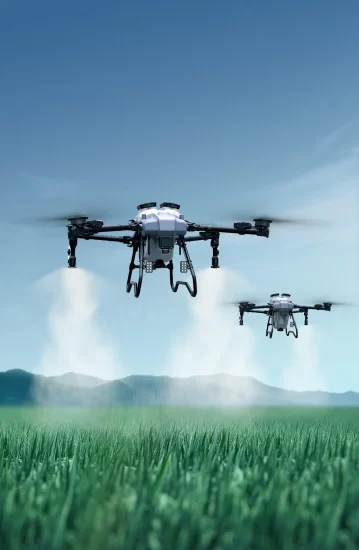


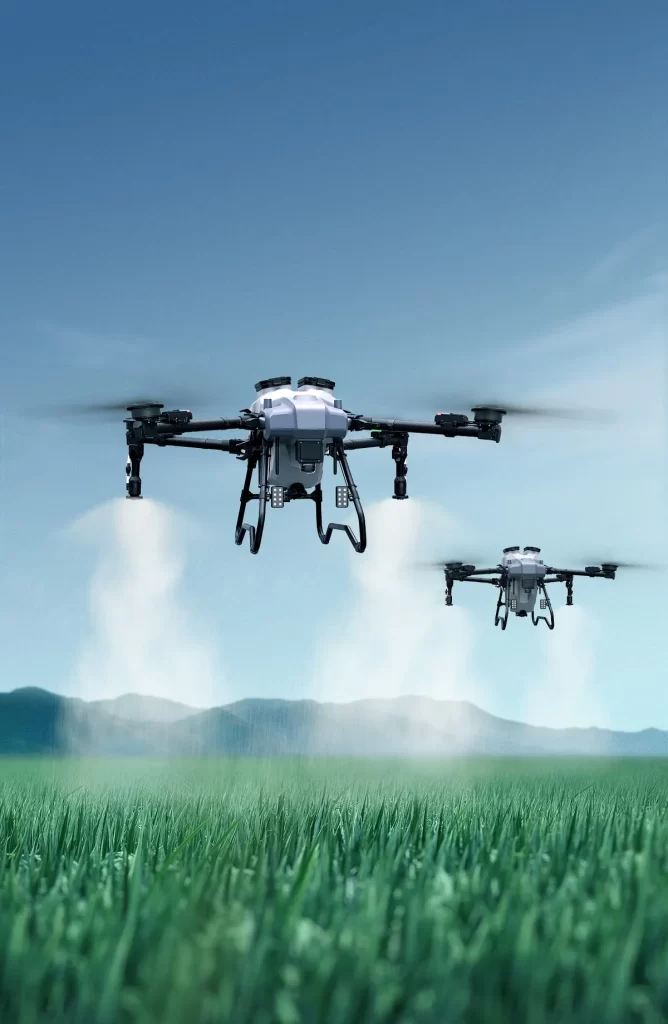
Modern crop production requires farmers to manage large areas efficiently while controlling labor, water, fertilizers, pesticides, and operating costs. Agricultural spraying drones provide a practical aerial application solution for farms, plantations, agricultural service companies, and crop-protection businesses.
MSOEN supplies agricultural drones designed for crop-spraying applications, providing equipment solutions for international agricultural businesses, distributors, dealers, and professional drone operators.
Agricultural drones are no longer limited to aerial photography or field mapping. The Food and Agriculture Organization of the United Nations (FAO) identifies crop spraying, crop monitoring, field analysis, and precision agriculture as important agricultural drone applications.
What Is an Agricultural Drone for Crop Spraying?
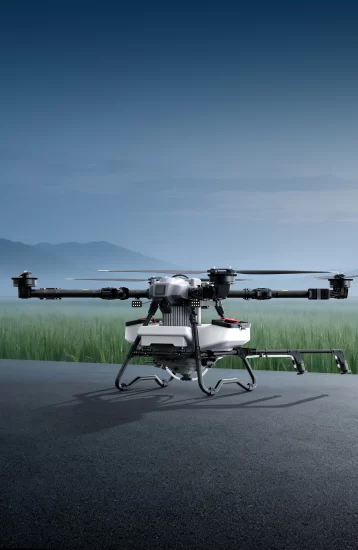
An agricultural spraying drone is an unmanned aerial vehicle equipped with a liquid tank and specialized spraying system.
Unlike conventional camera drones, spraying drones are engineered around agricultural operations. Their main systems normally include:
- Agricultural drone airframe
- Flight controller
- Liquid tank
- Electric pump
- Spray nozzles
- Flow-control system
- Rechargeable batteries
- Remote controller
- Satellite positioning system
- Flight-planning functions
- Safety and monitoring systems
The drone carries the spraying liquid and distributes it through the nozzles while following a planned flight path.
The exact spraying performance depends on the aircraft configuration, nozzle type, liquid characteristics, flight speed, flight height, weather conditions, and crop structure. Therefore, a professional agricultural drone should be evaluated as a complete spraying system rather than simply by its tank capacity.
Why Choose an Agricultural Drone for Crop Spraying?
Traditional agricultural spraying methods can require substantial manual labor or ground equipment. In certain field conditions, tractors and other ground machinery may also be difficult to operate.
A spraying drone provides an alternative aerial application method.
Reduced Physical Labor
With conventional backpack spraying, workers need to carry spraying equipment and move through the crop.
A spraying drone allows the operator to remain outside the treated area while controlling the aircraft remotely. This can reduce the physical workload involved in field spraying.
Reduced Crop Contact
When crops are tall, dense, or planted in difficult-to-access areas, ground equipment can come into direct contact with plants.
An aerial spraying drone can operate above the crop without driving wheels through crop rows.
Access to Difficult Fields
Agricultural drones can be useful in areas where conventional equipment is less convenient, including:
- Wet farmland
- Uneven fields
- Sloped farmland
- Narrow plots
- Orchards
- Rice fields
- Areas with limited road access
The suitability of a particular drone still depends on local terrain, weather, regulations, and operating conditions.
Flexible Field Operations
A drone can follow a planned route and repeatedly cover designated areas.
FAO describes drone flight-planning technology as a way to define areas and support automated flight paths, while agricultural spraying systems can be used for targeted application.
MSOEN Agricultural Drone Supplier
MSOEN focuses on agricultural drone solutions for professional crop-spraying applications.
For international customers, choosing a supplier involves more than comparing the initial purchase price. A reliable supplier should be able to provide clear technical specifications, configuration information, operating instructions, spare-parts support, and communication regarding export requirements.
MSOEN works with customers who may require agricultural drones for:
- Commercial farms
- Agricultural service companies
- Crop-protection businesses
- Agricultural equipment distributors
- Drone dealers
- Plantation operators
- Agricultural cooperatives
- Farming technology companies
- Regional importers
- OEM and private-label projects
Agricultural Crops Suitable for Drone Spraying
Agricultural spraying drones can be used across different crop-production scenarios, subject to local regulations and the approved use of the agricultural product.
Potential applications include:
Rice
Rice fields are an important application because wet fields can make conventional ground access difficult.
Aerial spraying can reduce the need for workers or heavy machinery to physically enter the field.
Corn
Corn fields can become increasingly difficult to access with ground equipment as plants grow.
Aerial spraying can provide an alternative treatment method for certain crop-protection operations.
Wheat
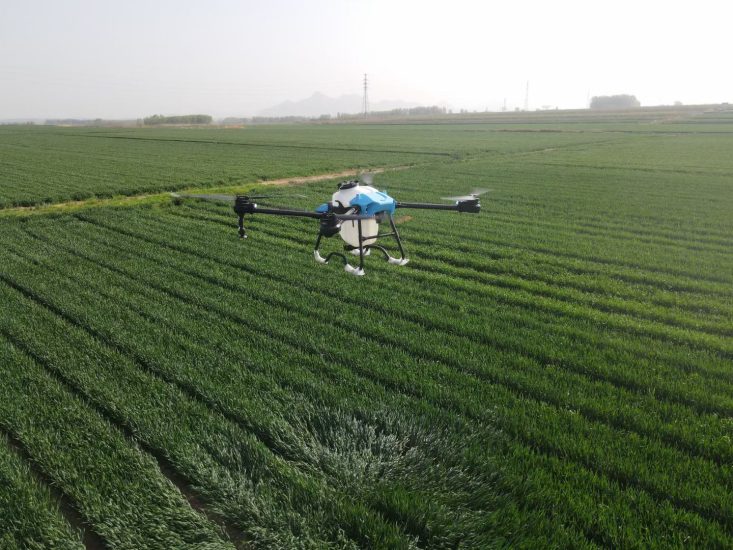
Drone technology can support crop monitoring and targeted agricultural operations in wheat production.
Soybeans
Soybean farms can use agricultural drone technology for crop monitoring and spraying applications where permitted.
Vegetables
Vegetable crops may benefit from flexible spraying equipment, particularly where fields contain irregular boundaries or difficult terrain.
Orchards
Orchard spraying is different from open-field spraying because trees create a three-dimensional canopy.
The drone configuration, flight height, airflow, nozzle selection, and operating pattern should therefore be selected according to the specific orchard and crop.
Vineyards
Vineyards contain relatively narrow and organized crop rows, making route planning particularly important.
A properly configured agricultural drone can potentially operate along designated vineyard areas where local regulations permit.
Agricultural Drone Spraying System
The spraying system is one of the most important parts of an agricultural drone.
A complete system may include the following components.
Liquid Tank
The tank determines the amount of liquid that can be carried during each flight.
Different farm operations require different tank capacities.
A larger tank may reduce refill frequency, but it also increases aircraft weight. Therefore, buyers should balance capacity with flight performance, battery consumption, terrain, and refill logistics.
Pump
The pump delivers liquid from the tank to the spray nozzles.
A stable pump system is important for maintaining consistent application during operation.
Spray Nozzles
Nozzles determine how liquid is distributed.
Different nozzles can produce different spray characteristics, and nozzle selection should be based on the agricultural product, required application rate, crop, weather, and operating conditions.
Flow Control
A professional spraying system should provide controlled liquid delivery.
The target application rate needs to be established according to the specific agricultural product and crop requirements rather than simply maximizing spray output.
Flight Control
Flight-control technology allows the drone to maintain its planned route and operating parameters.
Modern agricultural drone systems can combine navigation, route planning, spraying control, and other functions to support precision agriculture.
Precision Agriculture and Drone Spraying
Agricultural spraying drones are closely connected with precision agriculture.
Precision agriculture uses information about field conditions, crop health, location, and other variables to make better management decisions.
FAO explains that drones can support field mapping, crop monitoring, crop-health assessment, pest identification, and crop spraying.
A typical precision-agriculture workflow can look like this:
Field observation → Data collection → Problem identification → Treatment planning → Drone spraying → Follow-up monitoring
This approach can be more efficient than automatically treating every part of a field in exactly the same way.
FAO has also reported agricultural projects where drones were used to identify pest-affected areas and support more targeted treatment, potentially avoiding unnecessary application of crop-protection products.
Agricultural Drone for Pesticide Spraying
Pesticide spraying is one of the most important applications of agricultural drones.
However, the drone itself does not determine whether a pesticide is legal or appropriate for a particular crop.
Before spraying, operators need to verify:
- Whether aerial drone application is permitted
- Whether the pesticide is registered for the intended crop
- Whether the product label permits the intended application method
- Required application rate
- Required spray conditions
- Buffer zones
- Weather limitations
- Protection of people and nearby property
- Environmental requirements
The agricultural drone should be regarded as the application equipment. The pesticide label and local agricultural regulations remain the basis for determining how a product can legally and safely be applied.
Agricultural Drone for Fertilizer Application
Some agricultural spraying drones can also be used for liquid fertilizer application.
The correct configuration depends on the fertilizer formulation and the required application rate.
Buyers should communicate the intended fertilizer type to the supplier before ordering so that the spraying system can be evaluated for compatibility.
The goal should not simply be to apply as much fertilizer as possible. Precision agriculture aims to apply the appropriate input according to crop requirements and field conditions.
Agricultural Drone for Herbicide Application
Herbicide spraying requires careful control because drift can damage non-target plants.
When using a drone for herbicide applications, operators should pay close attention to:
- Wind
- Temperature
- Humidity
- Droplet characteristics
- Flight height
- Flight speed
- Nozzle selection
- Field boundaries
- Sensitive neighboring crops
Proper operation is especially important near residential areas, waterways, roads, and crops that may be sensitive to the product being applied.
Key Specifications Buyers Should Compare
When purchasing an agricultural drone from China, buyers should request complete specifications.
1. Tank Capacity
Examples of common commercial categories include:
- 10L
- 16L
- 20L
- 30L
- Larger professional configurations
The correct capacity depends on the application.
2. Maximum Takeoff Weight
Maximum takeoff weight is more meaningful than payload alone because it considers the aircraft’s overall operating configuration.
3. Spray Flow Rate
Flow rate affects the amount of liquid delivered during operation.
Buyers should request the actual operating range rather than relying on a single maximum figure.
4. Spray Width
Effective spray width depends on the complete spraying configuration and operating conditions.
A supplier should explain how the claimed spray width was determined.
5. Flight Time
Flight time varies according to:
- Payload
- Battery condition
- Wind
- Temperature
- Flight speed
- Terrain
- Operating pattern
Therefore, buyers should ask for flight-time data under realistic agricultural operating conditions.
6. Battery System
For professional agricultural operations, battery charging and replacement logistics are extremely important.
A buyer should evaluate:
- Battery capacity
- Charging time
- Battery cycle life
- Number of batteries required
- Charger configuration
- Spare battery availability
7. Navigation System
Accurate positioning is important for repeatable flight paths and field coverage.
Depending on configuration, agricultural drones can use satellite positioning and additional positioning technologies.
8. Obstacle Detection
Obstacle-detection systems can help identify objects around the aircraft.
However, they should complement—not replace—proper operator training and field inspection.
What Makes a Good Agricultural Drone Supplier?
International buyers should evaluate a supplier from several perspectives.
Product Quality
The drone should be designed for agricultural operating environments rather than adapted from a consumer photography platform.
Spraying Performance
The aircraft and spraying system should work together to provide stable and controllable application.
Technical Support
International customers may require help with:
- Setup
- Calibration
- Operation
- Maintenance
- Troubleshooting
- Spare parts
Documentation
Clear documentation helps distributors and operators understand how to install, operate, maintain, and service the equipment.
Spare Parts
Professional users should consider the long-term availability of critical components.
Important spare parts can include:
- Propellers
- Motors
- Pumps
- Nozzles
- Valves
- Batteries
- Chargers
- Landing components
- Electronic components
Export Experience
International buyers should also ask about packaging, shipping, customs documentation, product manuals, and market-specific requirements.
Why Source Agricultural Drones From China?
China has a mature manufacturing ecosystem for drones, electronics, batteries, motors, controllers, agricultural equipment, and related components.
For international buyers, direct sourcing can provide opportunities to discuss:
- Factory pricing
- Product configurations
- OEM requirements
- Branding
- Packaging
- Spare parts
- Distributor cooperation
- Technical support
- Bulk orders
However, buyers should not select a manufacturer based on price alone.
The best supplier for a particular market is the supplier whose equipment, support, documentation, quality, and configuration match the buyer’s actual requirements.
MSOEN for International Distributors
MSOEN agricultural drones can be considered by distributors and dealers looking to develop agricultural drone businesses in their local markets.
A distributor may need more than a product catalog. They may also require:
- Product specifications
- High-quality product images
- User manuals
- Spare-parts information
- Training materials
- Technical support
- Packaging information
- OEM options
- After-sales communication
For a new agricultural drone market, local service capability can be particularly important because operators need training and technical assistance after purchasing equipment.
Questions to Ask Before Buying
Before placing an agricultural drone order, international buyers should ask the supplier:
What is the actual tank capacity?
Confirm the usable capacity rather than relying only on the model name.
What is the recommended operating speed?
This should be considered together with the required application rate and spraying performance.
What is the actual flow rate?
Ask for the adjustable range and conditions under which the specification was measured.
What nozzles are included?
Nozzle specifications can directly affect spraying characteristics.
How many batteries are recommended?
This is important for continuous commercial operations.
What spare parts are included?
Clarify whether spare pumps, nozzles, propellers, motors, or other components are included.
What training is available?
International distributors may require operator training and technical documentation.
What are the warranty terms?
Clarify warranty coverage, exclusions, repair procedures, and spare-parts support before ordering.
Agricultural Drone Regulations
Drone regulations differ between countries.
An agricultural drone that can technically perform spraying operations may not automatically be approved for commercial use in every market.
Depending on the country, requirements may cover:
- Drone registration
- Pilot licensing
- Operator certification
- Flight restrictions
- Commercial operation
- Agricultural chemical application
- Pesticide registration
- Insurance
- Environmental protection
Therefore, international customers should verify requirements with their local aviation and agricultural authorities before importing and operating the equipment.
Safe Agricultural Drone Operation
Professional drone spraying requires responsible operation.
Operators should inspect the aircraft before every operation and check:
- Battery condition
- Propellers
- Motors
- Pump
- Nozzles
- Tank
- Pipes
- Valves
- Remote controller
- Navigation system
Weather should also be evaluated before spraying.
High wind can increase spray drift, while unsuitable weather can reduce application quality.
Operators should maintain safe distances from people, buildings, roads, power lines, waterways, and other sensitive areas.
Agricultural chemicals must be handled according to the product label and applicable safety requirements.
Frequently Asked Questions
Is MSOEN an agricultural drone supplier?
Yes. MSOEN focuses on agricultural drone solutions for crop-spraying applications and international B2B customers.
What is an agricultural spraying drone used for?
It can be used for agricultural liquid application, including certain pesticide, herbicide, fungicide, and fertilizer applications where permitted by local regulations and product instructions.
Are agricultural spraying drones suitable for commercial farms?
They can be suitable for commercial farming and agricultural service operations, but the correct model depends on crop type, farm size, terrain, application requirements, battery logistics, and local regulations.
How do I choose the right tank capacity?
Consider the required application rate, field size, refill availability, battery endurance, aircraft performance, and operating conditions. A larger tank is not automatically more efficient.
Can I buy agricultural drones from China for my local market?
International sourcing is possible, but buyers should verify their country’s drone, aviation, pesticide, import, certification, and commercial-use requirements before ordering.
Does MSOEN support distributors?
Agricultural drone distributors can discuss product configurations, commercial requirements, technical information, spare parts, and cooperation requirements with MSOEN.
Can agricultural drones replace tractors?
Not in every agricultural operation. Spraying drones are specialized aerial application equipment and should be viewed as a complementary solution for suitable crop-protection operations rather than a universal replacement for tractors.
Conclusion
An Agricultural Drone Supplier for Crop Spraying should provide more than an aircraft. Professional buyers need a complete agricultural solution that combines reliable flight performance, an appropriate spraying system, practical battery management, technical documentation, spare-parts support, and after-sales service.
MSOEN focuses on agricultural spraying drone solutions for international farms, agricultural service companies, distributors, dealers, and importers.
For customers sourcing agricultural drones from China, the most important step is to match the drone configuration with the crop, application, operating environment, local regulations, and commercial requirements.
With the right equipment and trained operators, agricultural drones can become an effective part of a modern precision-agriculture workflow, supporting more targeted crop monitoring and spraying operations. FAO and agricultural research literature recognize these applications as important areas of agricultural drone development.
MSOEN — Agricultural Drone Supplier for Crop Spraying
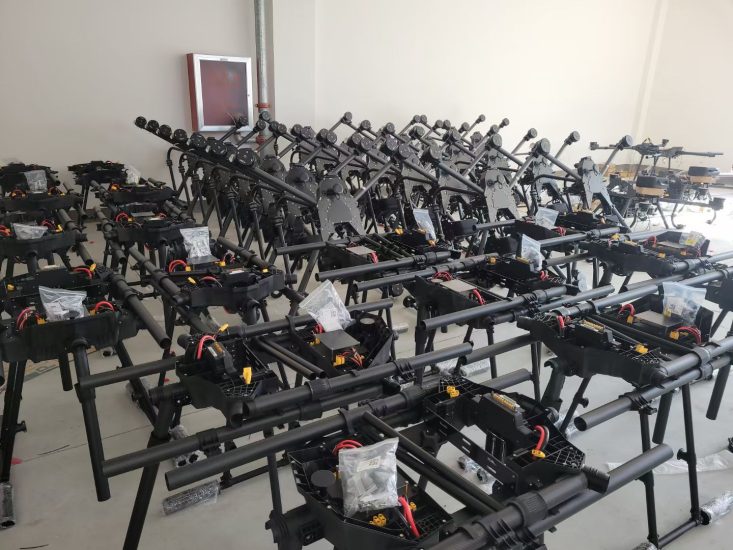
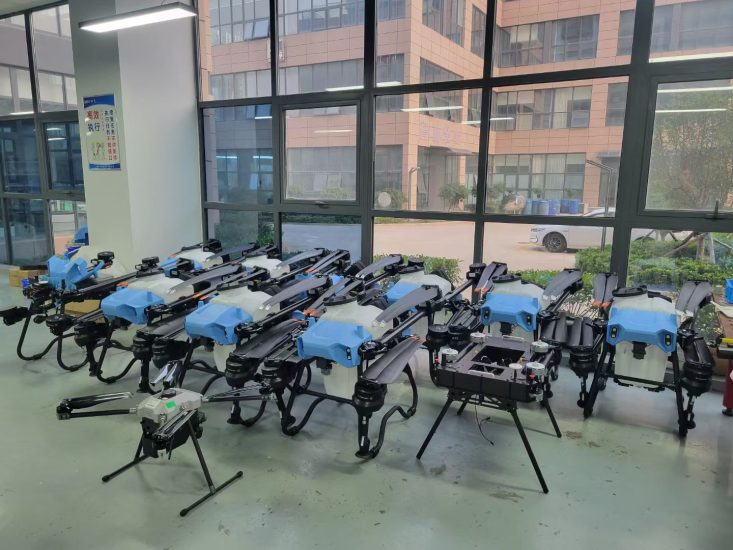
International buyers can contact MSOEN to discuss agricultural drone models, spraying configurations, OEM requirements, distributor cooperation, spare parts, and export orders.


No comments yet