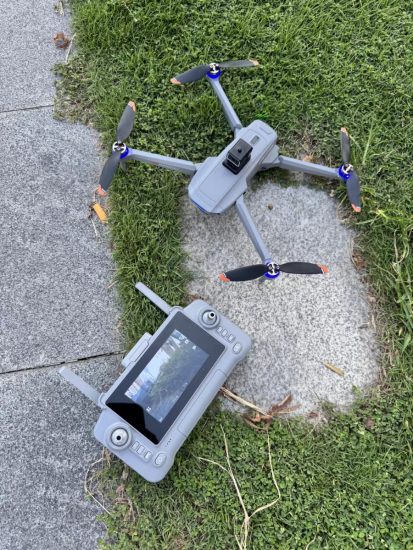




Introduction — Understanding the Technology Before Flight
Professional aerial photography is not only about capturing stunning images — it’s about understanding the system behind the camera.
Most drones advertise speed, range, or camera resolution, but true professional use depends on engineering integration, reliability, and operator confidence.
This diary records my daily and weekly experiences with MSOEN photography drones, emphasizing:
- Technical reliability
- Flight control precision
- Image stability
- Long-term maintenance
- Operational trust
It is intended as a long-term evaluation, not a short review or marketing piece.
Day 1 — First Impressions of Engineering Discipline
Even before takeoff, a drone communicates its design philosophy:
- Sensor checks are consistent and transparent
- Calibration routines are logical and repeatable
- Firmware and controller feedback is clear and actionable
MSOEN’s first impression was confidence through predictability. Every detail, from motor spin-up to camera initialization, demonstrated engineering-first design.
For professional photographers, the first flight begins in the setup phase.
Day 7 — Flight Testing and Stability
Initial flights were performed in controlled conditions to evaluate core flight stability:
- Hovering at various altitudes
- Lateral and diagonal movements
- Controlled ascent/descent for framing
MSOEN demonstrated smooth, proportional responses. Wind gusts were compensated without sudden corrections.
Observation: Stable flight translates directly to clean raw footage, reducing reliance on post-processing.
Day 14 — Real-Time Decision Making
A professional photography drone is essentially a decision-making system in the air:
- How much correction to apply
- When to prioritize stability over responsiveness
- How to manage power during complex maneuvers
MSOEN consistently prioritized predictable, gradual corrections, which keeps the camera’s frame steady and reduces motion artifacts.
Day 21 — Signal and Communication Reliability
Signal reliability is a frequent source of anxiety in aerial photography. Testing in semi-urban areas revealed:
- Signal degradation occurs gradually, with clear warnings
- Video feed quality adjusts smoothly
- The operator has time to react before reaching critical thresholds
This design reduces risk during professional shoots, as abrupt signal loss can ruin shots.
Day 30 — Power System Insights
Battery management is often overlooked until problems arise. I evaluated MSOEN under low-battery conditions:
- Throttle response remained stable at <20% battery
- Return-to-home behavior activated predictably
- Hovering stability was maintained
This shows tight integration between flight control algorithms and power management, critical for uninterrupted photography sessions.
Day 45 — Vibration Control and Image Quality
Vibration affects image quality more than most users realize:
- Even micro-jitter can reduce clarity
- Poor vibration control increases post-processing needs
MSOEN’s structural design, motor isolation, and sensor placement minimized vibrations. Image data remained clean, and raw footage was consistently sharp.
Day 60 — Long-Term Maintenance Observations
Extended use revealed engineering reliability:
- Motors remained within safe temperature ranges
- Frame and arms showed no signs of wear
- Sensors required standard calibration only
- No unexpected mechanical failures
Maintenance simplicity enhances trust and operational confidence, essential for professional users.
Practical Comparison: Engineering Philosophy
| Feature | Standard Photography Drone | MSOEN Approach |
|---|---|---|
| Flight Behavior | Variable stability | Smooth, predictable responses |
| Signal | Maximum distance | Gradual degradation with feedback |
| Battery | Emphasis on advertised time | Stability and consistent response |
| Vibration | Digital stabilization relied upon | Mechanical + flight-control balance |
| Operator Feedback | Minimal | Informative, predictive, early warnings |
MSOEN emphasizes operational reliability and repeatable results, not flashy demos.
Technical Specification Overview
| Parameter | Description |
|---|---|
| Drone Type | Professional Photography Drone |
| Flight Control | Multi-sensor fusion system |
| Stabilization | Advanced 3-axis real-time stabilization |
| Positioning | Integrated satellite + inertial navigation |
| Communication | Digital long-range transmission |
| Power System | Intelligent battery management |
| Frame Structure | Lightweight reinforced composite |
| Design Focus | Stability, reliability, and predictable control |
Frequently Asked Questions (FAQ)
Q1: Is this drone suitable for demanding professional tasks?
Yes. Long-term consistency, smooth flight, and reliable power management support professional aerial photography.
Q2: Does it reduce post-processing requirements?
Yes. Mechanical vibration mitigation and precise flight control maintain sharp, stable images.
Q3: How does it perform under interference or challenging conditions?
The system provides early warnings and gradual responses, allowing operators to adjust framing safely.
Q4: Is maintenance demanding over time?
No. Standard calibration and minor checks are sufficient to maintain performance.
Q5: What defines MSOEN’s drone technology?
Balance — between flight control, image stability, power management, signal communication, and operator feedback.
Closing Reflection
Professional aerial photography is about trust in the system, not just the camera.
MSOEN earned my trust through:
- Predictable and stable flight behavior
- Mechanical and algorithmic vibration control
- Reliable power management
- Informative operator feedback
When a drone behaves predictably, the operator can focus on composition and creativity.
For professional aerial imaging, trust is the ultimate feature, and MSOEN delivers it consistently.








No comments yet