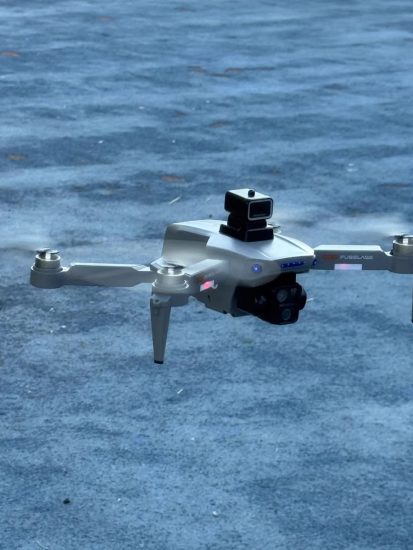


The global aerial photography drone market is projected to reach $58.4 billion by 2030, driven by demand across industries like filmmaking, agriculture, construction, and public safety. Behind every reliable, high-performance drone lies a sophisticated manufacturing facility—one that balances precision engineering, scalability, and innovation. As a leading producer of aerial photography drones, MSOEN operates a state-of-the-art factory designed to set new standards in UAV production. This article takes you inside MSOEN’s manufacturing ecosystem, exploring how our factory integrates cutting-edge technology, rigorous quality control, and sustainable practices to deliver drones that redefine aerial imaging.

![Image [2]-Inside the Aerial Photography Drone Factory: How MSOEN Masters the Art of Manufacturing High-Performance UAVs-msoen](https://www.msoen.com/wp-content/uploads/2026/01/490dfc895f192828-768x1024.jpg)
![Image [3]-Inside the Aerial Photography Drone Factory: How MSOEN Masters the Art of Manufacturing High-Performance UAVs-msoen](https://www.msoen.com/wp-content/uploads/2026/01/4fc1c2356c192846-768x1024.jpg)
![Image [4]-Inside the Aerial Photography Drone Factory: How MSOEN Masters the Art of Manufacturing High-Performance UAVs-msoen](https://www.msoen.com/wp-content/uploads/2026/01/02da71f10c192955-768x1024.jpg)
![Image [5]-Inside the Aerial Photography Drone Factory: How MSOEN Masters the Art of Manufacturing High-Performance UAVs-msoen](https://www.msoen.com/wp-content/uploads/2026/01/25b1b8e53d192813-768x1024.jpg)
![Image [6]-Inside the Aerial Photography Drone Factory: How MSOEN Masters the Art of Manufacturing High-Performance UAVs-msoen](https://www.msoen.com/wp-content/uploads/2026/01/5ced0788d4195152-768x1024.jpg)
![Image [7]-Inside the Aerial Photography Drone Factory: How MSOEN Masters the Art of Manufacturing High-Performance UAVs-msoen](https://www.msoen.com/wp-content/uploads/2026/01/2eda0d55c5195152-768x1024.jpg)
![Image [8]-Inside the Aerial Photography Drone Factory: How MSOEN Masters the Art of Manufacturing High-Performance UAVs-msoen](https://www.msoen.com/wp-content/uploads/2026/01/b100e1b304194838-1024x1024.jpg)
1. The Anatomy of a Modern Aerial Photography Drone Factory
Aerial photography drones are complex systems requiring seamless integration of hardware (cameras, sensors, propulsion) and software (flight controls, image processing). A world-class factory must excel in five core areas:
1.1 Vertical Integration of Key Components
To ensure consistency and performance, top-tier factories control the production of critical parts—from camera modules to flight controllers. Outsourcing core components often leads to variability; vertical integration allows manufacturers to fine-tune every element for optimal synergy.
1.2 Scalable Production Lines
Demand for drones fluctuates with industry trends (e.g., seasonal spikes in agriculture or real estate). Factories must adapt, scaling output from hundreds to thousands of units monthly without compromising quality.
1.3 Advanced Testing Protocols
Drones face extreme conditions—high winds, temperature swings, and prolonged flight. Rigorous testing (vibration, drop, endurance) ensures reliability in real-world scenarios.
1.4 Compliance with Global Standards
Regulations like the FAA’s Part 107 (U.S.), EASA’s UAS Regulation (EU), and ISO 21384 (drone safety) mandate strict manufacturing guidelines. Factories must embed compliance into every stage.
1.5 Sustainability Practices
With growing emphasis on eco-friendly tech, factories adopt renewable energy, waste reduction, and recyclable materials to minimize environmental impact.
MSOEN’s factory was built from the ground up to master these pillars, positioning itself as a benchmark for aerial photography drone manufacturing.
2. MSOEN’s Factory: A Hub of Precision and Innovation
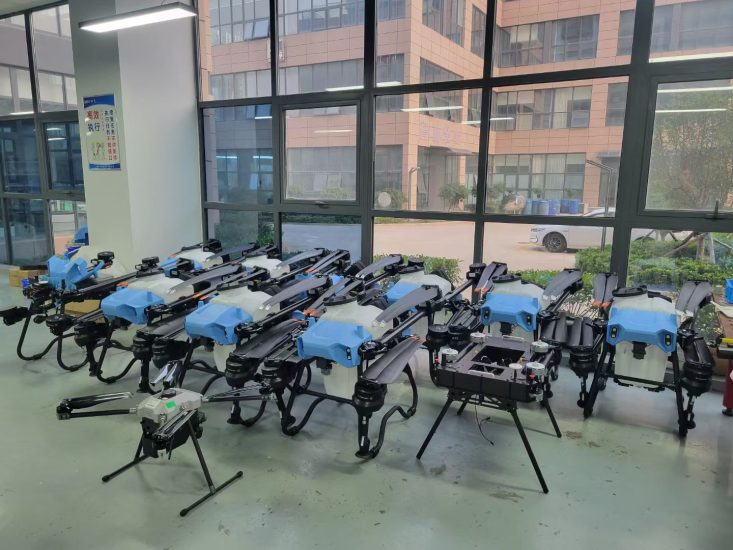
Located in a strategic industrial zone with access to supply chains and logistics networks, MSOEN’s factory spans 50,000 square meters—divided into specialized zones for R&D, component manufacturing, assembly, testing, and quality assurance. Unlike generic electronics factories, our facility is tailored exclusively to aerial photography drones, ensuring every square meter serves a purpose in delivering superior UAVs.
2.1 Design & Prototyping Lab: Where Vision Takes Shape
Before mass production begins, every MSOEN drone starts here. Our design lab combines 3D modeling software (SolidWorks, CATIA) with rapid prototyping tools like 3D printers and CNC machines. Engineers iterate on designs based on user feedback—for example, adjusting camera placement to reduce vibration or optimizing battery compartments for easier access.
Key innovations born in this lab include:
- Modular Camera Systems: Interchangeable lenses (wide-angle, telephoto) for versatile shooting.
- Foldable Frame Design: Compact storage without sacrificing durability.
- Ergonomic Remote Controllers: Intuitive interfaces for both beginners and professionals.
Prototypes undergo 100+ simulated flights in wind tunnels and virtual reality environments to validate performance before moving to production.
2.2 Component Manufacturing: Building Blocks of Excellence
MSOEN prioritizes vertical integration for mission-critical components, operating in-house production lines for:
2.2.1 Imaging Systems
Our cameras are the heart of aerial photography drones. MSOEN’s imaging division produces:
- 4K/8K CMOS Sensors: Custom-designed for low-light performance and dynamic range.
- Gimbal Stabilizers: Three-axis mechanical gimbals with brushless motors, capable of correcting vibrations up to 0.005°.
- Lens Assemblies: Multi-coated optics to minimize glare and distortion.
Each camera module undergoes calibration using automated optical test rigs, ensuring color accuracy and sharpness.
2.2.2 Flight Control Units (FCUs)
The FCU is the drone’s “brain,” managing navigation, stability, and obstacle avoidance. MSOEN’s FCUs integrate:
- GPS/GLONASS/BeiDou Modules: Triple-band positioning for centimeter-level accuracy.
- IMUs (Inertial Measurement Units): Six-axis gyroscopes and accelerometers for real-time orientation data.
- AI-Powered Obstacle Avoidance: Computer vision algorithms that detect and navigate around obstacles.
FCUs are tested in electromagnetic shielding chambers to prevent interference from external signals.
2.2.3 Propulsion Systems
Efficient motors and propellers are vital for flight time and maneuverability. MSOEN manufactures:
- Brushless Motors: High-torque, low-noise motors optimized for extended flight (up to 45 minutes).
- Carbon Fiber Propellers: Lightweight yet durable, with aerodynamic profiles to reduce drag.
Propellers are dynamically balanced using laser-guided machines to eliminate vibrations.
2.3 Assembly Line: Precision at Scale
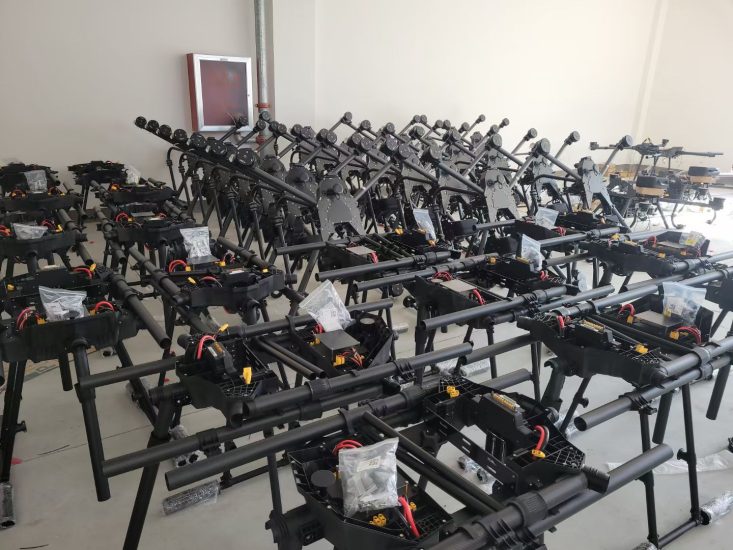
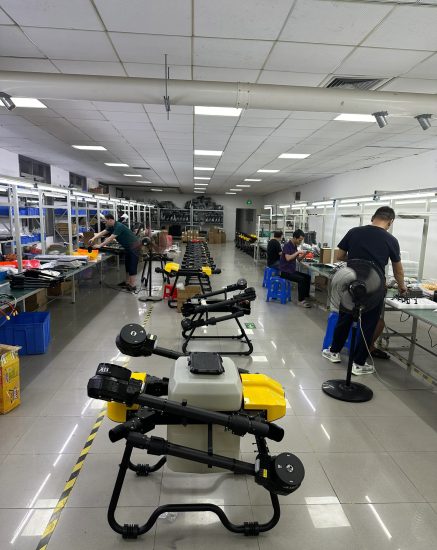
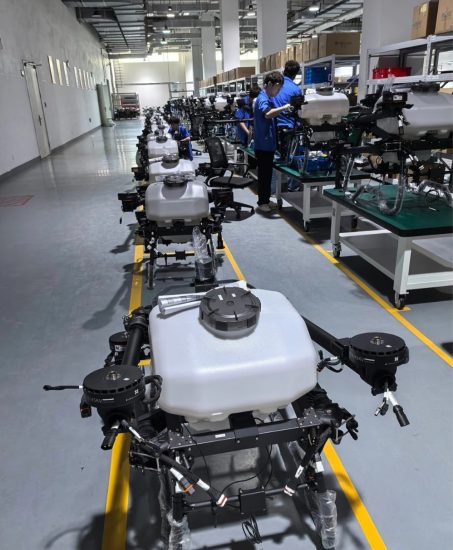
MSOEN’s assembly line blends automation with skilled craftsmanship. Divided into sub-assembly stations, each worker specializes in a task—from attaching motors to wiring circuits—to minimize errors. Key features include:
2.3.1 Automated Insertion Machines
Surface-mount technology (SMT) machines place tiny components (resistors, capacitors) onto circuit boards with 99.99% accuracy, far exceeding manual assembly.
2.3.2 Robotic Arms for Delicate Tasks
Robots handle fragile parts like camera sensors and gimbal assemblies, applying consistent torque to screws and connectors.
2.3.3 Human Oversight for Quality Checks
Skilled technicians inspect each station’s output, using magnifying glasses and digital microscopes to spot defects invisible to the naked eye.
The line is configured for flexibility: by rearranging workstations, MSOEN can switch between producing consumer drones (small batches) and enterprise models (large volumes) in under 48 hours.
2.4 Software Integration: The Digital Soul of the Drone
Hardware alone doesn’t make a great drone—software does. MSOEN’s software team develops:
- Flight Control Firmware: Open-source-compatible code for customization.
- Mobile Apps: Intuitive interfaces for mission planning, live streaming, and editing.
- Cloud Platforms: Data storage and analysis tools for enterprise clients.
Before shipping, each drone’s software is flashed with the latest firmware and tested for compatibility with iOS, Android, and Windows devices.
3. Rigorous Quality Assurance: From Factory Floor to Sky
At MSOEN, “good enough” is never good enough. Our quality assurance (QA) process is a multi-layered system designed to catch defects at every stage.
3.1 Incoming Material Inspection
All raw materials (aluminum alloys, plastics, electronic components) are tested for:
- Material Purity: Spectrometers verify metal grades.
- Durability: Tensile tests check plastic strength.
- Compliance: Certificates of conformity for RoHS (lead-free) and REACH (chemical safety) standards.
Rejected materials are returned to suppliers, and recurring issues trigger audits of vendor facilities.
3.2 In-Process Quality Control
During assembly, each station uses checklists and digital tools to log:
- Torque values for screws.
- Voltage/current readings for batteries.
- Calibration results for sensors.
Data is stored in a cloud-based QA system, allowing real-time monitoring of production metrics. If a parameter deviates, the line automatically pauses, and technicians investigate.
3.3 Final Product Testing: Simulating the Real World
Every MSOEN drone undergoes 20+ tests before leaving the factory:
3.3.1 Flight Performance Tests
- Hover Stability: Drones must maintain position within 0.5 meters in 10 mph winds.
- Endurance Flights: Full battery drain tests to confirm advertised flight times.
- Obstacle Avoidance: Navigating mazes with static and moving objects.
3.3.2 Environmental Stress Tests
- Temperature Cycling: -20°C to 50°C to simulate extreme climates.
- Vibration Testing: Shaken on platforms replicating takeoff/landing forces.
- Drop Tests: Dropped from 1.5 meters onto concrete to check structural integrity.
3.3.3 Imaging System Validation
- Resolution Tests: Capturing standardized charts to verify 4K/8K output.
- Low-Light Performance: Shooting in dark rooms with minimal ambient light.
- Color Accuracy: Comparing outputs to Pantone color swatches.
3.4 Third-Party Certification
MSOEN drones are certified by independent bodies like:
- ISO 9001: Quality management systems.
- FCC/CE: Electromagnetic compatibility.
- SDK Compatibility: Ensuring interoperability with popular accessories.
4. Sustainable Manufacturing: Building a Greener Future
MSOEN recognizes that drone production impacts the environment. Our factory implements:
4.1 Renewable Energy
Solar panels cover 30% of the factory roof, generating 2 MW of electricity—enough to power 500 homes annually. Excess energy is fed back into the grid.
4.2 Waste Reduction
- Recycled Materials: 60% of plastics and metals are post-consumer recycled.
- Zero-Waste Packaging: Biodegradable foam and cardboard replace plastic.
- Component Reuse: Defective parts are repaired or repurposed for non-critical applications.
4.3 Water Conservation
Closed-loop cooling systems reduce water usage by 40% compared to traditional factories. Rainwater harvesting supplements non-potable water needs.
5. Customization and Scalability: Meeting Diverse Needs
One size does not fit all in aerial photography. MSOEN’s factory offers:
5.1 Enterprise-Grade Customization
For clients in agriculture, construction, or public safety, we modify:
- Payloads: Adding multispectral sensors, thermal cameras, or LiDAR.
- Software: Developing custom mission-planning tools.
- Durability: Reinforcing frames for harsh environments.
5.2 Small-Batch Production
Hobbyists and indie filmmakers can order limited-edition drones with unique colors or accessories, produced on dedicated “boutique” lines.
5.3 Global Logistics
With regional warehouses in North America, Europe, and Asia, MSOEN ships drones within 48 hours of order confirmation, using carbon-neutral couriers.
6. The People Behind the Factory: Skilled Workforce, Continuous Learning
A factory is only as good as its people. MSOEN employs:
- 200+ Engineers: Specializing in aerospace, electronics, and software.
- 500+ Technicians: Trained in lean manufacturing and quality control.
- 50+ Support Staff: Handling logistics, customer service, and training.
We invest in employee development through:
- Monthly Workshops: On topics like AI in drones and sustainable manufacturing.
- Tuition Reimbursement: For degrees in STEM fields.
- Safety Certifications: OSHA and ISO 45001 training.
7. Future-Proofing the Factory: Adapting to Tomorrow’s Demands
The drone industry evolves rapidly, and MSOEN’s factory is designed to stay ahead:
7.1 Expansion Plans
By 2025, we will add 20,000 square meters for:
- AI Development Labs: Training drones to recognize objects autonomously.
- Drone Swarm Testing Areas: Simulating coordinated flights for large-scale mapping.
7.2 Automation Upgrades
Next-generation robots will handle 70% of assembly tasks, freeing technicians to focus on complex troubleshooting.
7.3 Circular Economy Initiatives
We are piloting a drone buyback program, refurbishing old units for resale or recycling rare-earth metals.
Conclusion: Why MSOEN’s Factory Sets the Standard
In an industry crowded with generic manufacturers, MSOEN stands out by treating drone production as an art form. Our factory combines vertical integration, rigorous QA, sustainability, and human expertise to deliver aerial photography drones that perform flawlessly in the sky.
Whether you’re a filmmaker chasing the perfect sunset shot, a farmer optimizing crop yields, or a rescue team searching for survivors, MSOEN’s drones are built to exceed expectations—because they’re built in a factory that refuses to compromise.
Discover the difference of factory-direct excellence. Visit [MSOEN’s website] to explore our product lineup and schedule a virtual tour of our manufacturing facility.
This article highlights MSOEN’s commitment to manufacturing excellence, positioning the brand as a trusted leader in aerial photography drones. By focusing on factory-specific details, SEO keywords (e.g., “aerial photography drone factory,” “drone manufacturing process,” “MSOEN quality control”), and user-centric value, it aims to attract B2B and B2C customers while reinforcing brand authorit


No comments yet