

![Image [1]-Inside a High-Quality Aerial Drone Factory: The Making of Msoen Drones-msoen](https://www.msoen.com/wp-content/uploads/2026/01/e46bda83bc195152-1024x768.jpg)
![Image [2]-Inside a High-Quality Aerial Drone Factory: The Making of Msoen Drones-msoen](https://www.msoen.com/wp-content/uploads/2026/01/76933d8539195152-768x1024.jpg)
![Image [3]-Inside a High-Quality Aerial Drone Factory: The Making of Msoen Drones-msoen](https://www.msoen.com/wp-content/uploads/2026/01/5ced0788d4195152-768x1024.jpg)
![Image [4]-Inside a High-Quality Aerial Drone Factory: The Making of Msoen Drones-msoen](https://www.msoen.com/wp-content/uploads/2026/01/2eda0d55c5195152-768x1024.jpg)
![Image [5]-Inside a High-Quality Aerial Drone Factory: The Making of Msoen Drones-msoen](https://www.msoen.com/wp-content/uploads/2026/01/b0b3024095195152-768x1024.jpg)

In the rapidly growing world of consumer drones, performance, safety, and durability begin long before a drone leaves the warehouse—they start on the factory floor. As aerial photography becomes mainstream and drone applications expand into industries like real estate, agriculture, education, and filmmaking, the demand for high-quality, reliable drones has never been higher.
Behind every great drone is a team of engineers, designers, and technicians working in harmony to create machines that are not only technically advanced but also safe, user-friendly, and built to last. In this article, we take you inside the high-quality aerial drone factory behind Msoen—a brand that has earned recognition for combining cutting-edge innovation with precision manufacturing.
Whether you’re a retailer, reseller, or drone enthusiast, understanding what goes into building a professional-grade drone from the ground up will give you a deeper appreciation for the Msoen name.
Why Manufacturing Quality Matters in Drones
Drones are complex devices. They combine aerodynamics, electronics, imaging systems, wireless communication, and intelligent software into a single compact unit. Unlike static electronics, drones endure constant motion, vibration, temperature changes, and sometimes rough landings. That’s why manufacturing quality isn’t just important—it’s everything.
A poorly assembled drone may:
- Suffer from frequent crashes due to imbalance
- Overheat or fail during flight
- Deliver blurry or distorted video
- Lose GPS signal mid-air
- Break apart after minor impacts
On the other hand, a factory that prioritizes quality ensures:
- Tight component tolerances
- Rigorous testing protocols
- Consistent performance across batches
- Compliance with international safety standards
- Long-term reliability and customer satisfaction
Msoen was founded with one goal: to build drones that professionals and beginners alike can trust. And that mission starts in our state-of-the-art production facility.
Location and Scale: A Purpose-Built Facility
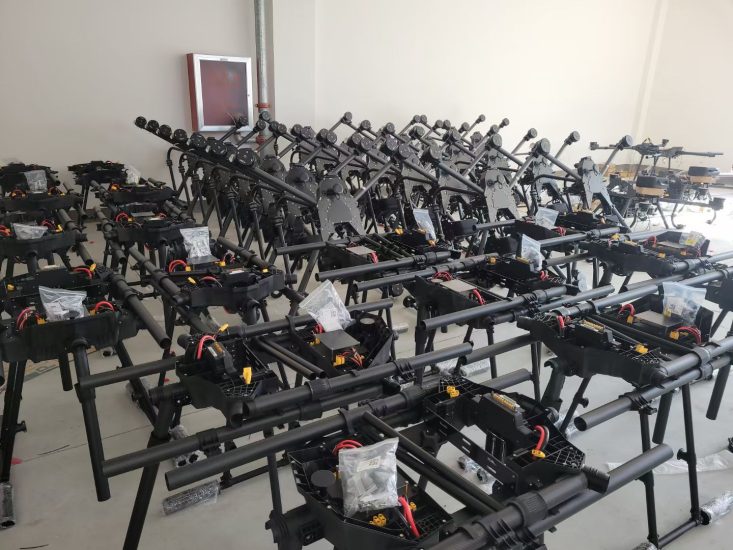
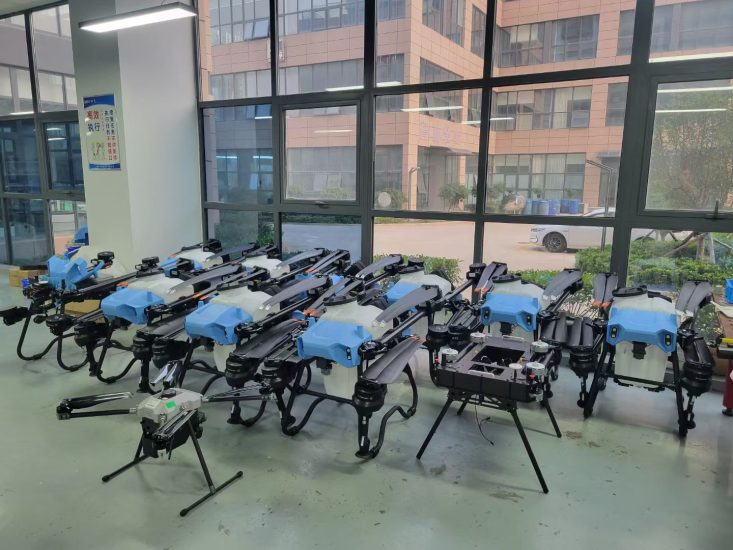
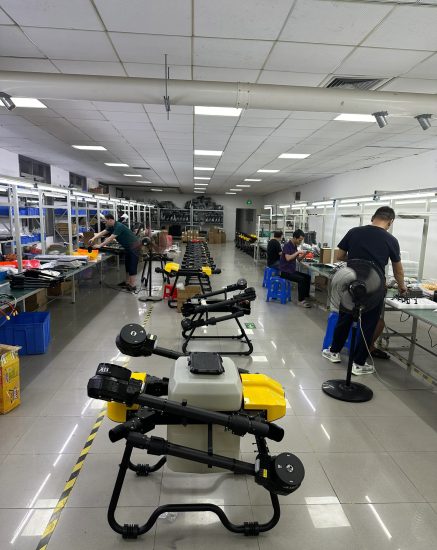
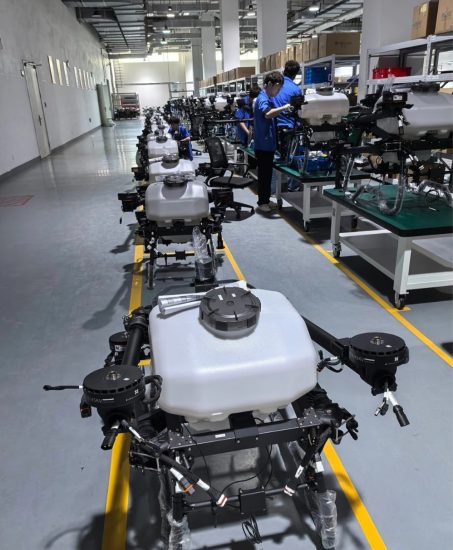
Our main manufacturing center is located in Shenzhen, China—a global hub for electronics and drone innovation. Spanning over 12,000 square meters, the factory is equipped with automated assembly lines, climate-controlled testing labs, and cleanroom environments for sensitive component installation.
With a workforce of more than 300 skilled technicians and engineers, the facility operates on a lean production model, producing up to 15,000 units per month while maintaining strict quality control at every stage.
From raw materials to final packaging, every Msoen drone is manufactured under one roof. This vertical integration allows us to control costs, ensure consistency, and respond quickly to market feedback or technical issues.
Stage 1: Research & Development (R&D)
Before a single screw is turned, our R&D team spends months designing, prototyping, and refining each drone model. This phase includes:
- Concept Development: Identifying target users (beginners, professionals, industrial clients) and defining core features.
- CAD Modeling: Creating detailed 3D blueprints of the airframe, motor mounts, and internal layout.
- Component Selection: Choosing high-grade materials (aerospace-grade plastics, carbon fiber, brushless motors) and trusted suppliers.
- Flight Algorithm Testing: Developing GPS logic, stabilization code, and intelligent flight modes in simulated environments.
Every Msoen drone undergoes at least five prototype iterations before entering mass production. This iterative process ensures optimal balance, efficiency, and durability.
Stage 2: Precision Component Manufacturing
Once the design is finalized, production begins with the fabrication of key components. Here’s how we ensure precision:
Injection Molding
The outer shell and structural parts are produced using high-pressure injection molding machines. We use durable, UV-resistant polymers that can withstand extreme temperatures (-10°C to 50°C) and resist fading from sun exposure.
PCB Production
Printed Circuit Boards (PCBs)—the “brains” of the drone—are manufactured in-house using multi-layer boards with gold-plated contacts for better conductivity. Automated optical inspection (AOI) checks for defects before assembly.
Motor and ESC Assembly
We use brushless DC motors paired with electronic speed controllers (ESCs) calibrated to match each drone model’s weight and flight profile. Motors are dynamically balanced to reduce vibration and noise.
Camera Module Integration
Our 4K and 8K camera modules are sourced from Tier-1 sensor manufacturers and undergo individual calibration for color accuracy and focus. Each lens is fitted with anti-reflective coating to improve low-light performance.
Stage 3: Automated Assembly Line
From here, components move to the main assembly line, where robotic arms and human technicians work side by side. The process includes:
- Frame Integration: Mounting motors, ESCs, and landing gear.
- PCB Installation: Securing the flight controller, GPS module, and wireless transceiver.
- Camera and Gimbal Mounting: Aligning the imaging system with sub-pixel precision.
- Wiring Harness Assembly: Connecting all electrical systems with heat-shrink tubing and strain relief.
- Propeller Guard Attachment (on select models): Ensuring safety compliance for younger users.
Each station is staffed by trained operators who perform visual inspections and functional tests before passing the unit to the next phase.
Stage 4: Software Loading & Calibration
No two drones are identical—even when built to the same specs. That’s why every Msoen drone receives customized software loading and sensor calibration.
- Firmware Installation: The latest stable version of our proprietary flight control software is uploaded via encrypted USB.
- Gyroscope & Accelerometer Calibration: Performed on a vibration-free platform to ensure accurate orientation detection.
- Compass Calibration: Conducted using a 3-axis coil system to neutralize electromagnetic interference.
- GPS Lock Test: Each unit must acquire at least 10 satellites within 60 seconds to pass quality control.
Only after passing these digital checks does the drone move to physical flight testing.
Stage 5: Flight Testing & Quality Assurance
This is where theory meets reality. Every single Msoen drone is test-flown in a controlled environment that simulates real-world conditions.
Closed-Field Flight Arena
Our 2,000-square-meter testing arena features:
- Netted perimeter for safe flight
- Variable wind generators (simulate 5–12 m/s winds)
- GPS signal repeaters for uninterrupted connectivity
- Obstacle courses for collision avoidance testing
During testing, drones perform:
- Auto takeoff and landing
- Hover stability (minimum 60 seconds)
- GPS return-to-home accuracy
- Intelligent flight mode validation (Follow Me, Orbit, etc.)
- Maximum range transmission test (up to 2km)
Any unit that deviates from performance benchmarks is flagged for repair or recycling.
Stage 6: Aging Test & Stress Screening
Before packaging, select units from each production batch undergo accelerated aging tests to predict long-term reliability.
- Thermal Cycling: Units are exposed to repeated heating and cooling (from -10°C to 60°C) over 72 hours.
- Vibration Testing: Simulates transportation shocks on bumpy roads.
- Power Surge Simulation: Ensures the battery management system (BMS) protects against voltage spikes.
- Drop Test: Samples are dropped from 1.5 meters onto concrete to verify structural integrity.
Only drones that pass all stress tests receive the Msoen quality seal.
Stage 7: Final Inspection & Packaging
The final stage is all about presentation and protection.
- Cosmetic Check: No scratches, smudges, or alignment issues allowed.
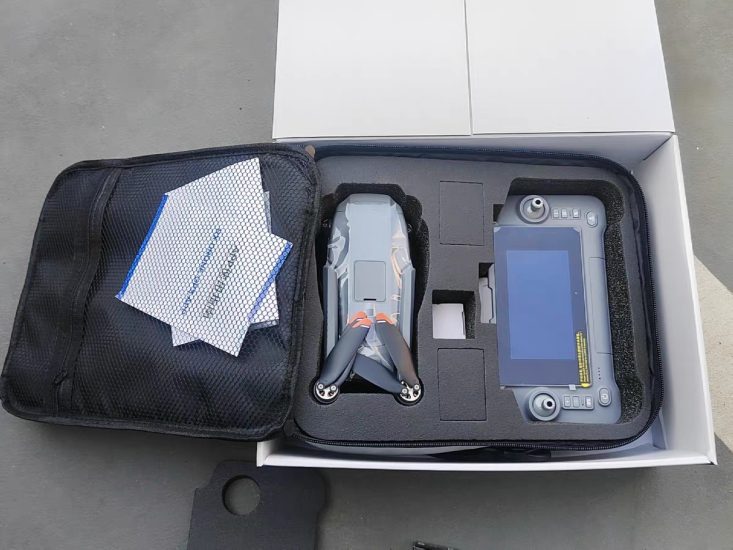
- Accessory Verification: Remote, batteries, cables, manuals, and propellers are counted and tested.
- Anti-Static Bagging: Drones are sealed in moisture-resistant, ESD-safe bags.
- Custom Branded Boxes: Each box includes multilingual instructions, QR codes for video tutorials, and a tamper-evident seal.
We ship globally using reinforced foam inserts and double-walled corrugated boxes to ensure your drone arrives in perfect condition.
Certifications & Compliance
As a responsible manufacturer, Msoen complies with international safety and environmental standards:
- CE Certification (Europe): Electromagnetic compatibility and safety compliance.
- FCC Approval (USA): Radio frequency emission limits.
- RoHS Compliant: Restriction of hazardous substances.
- ISO 9001:2015: Quality management system certification.
- UN 38.3: Lithium battery transportation safety.
These certifications aren’t just badges—they’re proof of our commitment to excellence.
Sustainability in Manufacturing
We believe great technology shouldn’t come at the cost of the planet. Our factory implements several green initiatives:
- Solar Panels: 30% of facility power comes from rooftop solar arrays.
- Water-Based Paints: Used in non-electronic parts to reduce VOC emissions.
- Recycled Packaging: 60% of cardboard is made from post-consumer waste.
- Battery Recycling Program: Customers can return old batteries for safe disposal.
Sustainability isn’t a trend for us—it’s a responsibility.
Why Retailers and Wholesalers Choose Msoen
For distributors and e-commerce sellers, working with a vertically integrated manufacturer like Msoen offers major advantages:
- Consistent Supply Chain: No middlemen or stock shortages.
- Customization Options: Private labeling, color variations, and bundle configurations.
- Competitive MOQs: Low minimum order quantities for startups.
- Fast Lead Times: 7–10 days for standard orders, 3 days for samples.
- Dedicated Support: From product training to marketing assets.
We don’t just sell drones—we build partnerships.
Behind the Scenes: The People of Msoen
Technology is nothing without the people who bring it to life. Our team includes:
- Ex-engineers from aerospace firms
- Former drone racers turned testers
- Quality managers with 15+ years of experience
- Young innovators fresh from university R&D programs
We foster a culture of continuous improvement, where every employee is encouraged to suggest design or process enhancements.
The Future of Msoen Manufacturing
Looking ahead, we’re investing in:
- AI-powered defect detection
- Robotic arm welding for metal frames
- In-house battery cell production
- Global after-sales service centers
Our vision is to make Msoen not just a leading drone brand, but a symbol of Chinese manufacturing excellence.
Final Thoughts: Built to Fly. Built to Last.
When you buy a Msoen drone, you’re not just getting a flying camera—you’re getting the result of thousands of hours of engineering, millions of test flights, and an unwavering commitment to quality.
From the drawing board to your hands, every Msoen drone is crafted with care, tested for perfection, and backed by a team that treats your trust as their highest priority.
We don’t cut corners. We build them up.
Partner With Us
Whether you’re launching a new product line, expanding your inventory, or creating a private-label drone program, Msoen offers the expertise, capacity, and quality assurance to help you succeed.
Contact our business development team today to request a catalog, sample unit, or factory tour.
Let’s build the future of flight—together.


No comments yet