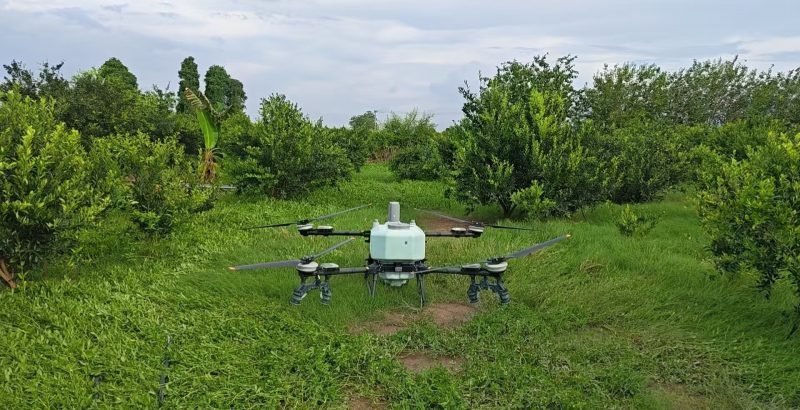



China is an important manufacturing source for agricultural spraying drones, including 20L, 30L, 40L and other commercial models. For overseas farmers, agricultural contractors, importers, distributors, and agricultural equipment companies, purchasing directly from a Chinese manufacturer can provide access to a wide range of products and OEM/ODM options.
However, importing agricultural drones is more complicated than purchasing ordinary equipment.
Buyers need to consider product specifications, batteries, packaging, international transportation, customs clearance, import requirements, taxes, documentation, local drone regulations, warranty, spare parts, and after-sales support.
This guide explains the major steps involved in importing agricultural spraying drones from China and how international buyers can reduce unnecessary costs and risks.
1. Why Import Agricultural Drones From China?
China has a large manufacturing ecosystem for agricultural drones and related components.
Depending on the supplier, buyers may be able to source:
- Agricultural spraying drones
- Drone batteries
- Intelligent chargers
- Remote controllers
- Spraying pumps
- Nozzles
- Flight-control systems
- RTK equipment
- Spare parts
- Transport cases
- OEM/ODM products
For distributors, working directly with a Chinese manufacturer can also provide opportunities for private labeling and long-term product cooperation.
However, the lowest factory price does not necessarily mean the lowest total import cost.
The buyer should calculate the complete landed cost before placing an order.
2. Define the Drone You Need Before Importing
Before contacting suppliers, determine your requirements.
Important factors include:
- Payload capacity
- Crop type
- Farming area
- Spraying application rate
- Required flight time
- Battery quantity
- Charger type
- Navigation system
- Spare parts
- OEM requirements
- Quantity
- Destination country
For example, a buyer looking for 30L drones for commercial rice farming should communicate this clearly to the supplier.
The manufacturer can then recommend an appropriate configuration.
3. Find a Suitable Chinese Manufacturer
You can find agricultural drone manufacturers through:
- Search engines
- B2B platforms
- Agricultural equipment exhibitions
- Industry networks
- Manufacturer websites
- Business referrals
When evaluating suppliers, check:
- Factory capability
- Product range
- R&D capability
- Quality control
- Export experience
- Certifications
- Warranty
- Spare-parts availability
- OEM/ODM services
- Technical support
Do not select a supplier based only on the lowest quotation.
4. Verify the Manufacturer Before Ordering
Before making a large payment, conduct reasonable supplier verification.
Request:
- Company information
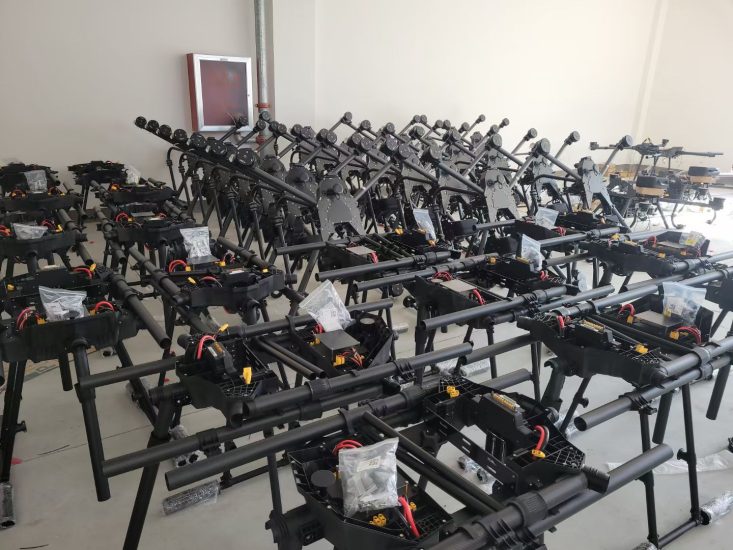
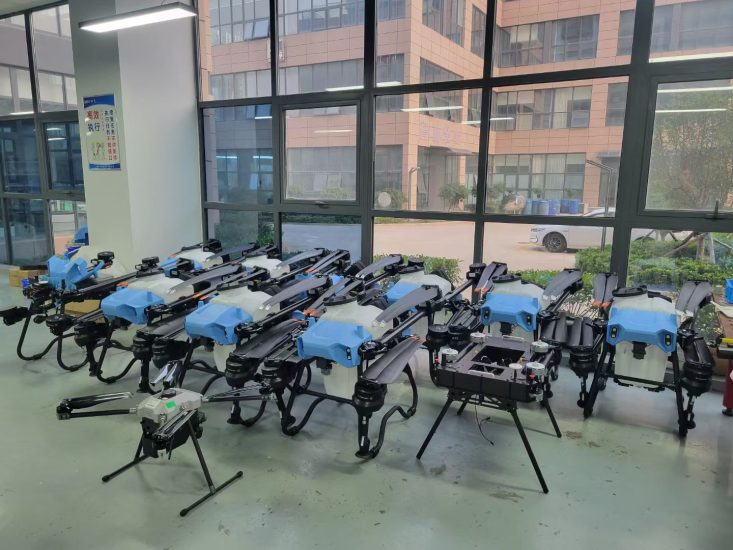
- Factory photographs
- Product specifications
- Test videos
- User manuals
- Available certificates
- Warranty terms
- Spare-parts information
- Export experience
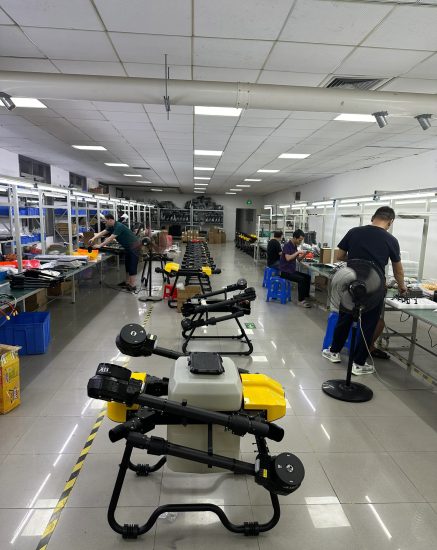
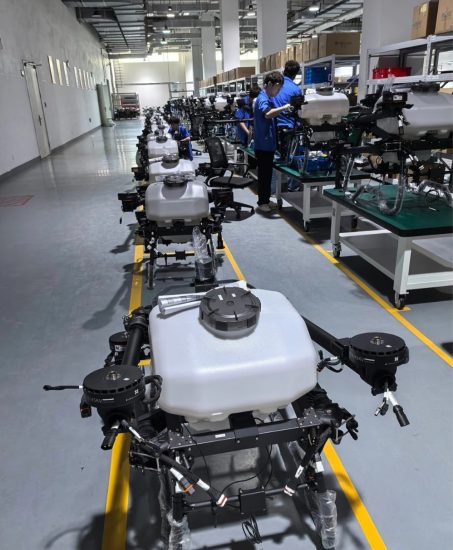
For larger orders, consider a factory audit or third-party inspection.
If possible, arrange a live video tour of the factory and production facilities.
5. Request a Complete Quotation
Ask the manufacturer to provide a detailed quotation.
The quotation should clearly state:
- Drone model
- Payload capacity
- Battery quantity
- Charger
- Remote controller
- Accessories
- Spare parts
- Packaging
- OEM charges
- MOQ
- Production lead time
- Incoterm
- Payment terms
Avoid accepting a quotation that simply says:
Agricultural Drone — USD XXX
You need to know exactly what is included.
6. Understand the Difference Between Product Price and Landed Cost
The factory price is only one part of the total cost.
Your approximate landed cost may include:
Product Cost + Packaging + Domestic Logistics + Export Charges + International Freight + Insurance + Customs Duties + Import Taxes + Destination Charges
The exact cost depends on your country, shipment size, shipping method, product classification, and import regulations.
This is why buyers should calculate the total landed cost before deciding whether a supplier’s quotation is competitive.
7. Choose the Appropriate Incoterm
Common Incoterms include:
- EXW
- FOB
- CIF
- DAP
- DDP
EXW
The buyer generally takes responsibility for transportation from the supplier’s premises and subsequent logistics.
FOB
The seller handles certain export responsibilities and delivery to the agreed port, while the buyer handles the main international transportation and subsequent costs.
CIF
The seller arranges the main transportation and insurance to the named destination port, but destination-side charges and import procedures may still be the buyer’s responsibility.
DAP
The seller arranges delivery to the agreed destination, while the buyer generally handles import clearance and applicable duties and taxes.
DDP
The seller takes on a broader range of responsibilities, including import clearance and delivery, subject to whether the seller can legally provide such service in the destination country.
The exact responsibilities depend on the agreed Incoterm and contract.
Always confirm the details before ordering.
8. Agricultural Drones With Lithium Batteries Require Special Attention
Many agricultural drones use high-capacity lithium batteries.
This is an important consideration when arranging international transportation.
Battery shipments may be subject to specific requirements concerning:
- Packaging
- Dangerous-goods classification
- Transport documentation
- Airline or carrier acceptance
- Battery specifications
- Shipping method
Therefore, buyers should tell the supplier and freight provider that the shipment contains lithium batteries.
Do not assume that ordinary cargo shipping procedures automatically apply.
The exact transportation requirements depend on the battery type, configuration, shipment quantity, and transportation method.
9. Air Freight vs Sea Freight
The best transportation method depends on the order size and delivery requirements.
Air Freight
Air freight can be suitable when:
- The shipment is relatively small
- Delivery speed is important
- The buyer needs samples
- The equipment is urgently required
However, lithium batteries may affect airline acceptance and transportation procedures.
Sea Freight
Sea freight may be more suitable for:
- Larger orders
- Multiple drones
- Distributor shipments
- Non-urgent deliveries
Sea transportation generally requires more time but can be economical for larger shipments.
The best option should be evaluated according to the complete shipment, not just the drone itself.
10. Can Agricultural Drones Be Shipped by Express?
Small accessories and certain components may be suitable for express transportation.
However, complete agricultural drones with high-capacity lithium batteries require careful evaluation.
The carrier may require additional documentation or impose specific shipping restrictions.
Before booking transportation, provide the freight forwarder with:
- Drone model
- Battery model
- Battery quantity
- Battery capacity
- Packaging information
- Shipment weight
- Package dimensions
- Pickup location
- Destination
This allows the logistics provider to determine an appropriate transportation solution.
11. Prepare the Required Commercial Documents
Depending on the shipment and destination country, common documents may include:
- Commercial invoice
- Packing list
- Sales contract
- Bill of lading or air waybill
- Export documentation
- Product specifications
- Battery-related documentation
- Certificates where applicable
- Other customs documents
The exact documents depend on the destination market and shipping method.
The buyer should confirm requirements with the local customs authority, customs broker, carrier, or qualified logistics provider.
12. Check the Product Classification Before Import
Correct customs classification is important.
Agricultural drones, batteries, chargers, and accessories may not necessarily be treated as one identical customs item.
The correct classification can affect:
- Import duties
- Taxes
- Customs procedures
- Required documentation
- Import restrictions
Do not simply copy a customs code from another shipment.
Confirm the appropriate classification for your specific product and destination country with a qualified customs professional or local customs authority.
13. Check Import Regulations in Your Country
Drone regulations vary significantly between countries.
Before ordering, investigate:
- Drone registration
- Import restrictions
- Radio equipment requirements
- Pilot requirements
- Flight permissions
- Agricultural application rules
- Battery requirements
- Product certification
- Insurance requirements
Importing the equipment and legally operating the equipment are two separate issues.
A drone may be importable but still require registration or operational approval before it can be used commercially.
14. Agricultural Chemical Regulations Are Also Important
The drone itself is only part of the agricultural operation.
The chemicals applied by the drone may be regulated separately.
Depending on the destination country, agricultural products may have requirements related to:
- Approved chemicals
- Application rates
- Operator qualifications
- Environmental protection
- Crop protection regulations
The drone manufacturer should not be assumed to be responsible for local pesticide regulations.
Buyers and operators should confirm local agricultural requirements before commercial operation.
15. Calculate Customs Duties and Taxes
Import costs vary by destination.
Potential charges may include:
- Customs duty
- Import VAT or sales tax
- Customs processing fees
- Port or airport charges
- Broker fees
- Storage charges
- Inspection fees
The exact amount depends on:
- Customs classification
- Declared customs value
- Country of origin
- Destination country
- Trade agreements
- Local tax regulations
Do not estimate import costs solely from the supplier’s product price.
16. Ask the Supplier About Packaging
Agricultural drones contain electronic components and mechanical parts that require suitable protection during international transportation.
Ask the manufacturer about:
- Outer cartons
- Foam protection
- Transport cases
- Moisture protection
- Battery packaging
- Shipping labels
- Product labels
For large orders, consider whether a stronger export package is required.
Good packaging can reduce the risk of damage during handling and transportation.
17. Consider Ordering Spare Parts With the First Shipment
A common mistake is ordering only the drones.
For commercial operation, consider adding commonly needed spare parts.
Possible items include:
- Propellers
- Motors
- Pumps
- Nozzles
- Filters
- Batteries
- Chargers
- Landing components
- Electronic components
Buying spare parts together with the initial shipment can simplify logistics and reduce future downtime.
For distributors, maintaining a local spare-parts inventory can also improve after-sales service.
18. Consider the Warranty Before Importing
International warranty service can be more complicated than domestic warranty service.
Before ordering, clarify:
- Warranty period
- Covered components
- Battery warranty
- Repair procedures
- Replacement procedures
- Shipping responsibility
- Technical support
Ask whether defective components need to be shipped back to China.
If so, determine who pays transportation costs and how long the repair process normally takes.
19. Request a User Manual and Technical Documentation
International buyers should receive appropriate technical documentation.
Useful documents may include:
- User manual
- Quick-start guide
- Battery instructions
- Charger instructions
- Maintenance instructions
- Troubleshooting guide
- Spare-parts list
- Product specifications
If you are a distributor, ask whether the documentation can be translated into the local language.
20. Consider Operator Training
An agricultural drone is a technical product.
Operators should understand:
- Assembly
- Flight control
- Mission planning
- Spraying parameters
- Battery management
- Maintenance
- Safety procedures
- Emergency procedures
Ask whether the manufacturer provides:
- Online training
- Training videos
- Manuals
- Remote support
- On-site training where available
Training can reduce operating mistakes and improve customer satisfaction.
21. Sample Order Before Bulk Import
For new suppliers, consider starting with a sample.
The sample can help you verify:
- Product quality
- Flight performance
- Spraying performance
- Battery performance
- Packaging
- Documentation
- Technical support
- Supplier communication
If the sample meets your requirements, you can move to a larger order.
This approach is especially useful for distributors entering a new agricultural drone market.
22. Factory Inspection Before Large Orders
For larger purchases, a factory inspection can provide additional confidence.
The inspection may examine:
- Company information
- Production facilities
- Assembly lines
- Testing equipment
- Warehouse
- Quality-control procedures
- Product samples
- Packaging
You can conduct the inspection personally, through a trusted representative, or through an independent inspection company.
23. How to Reduce the Total Import Cost
Several strategies can help control costs.
Compare Multiple Manufacturers
Don’t accept the first quotation.
Compare several suppliers using the same specifications.
Compare Complete Packages
Include:
- Drone
- Battery
- Charger
- Spare parts
- Packaging
- Freight
Negotiate Based on Quantity
Ask for pricing at different order volumes.
Consolidate Shipments
For larger orders, consolidating products can sometimes improve logistics efficiency.
Plan Spare Parts in Advance
Avoid repeated small international shipments when practical.
Compare Shipping Methods
Evaluate air and sea transportation based on total cost and delivery time.
24. Common Import Mistakes to Avoid
Mistake 1: Choosing the Cheapest Supplier
The lowest factory price may not produce the lowest landed cost.
Mistake 2: Ignoring Batteries
Battery transportation can significantly affect shipping arrangements.
Mistake 3: Comparing Different Incoterms
EXW, FOB, CIF, DAP, and DDP are not directly comparable.
Mistake 4: Not Checking Local Regulations
Importing a drone does not automatically mean it can be legally operated.
Mistake 5: Ordering Too Many Units Initially
A sample or small test order can reduce risk.
Mistake 6: Ignoring Spare Parts
A lack of replacement components can create long downtime.
Mistake 7: Not Confirming Warranty Terms
International repair procedures should be clear before payment.
Mistake 8: Not Checking Packaging
Agricultural drones need appropriate export packaging.
25. A Simple Agricultural Drone Import Checklist
| Item | Check Before Ordering |
|---|---|
| Product | Model and specifications |
| Payload | 20L / 30L / 40L or other |
| Battery | Quantity and specifications |
| Charger | Compatibility |
| Spraying | Pump and nozzle configuration |
| Spare parts | Initial spare-parts package |
| Supplier | Factory verification |
| Price | Complete quotation |
| Incoterm | EXW / FOB / CIF / DAP / DDP |
| Freight | Shipping method |
| Documents | Commercial and technical documents |
| Customs | Classification and import requirements |
| Taxes | Duties and local taxes |
| Certification | Destination-market requirements |
| Packaging | Export protection |
| Warranty | Coverage and procedures |
| Training | Operator support |
| Delivery | Production and shipping lead time |
FAQ
Can I import agricultural spraying drones directly from China?
Yes, international buyers can purchase agricultural drones from Chinese manufacturers, but they should first verify destination-country import, drone-operation, radio, battery, and agricultural regulations.
Can agricultural drones with lithium batteries be shipped internationally?
Transportation may be possible, but lithium batteries can be subject to specific shipping requirements. Buyers should provide complete battery information to the carrier or freight provider before booking transportation.
Is air freight or sea freight better for agricultural drones?
It depends on shipment size, urgency, battery configuration, destination, and carrier requirements. Air freight may be suitable for smaller urgent shipments, while sea freight may be more economical for larger orders.
What documents do I need to import an agricultural drone?
Documents vary by destination and shipment method. Common commercial documents may include an invoice, packing list, transport document, and product or battery documentation. Additional certificates may be required depending on the market.
Do I need to register an agricultural drone?
Many countries have drone registration or operational requirements, but the rules vary. Check the regulations in your destination country before commercial operation.
Should I buy spare parts with my first order?
For commercial users and distributors, purchasing commonly required spare parts with the initial shipment can help reduce downtime and future logistics costs.
Can a Chinese manufacturer arrange shipping?
Some manufacturers can help arrange transportation, while others may work with the buyer’s nominated freight forwarder. Confirm the exact shipping responsibility under the agreed Incoterm.
Should I use DDP when importing agricultural drones?
DDP may simplify logistics in some situations, but buyers should understand exactly what is included and whether the seller or logistics provider can legally handle import procedures in the destination country. Always verify the actual tax and customs arrangements.
Final Advice
Importing agricultural spraying drones from China can be a practical option for farmers, agricultural service companies, importers, and distributors, but successful importing requires careful planning.
The process should be viewed as:
Product Selection → Supplier Verification → Quotation → Sample → Testing → Order → Quality Control → Documentation → Shipping → Customs Clearance → Delivery → Training → After-Sales Support
Don’t focus only on the factory price.
Calculate the total landed cost and evaluate the entire supplier solution.
Before placing an order, confirm the drone configuration, battery requirements, shipping method, customs classification, import taxes, destination-country regulations, warranty, spare parts, and technical support.
For distributors, the best long-term strategy is to work with a manufacturer that can provide not only competitive products but also stable production, OEM/ODM support, spare parts, documentation, training, and reliable after-sales cooperation.
A successful agricultural drone import is not simply about moving equipment from China to another country.
It is about building a complete and compliant supply chain that allows the equipment to reach the customer safely and operate reliably in the target market.


No comments yet