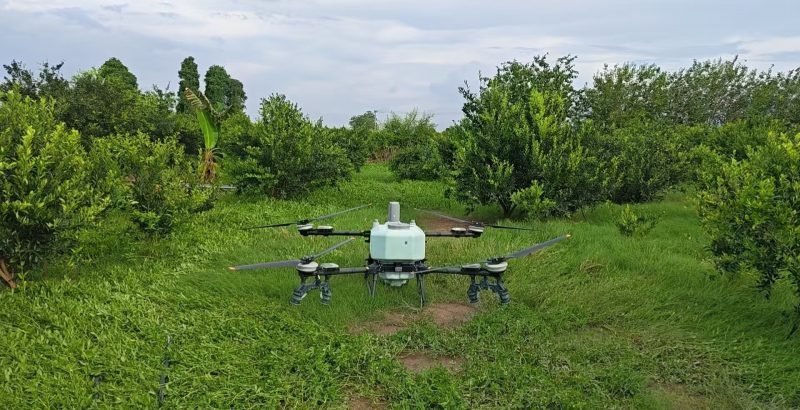



Importing agricultural spraying drones from China can be an attractive option for agricultural equipment distributors, farm machinery companies, drone dealers, importers, and businesses looking to develop their own agricultural UAV product line.
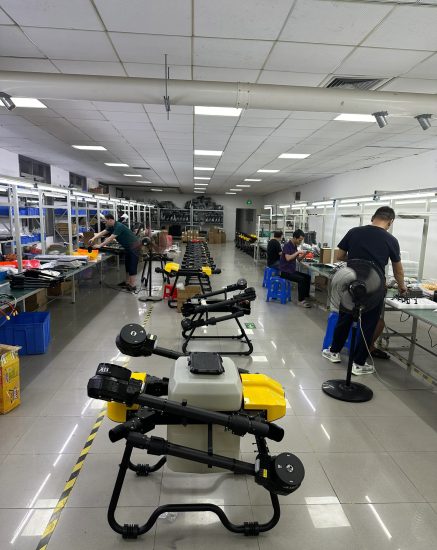
China has a large manufacturing supply chain for agricultural drones, including spraying systems, batteries, chargers, motors, flight-control systems, sensors, spare parts, and related equipment.
However, buying an agricultural drone from China involves more than finding a factory and paying the product price.
International buyers should consider product selection, supplier verification, pricing, batteries, packaging, shipping, customs documentation, import requirements, taxes, spare parts, warranty, and after-sales support.
This guide explains the major steps involved in importing agricultural spraying drones from China.
Why Import Agricultural Drones from China?
China is an important manufacturing base for agricultural UAV equipment.
International buyers can find suppliers offering:
- Agricultural spraying drones
- Different payload capacities
- Fertilizer-spreading systems
- Seeding solutions
- Agricultural drone batteries
- Chargers
- Remote controllers
- Spraying pumps
- Nozzles
- Spare parts
- OEM products
- ODM solutions
For distributors, direct sourcing from a Chinese manufacturer can potentially provide competitive factory pricing and greater customization flexibility.
However, buyers should evaluate the complete supply chain rather than choosing a supplier based only on price.
Step 1: Define Your Agricultural Drone Requirements
Before contacting manufacturers, determine exactly what you need.
Important specifications include:
- Payload capacity
- Tank capacity
- Spraying system
- Flow rate
- Spraying width
- Flight time
- Battery capacity
- Number of batteries
- Charger
- Navigation system
- RTK requirements
- Obstacle detection
- Remote controller
- Spare parts
- OEM requirements
You should also define the intended agricultural application.
For example:
- Rice spraying
- Wheat spraying
- Corn spraying
- Vegetable farming
- Orchard spraying
- Fruit tree applications
- Large-scale crop protection
Different applications may require different drone configurations.
Step 2: Choose the Right Payload Capacity
Agricultural spraying drones are available in different sizes.
10L Agricultural Drone
A smaller model may be suitable for:
- Small farms
- Demonstration projects
- Greenhouses
- Orchards
- Specialized applications
20L Agricultural Drone
A 20L model can be considered for many commercial farming applications.
It provides a balance between:
- Payload
- Maneuverability
- Battery requirements
- Transportation
- Operating efficiency
30L Agricultural Drone
Larger-capacity drones may be appropriate for larger-scale agricultural operations.
However, buyers should evaluate the complete system rather than choosing the largest tank.
Important factors include:
- Payload
- Battery consumption
- Spray performance
- Flight time
- Refill requirements
- Field conditions
Step 3: Find a Reliable Agricultural Drone Manufacturer
Do not choose a supplier based only on an online product listing.
Evaluate:
Manufacturing Capability
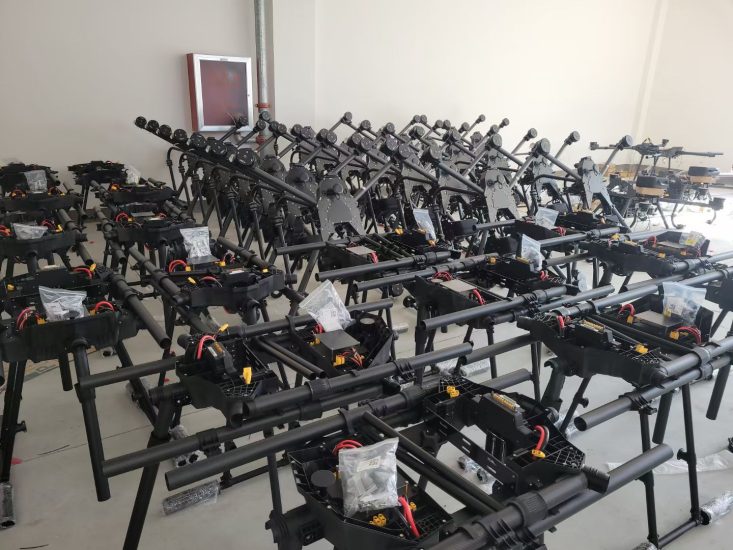
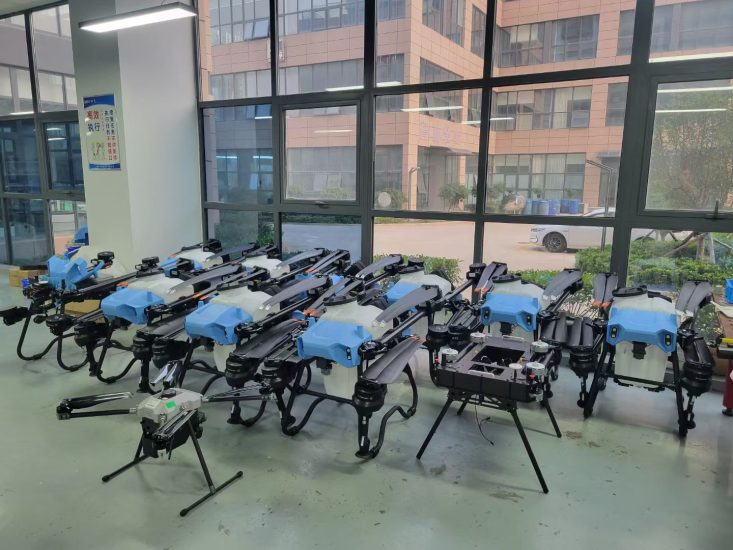
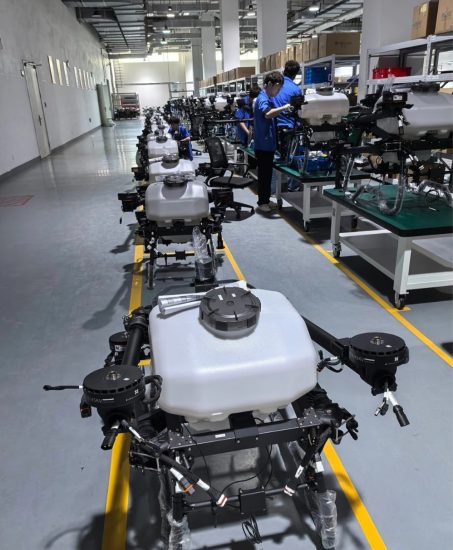
Ask whether the supplier has actual manufacturing and assembly capability.
Product Testing
Ask about:
- Flight testing
- Battery testing
- Spray-system testing
- Quality inspection
Production Capacity
Confirm whether the supplier can handle your expected order quantity.
Spare Parts
Ask whether replacement components are available.
OEM Capability
If you want your own brand, confirm whether OEM services are supported.
Export Experience
Ask whether the supplier has experience shipping agricultural drones internationally.
Step 4: Request a Detailed Factory Quotation
A professional quotation should clearly show the product configuration.
Ask the manufacturer to specify:
- Drone model
- Payload capacity
- Battery quantity
- Battery specifications
- Charger
- Remote controller
- Spraying system
- Standard accessories
- Spare parts
- OEM costs
- Packaging
- Production lead time
Do not compare two suppliers if their quotations contain different configurations.
For example, Supplier A may include one battery while Supplier B includes two batteries.
Supplier B may have a higher unit price but provide a better overall package.
Step 5: Understand Agricultural Drone Import Costs
The factory price is only one part of your total cost.
The total import cost may include:
Product Price + Packaging + Inland Transportation + International Freight + Customs Clearance + Import Duties + Taxes + Destination Charges + Local Delivery
The actual costs depend on the destination country and shipping method.
For a more accurate calculation, provide the manufacturer or logistics provider with:
- Product model
- Quantity
- Number of batteries
- Destination country
- Destination city
- Preferred shipping method
Step 6: Pay Special Attention to Lithium Batteries
Many agricultural spraying drones use rechargeable lithium batteries.
This is an important consideration when arranging international transportation.
Battery shipments may have specific transportation requirements depending on:
- Battery type
- Battery capacity
- Quantity
- Packaging
- Transportation method
- Destination
- Applicable regulations
Before shipment, ask the supplier about the battery specifications and required shipping documentation.
Do not assume that the same shipping method used for ordinary machinery will automatically apply to drones with batteries.
Step 7: Choose the Shipping Method
The appropriate shipping method depends on your order size, destination, urgency, and battery configuration.
Possible options may include:
Air Freight
Air freight may be suitable when:
- The shipment is relatively small
- Delivery speed is important
- The destination is suitable for air cargo
Battery transportation requirements should be confirmed in advance.
Sea Freight
Sea freight can be considered for larger commercial shipments.
It may be more suitable when:
- Order volume is large
- Delivery time is less urgent
- The buyer wants to reduce transportation costs
The final method should be determined based on the cargo and destination requirements.
Step 8: Prepare Export and Import Documents
The exact documentation depends on the product, destination, shipping method, and local regulations.
Common commercial documents may include:
- Commercial invoice
- Packing list
- Transport document
- Product information
- Battery-related documents where applicable
- Export documentation
- Other documents required by the destination
Buyers should confirm the exact requirements with their customs broker or logistics provider before shipment.
Step 9: Check Import Regulations in Your Country
Agricultural drones are not necessarily subject to the same rules in every country.
Before placing a large order, check:
- Drone registration requirements
- Aviation regulations
- Radio-frequency requirements
- Import requirements
- Agricultural chemical application regulations
- Battery transportation requirements
- Product compliance requirements
- Operator requirements
A drone may be technically suitable but still require additional registration or approval before commercial operation.
Therefore, buyers should investigate local requirements before importing.
Step 10: Calculate the Landed Cost
A useful way to evaluate an agricultural drone purchase is to calculate the landed cost.
The basic formula is:
Landed Cost = Product Cost + International Shipping + Import Costs + Local Charges
For example, a buyer should not calculate profitability based only on the factory quotation.
The distributor may also need to pay for:
- Local transportation
- Warehousing
- Marketing
- Installation
- Training
- Warranty
- Spare parts
- Customer service
These expenses should be included in the business plan.
Step 11: Order a Sample Before a Large Shipment
For first-time buyers, a sample or small trial order can reduce risk.
Testing should cover:
- Flight performance
- Spraying performance
- Battery operation
- Charger
- Remote controller
- Navigation
- Software
- Product packaging
- Spare parts
- Documentation
If you are a distributor, test the product in conditions similar to your target market.
This can help identify problems before committing to a larger shipment.
Step 12: Prepare Spare Parts
Importers should consider purchasing spare parts together with the initial shipment.
Common parts include:
- Propellers
- Motors
- ESCs
- Pumps
- Nozzles
- Pipes
- Landing gear
- Sensors
- Batteries
- Chargers
- Remote controllers
A local spare-parts inventory can reduce downtime for customers.
For distributors, it can also improve customer confidence.
Agricultural Drone OEM Importing
If you plan to sell the drone under your own brand, discuss OEM before production.
Possible OEM services include:
- Company logo
- Packaging
- Product labels
- Manuals
- Accessories
- Color options
- Selected product configurations
For more advanced projects, ODM may involve:
- Hardware modifications
- Software
- Product structure
- Customized functions
OEM and ODM projects may require higher MOQs and longer production times.
Agricultural Drone Importing for Distributors
Distributors should think beyond the first shipment.
A long-term supply plan should include:
Product
Choose models with sufficient market demand.
Price
Maintain enough margin for your local market.
Spare Parts
Keep commonly required components available.
Warranty
Define the manufacturer’s responsibilities clearly.
Technical Support
Make sure your team can obtain technical assistance.
Supply Stability
Confirm the manufacturer can support future orders.
Marketing
Request product images, specifications, manuals, and other useful materials.
A reliable supply chain is often more important than obtaining the absolute lowest initial price.
Common Mistakes When Importing Agricultural Drones
Mistake 1: Choosing the Cheapest Supplier
The cheapest product may not provide the best total value.
Mistake 2: Ignoring Battery Transportation
Battery requirements can affect the shipping method and total cost.
Mistake 3: Not Checking Local Regulations
Drone operation may require registration, certification, or other approvals depending on the country.
Mistake 4: Buying a Large Quantity Without Testing
A sample order can reduce the risk of discovering technical problems after a large shipment arrives.
Mistake 5: Not Buying Spare Parts
Without replacement parts, even a small failure can cause long downtime.
Mistake 6: Not Confirming the Product Configuration
Always confirm the exact model, battery, charger, accessories, and spraying system before payment.
Mistake 7: Ignoring After-Sales Support
Technical support is particularly important for distributors serving multiple customers.
How to Ask a Chinese Manufacturer for an Import Quotation
A good inquiry should include:
Product: Agricultural spraying drone
Capacity: 20L / 30L / other
Quantity: ______ units
Destination country: ______
Destination city: ______
Application: ______
OEM: Yes / No
Battery quantity: ______
Spare parts: Yes / No
Shipping: Air / Sea / Other
Target delivery date: ______
For example:
We are planning to import agricultural spraying drones from China for distribution in our market. We are interested in 20L models and would like to purchase 10 units for the initial order. Please provide your factory price, product specifications, battery configuration, spare-parts options, OEM availability, production lead time, and shipping cost to our destination.
This gives the manufacturer enough information to prepare a useful quotation.
Why Choose MSOEN for Agricultural Drone Importing?
MSOEN provides agricultural UAV solutions for international buyers and businesses looking to source agricultural spraying drones from China.
For importers and distributors, product selection can be based on:
- Crop application
- Payload requirements
- Order quantity
- Target market
- Battery configuration
- OEM requirements
- Spare-parts requirements
- Shipping destination
Buyers can discuss the appropriate agricultural drone configuration before placing an order.
The goal is not simply to find the lowest factory price, but to build a reliable purchasing solution covering the product, documentation, spare parts, support, and international logistics requirements.
Frequently Asked Questions
Can I import agricultural spraying drones directly from China?
Yes. International importers and distributors can purchase agricultural drones from Chinese manufacturers, subject to the applicable import, aviation, radio, battery, and local operating requirements.
How much does it cost to import an agricultural drone from China?
The total cost depends on the drone configuration, quantity, batteries, shipping method, destination, customs charges, taxes, and other applicable costs.
Can I import a 20L agricultural spraying drone?
A 20L agricultural drone can be imported for commercial purposes where permitted, but buyers should verify the requirements in their destination country before purchasing.
Can agricultural drones with lithium batteries be shipped internationally?
Transportation may be possible, but lithium batteries can have specific shipping and documentation requirements. Confirm the applicable transportation rules before shipment.
Should I order a sample first?
For a new supplier relationship, a sample or small trial order can help verify product quality and performance before a larger purchase.
Can I put my own brand on the drone?
OEM branding may be available depending on the manufacturer. Logo, packaging, MOQ, and customization requirements should be confirmed before production.
What documents are needed to import agricultural drones?
The exact documents vary by destination and shipping method. Commercial documents commonly include an invoice, packing list, and transport documentation, while battery and product-specific documentation may also be required.
Can the manufacturer arrange international shipping?
Some manufacturers can assist with international shipping or coordinate with logistics providers. Buyers should provide their destination country and city when requesting a quotation.
Import Agricultural Drones From China With a Clear Purchasing Plan
Importing agricultural spraying drones is a business project rather than a simple product purchase.
Before placing an order, evaluate:
Supplier + Product + Price + Battery + Shipping + Customs + Local Requirements + Spare Parts + Warranty + Technical Support
A detailed purchasing plan can help reduce unexpected costs and operational problems.
If you are an importer, distributor, agricultural equipment dealer, or farm machinery company looking for agricultural spraying drones from China, contact MSOEN with your requirements.
Please provide:
Drone capacity + quantity + destination country + application + OEM requirements + battery requirements
MSOEN can then discuss the appropriate product configuration and provide information for your purchasing and import planning.
Request an agricultural drone factory quotation and shipping solution for your market.


No comments yet