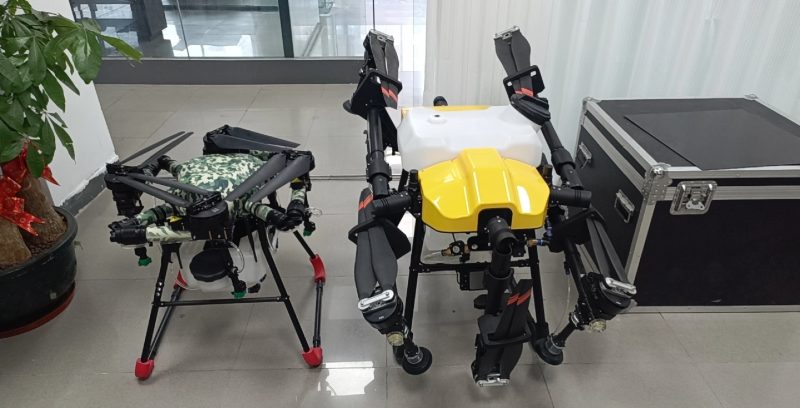



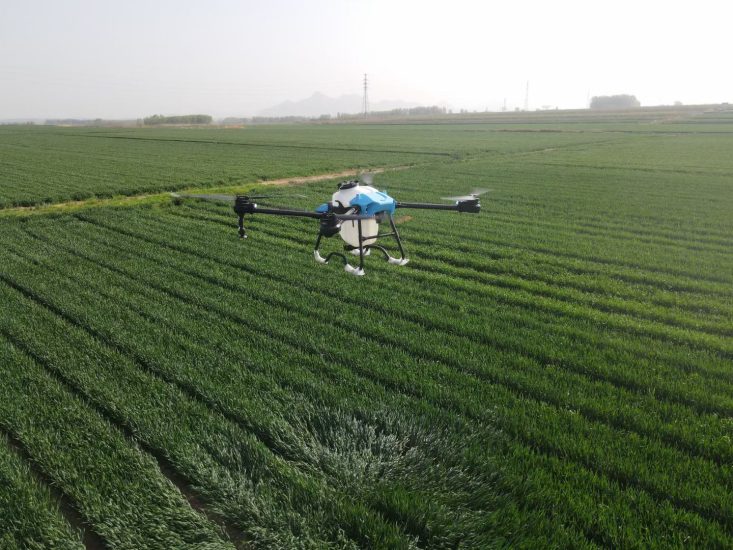
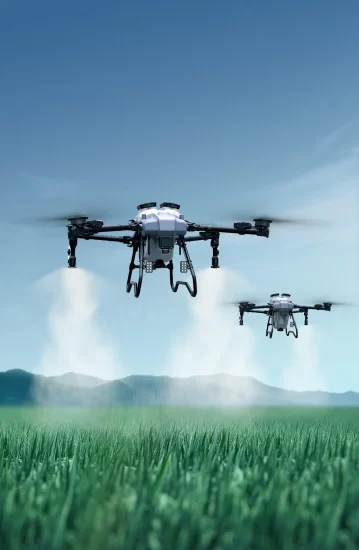
Agricultural drones are becoming increasingly useful for commercial crop spraying, spreading, field inspection, and other precision-agriculture applications. For large farms and professional agricultural service companies, choosing the right drone is not simply a matter of selecting the largest tank or the lowest purchase price.
A commercial agricultural drone must work as part of an entire operating system that includes the aircraft, batteries, chargers, spraying equipment, refill infrastructure, flight planning, operators, maintenance, spare parts, and local regulatory compliance.
For large-scale operations, a small difference in flight time, refill frequency, spray width, battery management, or downtime can have a significant effect on daily productivity.
This guide explains how to select an agricultural drone for large farms and commercial spraying operations.
1. Start With the Actual Farming Operation
Before comparing drone models, define how the drone will be used.
A large farm may have very different requirements from another farm of the same size.
Important factors include:
-
Total cultivated area
-
Crop type
-
Field size
-
Field shape
-
Terrain
-
Crop height
-
Crop density
-
Required application volume
-
Daily spraying target
-
Available labor
-
Water supply
-
Battery charging facilities
-
Weather conditions
For example, a flat farm with large, continuous fields may favor a different drone configuration from a farm with small, irregular fields or extensive orchards.
The best agricultural drone is therefore determined by the operating environment rather than tank capacity alone.
2. Determine Your Daily Spraying Requirement
One of the most useful calculations is to determine how much area you need to cover each day.
For example, suppose a commercial spraying company needs to treat a large area within a limited working window.
You need to estimate:
-
Required hectares per day
-
Available operating hours
-
Average flight time
-
Refill time
-
Battery replacement time
-
Charging time
-
Weather interruptions
-
Operator efficiency
A drone that performs well in a demonstration may not necessarily meet your daily production target.
The important measurement is actual field productivity.
3. Do Not Choose a Drone Based Only on Tank Capacity
A common mistake is to assume that a 40L drone is automatically better than a 20L or 30L drone.
A larger tank can reduce refill frequency, but the aircraft may also be heavier and require more battery power.
Commercial performance depends on several variables:
Operational productivity = effective coverage rate × available working time
Factors affecting this include:
-
Spray width
-
Flight speed
-
Flight time
-
Payload
-
Refill time
-
Battery replacement
-
Route planning
-
Field layout
A larger drone can be advantageous when the supporting infrastructure is properly designed.
4. Compare Recommended Payload, Not Just Maximum Payload
Manufacturers may publish both maximum payload and recommended operating payload.
These numbers should not be treated as identical.
A drone might physically carry a certain amount of liquid, but operating continuously at maximum payload can affect:
-
Flight time
-
Battery consumption
-
Motor temperature
-
Flight stability
-
Overall efficiency
Ask the manufacturer for performance information under realistic operating conditions.
For example:
What is the expected flight time with the recommended payload?
This is much more useful than asking only for the maximum tank capacity.
5. Evaluate Flight Time Under Real Operating Conditions
Flight-time claims should always be examined carefully.
A manufacturer may state a maximum flight time under specific conditions, but actual commercial spraying time depends on:
-
Payload
-
Battery condition
-
Wind
-
Temperature
-
Flight speed
-
Flight altitude
-
Route pattern
-
Spraying flow
For large farms, request test data or demonstrations under conditions similar to your intended application.
A useful comparison is:
Flight time with empty tank
versus
Flight time with normal operating payload
The second figure is much more relevant to commercial spraying.
6. Check the Effective Spraying Width
Spraying width directly affects field coverage.
Ask the manufacturer:
-
What is the effective spray width?
-
How many nozzles are installed?
-
What nozzle type is used?
-
What is the flow rate?
-
What flight altitude is recommended?
-
How is spray uniformity controlled?
The advertised maximum width should not automatically be considered the effective working width.
Actual performance can vary depending on:
-
Wind
-
Droplet size
-
Flight altitude
-
Nozzle arrangement
-
Crop structure
-
Spray pressure
For commercial operations, field testing is more valuable than marketing specifications.
7. Evaluate Flow-Rate Control
The spraying system should deliver a consistent application rate.
Important components include:
-
Pumps
-
Flow meters
-
Valves
-
Nozzles
-
Filters
-
Spray pipes
-
Control software
Ask whether the system can automatically adjust flow according to flight speed.
Consistent application is important because uneven spraying can reduce treatment effectiveness and increase product waste.
For professional agricultural service companies, precise application can also be important for maintaining customer trust.
8. Consider the Type of Crops You Spray
Different crops can require different drone configurations.
Potential applications include:
-
Rice
-
Wheat
-
Corn
-
Soybeans
-
Vegetables
-
Orchards
-
Vineyards
-
Cotton
-
Fruit trees
-
Other specialty crops
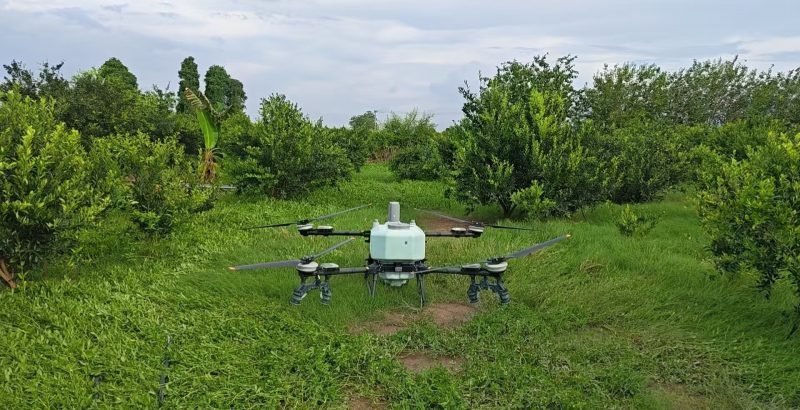
Open-field crops generally provide different flight conditions from orchards.
Orchards may involve:
-
Trees
-
Narrow rows
-
Uneven terrain
-
Higher obstacles
-
Different airflow conditions
Therefore, the same drone configuration may not be optimal for every crop.
9. Consider Terrain and Field Layout
Terrain is an important factor in drone selection.
Large farms can contain:
-
Flat fields
-
Hills
-
Slopes
-
Terraced land
-
Irrigation channels
-
Trees
-
Buildings
-
Power lines
If the operating area contains significant elevation changes, ask about:
-
Terrain-following capability
-
Altitude control
-
Radar
-
Obstacle detection
-
Positioning accuracy
A drone designed primarily for flat farmland may require additional features for more complex terrain.
10. Evaluate GPS and RTK Capabilities
Accurate positioning can improve flight planning and route repeatability.
Depending on the application, agricultural drones may use GPS or RTK-based positioning systems.
RTK can provide much higher positioning accuracy when the required infrastructure and conditions are available.
Ask:
-
Is RTK included?
-
Is it optional?
-
What correction service is required?
-
What happens if the RTK signal is unavailable?
-
Can the drone continue operating safely?
-
How is positioning data used in route planning?
The appropriate system depends on the operational requirements of your farm.
11. Check Obstacle Detection and Radar
Commercial drones may operate near:
-
Trees
-
Utility poles
-
Buildings
-
Farm equipment
-
Other obstacles
Radar or other sensing systems may improve situational awareness and automated flight functions.
Ask the manufacturer:
-
What sensors are included?
-
What obstacles can they detect?
-
How many directions are covered?
-
How does the system respond to an obstacle?
-
Is the radar standard or optional?
-
How are sensors maintained and calibrated?
Do not assume that all radar systems provide the same capability.
12. Battery Capacity Is Critical for Commercial Operations
For large farms, battery management can become one of the biggest operational factors.
A commercial fleet may require multiple batteries per aircraft.
You need to calculate:
-
Flight time
-
Charging time
-
Number of batteries
-
Battery replacement time
-
Charger capacity
-
Number of simultaneous charging ports
-
Battery storage requirements
For example, if a drone can complete several short flights but charging takes too long, the aircraft may spend more time waiting than working.
A good commercial setup should balance:
Drone capacity + battery quantity + charging capacity + refill capacity
13. Build the Right Charging System
A professional agricultural drone operation needs more than a drone and one charger.
For larger operations, consider:
-
Number of drones
-
Number of batteries
-
Charger capacity
-
Power supply
-
Charging location
-
Backup power
-
Battery storage
-
Operator workflow
The charging system should support the intended daily workload.
If multiple drones are operating simultaneously, insufficient charging capacity can become a major bottleneck.
14. Design the Refill System
Refilling can have a greater impact on productivity than the drone’s advertised flight time.
A commercial spraying operation should plan:
-
Water source
-
Mixing station
-
Refill tanks
-
Pumps
-
Hoses
-
Transport vehicles
-
Field access
The goal is to minimize unnecessary movement.
For example, if the drone needs to return to a distant location after every flight to refill, the theoretical productivity of a large-capacity aircraft may not translate into actual field productivity.
15. Calculate Total Operating Time
A useful commercial calculation is to divide each operating cycle into stages:
-
Preparation
-
Takeoff
-
Flight
-
Spraying
-
Return
-
Battery replacement
-
Refilling
-
Takeoff preparation
-
Next flight
The drone itself is only one part of this cycle.
If battery replacement takes too long, improve battery logistics.
If refilling is slow, improve the refill station.
If route planning is inefficient, improve the flight-management process.
This approach helps identify the actual bottleneck.
16. Compare Total Cost of Ownership
The purchase price is only the beginning.
A commercial agricultural drone’s total cost may include:
-
Aircraft
-
Batteries
-
Chargers
-
Remote controllers
-
Spare parts
-
Maintenance
-
Transportation
-
Training
-
Software
-
Insurance
-
Regulatory compliance
-
Downtime
For long-term operations, calculate the expected cost per hectare rather than focusing only on the purchase price.
A more expensive aircraft may provide better value if it reduces downtime and improves productivity.
17. Evaluate Motor and Propeller Reliability
Large agricultural drones carry significant payloads.
Motors and propellers therefore operate under demanding conditions.
Ask the manufacturer about:
-
Motor specifications
-
Motor efficiency
-
Recommended maintenance
-
Propeller material
-
Propeller replacement intervals
-
Spare-part availability
Also ask whether the manufacturer provides recommended inspection procedures.
Regular inspection of motors and propellers can help identify potential problems before they affect field operations.
18. Check the Spraying System for Maintenance
Agricultural chemicals and liquid residue can affect equipment over time.
The spraying system should be designed for practical maintenance.
Check whether operators can easily:
-
Remove nozzles
-
Clean filters
-
Inspect pumps
-
Replace pipes
-
Replace seals
-
Flush the system
A system that is difficult to clean can increase maintenance time and potentially affect spraying consistency.
19. Check Water and Chemical Compatibility
Different agricultural applications may involve different products.
Before using any chemical or agricultural treatment product, verify compatibility with the drone’s:
-
Tank material
-
Pump
-
Pipes
-
Valves
-
Seals
-
Nozzles
The drone manufacturer should provide appropriate technical guidance.
Operators must also follow the applicable pesticide or agricultural-chemical regulations in the operating country.
The drone manufacturer does not replace the need for proper agricultural application procedures.
20. Consider Weather Conditions
Agricultural drone performance can be affected by:
-
Wind
-
Rain
-
Temperature
-
Humidity
-
Visibility
Large farms often operate under narrow weather windows.
Therefore, the drone should be selected according to local environmental conditions.
Ask the manufacturer for recommended operating limits rather than relying on a generic statement such as “strong wind resistance.”
Actual performance depends on aircraft configuration and operating conditions.
21. Evaluate the Remote Controller
For commercial operations, the remote controller should be easy for operators to use.
Look for:
-
Clear display
-
Battery monitoring
-
Flight information
-
Route planning
-
Safety alerts
-
Spraying controls
-
Signal information
-
Easy-to-use interface
If multiple operators will use the system, consistent training is important.
The manufacturer should provide manuals and training materials.
22. Check Software and Flight Planning
Large farms can benefit from route-planning functions.
Depending on the system, software may support:
-
Field mapping
-
Route planning
-
Automatic flight paths
-
Repeated missions
-
Spraying parameters
-
Flight records
-
Battery information
-
Operator management
Ask whether software features are included in the standard price.
Also check whether software updates are provided and how long technical support will be available.
23. Plan for Spare Parts
Commercial agricultural operations cannot afford long periods of downtime because of a small replacement component.
Keep critical spare parts available.
Recommended inventory may include:
-
Propellers
-
Motors
-
Pumps
-
Nozzles
-
Filters
-
Spray pipes
-
Landing components
-
Batteries
-
Chargers
-
Electronic components
The exact spare-parts list should be based on the manufacturer’s recommendations and your operating volume.
24. Evaluate Manufacturer After-Sales Support
For large farms and commercial spraying companies, after-sales service can be as important as the aircraft itself.
Ask whether the manufacturer provides:
-
Technical support
-
Troubleshooting
-
Training
-
Maintenance instructions
-
Spare parts
-
Warranty
-
Software support
-
Remote assistance
A supplier should be able to explain how warranty claims and technical problems are handled.
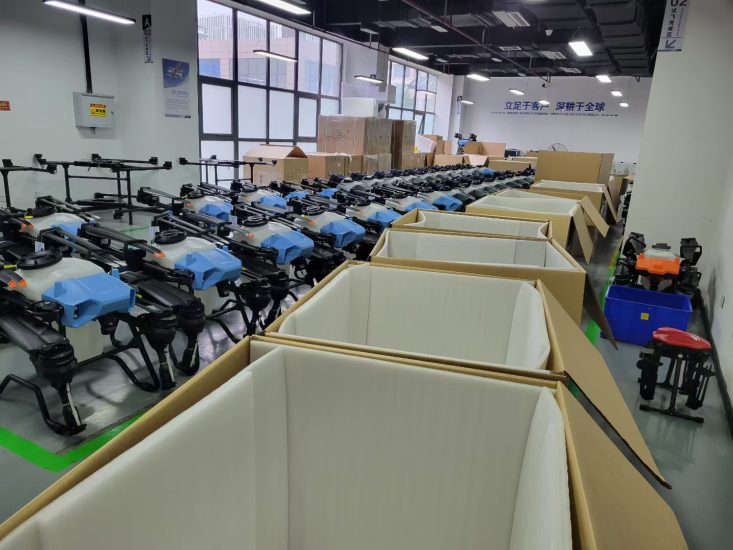
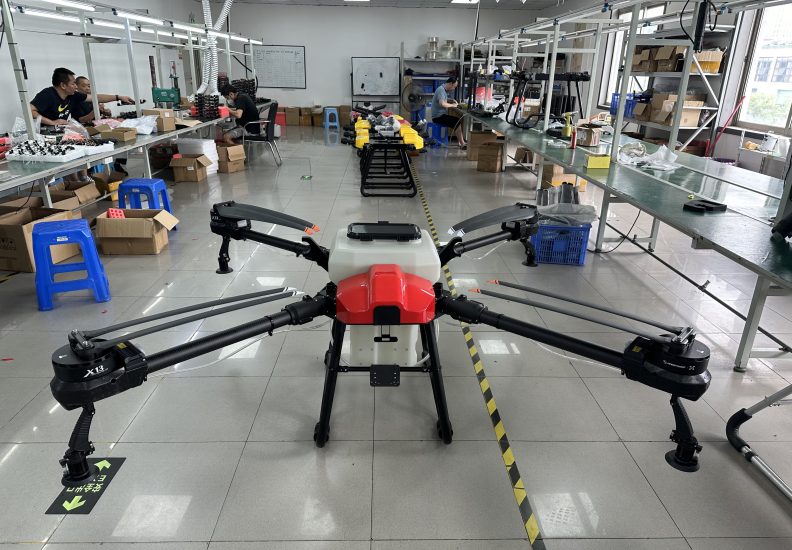
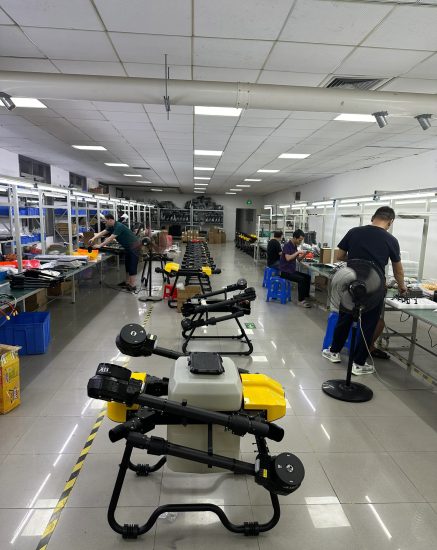
25. Check the Manufacturer’s Production Capability
If you plan to purchase multiple drones, make sure the factory can maintain consistent quality and delivery.
Ask about:
-
Production capacity
-
Quality-control procedures
-
Component supply
-
Lead time
-
Battery production
-
Spare-parts availability
For fleet purchases, consistency is important.
The second batch should perform similarly to the first batch.
26. Consider OEM and Fleet Customization
Commercial operators and distributors may want customized configurations.
Possible customization includes:
-
Brand logo
-
Product color
-
Packaging
-
Remote-controller branding
-
Accessories
-
Spare-parts kits
-
Software language
-
Selected hardware configurations
For larger fleets, standardizing the configuration can simplify:
-
Operator training
-
Maintenance
-
Spare-parts inventory
-
Battery management
-
Customer support
A consistent fleet is often easier to operate than a collection of unrelated drone models.
27. Verify Local Regulations Before Importing
Before purchasing commercial quantities, confirm the regulations in the destination country.
Requirements may involve:
-
UAV registration
-
Operator certification
-
Radio equipment
-
Product certification
-
Flight restrictions
-
Agricultural chemical application
-
Insurance
-
Data requirements
Importing a drone and legally operating it are separate issues.
A buyer should confirm both before investing in a commercial fleet.
28. Test Before Buying a Large Fleet
If you are considering 10, 20, 50, or more drones, begin with a smaller evaluation order.
Use the initial units to test:
-
Flight performance
-
Spraying efficiency
-
Battery life
-
Operator training
-
Maintenance
-
Spare parts
-
Software
-
Local customer acceptance
The results can then be used to optimize the fleet before scaling up.
29. Questions to Ask an Agricultural Drone Manufacturer
Before purchasing, ask:
-
What is the recommended payload?
-
What is the actual flight time with the normal operating load?
-
What is the effective spraying width?
-
What is the flow rate?
-
What pump is used?
-
What battery capacity is available?
-
How many batteries are recommended per drone?
-
How long does charging take?
-
What radar system is included?
-
Does the drone support RTK?
-
What crops is the drone designed for?
-
What operating conditions are recommended?
-
What spare parts should be stocked?
-
What is the warranty?
-
What technical support is available?
-
What is the production lead time?
-
Can the product be customized?
-
Can you provide a sample?
-
What documentation is supplied?
-
Can you support our target market?
A professional manufacturer should be able to provide detailed answers and supporting documentation.
30. A Practical Selection Framework
When comparing agricultural drones for commercial use, evaluate five major areas.
1. Productivity
Can the drone meet your daily area target?
2. Reliability
Can it operate consistently under realistic field conditions?
3. Operating Cost
What is the expected cost per hectare?
4. Support
Can the manufacturer provide spare parts and technical assistance?
5. Scalability
Can the supplier support you if the fleet grows?
A drone that scores well in all five categories is generally more valuable than one that simply has a large tank or low purchase price.
31. Example of a Commercial Decision
Suppose a farm is choosing between three models:
20L
Lower initial investment and easier transportation, but potentially more frequent refilling.
30L
A balanced option with higher payload and commercial flexibility.
40L
Higher capacity and potentially fewer refill cycles, but greater battery, transportation, and infrastructure requirements.
The correct choice depends on the farm’s workflow.
If the refill station is close to the field and daily acreage is moderate, a 20L or 30L drone may be sufficient.
If the farm has a large continuous area and efficient refill and charging infrastructure, a 40L system may provide greater operational efficiency.
This is why the entire workflow should be analyzed before purchasing.
32. Final Checklist for Large Farms
Before purchasing an agricultural drone fleet, confirm:
Aircraft
-
Recommended payload
-
Flight time under load
-
Spray width
-
Flow rate
-
Navigation
-
Radar
-
Safety functions
Battery
-
Capacity
-
Charging time
-
Cycle life
-
Number required
-
Replacement cost
Operations
-
Refill station
-
Charging station
-
Operators
-
Route planning
-
Maintenance
Supply
-
Spare parts
-
Warranty
-
Technical support
-
Production capacity
-
Delivery schedule
Compliance
-
UAV regulations
-
Radio requirements
-
Agricultural application regulations
-
Import requirements
Commercial
-
Unit price
-
Complete system cost
-
Shipping
-
Taxes
-
Maintenance
-
Expected cost per hectare
Conclusion
Choosing the right agricultural drone for a large farm or commercial spraying business requires a complete evaluation of the operating system.
Tank capacity is important, but it is only one factor.
Buyers should consider recommended payload, actual flight time under load, spray width, flow control, battery capacity, charging infrastructure, refill logistics, navigation, radar, terrain, weather, maintenance, spare parts, local regulations, and after-sales support.
A 20L drone may be ideal for smaller or more specialized operations. A 30L drone can provide a useful balance between capacity and flexibility. A 40L drone may be more appropriate for high-volume commercial operations with the infrastructure required to support it.
The best choice is not necessarily the largest drone.
It is the agricultural UAV that can reliably achieve your required daily coverage, application quality, operating cost, and uptime.
For large farms and agricultural service companies, testing the drone under real field conditions before purchasing a large fleet is one of the most effective ways to reduce risk.
A reliable Chinese agricultural drone manufacturer should be able to provide detailed specifications, testing support, spare parts, technical documentation, warranty service, and scalable production. With the right supplier and operating system, agricultural drones can become a practical part of a modern commercial crop-management operation.
THE END


No comments yet