



Purchasing a professional drone is an important investment for businesses involved in aerial photography, mapping, agriculture, inspection, surveillance, and industrial applications. However, many buyers quickly discover that professional drone prices vary significantly. Some systems cost only a few thousand dollars, while others require a much larger budget.
The reason is simple: the cost of a professional drone depends on much more than the aircraft itself. Flight performance, payload, batteries, communication systems, software, and customization all influence the final price.
Understanding these factors can help buyers choose the right solution without overspending.
Why Do Professional Drone Prices Vary So Much?
Professional drones are designed for different missions. A drone used for photography has very different requirements from one used for crop spraying or infrastructure inspection.
Several factors determine the overall cost:
- Flight endurance
- Payload capacity
- Camera and sensor systems
- Navigation accuracy
- Communication distance
- Battery technology
- Software functions
- Customization requirements
- Spare parts and maintenance support
The more advanced the system, the higher the investment.
Aircraft Structure and Materials
The frame is the foundation of every drone.
Professional drones often use lightweight and durable materials to achieve better stability and longer service life.
Factors affecting frame cost include:
- Size of the aircraft
- Folding design
- Weather resistance
- Structural strength
- Payload capability
Heavy-duty industrial drones naturally require more robust structures than compact photography drones.
Battery System and Flight Time
Battery performance has a major impact on price.
Longer flight endurance usually requires:
- Higher-capacity batteries
- Intelligent battery management systems
- Fast charging technology
- Multiple battery packs
Although batteries increase the initial investment, they also improve efficiency and reduce downtime during operations.
Payload Capacity
Payload capability directly influences drone cost.
Different applications require different payloads:
Photography
- High-resolution cameras
- Stabilized gimbals
Mapping
- Survey cameras
- RTK positioning systems
Inspection
- Zoom cameras
- Thermal imaging equipment
Agriculture
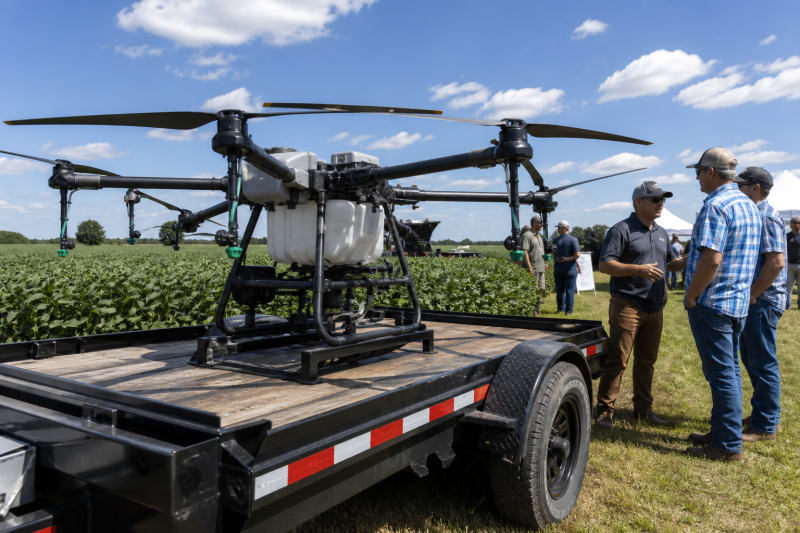
- Spraying tanks
- Spreading systems
Security Applications
- Night vision cameras
- Real-time transmission devices
Larger payloads require stronger motors and more powerful flight systems, increasing the total cost.
Camera and Sensor Systems
For many professional users, the payload is more expensive than the aircraft itself.
Specialized sensors may include:
- Thermal cameras
- Multispectral cameras
- LiDAR systems
- High-resolution optical cameras
- Infrared imaging systems
Advanced imaging equipment significantly increases the overall investment but also expands application possibilities.
Flight Control and Navigation Systems
Reliable flight control systems improve safety and operational accuracy.
Features affecting price include:
- GPS positioning
- RTK centimeter-level accuracy
- Automatic return-to-home
- Obstacle avoidance
- Waypoint mission planning
- Redundant safety systems
Industrial users usually require higher levels of reliability and precision.
Communication Range
Transmission distance is another important pricing factor.
Long-range systems often require:
- Powerful antennas
- Stable communication modules
- Real-time video transmission
- Interference resistance
These features are particularly valuable for mapping, inspection, and surveillance missions.
Software Functions
Modern drones rely heavily on software.
Intelligent functions may include:
- Automatic route planning
- AI object tracking
- Terrain following
- Data collection
- Real-time monitoring
- Cloud-based management systems
Advanced software increases efficiency and reduces pilot workload, but it also contributes to overall cost.
Accessories and Supporting Equipment
Many buyers focus only on the drone and forget additional equipment.
Typical accessories include:
- Extra batteries
- Battery chargers
- Remote controllers
- Carrying cases
- Spare propellers
- Landing pads
- Data transmission modules
These accessories should be included when estimating the total investment.
Custom Drone Development Costs
Custom drone solutions usually require additional engineering work.
Customization may involve:
- Special frame designs
- Extended flight time
- Heavy payload systems
- Unique communication modules
- Proprietary software
- Brand labeling and OEM services
Although development costs are higher, custom solutions provide greater flexibility and long-term advantages.
Operating Costs Matter Too
The purchase price is only part of the investment.
Long-term expenses include:
Battery Replacement
Batteries gradually lose capacity and require replacement over time.
Maintenance
Regular inspections and component replacement improve reliability.
Spare Parts
Propellers, motors, landing gear, and other parts experience wear during operation.
Training
Professional operators may require technical training to maximize efficiency and safety.
Software Updates
Advanced applications may require continuous software support.
Evaluating the total cost of ownership helps avoid unexpected expenses.
How to Choose the Right Budget
Instead of simply choosing the cheapest option, buyers should focus on actual requirements.
Consider:
- What mission will the drone perform?
- What payload is needed?
- How frequently will it be used?
- Are future upgrades necessary?
- Is OEM or custom development required?
The best solution is one that balances performance, reliability, and long-term value.
Common Mistakes Buyers Make
Focusing Only on Price
Low-cost drones may have limited capabilities and higher maintenance costs.
Ignoring Spare Parts Availability
Easy access to replacement components is essential for continuous operation.
Buying More Than Necessary
Paying for features that will never be used increases costs unnecessarily.
Overlooking After-Sales Support
Technical support and maintenance services are critical for professional applications.
Conclusion
The cost of a professional drone depends on much more than the aircraft itself. Payload requirements, batteries, communication systems, software, accessories, and customization all influence the final investment.
Instead of searching for the lowest price, businesses should focus on selecting a solution that matches their operational requirements and provides reliable long-term performance.
A carefully chosen professional drone can improve efficiency, reduce labor costs, and create lasting value for many industries.
FAQ
How much does a professional drone cost?
The price varies depending on flight performance, payload, sensors, software functions, and customization requirements.
What affects the price of a commercial drone?
Battery systems, payload capacity, communication range, camera equipment, and intelligent functions are major pricing factors.
Are custom drones more expensive?
Yes. Custom development usually requires additional engineering and testing, which increases the initial investment.
Should I only consider the purchase price?
No. Maintenance, batteries, spare parts, and training should also be included when evaluating total ownership costs.
Is the most expensive drone always the best?
Not necessarily. The best drone is the one that meets your operational requirements and delivers long-term value.


No comments yet