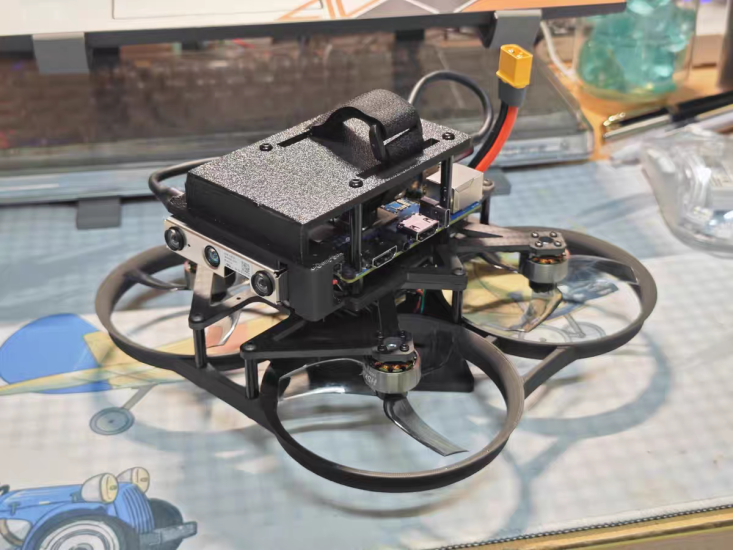


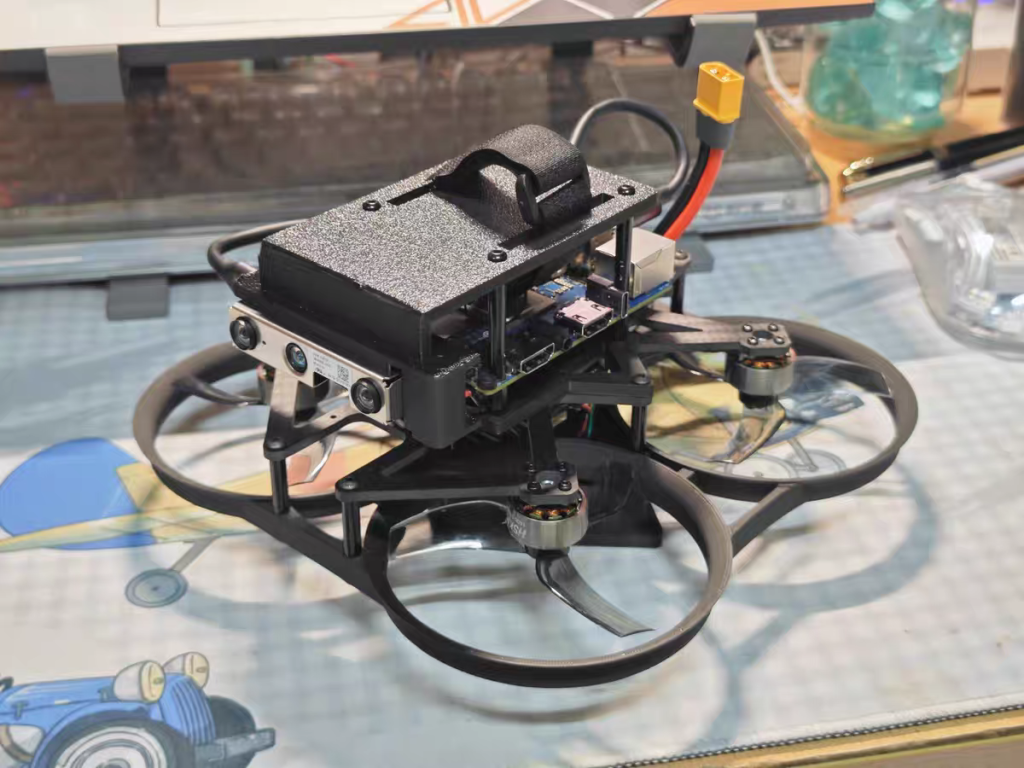
The integration of Unmanned Aerial Systems (UAS) into educational environments has transcended the era of simple remote-control hobbies to become a cornerstone of modern STEM (Science, Technology, Engineering, and Mathematics) pedagogy. At the core of this transformation is the MSOEN framework—Mission planning, Sensor fusion, Obstacle avoidance, Environmental mapping, and Network communication. This paper explores how campus-based unmanned MSOEN technology is not merely a tool for teaching robotics, but a disruptive force that is fundamentally restructuring the way students learn physics, computer science, data analysis, and systems engineering. We examine the architectural shift from “black box” consumer drones to open-source, programmable autonomous systems, and detail how this transition is preparing students for the “Algorithmic Age.”
1. Introduction: The Campus as a Living Laboratory
For decades, STEM education has been constrained by the four walls of a classroom and the limitations of theoretical abstraction. Students learned Newton’s Laws through textbook diagrams and coding through “Hello World” scripts that produced no physical output. Today, the campus itself is becoming a “Living Laboratory.” With the advent of affordable, open-source autopilot hardware (such as the Pixhawk series) and powerful edge-computing devices (like the NVIDIA Jetson Nano), schools can now deploy sophisticated autonomous systems that turn the entire campus into a dynamic learning environment.
The MSOEN framework provides the architectural blueprint for this shift. By breaking down autonomous flight into five distinct, teachable pillars, educators can move beyond the “toy” phase of drones and into the realm of “systems engineering.” This paper details how MSOEN technology is reshaping STEM education from the ground up.
2. The MSOEN Paradigm: A New STEM Curriculum
2.1 Mission (M): The Rise of Computational Logic
In the traditional model, a “mission” was a simple flight path. In the MSOEN model, the Mission layer is the domain of Computer Science and Logic.
-
The Shift: Students are no longer just “pilots”; they are “architects” writing the decision-making logic. They learn to implement Finite State Machines (FSM) and Behavior Trees to govern the drone’s actions.
-
Educational Impact: This transforms abstract coding concepts into tangible outcomes. When a student writes an
if-thenstatement that determines whether a drone lands or aborts based on battery levels, they are learning Conditional Logic in its most visceral form. The campus becomes the testbed for algorithms, where a bug in the code doesn’t just crash a program—it requires a physical “recovery mission.”
2.2 Sensor Fusion (S): The Physics of Certainty
The Sensor Fusion layer is where Physics and Mathematics meet. A drone in flight is a chaotic environment of vibrations, wind shear, and electromagnetic noise.
-
The Shift: Students learn that no single sensor is infallible. They are taught to use the Extended Kalman Filter (EKF) to combine data from accelerometers, gyroscopes, magnetometers, and GPS.
-
Educational Impact: This provides a “hands-on” approach to Statistics and Probability. Students visualize how the EKF weighs the “certainty” of each sensor to produce a stable flight. They learn that “Autonomy” is not magic; it is the mathematical reconciliation of conflicting data. This demystifies the “black box” of flight control and teaches the rigorous application of physics to solve real-world instability.
2.3 Obstacle Avoidance (O): The Geometry of Survival
Obstacle Avoidance moves the curriculum into the realm of Spatial Geometry and Reactive Programming.
-
The Shift: Instead of flying in open fields, students program drones to navigate the complex, GPS-denied environments of campus buildings. They utilize Stereo Vision and LiDAR to create “Point Clouds” and implement Vector Field Histograms (VFH).
-
Educational Impact: This teaches 3D Geometry and Trigonometry in a high-stakes environment. Students must calculate angles of incidence and vector magnitudes to ensure the drone can “slide” past obstacles. It also introduces the concept of Ethics in AI—how does a machine prioritize “self-preservation” versus “mission completion” when faced with an unavoidable collision?
2.4 Environmental Mapping (E): The Science of Data
The Mapping layer transforms the drone into a Geospatial Data Platform.
-
The Shift: Students move from “flying” to “surveying.” They use Simultaneous Localization and Mapping (SLAM) to create 3D models of the campus.
-
Educational Impact: This bridges the gap between Computer Science and Environmental Science. Students learn Photogrammetry—the science of making measurements from photographs. They analyze “NDVI” (Normalized Difference Vegetation Index) maps to assess the health of campus flora or use thermal imaging to detect heat loss in school buildings. The drone becomes a tool for Citizen Science, where student-generated data can be used by the school administration for real infrastructure decisions.
2.5 Network (N): The Sociology of Connectivity
The Network layer addresses the IT and Security aspects of autonomous systems.
-
The Shift: Students learn about MAVLink protocols, Bandwidth Management, and Cybersecurity.
-
Educational Impact: In an age of increasing digital threats, students learn how to encrypt telemetry data and prevent “spoofing.” They set up Mesh Networks where multiple drones communicate to share mapping data. This teaches Distributed Systems and the “Internet of Things” (IoT), preparing students for careers in network architecture and defense technology.
3. Reshaping the Educational Ecosystem
3.1 From “Silos” to “Systems”
MSOEN technology forces the dissolution of traditional academic silos. A single project—such as programming a drone to deliver a library book—requires knowledge of:
-
Physics (Lift and thrust)
-
Math (Trajectory optimization)
-
Computer Science (Pathfinding algorithms)
-
Ethics (Privacy concerns of overflight)
This interdisciplinary approach fosters a “Systems Thinking” mindset, which is the hallmark of the modern engineer.
3.2 The “Digital Twin” Classroom
The use of Software-In-The-Loop (SITL) simulation allows for a “fail-fast” learning environment. Students can crash a virtual drone a hundred times in Gazebo or AirSim without incurring any cost. This encourages Risk-Taking and Iteration, core components of the Engineering Design Process. The “Future” of education is one where the physical and digital worlds are seamlessly integrated, allowing students to test the limits of their logic before touching a single propeller.
3.3 Democratizing High-Tech
Historically, autonomous systems were the domain of military and well-funded universities. The open-source MSOEN movement has democratized this technology. A school can now build a “Smart Drone Lab” for a fraction of the cost of a traditional computer lab. This accessibility ensures that students from all socioeconomic backgrounds are exposed to cutting-edge technology, bridging the “Digital Divide.”
4. Challenges and the Path Forward
Despite the promise, implementing MSOEN technology faces hurdles:
-
The “Syntax” Barrier: The complexity of C++ and Python can be daunting. Solution: Use visual programming (like Blockly) as a “stepping stone” before transitioning to text-based code.
-
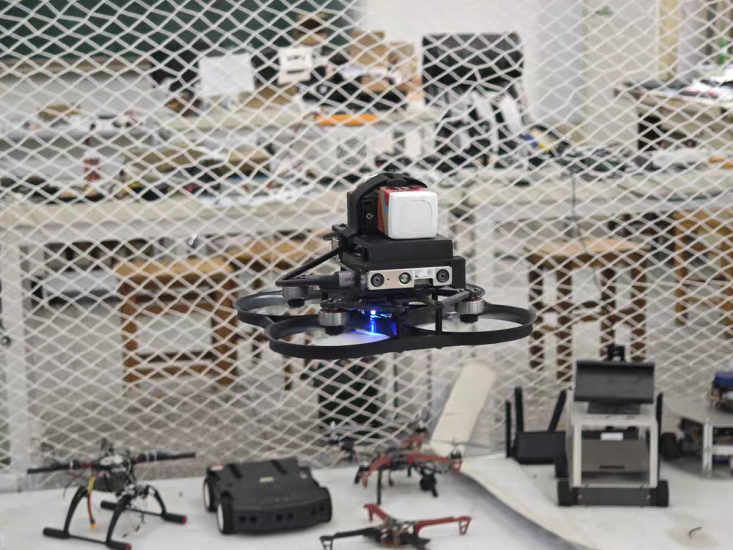
Safety and Regulation: The FAA and local authorities impose strict rules on drone flight. Solution: Create “Indoor Nets” and “Caged Labs” to provide a safe space for experimentation without regulatory overhead.
-
Teacher Training: Many educators lack the background in robotics. Solution: Industry partnerships and “Train-the-Trainer” programs are essential to upskill the teaching workforce.
5. Conclusion: The Algorithmic Age
The integration of unmanned MSOEN technology on campus is not just an upgrade to the robotics club; it is a fundamental re-imagining of STEM education. By providing a framework where code has physical consequences, where math has a purpose, and where science is a tool for exploration, we are preparing students for a world where autonomous systems are ubiquitous. The “Future is Now,” and it is flying in the hallways and above the quads of our schools, guided by the brilliant, inquisitive minds of the next generation.
THE END


No comments yet