

Amazon said in mid-August 2026 that Prime Air drone delivery will stretch from a handful of U.S. operating sites to about 500 cities and towns by the end of the year. Reuters reported the network sits at 11 locations today, including Papillion, Nebraska, and Ruskin, Florida, with more hubs planned around Syracuse, Cleveland, and other metro edges. Each hub can serve multiple communities inside a radius of roughly 7.5 miles. Customers pay $4.99 per drone drop, or $2.99 if they are Prime members, with the fee waived on orders of at least $50.
That is a logistics story, not a crop-spraying story. MSOEN still pays attention. Last-mile drones and agricultural drones share batteries, weather limits, community hearings, and the hard problem of flying a heavy aircraft near people. When the world’s largest retailer treats drone delivery as a priced SKU instead of a Super Bowl demo, the rest of the UAV industry has to talk about reliability the same way.
The aircraft changed. The radius did not get magical.
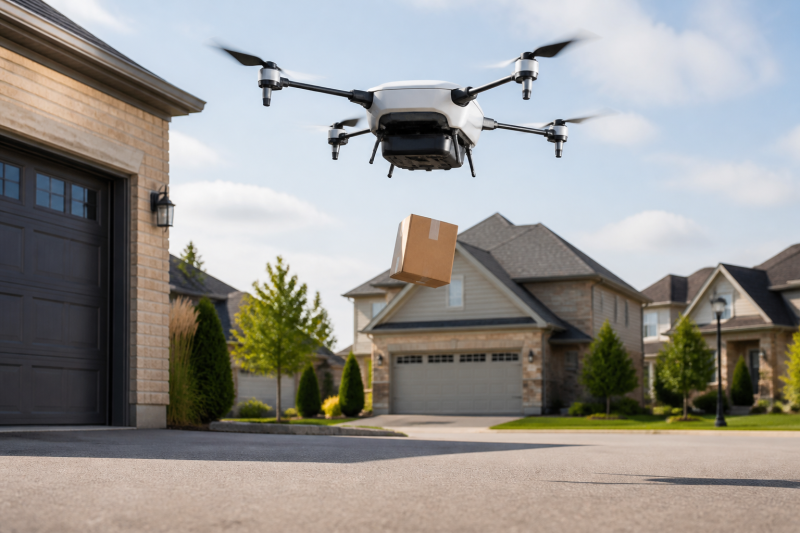
Jeff Bezos showed octocopters in 2013 and talked about a four-to-five-year launch. The current MK30 does not land to drop a box. It hovers a few feet up and releases the package. That is a different risk picture: less contact with lawns and pets, more dependence on a clean hover and a working release mechanism.
Amazon has FAA approval to fly in most of the United States, the company has said, but it still needs community permission. Reuters described a Nampa, Idaho, planning meeting where an Amazon executive spent about an hour on noise, safety, and bird concerns. The board approved the rollout unanimously. The same report noted a March hearing in Richardson, Texas, where a resident called the overhead buzz irritating. Amazon said it raised average flight height and pushed more routes over commercial zones.
MSOEN’s factory lesson is not “copy Amazon’s airframe.” It is that scale fails locally. Agricultural buyers already know this. A spray drone that is legal under Part 137 can still be unwelcome next to a school, a horse barn, or a suburban orchard. Delivery and spraying will keep meeting the same neighbors.
Darlington puts the same model in Europe
Amazon has also started Prime Air from its Darlington fulfillment center in England — its first Prime Air site outside the United States. Cross-border trade coverage in late August 2026 described MK30 aircraft serving a similar 7.5-mile (about 12 km) radius, with some orders promised in 60 minutes and some in around 30. Packages are limited to about five pounds (2.2 kg) and a shoebox-class volume. Customers need a garden, yard, or driveway. The UK Civil Aviation Authority has Amazon inside BVLOS trials; routine national scale is still a 2027-era roadmap item, not a finished rulebook.
Europe’s airspace is denser than a Nebraska corn suburb. Emergency helicopters get priority. Weather windows are shorter. MSOEN distributors who sell mapping or light logistics UAVs into the UK should not assume that a U.S. delivery headline equals an open market for dropping articles. The CAA still treats dropping from a drone as an operation that needs authorization. Agriculture is even tighter, as our UK spraying note in this week’s series explains.
What delivery scale teaches spray-drone factories
First, noise is a product specification. Amazon compared the pass to something quieter than a lawnmower for about 20 seconds; social videos still get compared to a leaf blower. Agricultural drones are louder because they are heavier and they hover to spray. If you sell into peri-urban orchards or European villages, publish a sound figure and a recommended setback. Do not wait for the first complaint video.
Second, accidents will be public. Reuters noted an October collision of two Amazon drones with a crane in suburban Arizona, still under NTSB review at the time of the expansion story. Spray operators already live with this reality: a flyaway over a highway ends more than a tank of fungicide. Redundant compass, radar, return-to-home, and propeller quality are not optional extras on an MSOEN 20-liter or 30-liter platform.
Third, batteries and cycle time decide whether “500 locales” is a press release or a network. Delivery drones need a charged pack, a packed box, and a clear pad. Spray drones need the same rhythm: mix, fill, fly, rinse, charge. Amazon’s hub model — one site, many towns — is the same geometry as a custom applicator who parks a trailer and treats every quarter-section within radio range. MSOEN designs mixing and charging around that trailer, not around a single demo flight.
Fourth, cameras create privacy arguments even when the company says they are only for navigation. Farm drones record fields, farmyards, and sometimes neighboring houses. Distributors should have a simple data policy: who stores the map, how long, and whether the grower owns it. That conversation is cheaper than a council hearing.
Where agricultural UAVs and delivery UAVs should not be confused
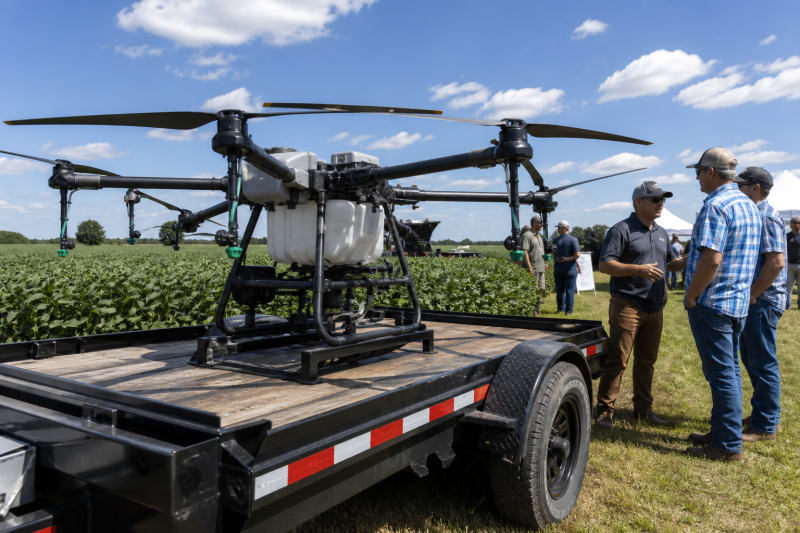
A Prime Air MK30 carries a few kilograms. An MSOEN agricultural spraying drone may lift 10, 20, 30 liters of liquid, plus the airframe and batteries. The regulations diverge. U.S. delivery can sit under Part 107 with waivers; loaded spray aircraft usually need Part 137 and a 44807 exemption above 55 pounds. The missions diverge too. Delivery wants a quiet hover over a driveway. Spraying wants a consistent swath over a canopy, often at dawn, with chemical handling and rinse water.
MSOEN is not building Amazon’s last-mile fleet. We are building plant-protection aircraft for farms, cooperatives, and OEM partners. The delivery boom still helps our customers in one way: it forces airports, towns, and insurers to write drone rules in plain language. Every community that learns to live with a 20-second delivery pass is a community that can be educated about a seasonal spray program — if the applicator shows up with licenses, insurance, and a noise-and-drift plan.
Practical takeaways for MSOEN buyers who also watch logistics news
If you are a distributor, do not pitch a spray drone as “like Amazon, but for farms.” Pitch payload, swath, and the license stack. If you are a logistics startup looking at agricultural airframes for cargo, check maximum takeoff weight, battery chemistry shipping rules, and whether the airframe is even type-eligible in your country.
If you operate near a planned Prime Air hub, expect more local meetings about drones in general. Bring facts: your altitudes, your hours, your chemical mix, your insurance certificate. Amazon’s expansion will raise the volume of that conversation. Farms that already spray by UAV should be the adults in the room, not the surprise.
FAQ
Is Amazon’s MK30 the same class of machine as an MSOEN agricultural spraying drone?
No. Prime Air carries a few kilograms to a driveway. MSOEN spray drones lift tens of liters of liquid plus batteries. Different weights, different rules, different missions. Do not buy a sprayer because you saw a delivery video.
How far can one drone-delivery hub reach?
Amazon has described a radius of about 7.5 miles (roughly 12 km) around a hub, covering several towns. Agricultural custom applicators use a similar geometry: one trailer, many nearby fields. Payload and weather still limit both.
Does Prime Air’s UK launch mean I can spray pesticides by drone in England?
No. Delivery and plant protection are separate legal files. UK pesticide spraying by drone remains trial-limited under HSE. MSOEN will not treat a Darlington parcel route as a spraying permit.
What should spray operators learn from community noise complaints?
Treat sound as a spec. Delivery drones already face lawnmower-versus-leaf-blower arguments. Loaded agricultural drones are heavier and hover longer. Publish setbacks and hours, especially near houses and livestock.
Do delivery-drone accidents change how MSOEN designs fail-safes?
Public incidents remind everyone that GPS, radar, and propeller quality are safety parts. MSOEN agricultural platforms ship with return-to-home logic and obstacle sensing options because a flyaway over a road ends the business, not only the tank.
Can an agricultural drone factory supply last-mile delivery fleets?
Only after a full redesign for noise, package release, and urban airspace. MSOEN’s catalog is plant protection and spreading. Logistics buyers should not assume a 20L sprayer is a cargo ship.
Will more delivery drones make it harder to get spray waivers?
They can raise local scrutiny. They can also normalize drones if operators behave. Bring licenses and a drift plan to hearings. Silence is worse than a clear altitude explanation.
Conclusion
Amazon pricing a $2.99–$4.99 drone drop and aiming at about 500 U.S. locales — with Darlington as a first overseas hub — means last-mile UAVs are no longer a Super Bowl clip. Communities will debate noise, privacy, and crashes in public.
MSOEN’s takeaway for farm buyers is to stay in our lane: payload, swath, and agricultural certificates. Use the delivery boom as a reminder to document reliability and neighbor impact. A 10L or 20L MSOEN spraying drone will not deliver toothpaste. It will, if specified honestly, treat a canopy on time. That is the product we stand behind.