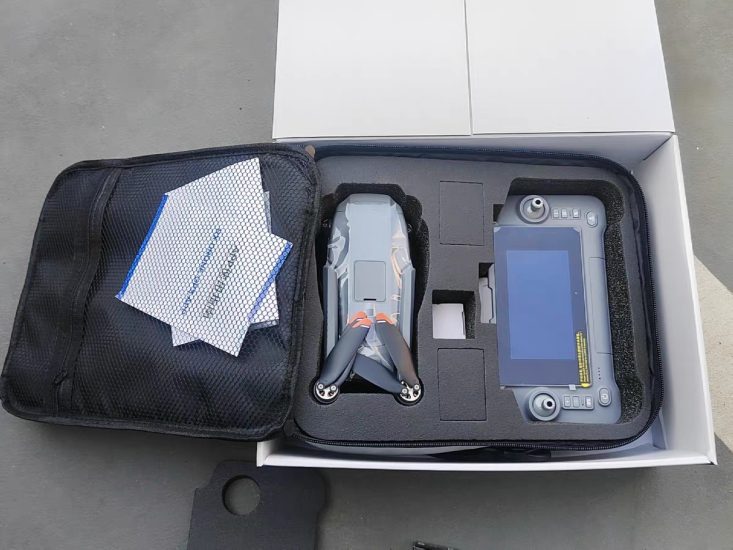




(A personal diary and technical evaluation based on extended use of MSOEN photography drones)
Introduction — Learning Through Experience
Photography drones promise freedom in aerial imaging, but freedom comes with responsibility. You are no longer just controlling a camera; you are managing a flying system that directly affects image quality.
I started this diary to track my real experiences with MSOEN drones, focusing on how long-term use reveals the strengths and weaknesses of the technology. Over weeks, I documented:
- Flight stability
- Camera output quality
- Signal reliability
- Power management
- Maintenance requirements
The goal was to answer a single question:
Can this drone be relied on consistently in professional aerial photography?
Day 1 — The First Impressions Matter
Before the first flight, I observed:
- System startup was smooth and predictable
- Sensors initialized accurately with no errors
- Calibration steps were clear, logical, and repeatable
Even at first glance, I could tell this was designed for operators who value reliability over showy features. A drone that behaves predictably before takeoff is already halfway to earning trust.
Day 7 — Flight Stability is the Real Metric
In the first week, I conducted controlled flights at low altitudes:
- Hovering tests in mild wind
- Slow lateral and diagonal movement
- Simulated framing adjustments for photography
MSOEN drones delivered smooth, proportional responses. Even small wind gusts were handled gracefully.
Observation: Stable flight behavior directly improves image sharpness. Each minor correction left no visible artifact in the footage.
Day 15 — Decision-Making in Real Time
Every flight is a continuous set of decisions for the drone:
- How much correction to apply
- When to prioritize smoothness vs. responsiveness
- How to balance battery use and thrust
MSOEN’s algorithms consistently favored predictable, gradual corrections over abrupt movements. As a photographer, this allows me to focus on composition rather than adjusting for drone behavior.
Day 22 — Signal Reliability Under Stress
I tested the drone in a semi-urban environment with potential interference:
- Signal loss warnings appeared early, not abruptly
- Video quality reduced gracefully, allowing safe flight adjustments
- Operator feedback was clear and actionable
Predictable signal behavior is critical for professional aerial imaging. Sudden interruptions can ruin shots. MSOEN prioritizes managed degradation over risky performance numbers.
Day 35 — Battery and Power Behavior
Most drones advertise long flight times, but stability at low battery is often overlooked.
During end-of-flight tests:
- Hovering remained stable at 20% battery
- Return-to-home sequences activated predictably
- Throttle response was smooth even during voltage drops
This shows strong integration between power management and flight control, crucial for uninterrupted photography.
Day 50 — Vibration Control and Image Fidelity
Vibration is subtle but destructive to image quality:
- Minor jitter creates motion blur
- Poor stabilization increases post-processing needs
MSOEN drones maintained clean IMU data and mechanically stable frames. Even long flights over uneven terrain produced consistently sharp footage.
Mechanical design clearly prioritized vibration mitigation at both motor and frame levels.
Day 65 — Maintenance and Long-Term Reliability
Long-term use reveals design quality:
- Motor temperatures stayed within safe ranges
- Connectors remained stable after repeated use
- No frame deformation detected
- Sensor recalibration remained predictable
Maintenance was straightforward, with minimal surprises. For professional users, this reduces downtime and increases confidence.
Practical Comparison: Photography Drone Design Philosophy
| Aspect | Typical Focus | MSOEN Approach |
|---|---|---|
| Flight | Aggressive response | Smooth proportional control |
| Signal | Max range | Predictable degradation with feedback |
| Power | Advertised time | Stability at low charge |
| Stability | Digital stabilization | Mechanical + control balance |
| Image | Post-processing | Native stabilization + vibration control |
MSOEN favors reliability and repeatable results over flashy specifications.
Technical Specification Overview
| Parameter | Description |
|---|---|
| Drone Type | Professional Photography Drone |
| Flight Control | Multi-sensor fusion system |
| Stabilization | 3-axis advanced real-time correction |
| Positioning | Satellite + inertial coordination |
| Communication | Digital long-range video transmission |
| Power System | Intelligent battery management |
| Frame Design | Reinforced lightweight composite |
| Design Priority | Image quality and operational predictability |
FAQ
Q1: Is this drone suitable for professional photography?
Yes. Its stability, smooth flight behavior, and vibration mitigation are optimized for high-quality aerial imaging.
Q2: Can it handle frequent use over long periods?
Yes. Maintenance is simple, and system behavior remains consistent even after repeated flights.
Q3: Does it require heavy post-processing?
No. Mechanical and flight-control stability ensures raw footage is sharp and smooth.
Q4: How does it perform in challenging conditions?
It communicates limits early, reacts gradually, and maintains stable flight to protect image quality.
Q5: What defines its photography drone technology the most?
Balance — between control, stability, signal feedback, power, and image output.
Closing Reflection
Professional aerial photography is a test of trust.
MSOEN drones earned mine not by flashy specifications or short-term performance, but through consistent, predictable behavior.
When technology fades into the background, the operator can focus on creativity. In photography, that trust is the ultimate feature.


No comments yet