
Every growing season, hospital wards in agricultural regions fill with the same patients: vegetable farm workers suffering from pesticide poisoning. The symptoms are distressingly familiar—headaches, nausea, dizziness, muscle tremors, difficulty breathing. In severe cases: seizures, coma, permanent neurological damage. In the worst cases: death.
This is not a developing-world problem alone. In the United States, the CDC estimates that 10,000 to 20,000 pesticide-related illnesses and injuries occur annually among agricultural workers. In the European Union, occupational pesticide exposure accounts for an estimated 1,400 to 16,000 excess cancer cases per year across farming populations. Globally, the World Health Organization classifies pesticide poisoning as one of the most underreported occupational health crises, with an estimated 385 million cases of unintentional acute pesticide poisoning worldwide each year.
For vegetable farmers, the risk is disproportionately high. Vegetables require frequent spraying—every 7 to 14 days during peak season. Workers mix and handle concentrated chemicals repeatedly. They walk through treated fields while spraying, breathing in aerosolized droplets and absorbing chemicals through skin contact. And because vegetables are often low-growing crops, workers bend and crouch in the spray zone, maximizing exposure.
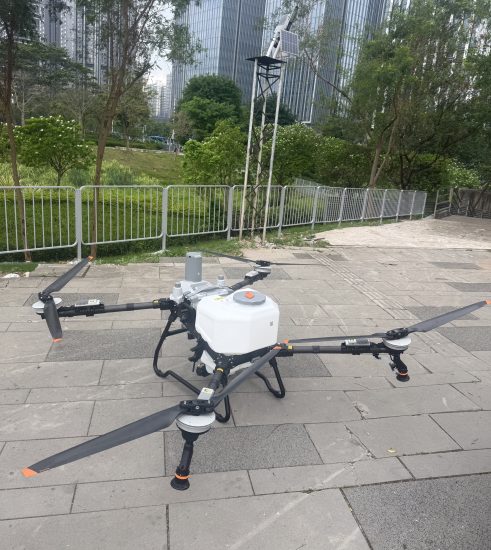
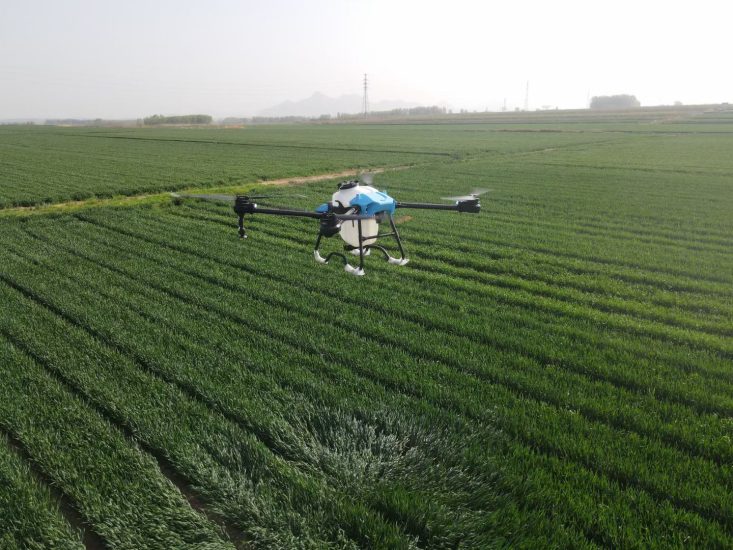
Remote-controlled agricultural drones eliminate this risk entirely. By moving the operator 10 to 50 meters away from the spray cloud—and often into an enclosed vehicle—drone spraying creates a physical and atmospheric barrier between the pesticide and the person applying it. This article examines the full scope of the poisoning problem, how remote operation solves it, the regulatory tailwind pushing farms in this direction, and what it means for your operation’s safety, compliance, and long-term viability.
The Health Toll of Manual Spraying: The Numbers
To understand why remote operation matters, we must first confront the actual health burden of manual pesticide application.
Acute Poisoning: What Happens in the Field
Exposure Route
|
How It Happens
|
Common Symptoms
|
Time to Onset
|
Dermal (skin contact)
|
Splashes during mixing; drift onto exposed skin; soaked clothing
|
Rash, burning sensation, systemic absorption → nausea, headache
|
30 min – 4 hrs
|
Inhalation
|
Breathing aerosolized droplets in the spray cloud; vapor from volatile chemicals
|
Coughing, throat irritation, dizziness, respiratory distress
|
5–30 min
|
Ocular (eyes)
|
Direct spray splash; drift into face
|
Redness, burning, blurred vision, corneal damage
|
Immediate – 2 hrs
|
Ingestion
|
Hand-to-mouth transfer; contaminated food/water at worksite
|
Severe gastrointestinal distress, systemic toxicity
|
15 min – 2 hrs
|
Chronic Health Effects: The Long-Term Cost
Repeated low-level exposure over years is even more insidious than acute poisoning:
-
Neurotoxicity: Studies link chronic pesticide exposure to Parkinson’s disease (2× increased risk), cognitive decline, and peripheral neuropathy.
-
Cancer: Agricultural workers show elevated rates of non-Hodgkin lymphoma, leukemia, prostate cancer, and skin cancer.
-
Reproductive effects: Male farmworkers exposed to certain pesticides show reduced sperm quality; female workers face increased risk of miscarriage and birth defects in offspring.
-
Endocrine disruption: Organophosphate and pyrethroid exposure is associated with thyroid dysfunction and metabolic disorders.
The Economic Cost of Poisoning
Beyond human suffering, pesticide poisoning carries a direct financial cost:
Cost Category
|
Estimated Annual Impact (per 100 workers)
|
Lost workdays (acute illness)
|
150–300 days lost
|
Medical treatment (ER, clinic, medication)
|
$25,000–$80,000
|
Workers’ compensation claims
|
$15,000–$50,000
|
Insurance premium increases
|
10%–25% after claim
|
Legal liability (severe cases)
|
$100,000–$1,000,000+
|
Worker turnover (replacement & training)
|
$20,000–$40,000
|
For a mid-sized vegetable operation employing 20–30 seasonal spray workers, these costs can easily reach $50,000–$150,000 per year—money that comes straight off the bottom line.
How Remote Drone Operation Eliminates Exposure
The fundamental safety advantage of drone spraying is simple: the person controlling the application is not standing in the spray zone.
The Distance Factor
In a standard drone spraying operation, the pilot stations themselves 10 to 50 meters from the active spray area. This distance is not arbitrary—it is based on drift modeling and field measurements:
Distance from Spray Zone
|
Droplet Concentration in Air
|
Risk Level
|
0–2 meters (manual operator position)
|
500–5,000 droplets/L of air
|
High
|
5–10 meters
|
50–200 droplets/L of air
|
Moderate
|
10–20 meters
|
5–30 droplets/L of air
|
Low
|
20–50 meters
|
<5 droplets/L of air
|
Negligible
|
At 20 meters, the concentration of airborne pesticide droplets is 99% lower than at the operator’s position during manual spraying. At 50 meters, it is effectively zero.
Enclosed Cab Operation
Many commercial drone spraying teams take safety one step further: the pilot operates from inside an enclosed vehicle—a pickup truck, van, or ATV cab—parked at the field edge. The vehicle serves as an additional physical barrier:
-
Windows closed → no inhalation exposure
-
Air conditioning on recirculate → filtered air
-
No skin exposure to outdoor environment
In this configuration, the pilot’s pesticide exposure is indistinguishable from zero.
No Mixing Contact (With Proper Protocol)
While the pilot is protected during flight, chemical mixing remains a potential exposure point. Professional drone operations address this through:
-
Pre-mixed concentrate system: Pesticides are measured and diluted at a centralized mixing station away from the field, by a worker wearing full PPE (gloves, apron, face shield, respirator). Once mixed, the solution is transferred to sealed transport containers.
-
Closed-transfer refilling: The drone’s tank is refilled via a sealed coupling system that minimizes splash and vapor release. The ground assistant wears chemical-resistant gloves and sleeves but does not handle raw concentrate.
-
Dedicated mixing area: Located downwind of the field, with water washdown and spill containment.
With these protocols, total pesticide exposure across the entire operation team drops by 95%–99% compared to manual spraying.
Regulatory Pressure: The Tide Is Turning
Farmers who have not yet transitioned to remote spraying may soon find they have little choice. Regulatory bodies worldwide are tightening rules on agricultural pesticide exposure:
Region / Regulation
|
Key Requirement
|
Impact on Manual Spraying
|
US EPA WPS (Worker Protection Standard)
|
Mandatory 4-hour re-entry interval; annual training; PPE requirements
|
Increases labor cost; harder to find compliant workers
|
EU Sustainable Use Directive
|
Mandatory integrated pest management; restriction of high-risk pesticides
|
Reduces chemical options; increases pressure for low-exposure methods
|
California DPR (Department of Pesticide Regulation)
|
Buffer zones near schools/residences; notification requirements
|
Limits when/where manual crews can spray
|
India Insecticides Act (amended 2023)
|
Stricter PPE enforcement; ban on certain organophosphates
|
Increased compliance burden and liability
|
Brazil ANVISA Resolution RDC 216/2022
|
Classification of pesticides by toxicity; restricted use near populated areas
|
Narrower application windows; higher PPE costs
|
The clear trend: regulators are making manual pesticide application more expensive, more restricted, and more legally risky. Remote drone operation is not just a safety upgrade—it is a compliance strategy.
Safety Data: Before and After
Safety Metric
|
Manual Spraying (5-person crew)
|
Drone Spraying (1 pilot + 1 assistant)
|
Improvement
|
Dermal exposure (mg active ingredient/day)
|
15–80 mg
|
<0.5 mg
|
↓ 97–99%
|
Inhalation exposure (µg/m³)
|
50–500 µg/m³
|
<5 µg/m³
|
↓ 90–99%
|
PPE requirement level
|
Full (Tyvek suit, respirator, gloves, goggles)
|
Minimal (gloves, sleeves for mixer only)
|
↓ 70–80%
|
Medical surveillance needed
|
Yes (annual blood tests, neurological screening)
|
No (for pilot); optional for mixer
|
Eliminated for flight crew
|
Insurance classification
|
High-risk agricultural
|
Standard agricultural
|
Lower premium tier
|
What About the Ground Assistant?
It is important to be honest: in a two-person drone operation, the ground assistant who handles refilling and battery swapping is closer to the spray zone than the pilot. They may be exposed to:
-
Residual chemical on the drone frame after landing
-
Minor splash during tank refilling
-
Vapor from the open tank
Professional operators mitigate this through:
-
Positioning: The assistant stations 5–10 meters from the active spray zone, upwind whenever possible.
-
PPE: Chemical-resistant gloves, long sleeves, and eye protection during refilling.
-
Decontamination: A wash station with clean water and soap at the field edge for handwashing after each refill cycle.
-
Rotation: The pilot and assistant swap roles every 2–3 hours, ensuring neither person spends an entire day in the assistant role.
-
Closed-transfer systems: Increasingly available for drone sprayers, these eliminate open pouring and reduce splash to near zero.
Even with these measures, the ground assistant’s exposure is 90%–95% lower than a manual sprayer’s, and the pilot’s exposure is effectively zero.
Training and Certification: Building a Safety Culture
Transitioning to drone spraying does not automatically eliminate all risk. A comprehensive safety program includes:
Training Component
|
Content
|
Frequency
|
Pesticide safety (all team members)
|
Label reading, toxicity classes, first aid, emergency response
|
Annual
|
Drone pilot certification
|
Flight safety, emergency procedures, no-spray zone compliance
|
Initial + biennial renewal
|
Mixing safety (mixer only)
|
Concentrate handling, PPE donning/doffing, spill response
|
Annual + before each season
|
First aid for pesticide exposure
|
Decontamination steps, when to seek medical care, info to provide doctors
|
Annual
|
Emergency drill
|
Simulated spill, exposure incident, or drone malfunction
|
Semi-annual
|
Farmers who invest in this training report not only fewer incidents but also higher worker retention—employees stay longer when they feel their employer prioritizes their health.
The Bottom Line
Pesticide poisoning is not an unavoidable cost of growing vegetables. It is a consequence of a delivery system that puts human beings directly in the line of fire. For decades, farmers have tried to manage this risk with better PPE, more training, and stricter protocols. These measures help—but they do not change the fundamental reality: if you are standing in a field while chemicals are being sprayed, you are being exposed.
Remote drone operation changes that reality. It moves the person controlling the spray from inside the cloud to 50 meters away—or behind the window of an enclosed cab. It reduces total team exposure by 95%–99%. It lowers insurance costs, reduces legal liability, and positions the farm ahead of tightening regulations.
For vegetable farmers, the question is no longer whether to adopt remote spraying technology. The question is whether you can afford the health, financial, and legal risks of continuing with manual methods. Every season you delay is another season of unnecessary exposure for your team—and another step toward a regulatory environment that may soon make manual spraying unviable altogether.
FAQ
Q: Is the drone pilot completely safe from pesticide exposure, or is there still some risk?
A: At a distance of 20–50 meters with the drone upwind, airborne droplet concentration is 99% lower than at the manual operator position—effectively zero for practical purposes. However, pilots should still avoid standing directly downwind of active spraying and should wash their hands and face after each day’s operation. If the pilot operates from inside an enclosed vehicle with windows closed, exposure is indistinguishable from zero. No system is 100% risk-free, but drone remote operation reduces exposure to a fraction of a percent of manual levels.
Q: What about the person mixing the chemicals? Aren’t they still at high risk?
A: Yes, mixing concentrated pesticides remains the highest-exposure task in a drone operation. However, this task is typically performed by only one person (versus 5–6 manual sprayers), and that person can use maximum PPE in a controlled environment. Best practice is to use a closed-transfer mixing system that eliminates open pouring, wear a full-face respirator with appropriate cartridges, and work in a well-ventilated area away from the field. With these measures, mixer exposure can be kept within occupational safety limits. Some farms outsource mixing entirely to a licensed chemical handling service, reducing on-farm risk to near zero.
Q: Can I still get sick from pesticide residue on the vegetables I harvest after drone spraying?
A: No. Drone spraying does not increase residue levels—in fact, because it uses 30%–45% less pesticide overall, residue levels are typically lower than with manual spraying. All pesticides have a pre-harvest interval (PHI) specified on the label, indicating how many days must pass between spraying and harvesting. This interval is the same regardless of application method. As long as you respect the PHI, harvested vegetables are safe to eat. Many buyers now specifically request drone-sprayed produce because the digital spray log provides verifiable proof of application timing and chemical rates.
Q: Do I still need to provide PPE for workers if I switch to drone spraying?
A: You will need significantly less PPE, but not zero. The drone pilot and ground assistant need basic chemical-resistant gloves and eye protection during refilling. The person mixing concentrates needs full PPE (gloves, apron, face shield, respirator). Workers entering the field after spraying still need to follow re-entry intervals specified on the pesticide label. However, you can eliminate the bulk PPE purchases for 5–6 manual sprayers—a savings of $2,000–$5,000 per season.
Q: What happens if the drone malfunctions and sprays while flying over the pilot’s position?
A: Modern agricultural drones include multiple independent safety systems: (1) geofencing that prevents the drone from flying over the pilot’s designated safe zone, (2) automatic motor shutdown in case of a crash, (3) pump cutoff within 0.5 seconds of any system error, and (4) a manual emergency stop button on the controller. In the unlikely event of a malfunction, the pilot’s distance from the drone (10–50 meters) provides a critical safety buffer. No documented cases exist of a drone pilot being seriously exposed to pesticide due to a mid-air malfunction.
Q: Are there any pesticides that are too toxic to be applied by drone, even remotely?
A: Extremely toxic pesticides (WHO Class Ia and Ib, such as certain organophosphates and carbamates) are increasingly restricted or banned in most jurisdictions, regardless of application method. For the remaining approved chemicals, drone application is actually safer than manual because of the distance factor. However, some ultra-volatile fumigants are not suitable for any aerial application, including drones. Always consult the pesticide label—if it prohibits aerial application, drone use is not permitted. Your local agricultural extension office can provide a list of drone-approved formulations for your region.
Q: How does remote drone spraying compare to tractor boom spraying for operator safety?
A: Tractor boom sprayers offer good operator safety if the tractor has an enclosed, filtered cab (a “spray cab” with carbon filter). However, many vegetable farms use open-cab tractors or older equipment without filtration. In those cases, the tractor driver faces significant inhalation and dermal exposure. Drone pilots operating from an enclosed vehicle match or exceed the safety of a spray cab—and drones have the additional advantage of not requiring the driver to be physically present in the field where chemical concentration is highest. For small and medium vegetable farms that cannot justify the cost of a $50,000+ spray cab tractor, drone spraying provides a safer and more affordable alternative.
THE END
Support it if you like it




No comments yet