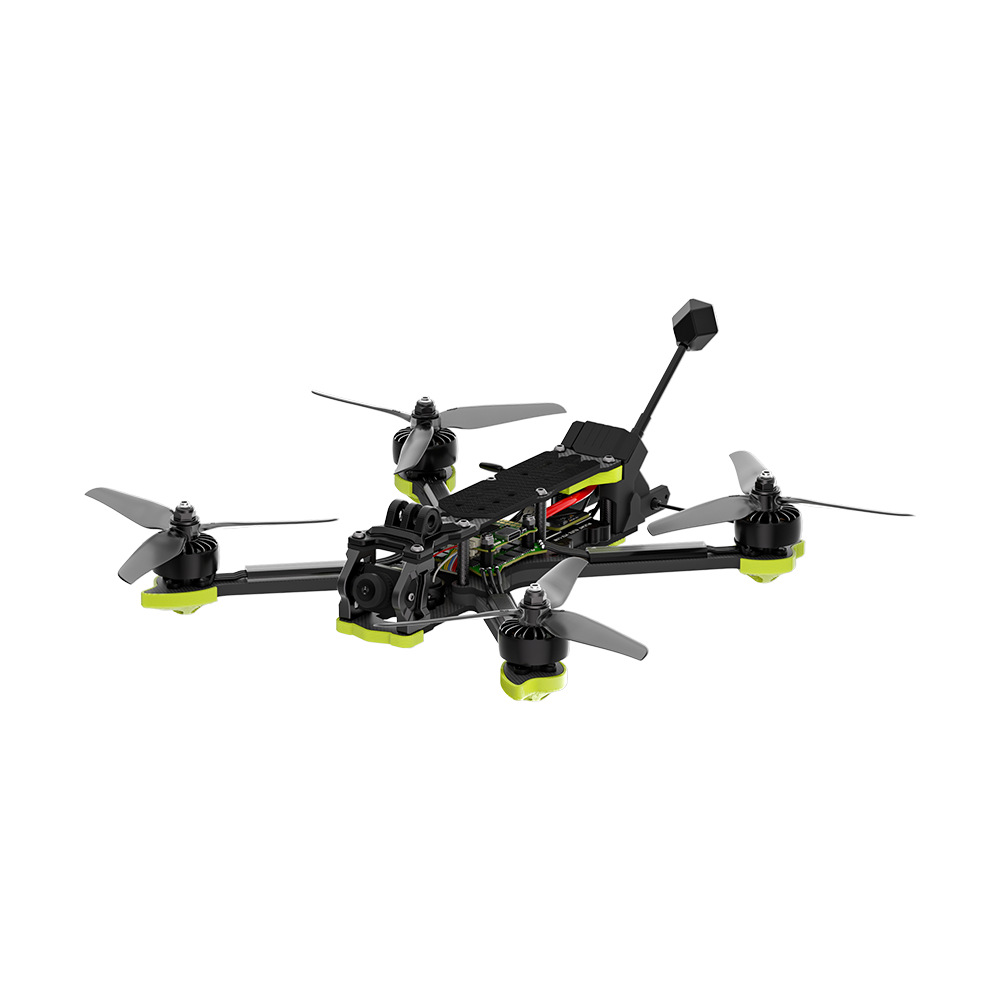
A Technical Procurement Guide for Distributors and Professional Pilots
1. The Latency Ceiling: Why <20ms Defines the Professional Tier
In FPV (First Person View) racing, latency is not a specification; it is the boundary between control and reaction. A system with 200ms latency creates a cognitive disconnect between pilot input and aircraft response. By the time the pilot sees an obstacle, the drone has already crashed into it.
Latency Source
|
Typical Value
|
Impact on Flight
|
Camera Sensor Readout
|
1–3 ms
|
Rolling shutter effect; minimal flight impact.
|
Video Encoder/Decoder
|
5–15 ms
|
Primary bottleneck in HD systems.
|
Radio Link (Control)
|
5–10 ms
|
Determines stick-to-servo responsiveness.
|
Display/Goggles Refresh
|
1–5 ms
|
Affects visual perception timing.
|
Technical Definition: When we specify <20ms latency, we refer to the end-to-end glass-to-glass delay: from light hitting the camera sensor to the image appearing on the pilot’s goggles display. Achieving this consistently requires a tightly integrated hardware ecosystem, not just a fast camera.
2. Analog vs. Digital: The Physics of Latency
The quest for low latency has driven the industry from analog to digital transmission, but with trade-offs.
Feature
|
Analog (Analog 5.8GHz)
|
Digital HD (Proprietary Systems)
|
Latency
|
8–12 ms
|
18–28 ms
|
Image Quality
|
Low resolution, noise, multi-path interference.
|
720p/1080p, crisp, color-accurate.
|
Penetration
|
Better through obstacles, signal degrades gradually.
|
“Digital Cliff”; signal drops suddenly.
|
Channel Count
|
40+ channels, easy frequency management.
|
Limited channels, prone to interference in crowded areas.
|
Price Point
|
Low-cost entry point.
|
Premium pricing for hardware.
|
The Professional Choice: For competitive racing, Analog remains the gold standard for latency. However, for cinematic FPV or freestyle where image clarity matters, Digital HD with <20ms latency is the new benchmark.
3. System Architecture for <20ms Performance
To guarantee sub-20ms performance, every component in the video chain must be optimized.
3.1 Camera: Global Shutter vs. Rolling Shutter
Camera Type
|
Latency Contribution
|
Use Case
|
Global Shutter CMOS
|
Minimal (<2ms)
|
Essential for high-speed racing; eliminates “jello” effect.
|
Rolling Shutter CMOS
|
Higher (3–5ms)
|
Acceptable for freestyle/cinematic; cheaper.
|
CCD Sensors
|
Very Low (<2ms)
|
Legacy tech; being replaced by modern CMOS.
|
3.2 Video Transmitter (VTX): Output Power & Heat
-
Power (mW): Higher power (e.g., 600mW–1000mW) extends range but generates heat, which can increase latency and damage components. 25mW–200mW is standard for indoor tracks; 600mW+ for outdoor.
-
Heat Dissipation: A VTX that overheats will throttle performance or shut down. Look for aluminum heatsinks and MMCX antenna connectors for durability.
3.3 Antenna Diversity: Polarization Matters
Polarization
|
Signal Pattern
|
Best Application
|
Linear
|
Figure-8, omnidirectional.
|
Simple, low-cost setups.
|
Circular (RHCP/LHCP)
|
Toroidal (donut-shaped).
|
Professional standard. Resistant to multi-path interference and orientation changes.
|
4. The Radio Control Link: The Other Half of Latency
Video latency is useless if the control link is slow. The radio system must match the video performance.
Protocol
|
Latency
|
Range
|
Frequency
|
Notes
|
ExpressLRS (ELRS)
|
<10 ms
|
Long Range (up to 50km)
|
2.4GHz / 915MHz
|
Current professional favorite; open-source.
|
TBS Crossfire
|
10–15 ms
|
Very Long Range
|
915MHz / 868MHz
|
Robust, proven, slightly higher latency than ELRS.
|
FrSky ACCST
|
15–20 ms
|
Medium Range
|
2.4GHz
|
Older standard; being phased out for high-performance.
|
Critical Pairing: For a true <20ms experience, pair a Global Shutter Camera + Low-Latency Digital VTX with an ExpressLRS radio system.
5. Goggle Technology: The Final Mile
The pilot’s goggles must process the incoming signal without adding delay.
Feature
|
Technical Requirement
|
Benefit
|
Diversity Receivers
|
Dual internal receivers (e.g., RapidFire, TBS Fusion).
|
Instantly switches to the strongest signal.
|
Low-Latency Mode
|
Dedicated firmware setting.
|
Prioritizes speed over image processing.
|
Display Panel
|
High refresh rate LCD/OLED.
|
Reduces motion blur and perceived lag.
|
Fan Cooling
|
Active cooling for the receiver module.
|
Prevents overheating-induced latency spikes.
|
6. Wholesale Procurement Checklist: Specs That Matter
When sourcing FPV racing drones for wholesale, verify these technical specifications with your supplier.
Component
|
Must-Have Spec for <20ms
|
Red Flag (Avoid)
|
Camera
|
Global Shutter, 1/1.8″ or larger sensor.
|
Rolling shutter, “AIO” camera/VTX combos.
|
VTX
|
Dedicated 20×20 or 30×30 stack mount, MMCX.
|
Tiny whoop VTXs, U.FL connectors only.
|
Antennas
|
RHCP or LHCP circular polarized, premium brand.
|
Linear antennas, generic brands.
|
Radio Rx
|
ExpressLRS or TBS Crossfire, full-diversity.
|
FrSky D8/D16, single antenna.
|
Flight Controller
|
F4 or F7 processor, dedicated gyro (e.g., MPU6000).
|
F3 processors, noisy gyros.
|
ESC
|
BLHeli_32 or AM32 firmware, current sensor.
|
Old BLHeli_S, no current sensor.
|
7. Firmware & Configuration: The Software Side of Speed
Hardware is only half the equation. The software stack must be tuned for zero-lag performance.
-
Betaflight Configurator: Set gyro_lowpass_hz to 0 (disable filtering) only if the gyro is clean. Use dyn_notch_width_percent to manage noise.
-
PID Tuning: Aggressive PIDs can mask latency but make the quad harder to control. Find the sweet spot.
-
OSD Elements: Disable unnecessary OSD elements (like CPU load) that consume processing cycles.
8. FAQ: Solving Technical Roadblocks for Buyers
Q1: Can I achieve <20ms latency with a DJI O3 Air Unit?
A: No. The DJI O3 system has a minimum latency of around 28–30ms. It is excellent for cinematic and freestyle but too slow for competitive racing.
Q2: Does higher VTX power always mean better range?
A: Not necessarily. Higher power increases signal strength but also heat and current draw. Beyond a certain point, the antenna gain and receiver sensitivity become the limiting factors.
Q3: Why does my latency increase when I fly behind trees?
A: Trees cause multi-path interference. The signal reflects off leaves and branches, creating multiple paths to the antenna. Circular polarization helps, but dense obstacles will always degrade the signal.
Q4: What is the “Digital Cliff”?
A: Digital systems transmit data packets. If packets are lost due to weak signal, the image freezes or drops completely (“cliff”), unlike analog which gradually gets noisy.
Q5: How important is the antenna placement on the quad?
A: Critical. Antennas should be mounted perpendicular to each other (e.g., one vertical, one horizontal) for diversity. Never mount them inside carbon fiber, which blocks RF signals.
Conclusion: Engineering the Zero-Lag Experience
Selling FPV and Racing Drones wholesale requires moving beyond “camera and motors.” It demands an understanding of the latency budget across the entire RF and video chain. By focusing on global shutter sensors, optimized digital VTXs, ExpressLRS control links, and diversity receivers, you provide a product that meets the professional pilot’s demand for instantaneous control.
Ready to stock the fastest drones on the track?
Contact our technical sales team for a wholesale catalog focused on sub-20ms performance and a dealer demo program.
THE END
Support it if you like it





No comments yet