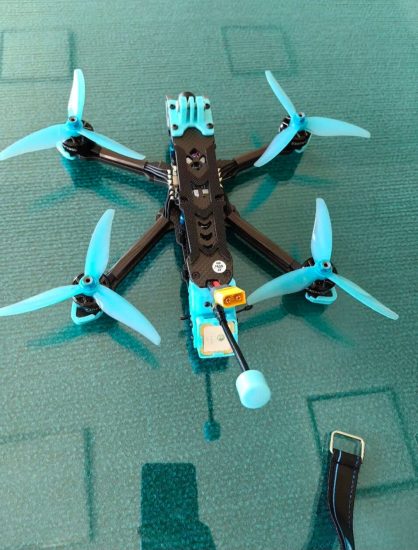



The evolution of unmanned aerial vehicles has reached a defining moment. No longer confined to the realm of military applications or high-budget film sets, the professional FPV racing drone has emerged as the ultimate expression of speed, precision, and visual technology. By seamlessly integrating a 4K camera with a low-latency transmission system, this ultimate indoor/outdoor RC quadcopter shatters the boundaries between the physical and the digital. It is a machine built for those who demand perfection—whether carving through a sunlit park or navigating the tight corridors of an abandoned warehouse.
The Pursuit of Zero Latency
In the world of professional FPV flight, latency is the invisible barrier between victory and defeat. Latency refers to the milliseconds it takes for a signal to travel from the drone’s camera to the pilot’s goggles. In a high-speed scenario, even a 20-millisecond delay can result in a missed gate or a catastrophic collision. The professional-grade low-latency transmission system utilized in this class of drone is engineered to compress this delay to the absolute minimum. By utilizing cutting-edge digital RF (Radio Frequency) protocols, the video feed maintains a rock-solid connection with virtually zero perceptible lag. This allows the pilot’s brain to react in real-time, transforming the drone from a remote-controlled toy into a natural extension of the human body.
Visual Supremacy: The 4K Advantage
While the “low-latency” aspect ensures the pilot can fly safely at high speeds, the “4K camera” ensures that the flight is captured in museum-quality detail. Unlike standard FPV cameras that prioritize only the live feed, a professional 4K setup features a dual-purpose optical system. The camera captures a high-bitrate 4K stream to an onboard memory card while simultaneously broadcasting a lower-resolution, high-frame-rate feed to the goggles for piloting.
This 4K capability is a game-changer for content creators and professionals. It allows for “digital zoom” in post-production without loss of quality and provides the dynamic range necessary to handle harsh lighting conditions—from the bright glare of an outdoor noon to the dim shadows of an indoor track. The color accuracy and sharpness ensure that every flight is not just a ride, but a cinematic masterpiece.
The Ultimate Indoor/Outdoor Versatility
A true professional machine must adapt to its environment. This quadcopter is designed to excel in both the confined spaces of indoor flight and the expansive arenas of outdoor racing.
-
Indoor Mastery: Indoors, the drone’s high-torque motors and responsive PID (Proportional-Integral-Derivative) tuning allow for “precision proximity flying.” The aerodynamic profile is slim enough to pass through doorways and under furniture, while the low-latency feed provides the clarity needed to avoid walls at high speed. Propeller guards and a robust frame ensure that the inevitable bumps of indoor learning don’t ground the aircraft.
-
Outdoor Dominance: Outdoors, the drone sheds its constraints. The 4K camera captures sweeping vistas as the quadcopter reaches its top velocity. The advanced flight controller utilizes a barometer and GPS (in some configurations) to maintain stability against crosswinds, ensuring that the low-latency transmission remains clear even at the edge of its range.
Professional-Grade Components
Under the hood, this drone is a symphony of high-end engineering. The frame is typically constructed from 3K carbon fiber, offering a strength-to-weight ratio that is unmatched in the industry. The Electronic Speed Controllers (ESCs) are rated for high-amperage bursts, providing the instantaneous power needed for vertical climbs and aggressive dives.
The “Brain” of the operation—the Flight Controller—runs sophisticated firmware that processes data from the gyroscope and accelerometer thousands of times per second. This ensures that the drone remains stable yet agile, responding to the slightest twitch of the control sticks with pinpoint accuracy. For the professional pilot, this level of hardware sophistication translates into a confidence that they can push the machine to its absolute limits without fear of mechanical failure.
The Competitive Edge
For those involved in the competitive racing scene, this drone is more than a tool; it is a teammate. The low-latency transmission provides a tactical advantage, allowing racers to see upcoming obstacles before their competitors. The 4K camera, meanwhile, serves as an invaluable training tool. By reviewing recorded flights, pilots can analyze their racing lines, identify inefficiencies in their throttle management, and refine their technique. It is this fusion of real-time performance and post-flight analysis that elevates a good pilot to a professional level.
Modularity and Future-Proofing
A hallmark of the “Ultimate” RC quadcopter is its ability to evolve. Professional drones are designed with modularity in mind. The camera module can be swapped for newer sensors as technology advances. The antennas can be upgraded to directional “Patch” or “Helical” types for increased range. The receiver can be changed to support the latest radio protocols. This ensures that your investment remains at the forefront of the hobby, capable of being upgraded rather than replaced.
Safety and Responsibility in High Performance
With great speed comes the need for great responsibility. Professional FPV drones are capable of reaching velocities that can be dangerous if mishandled. Therefore, these systems often include advanced “Fail-safe” protocols. If the signal is lost or the battery drops below a critical threshold, the drone can be programmed to either land immediately or initiate a Return-to-Home (RTH) sequence. This protects both the investment and the public, ensuring that the thrill of flight never comes at the cost of safety.
Conclusion
The professional FPV racing drone with 4K camera and low-latency transmission is the culmination of decades of RC innovation. It is the ultimate indoor/outdoor RC quadcopter, offering a blend of cinematic quality and racing performance that is simply unmatched. For the professional pilot, the content creator, or the dedicated enthusiast, it represents the freedom to fly without limits. It is not just a drone; it is the future of flight, available today.
Frequently Asked Questions (FAQ)
1. What is the actual flight time of a professional FPV racing drone?
Despite the high performance, flight times typically range from 6 to 10 minutes depending on the battery capacity (mAh) and the aggressiveness of your flying. Professional pilots usually carry multiple LiPo batteries to ensure continuous flight sessions.
2. Does the 4K camera record audio as well?
Most FPV drones do not record high-quality audio via the 4K camera due to the noise of the propellers. However, some setups allow for an external microphone or record the “raw” ambient sound for post-production syncing.
3. How far can the low-latency transmission reach?
In ideal, open environments, professional digital transmission systems can maintain a clear, low-latency signal for up to 10 kilometers. However, local regulations strictly govern how far you can fly, and maintaining visual line-of-sight (VLOS) is often a legal requirement.
4. Is this drone suitable for someone who has never flown before?
While it is built for professionals, many of these quadcopters feature “Beginner Modes” that limit speed and enable self-leveling. However, due to the investment cost, it is highly recommended that first-time pilots practice on a simulator or a more affordable “Toy Grade” drone first.
5. Can I fly this drone in the rain?
No. Despite its rugged construction, the electronic components and the 4K camera are not waterproof. Flying in wet conditions can cause permanent damage to the motors and short-circuit the flight controller.
6. What kind of maintenance does a professional drone require?
Regular maintenance includes checking for “prop wash” vibrations, ensuring screws remain tight, and cleaning the camera lens. After a crash, it is essential to check the motor bell for bends and ensure the antenna wires are intact.
7. Do I need a special license to operate this 4K FPV drone?
In most countries, if the drone weighs over 250 grams, you are required to register it and pass a basic safety exam. For commercial use of the 4K footage, additional certifications may be required. Always consult your local aviation authority.
THE END



No comments yet