

The integration of Unmanned Aerial Vehicles (UAVs) into education has evolved from a niche hobby into a sophisticated pedagogical tool. This paper explores the implementation of MSOEN (Mission, Sensor fusion, Obstacle avoidance, Environmental mapping, and Network) as the backbone for Interdisciplinary Project-Based Learning (PBL). By anchoring curriculum in the autonomous flight stack, educators can dissolve the traditional silos between Computer Science, Physics, Environmental Science, and Ethics. We detail the framework for a “Flying Classroom,” providing case studies and technical specifications for high school and undergraduate programs to execute complex, real-world missions.
1. Introduction: The Classroom Without Walls
Traditional STEM education often suffers from fragmentation; physics is taught in one room, coding in another, and environmental science in a third. However, an autonomous drone is a “system of systems.” It cannot fly without physics, cannot navigate without code, and cannot serve a purpose without a mission.
The MSOEN framework provides the perfect architecture for Project-Based Learning (PBL). Unlike simple remote-control activities, MSOEN-based PBL requires students to solve ill-structured problems where the solution demands the integration of multiple disciplines. This paper outlines how to construct a curriculum where the drone is not just the subject, but the vehicle for interdisciplinary discovery.
2. The MSOEN-PBL Framework: A Symbiosis of Disciplines
To achieve true interdisciplinarity, each pillar of the MSOEN framework must be mapped to specific academic domains.
2.1 Mission (M): The Intersection of Logistics and Ethics
The Mission layer defines the “Why” and “What” of the flight.
-
Interdisciplinary Link: Mathematics (Optimization) & Philosophy (Ethics). Students must calculate the most efficient flight path (The Traveling Salesperson Problem) while debating the ethical implications of drone surveillance or delivery in restricted airspace.
-
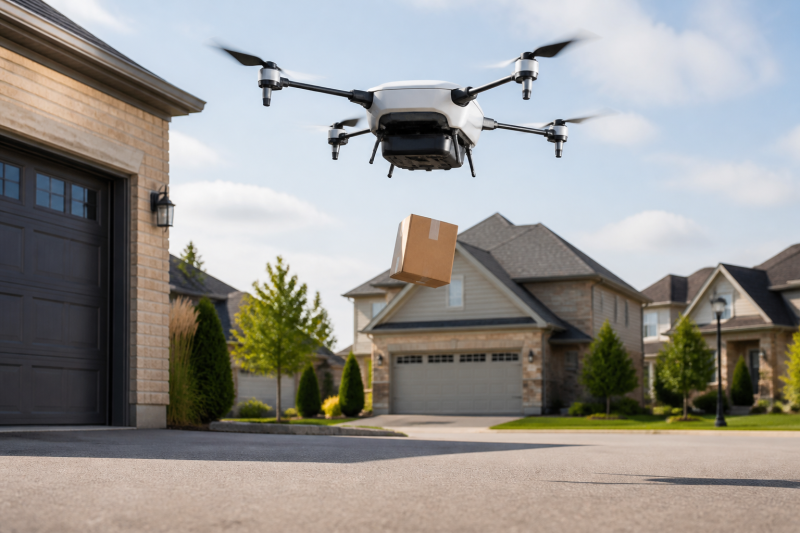
The Project: Students design a “Medical Delivery Mission” to a remote area. They must code the waypoints while calculating fuel consumption (Physics) and justifying the route based on privacy laws (Civics).
2.2 Sensor Fusion (S): The Physics of Perception
Sensor Fusion is the algorithmic combination of data from Inertial Measurement Units (IMUs), GPS, and barometers to create a reliable state estimate.
-
Interdisciplinary Link: Computer Science (Kalman Filters) & Physics (Kinematics). Students learn that a GPS update is only 5Hz, while an accelerometer is 1000Hz. They must write the code that bridges this gap.
-
The Project: Students build a “Sensor Dashboard” that visualizes the “noise” in raw sensor data versus the “smoothness” of the fused data, explaining the underlying physics of inertia and gravity.
2.3 Obstacle Avoidance (O): The Geometry of Survival
Autonomous navigation in cluttered environments requires the drone to make split-second decisions to avoid collisions.
-
Interdisciplinary Link: Mathematics (Vector Calculus) & Art (Spatial Design). Students implement Vector Field Histograms where obstacles create “repulsive forces.” They then design a 3D obstacle course that tests the limits of their algorithm.
-
The Project: A “Blind Flight” challenge where GPS is disabled, and the drone must rely solely on stereo-vision and LiDAR to navigate a maze designed by the students.
2.4 Environmental Mapping (E): The Science of Space
Mapping turns the drone into a mobile sensor platform.
-
Interdisciplinary Link: Geography (GIS) & Biology (Ecology). Using SLAM (Simultaneous Localization and Mapping), students create 3D models of the school campus. They then overlay thermal or multispectral data to analyze vegetation health or heat loss in buildings.
-
The Project: An “Urban Heat Island” study. Students program the drone to fly a grid pattern, collecting temperature data at different altitudes to map microclimates within the school grounds.
2.5 Network (N): The Sociology of Connectivity
The Network layer handles the communication between the drone and the ground station.
-
Interdisciplinary Link: IT Security (Cryptography) & Social Studies (Policy). Students learn about MAVLink protocols and the dangers of “packet loss.” They then debate the need for “Remote ID” regulations for drones.
-
The Project: Students simulate a “Man-in-the-Middle” attack on a drone’s video feed and then code a basic encryption layer to secure the telemetry.
3. Case Study: The “River Health” Autonomous Expedition
To illustrate the MSOEN-PBL framework, we present a semester-long project: “Autonomous River Health Monitoring.”
-
The Mission: Students are tasked with assessing the water quality of a local river without landing the drone in the water.
-
The Engineering:
-
They must integrate a multi-spectral camera (Environmental Science) to detect algae blooms.
-
They must program the Obstacle Avoidance system to navigate the tree canopy (Computer Science).
-
They must use Sensor Fusion to maintain a steady hover at 10 meters despite river winds (Physics).
-
-
The Outcome: The final deliverable is not just a flying drone, but a comprehensive report combining the 3D map of the river, the spectral analysis of the water, and a policy recommendation for the local environmental agency.
4. Technical Implementation: The “School Lab” Stack
For a school to execute these projects, a specific technical stack is required:
-
Hardware:
-
Airframe: F450 or similar robust quadcopter frames.
-
Flight Controller: Pixhawk 6C running PX4 firmware (Open-source and industry-standard).
-
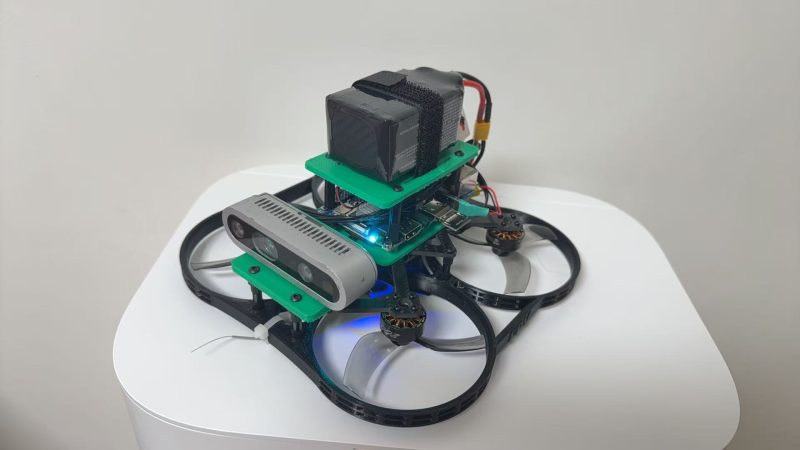
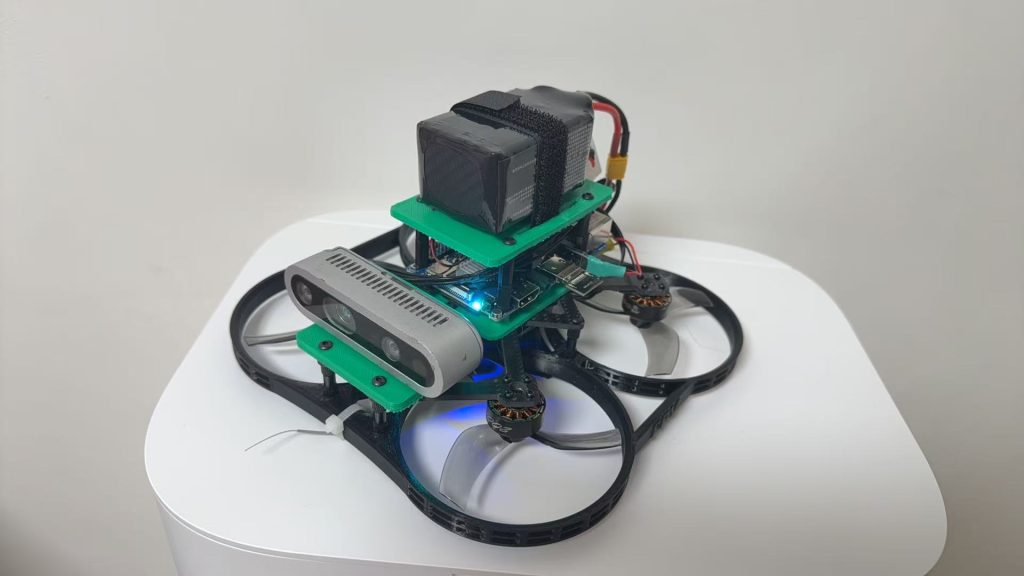
Companion Computer: NVIDIA Jetson Orin Nano (for running AI/ML models and Network tasks).
-
Sensors: Intel RealSense (for Obstacle Avoidance) and a GPS/RTK module (for precise Mission planning).
-
-
Software:
-
Simulation: Gazebo or Unity with the AirSim plugin. This allows students to test their MSOEN logic in a “Digital Twin” environment before risking hardware.
-
Development: VS Code with the MAVSDK-Python library. Students write scripts that interact with the drone’s MAVLink interface.
-
Mapping: QGroundControl for mission planning and WebODM for Environmental Mapping.
-
5. Assessment in the “Flying Classroom”
Assessment in MSOEN-PBL cannot be a written test. It must be performance-based:
-
The “Black Box” Analysis: After a flight, students are given the flight log (
.ulgor.binfile). They must use data analysis tools (like Pandas in Python) to graph the sensor data and explain any anomalies (e.g., “Why did the voltage drop cause a yaw drift?”). -
The Pitch: Students must present their project to a panel of “stakeholders” (teachers from different departments), defending their design choices from both an engineering and an ethical standpoint.
-
The Iteration: Grades are based on the “Engineering Design Process.” A crash is not a failure if the student can identify the root cause in the code or hardware and propose a viable fix.
6. Challenges and Mitigation
-
The “Syntax” Wall: Students often get bogged down in Python syntax. Mitigation: Use “Code Sandboxes” where students only fill in the logic gaps (e.g., “Write the
ifstatement for obstacle detection”). -
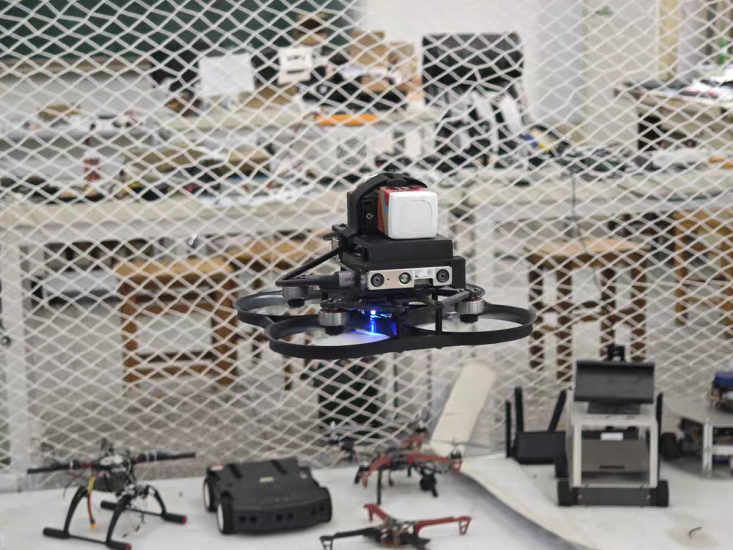
Safety Regulations: Flying drones indoors or near people is risky. Mitigation: Start with “Caged Drones” (a netted area) and use “Propeller Guards” always.
-
Resource Intensity: Drones are expensive. Mitigation: Implement a “Co-Pilot” system where one drone is shared by a team of four, ensuring each student has a specific role (Pilot, Coder, Analyst, Presenter).
7. Conclusion: The Future of Flight Education
The “Fly” Beyond the Ordinary classroom is one where the drone is a bridge between disciplines. By grounding education in the MSOEN framework, we teach students that technology is not just about circuits and code, but about solving human problems. This interdisciplinary approach prepares students for the “Fourth Industrial Revolution,” where the ability to integrate knowledge across fields is the most valuable skill. The classroom ceiling is no longer a limit; it is a launchpad.
THE END


No comments yet