

![Image [1]-Drone Lightweight Design-msoen](https://www.msoen.com/wp-content/uploads/2026/03/20260315114823683-1000021472-1024x898.jpg)
![Image [2]-Drone Lightweight Design-msoen](https://www.msoen.com/wp-content/uploads/2026/03/20260315114543757-1000021471-819x1024.jpg)
![Image [3]-Drone Lightweight Design-msoen](https://www.msoen.com/wp-content/uploads/2026/03/20260315114516570-1000021466.jpg)
![Image [4]-Drone Lightweight Design-msoen](https://www.msoen.com/wp-content/uploads/2026/03/20260315114536605-1000021469-1024x947.jpg)
![Image [5]-Drone Lightweight Design-msoen](https://www.msoen.com/wp-content/uploads/2026/03/20260315114551331-1000021467-819x1024.jpg)
![Image [6]-Drone Lightweight Design-msoen](https://www.msoen.com/wp-content/uploads/2026/03/20260315114825140-1000021476-876x1024.jpg)
📦 Quick Overview
Drone lightweight design focuses on reducing the overall weight of the aircraft while maintaining strength, stability, and performance. By using advanced materials and optimized structures, lightweight drones achieve longer flight time, higher efficiency, and better operational flexibility.
What Is Drone Lightweight Design?
Drone lightweight design refers to engineering strategies that minimize the weight of a drone without compromising its structural integrity or functionality.
This includes:
- 🪶 Use of lightweight materials
- 🧩 Structural optimization
- 🔋 Efficient power systems
- ⚙️ Compact component integration
The goal is simple: maximize performance while minimizing weight.
Why Lightweight Design Matters
🚀 1. Longer Flight Time
Less weight means:
- Lower energy consumption
- Extended battery life
- Longer mission duration
⚡ 2. Higher Efficiency
Lightweight drones can:
- Fly faster
- Cover larger areas
- Improve productivity
🛫 3. Better Flight Performance
Reduced weight improves:
- Stability
- Maneuverability
- Responsiveness
💰 4. Lower Operating Costs
With improved efficiency:
- Fewer battery replacements
- Reduced maintenance
- Lower overall cost per mission
Key Technologies Behind Lightweight Drone Design
🧱 1. Advanced Materials
Common lightweight materials include:
- Carbon fiber – High strength, low weight
- Magnesium alloys – Durable and lightweight
- Engineering plastics – Cost-effective and flexible
These materials provide the perfect balance between weight and durability.
🧩 2. Structural Optimization
Engineers design:
- Hollow or lattice structures
- Foldable arms
- Integrated frames
This reduces unnecessary mass while maintaining strength.
🔋 3. Efficient Power Systems
Lightweight design works together with:
- High energy-density batteries
- Efficient motors and ESC systems
This ensures optimal power-to-weight ratio.
⚙️ 4. Integrated Electronics
Modern drones use:
- Compact circuit boards
- Multi-functional modules
- Reduced wiring systems
This minimizes internal weight and complexity.
Key Benefits
✔ Extended Endurance
Fly longer with the same battery capacity.
✔ Increased Payload Efficiency
Carry more payload relative to total weight.
✔ Improved Mobility
Easier to transport and deploy in the field.
✔ Enhanced Safety
Better control and stability reduce accident risks.
Application Scenarios
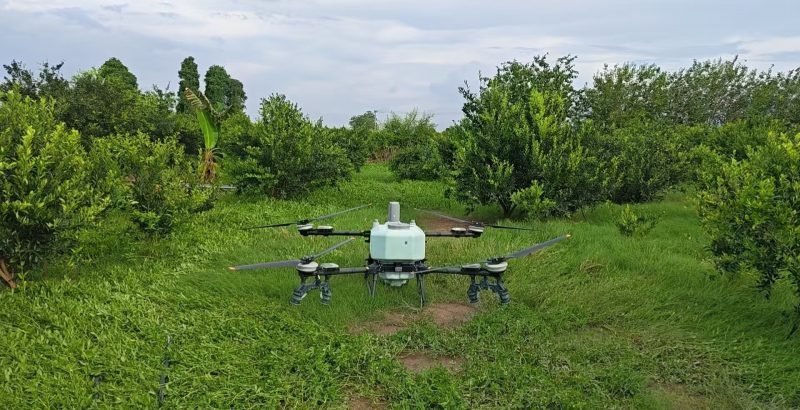
🌾 Agriculture
- Cover larger farmland in one flight
- Improve spraying efficiency
- Reduce downtime for battery changes
🏗️ Industrial Inspection
- Access hard-to-reach areas
- Maintain stable flight in complex environments
🚓 Security & Surveillance
- Quick deployment
- Longer monitoring time
🗺️ Surveying & Mapping
- Extended missions for large-scale mapping
- Higher efficiency in data collection
Challenges in Lightweight Design
⚠️ Strength vs. Weight Balance
Reducing weight must not:
- Compromise durability
- Affect flight safety
⚠️ Material Cost
Advanced materials like carbon fiber:
- Increase production cost
⚠️ Heat Dissipation
Compact and lightweight systems may:
- Accumulate heat faster
- Require efficient thermal design
Design Considerations
✔ Structural Integrity
Ensure the frame can handle:
- Vibration
- Wind resistance
- Payload stress
✔ Aerodynamics
Optimized shapes reduce:
- Air resistance
- Energy consumption
✔ Component Compatibility
All parts must:
- Fit seamlessly
- Maintain balance and performance
Future Trends
- 🚀 Ultra-light composite materials
- 🤖 AI-assisted structural optimization
- 🔋 Next-generation lightweight batteries
- 🧩 Integrated multifunctional components
These innovations will push drone performance to new limits.
Why Choose a Lightweight Drone Solution?
A high-quality lightweight drone system offers:
- Longer flight endurance
- Higher operational efficiency
- Improved mobility and deployment
- Reduced long-term costs
- Strong and durable structure
This makes it ideal for professional and industrial applications.
📩 Get a Custom Lightweight Drone Solution
Looking for a high-performance lightweight drone?
We provide:
- Advanced lightweight drone platforms
- Agricultural and industrial solutions
- Custom material and structural design
- OEM/ODM manufacturing services
👉 Contact us today to get a tailored solution and fast quotation.
FAQ
1. Does a lighter drone always perform better?
Not always. It must maintain a balance between weight, strength, and stability.
2. What materials are best for lightweight drones?
Carbon fiber and advanced composites are widely used for their strength-to-weight ratio.
3. Can lightweight drones carry heavy payloads?
Yes, with proper design and high power efficiency, they can maintain good payload capacity.
4. Are lightweight drones more expensive?
They may have higher initial costs due to advanced materials but offer long-term savings.
5. Who benefits most from lightweight drones?
Agriculture operators, inspection teams, and mapping professionals benefit the most.
Enhance your aerial operations with lightweight drone technology and achieve longer, smarter, and more efficient flights. 🚀


No comments yet