


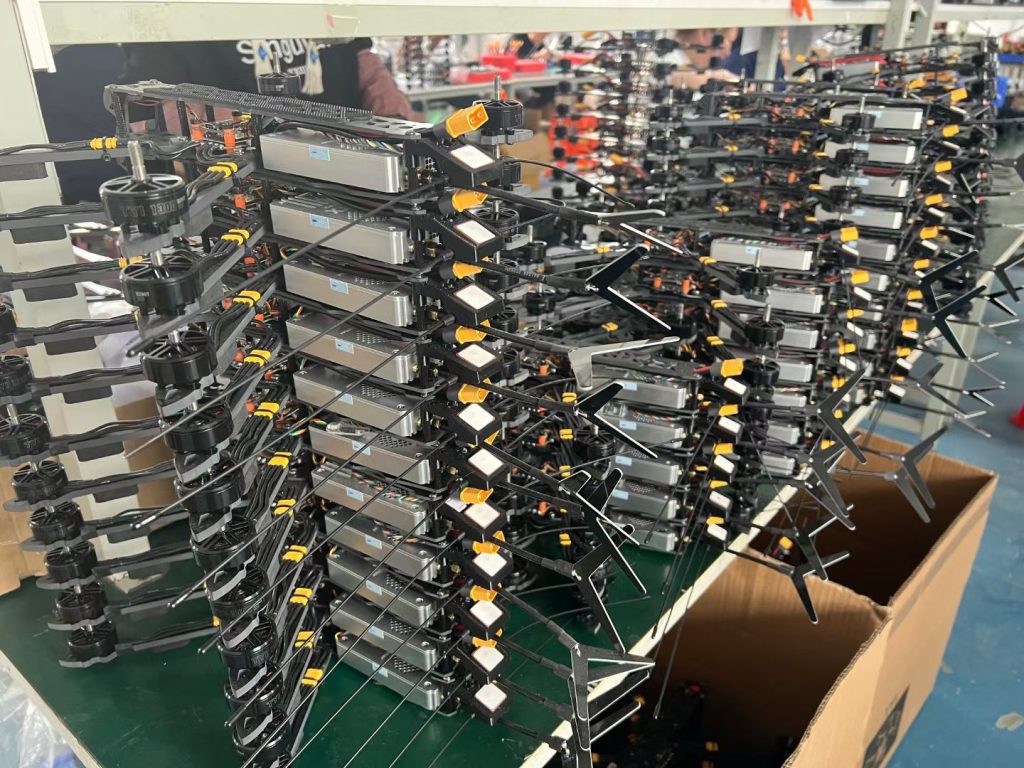


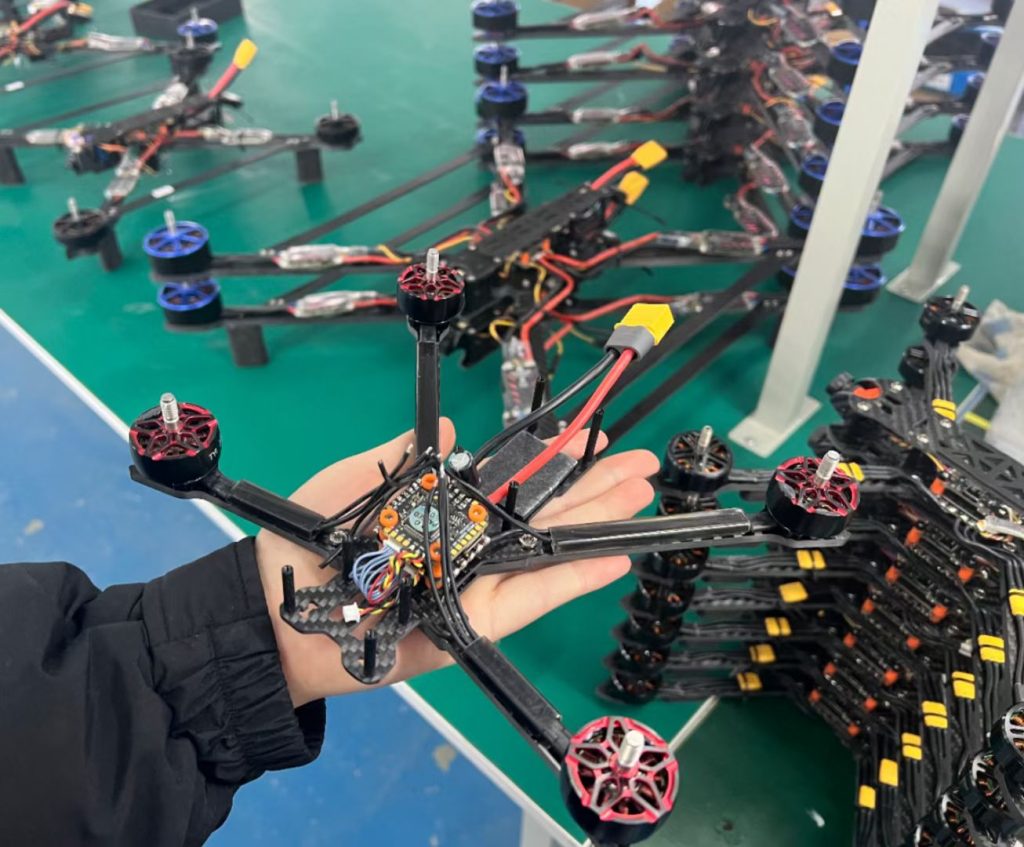

In the evolving landscape of STEM education, hands-on learning tools have become pivotal in bridging theoretical knowledge with real-world application. Among these innovations, autonomous unmanned aerial vehicles (UAVs) stand out as dynamic platforms for teaching robotics, programming, and aerospace principles. A custom autonomous educational UAV prototype—designed specifically for classroom and lab environments—offers a unique blend of affordability, adaptability, and advanced capabilities, making it an ideal tool for educators aiming to inspire the next generation of engineers and innovators. This article explores the design philosophy, technical features, pedagogical applications, and future potential of such a prototype, highlighting its role in transforming how students engage with complex scientific concepts.
The Need for Customized Educational Drones
Traditional educational tools often fail to keep pace with rapid technological advancements, leaving students with outdated or oversimplified resources. Off-the-shelf drones, while accessible, are typically designed for commercial or recreational use, lacking the customization needed to align with specific curricula. For example, a standard consumer drone may not support modular sensor integration, which is critical for experiments in environmental science or data analysis. Additionally, their pre-programmed flight paths limit opportunities for students to develop problem-solving skills through iterative design.
A custom autonomous educational UAV prototype addresses these gaps by prioritizing pedagogical alignment over mass-market appeal. It is engineered to be:
-
Modular: Allowing students to swap components (e.g., cameras, LiDAR sensors, or payloads) to suit different projects.
-
Programmable: Supporting multiple coding languages (Python, C++, block-based) to accommodate varying skill levels.
-
Durable: Built with lightweight, impact-resistant materials to withstand frequent use in classrooms.
-
Cost-Effective: Using open-source hardware and 3D-printed parts to reduce production costs, making it accessible to schools with limited budgets.
Design Philosophy: From Concept to Classroom
The development of a custom educational UAV prototype begins with defining clear learning objectives. Unlike commercial drones, which focus on user experience, this prototype is designed to be a “learning artifact”—a tool that reveals its inner workings to students. Key design principles include:
1. Open Architecture
The prototype adopts an open-source framework, enabling educators and students to access schematics, code repositories, and troubleshooting guides. This transparency encourages exploration; for instance, students can modify flight control algorithms or integrate new sensors without proprietary restrictions. Open-source communities also provide ongoing support, allowing users to share modifications and best practices.
2. Scalable Complexity
Recognizing that learners span from middle school beginners to university researchers, the prototype offers scalable challenges. Beginners might start with basic flight commands using block-based programming (e.g., Scratch), while advanced students could dive into PID controller tuning or machine learning-based obstacle avoidance. This tiered approach ensures the tool grows with the learner’s expertise.
3. Safety First
Autonomy introduces risks, especially in educational settings. The prototype incorporates multiple safety features: geofencing to restrict flight areas, emergency stop buttons, and collision detection via ultrasonic sensors. Additionally, its low-altitude flight capability (typically under 30 meters) minimizes hazards, making it suitable for indoor labs or outdoor fields with controlled airspace.
Technical Specifications: Powering Hands-On Learning
To deliver meaningful educational value, the prototype integrates cutting-edge technologies in an accessible package. Below are its core components:
Flight Control System
At the heart of the UAV is a flight controller running ArduPilot or PX4—open-source autopilot software known for flexibility. These systems allow students to adjust parameters like throttle response, gyroscopic stabilization, and waypoint navigation. For example, a group project might involve optimizing the drone’s hover stability by tweaking PID (Proportional-Integral-Derivative) gains, teaching them about feedback loops in control theory.
Sensor Suite
The prototype includes a suite of sensors to enable diverse experiments:
-
IMU (Inertial Measurement Unit): Combines accelerometers, gyroscopes, and magnetometers to track orientation and movement. Students can analyze IMU data to understand how drones maintain balance.
-
GPS/GLONASS Module: Enables precise positioning for waypoint missions. Advanced users can explore differential GPS for centimeter-level accuracy.
-
LiDAR or Ultrasonic Sensors: Used for obstacle avoidance and terrain mapping. In a geography class, students might program the drone to create 3D models of local landscapes.
-
Environmental Sensors: Optional add-ons like temperature, humidity, or air quality sensors allow experiments in meteorology or ecology.
Communication and Data Logging
The UAV communicates with ground stations via Wi-Fi or radio frequency (RF) links, transmitting real-time telemetry (e.g., battery level, altitude). All flight data—including sensor readings and control inputs—is logged to an onboard SD card or cloud platform. Students can later analyze this data using Python libraries like Pandas or Matplotlib, reinforcing skills in data science.
Payload Capacity
With a payload capacity of 200–500 grams, the prototype supports small cameras (for aerial photography), soil sample collectors, or even miniature weather stations. For instance, in an agriculture module, students could attach a multispectral camera to assess crop health via NDVI (Normalized Difference Vegetation Index) analysis.
Pedagogical Applications Across Disciplines
The versatility of the custom autonomous UAV prototype makes it applicable across multiple STEM domains. Here are some examples of how it enhances learning:
1. Robotics and Programming
Students learn fundamental robotics concepts by assembling the drone from modular kits. They write code to control flight patterns, implement sensor fusion algorithms, or design autonomous missions (e.g., search-and-rescue simulations). For example, a lesson might challenge students to program the drone to navigate a maze using LiDAR data, teaching path planning and decision-making logic.
2. Physics and Aerospace Engineering
The UAV serves as a tangible model for studying aerodynamics. Students measure lift, drag, and thrust by attaching force sensors to propellers, then compare experimental results with theoretical calculations. They can also explore orbital mechanics by simulating satellite trajectory adjustments or analyzing how wind affects flight stability.
3. Environmental Science
Equipped with environmental sensors, the drone becomes a tool for field research. Students can map deforestation patterns, monitor water quality in lakes, or track wildlife migration routes. For instance, a high school project might involve collecting air pollution data along urban corridors, linking findings to traffic density maps.
4. Mathematics and Data Analysis
Flight data provides rich datasets for mathematical modeling. Students use trigonometry to calculate distance traveled between waypoints, statistics to identify anomalies in sensor readings, or calculus to optimize flight paths for energy efficiency. A college-level course might task students with developing a predictive model for battery life based on payload weight and flight duration.
5. Collaborative Problem-Solving
Group projects encourage teamwork, mirroring real-world engineering workflows. One team might focus on hardware assembly, another on software development, and a third on mission planning. For example, designing a drone to deliver medical supplies to a simulated disaster zone requires coordinating logistics, programming delivery mechanisms, and ensuring compliance with safety regulations.
Implementation Strategies for Educators
Integrating a custom autonomous UAV prototype into the curriculum requires careful planning. Here are key strategies for success:
Start with Low-Stakes Projects
Begin with simple tasks, such as basic takeoff/landing sequences or figure-eight flights, to build confidence. Gradually introduce complexity, like waypoint navigation or sensor calibration. This incremental approach prevents frustration and maintains student engagement.
Leverage Project-Based Learning (PBL)
Frame lessons around open-ended challenges. For example: “Design a drone that can survey a 100m² area and generate a 3D map within 10 minutes.” Such prompts encourage creativity and critical thinking, as students must balance speed, accuracy, and resource constraints.
Foster Peer Mentorship
Pair experienced students with beginners to create a collaborative learning environment. Advanced learners can assist with debugging code or explaining flight dynamics, reinforcing their own understanding while helping peers.
Integrate Cross-Curricular Connections
Link drone projects to other subjects. For instance, a history class might use the drone to document archaeological sites, while an art class could experiment with aerial photography for creative compositions. This interdisciplinary approach highlights the relevance of STEM in diverse fields.
Challenges and Solutions
While the benefits are significant, implementing educational UAVs comes with challenges:
Cost Barriers
Even with cost-saving measures, initial investment in hardware and training can be prohibitive. Solution: Seek grants from STEM-focused organizations, partner with local tech companies for sponsorships, or use crowdfunding platforms to raise funds. Many schools also opt for phased implementation, starting with a single prototype before expanding.
Teacher Training
Educators may lack familiarity with drone technology or programming. Solution: Provide professional development workshops focused on hands-on activities. Online resources, such as tutorials from DroneBlocks or DIY Drones, offer self-paced learning modules. Partnering with universities or industry experts can also bridge knowledge gaps.
Regulatory Compliance
Flying drones may require permits, depending on local laws. Solution: Work with aviation authorities to obtain necessary licenses and designate safe flying zones (e.g., school athletic fields). Emphasize indoor flight options for schools in restricted areas.
Future Directions: AI and Beyond
As technology advances, the custom autonomous educational UAV prototype will evolve to incorporate emerging trends:
Artificial Intelligence Integration
Adding machine learning capabilities will enable more sophisticated autonomy. For example, students could train the drone to recognize objects (e.g., identifying plastic waste in oceans) using computer vision libraries like OpenCV. Reinforcement learning algorithms could teach the drone to adapt to changing environments, such as avoiding sudden obstacles during flight.
Swarm Robotics
Scaling up to multi-drone systems introduces lessons in swarm intelligence. Students can program drones to collaborate on tasks like area coverage or distributed sensing, mimicking behaviors seen in bird flocks or ant colonies. This prepares them for careers in fields like logistics or disaster response.
Virtual Reality (VR) Simulations
Combining physical drones with VR headsets allows students to simulate complex missions in virtual environments. For instance, they could practice navigating a collapsed building or conducting space exploration scenarios without risking equipment.
Conclusion
A custom autonomous educational UAV prototype represents a paradigm shift in STEM education. By merging cutting-edge technology with pedagogical intent, it empowers students to move beyond passive learning and become active creators. Its modular design, scalability, and emphasis on open-source collaboration make it a versatile tool for teaching robotics, programming, physics, and environmental science. As educators continue to adopt such innovations, we edge closer to a future where every student has the opportunity to explore the skies—and the possibilities they hold.
For schools ready to embrace this revolution, the journey begins with a single prototype: a flying classroom that inspires curiosity, fosters innovation, and prepares students for the challenges of tomorrow.
THE END








No comments yet