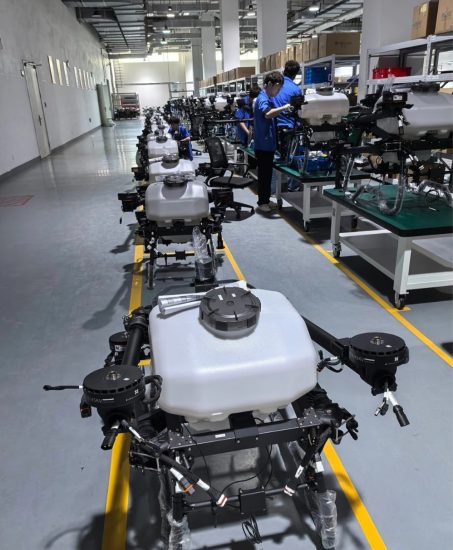


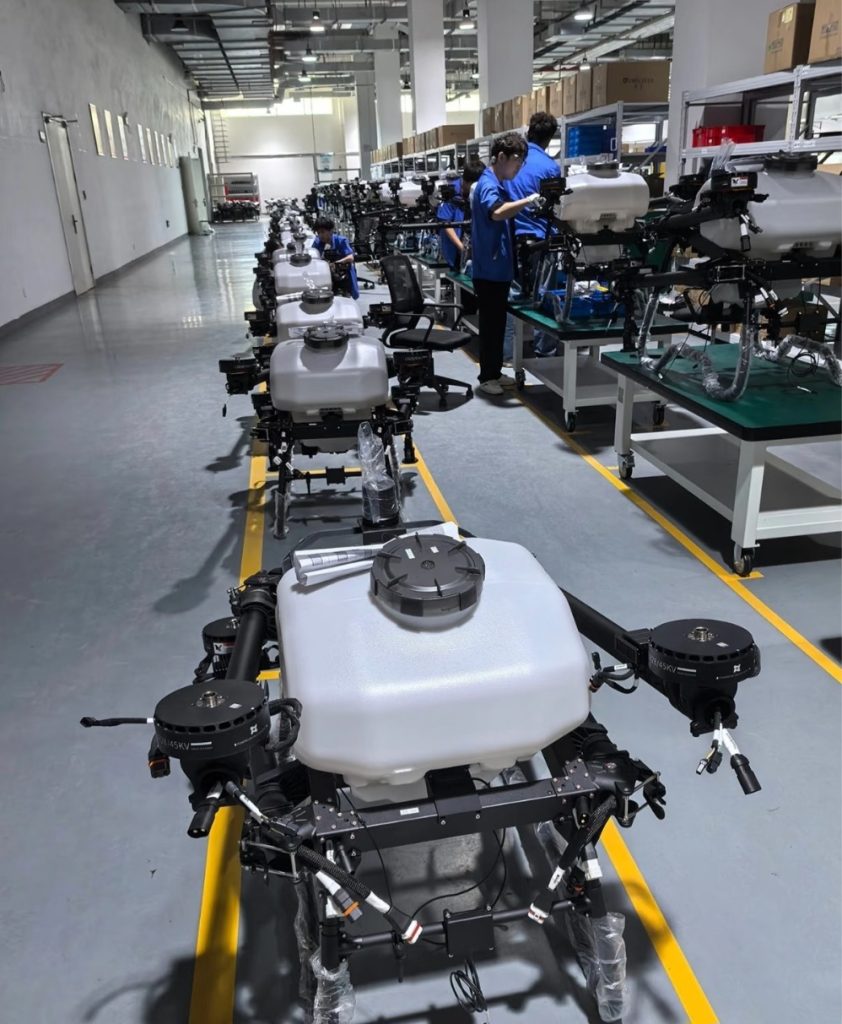
Choosing an agricultural drone factory in China is an important decision for farmers, agricultural service companies, distributors, importers and OEM buyers.
A professional factory should not only be able to assemble a drone. It should have the ability to develop the flight platform, integrate the spraying system, test flight performance, control product quality, supply spare parts and provide technical support after delivery.
MSOEN is a professional UAV manufacturer focused on agricultural spraying drones and other UAV solutions. Its agricultural product range is designed for crop spraying, pesticide application, fertilizer spreading, precision farming, orchards, plantations, rice fields and other agricultural applications.
Official website:
1. What Should a Professional Agricultural Drone Factory Provide?
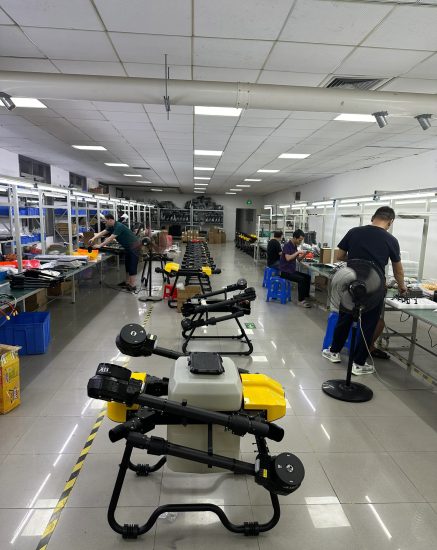
A professional agricultural drone factory should provide a complete manufacturing process rather than simply purchasing finished components and putting them together.
The process generally includes:
- Product design
- Engineering development
- Component selection
- Flight-control integration
- Spraying-system development
- Battery-system integration
- Software configuration
- Assembly
- Calibration
- Flight testing
- Quality inspection
- Packaging
- Technical support
- Spare-parts supply
For agricultural drones, these processes are particularly important because the aircraft must carry a liquid payload while maintaining stable flight and consistent spraying.
MSOEN describes its business as UAV manufacturing and solutions development covering agricultural spraying drones, fertilizer spreading drones, mapping drones, aerial imaging drones and customized UAV projects.
2. R&D Is the Foundation of Agricultural Drone Manufacturing
Agricultural drones operate in a much more demanding environment than ordinary camera drones.
The manufacturer needs to consider the relationship between:
Airframe + Motors + Propellers + Flight Controller + Battery + Payload + Pump + Nozzles + Navigation
Changing one component can affect other parts of the system.
For example, increasing the liquid payload can increase power consumption. This can affect flight time, motor load and battery temperature.
Therefore, agricultural drone R&D requires system-level engineering rather than simply selecting individual components.
MSOEN states that its manufacturing focus includes practical UAV systems designed for agricultural and professional applications.
3. Agricultural Drone Product Development
Before an agricultural drone reaches mass production, the manufacturer needs to establish a suitable product configuration.
Important design considerations include:
Payload
The tank needs to provide sufficient capacity while keeping the aircraft’s overall weight within its intended operating range.
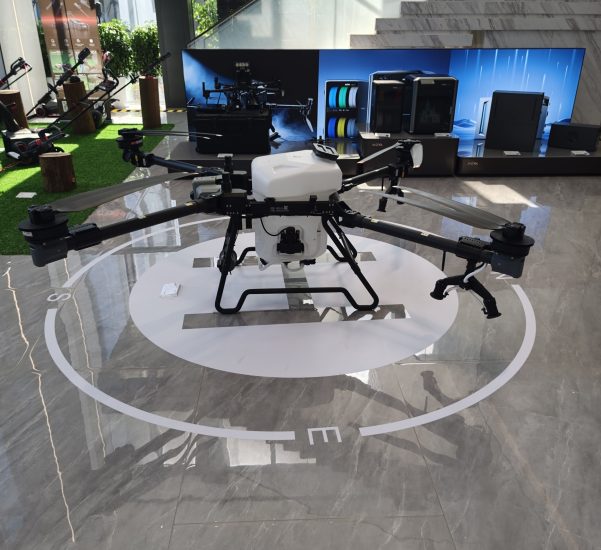
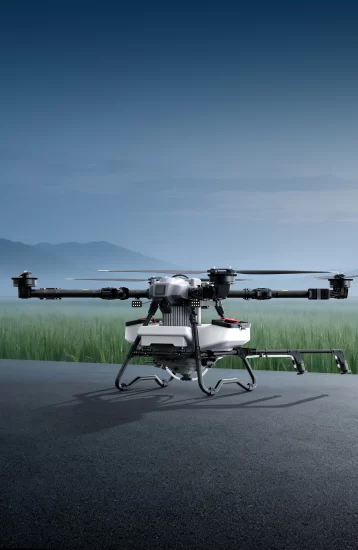
MSOEN’s published agricultural drone information lists configurations including 10L, 16L, 20L, 30L and 40L spraying platforms. Actual specifications should be confirmed for the selected model.
Flight Platform
The airframe needs to support the required payload while maintaining structural stability.
Spraying System
The manufacturer needs to match:
- Pump
- Nozzle
- Filter
- Pipe
- Flow-control system
- Tank
Navigation
Agricultural drones may use GPS-based navigation and automated route planning. Depending on configuration, functions can include terrain following, automatic return and breakpoint resume spraying.
4. Why Factory Testing Matters
A professional agricultural drone should not simply be assembled and shipped immediately.
Testing is an important part of the manufacturing process.
A suitable testing process may include:
Component Inspection
Check critical components before assembly.
Assembly Inspection
Verify mechanical and electrical connections.
Software Configuration
Configure flight-control parameters and operating functions.
Calibration
Calibrate relevant sensors and flight systems.
No-Load Flight Test
Test basic flight behavior before applying the agricultural payload.
Loaded Flight Test
Evaluate the aircraft under an appropriate operating payload.
Spraying Test
Check the pump, nozzles and liquid delivery system.
Final Inspection
Verify the aircraft, accessories and documentation before packaging.
MSOEN has previously described its agricultural sprayer products as being assembled, parameter-configured and flight-tested before dispatch.
5. Spraying-System Manufacturing
The spraying system is one of the most important differences between a normal UAV and an agricultural spraying drone.
A complete system normally contains:
Tank → Filter → Pump → Pipe → Nozzle → Liquid Application
Each part needs to work correctly with the others.
Pump
The pump needs to provide an appropriate flow rate for the spraying system.
Nozzle
Nozzle selection influences spray characteristics and application performance.
Filter
Filters help prevent particles from entering the pump and nozzle system.
Pipes
Pipes should be appropriately selected for the pressure and agricultural operating environment.
Flow Control
The system should provide suitable control of liquid flow according to operating requirements.
MSOEN’s agricultural drone information highlights adjustable spraying systems and agricultural applications including pesticide, herbicide and fertilizer spraying.
6. Battery System Integration
Battery performance has a direct relationship with agricultural drone productivity.
A professional manufacturer needs to consider:
- Battery capacity
- Aircraft weight
- Motor power
- Payload
- Charging requirements
- Battery management
- Operating temperature
- Safety
- Charging efficiency
The battery should be matched to the aircraft rather than treated as an independent accessory.
For commercial customers, battery management is particularly important because the number of batteries and charging equipment can influence the complete daily operating cycle.
7. Flight-Control and Navigation Technology
Agricultural spraying often requires the drone to follow repeatable routes.
Modern agricultural drones can support functions such as:
- GPS positioning
- Automatic flight
- Route planning
- Automatic return
- Terrain following
- Breakpoint resume
- Obstacle detection
MSOEN’s published agricultural drone specifications include GPS automatic flight, route planning, terrain-following radar and breakpoint resume spraying on applicable configurations.
The exact functions vary by model, so buyers should request the technical specification for the specific drone they intend to purchase.
8. From Prototype to Mass Production
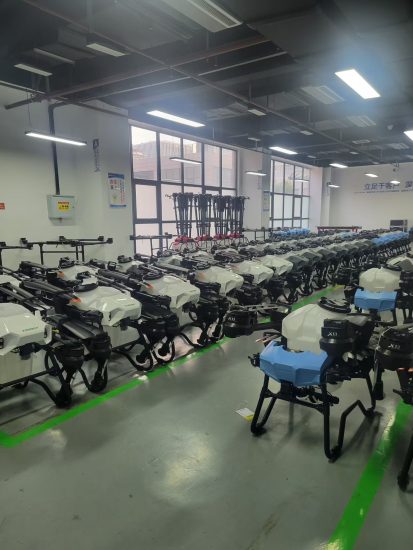
There is a significant difference between developing one working prototype and producing agricultural drones consistently.
Mass production requires standardized procedures.
A professional manufacturing workflow can include:
Engineering → Prototype → Testing → Design Optimization → Production Preparation → Assembly → Quality Control → Flight Testing → Final Inspection → Packaging
The purpose is to ensure that the production model maintains consistent performance.
For distributors purchasing multiple units, production consistency becomes especially important.
9. Quality Control Should Cover the Complete Drone
Quality control should not focus only on the finished aircraft.
Critical areas include:
Mechanical Quality
- Frame
- Arms
- Landing structure
- Propellers
- Motors
- Fasteners
Electrical Quality
- Wiring
- Connectors
- Battery interfaces
- Electronic modules
Spraying Quality
- Tank
- Pump
- Pipes
- Filters
- Nozzles
Software Quality
- Flight control
- Navigation
- Remote-control functions
- Route planning
- Safety functions
Final Performance
- Takeoff
- Hovering
- Flight stability
- Payload operation
- Spraying operation
This complete approach helps reduce failures caused by interactions between different systems.
10. OEM Manufacturing for International Buyers
OEM manufacturing is particularly useful for agricultural equipment distributors.
A buyer may want to sell an agricultural spraying drone under their own brand while relying on MSOEN for manufacturing.
Possible OEM requirements include:
- Logo
- Product labels
- Packaging
- User manuals
- Accessories
- Product configuration
- Software branding where supported
MSOEN provides OEM and ODM customization support for global customers.
OEM projects should be discussed in detail before production because customization requirements can affect:
- MOQ
- Production time
- Packaging
- Certification
- Engineering costs
- Testing requirements
11. ODM Agricultural Drone Development
ODM is more suitable when the buyer needs a customized product rather than a standard agricultural drone.
Possible requirements may include:
- Different tank capacity
- Modified spraying system
- Customized frame
- Different battery configuration
- Customized appearance
- Software requirements
- Market-specific functions
The feasibility of each requirement should be evaluated by the engineering team.
A professional ODM project should start with a clear technical specification rather than a general request such as “make a bigger spraying drone.”
12. Agricultural Drone Applications
MSOEN agricultural drones are designed for a range of agricultural applications.
Rice
Rice fields can present difficult conditions for ground equipment, particularly when fields are wet.
Aerial spraying can provide an alternative operating method.
Wheat
Large fields can benefit from automated route planning and efficient aerial coverage.
Corn
Drone spraying can be used for appropriate crop-protection applications when local regulations and agricultural-product requirements are followed.
Vegetables
Vegetable crops may require careful control of application rates and flight parameters.
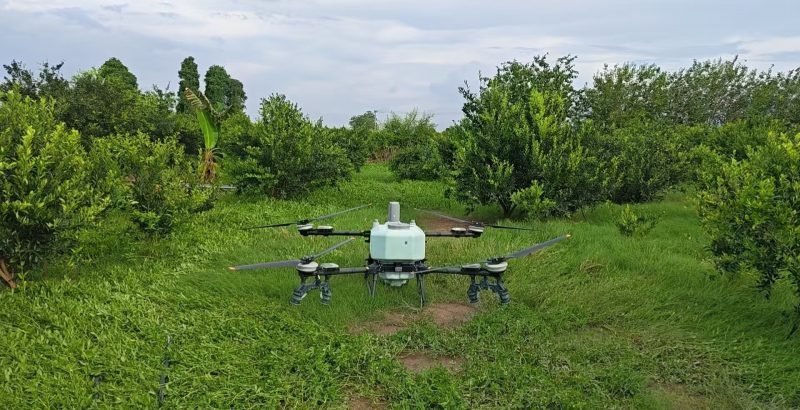
Orchards
Orchards require special attention to:
- Tree height
- Canopy density
- Row spacing
- Terrain
- Wind
- Flight altitude
Tea and Plantations
Plantations can cover large areas and may include slopes or difficult terrain, making aerial operations useful in appropriate circumstances.
MSOEN’s published factory information specifically lists rice, wheat, corn, vegetables, orchards and tea plantations among potential agricultural drone applications.
13. How a Factory Supports Overseas Customers
For international buyers, manufacturing is only one part of the purchasing process.
A professional supplier should also help with:
- Product specifications
- Technical documentation
- Spare parts
- Packaging
- Export preparation
- Operator instructions
- Troubleshooting
- After-sales communication
MSOEN describes its business as serving international customers and providing technical support, export cooperation and customized UAV solutions.
14. Spare Parts Are Part of the Product
Agricultural drones operate in demanding environments.
Over time, some components may require replacement.
Common spare parts can include:
- Propellers
- Motors
- Pumps
- Nozzles
- Filters
- Pipes
- Batteries
- Chargers
- Landing components
- Electronic parts
For professional agricultural service companies, it is often sensible to establish a spare-parts inventory before beginning large-scale operations.
This can reduce downtime when a commonly used component needs replacement.
15. What Should Buyers Ask Before Ordering?
Before purchasing from a Chinese agricultural drone factory, ask for clear answers to the following questions:
- What is the recommended payload?
- What tank capacities are available?
- What is the actual flight time under working payload?
- What spraying system is included?
- How is the flow rate controlled?
- What navigation functions are included?
- Does the drone support automatic route planning?
- What batteries and chargers are included?
- What spare parts are recommended?
- What testing is completed before shipment?
- Can OEM branding be provided?
- Can ODM development be supported?
- What technical documentation is provided?
- What is the warranty policy?
- What support is available after delivery?
A professional factory should be able to provide detailed technical information rather than only a price list.
16. How to Compare Two Agricultural Drone Factories
Do not compare factories only by unit price.
Use a broader evaluation:
| Evaluation Area | What to Check |
|---|---|
| R&D | Product development and engineering capability |
| Manufacturing | Production and assembly capability |
| Testing | Flight and spraying tests |
| Payload | Suitable tank configurations |
| Spraying | Pump, nozzle and flow system |
| Navigation | GPS and automated flight functions |
| Battery | Capacity, charging and management |
| OEM | Branding and packaging |
| ODM | Product customization |
| Spare Parts | Availability and support |
| Technical Support | Documentation and troubleshooting |
| Export | International shipping and documentation |
This approach provides a much more realistic picture of the manufacturer’s capabilities.
17. Why Choose MSOEN?
MSOEN focuses on UAV manufacturing and provides agricultural, industrial and customized drone solutions.
Its published company information identifies key capabilities including:
- Agricultural spraying drones
- Fertilizer spreading drones
- Mapping drones
- Aerial imaging drones
- Industrial UAV platforms
- OEM manufacturing
- ODM customization
- Technical support
- International cooperation
The company’s agricultural drone factory information also describes multiple spraying capacities, automated flight functions, terrain-following technology and OEM/ODM options.
For buyers, the important point is that an agricultural drone should be treated as a complete agricultural operating system, not simply as an aircraft.
18. Frequently Asked Questions
Is MSOEN an agricultural drone manufacturer in China?
Yes. MSOEN identifies itself as a professional UAV manufacturer providing agricultural spraying drones and other UAV solutions.
Does MSOEN manufacture spraying drones?
Yes. Agricultural spraying drones are one of MSOEN’s main UAV product categories.
What spraying drone capacities does MSOEN offer?
Published MSOEN information lists 10L, 16L, 20L, 30L and 40L spraying configurations. Availability and exact specifications should be confirmed for the current model.
Does MSOEN provide OEM services?
Yes. MSOEN provides OEM and ODM customization support for global customers.
Can I order one agricultural spraying drone?
MSOEN has previously published a minimum order quantity of one unit for certain agricultural drone products. Buyers should confirm the current MOQ for the specific model.
Can MSOEN provide spare parts?
MSOEN’s agricultural drone service information includes spare-parts supply and after-sales support. The exact parts available should be confirmed according to the selected model.
Can the drones be used in different countries?
The aircraft can be supplied for international markets, but UAV registration, radio requirements, agricultural regulations and operating restrictions differ by country. Buyers should verify the requirements in their destination market before purchase.
How can I contact MSOEN?
Visit the official website www.msoen.com to review agricultural spraying drone products, manufacturing information and OEM/ODM solutions.
Conclusion
A professional agricultural drone factory needs much more than basic assembly capability.
The complete manufacturing process should cover R&D, engineering, component integration, spraying-system development, battery integration, software configuration, assembly, calibration, flight testing, quality control, packaging and after-sales support.
For international buyers, OEM and ODM capability provides additional flexibility, while reliable spare-parts and technical support are important for long-term operation.
MSOEN provides agricultural spraying drone manufacturing, OEM/ODM customization and UAV solutions for international agricultural customers. Its published product information covers multiple spraying capacities and agricultural applications.
If you are looking for a China agricultural drone factory for your farm, agricultural service business, distribution business or private-label project, you can visit www.msoen.com and contact MSOEN with your crop type, required capacity, target country and OEM/ODM requirements.


No comments yet