



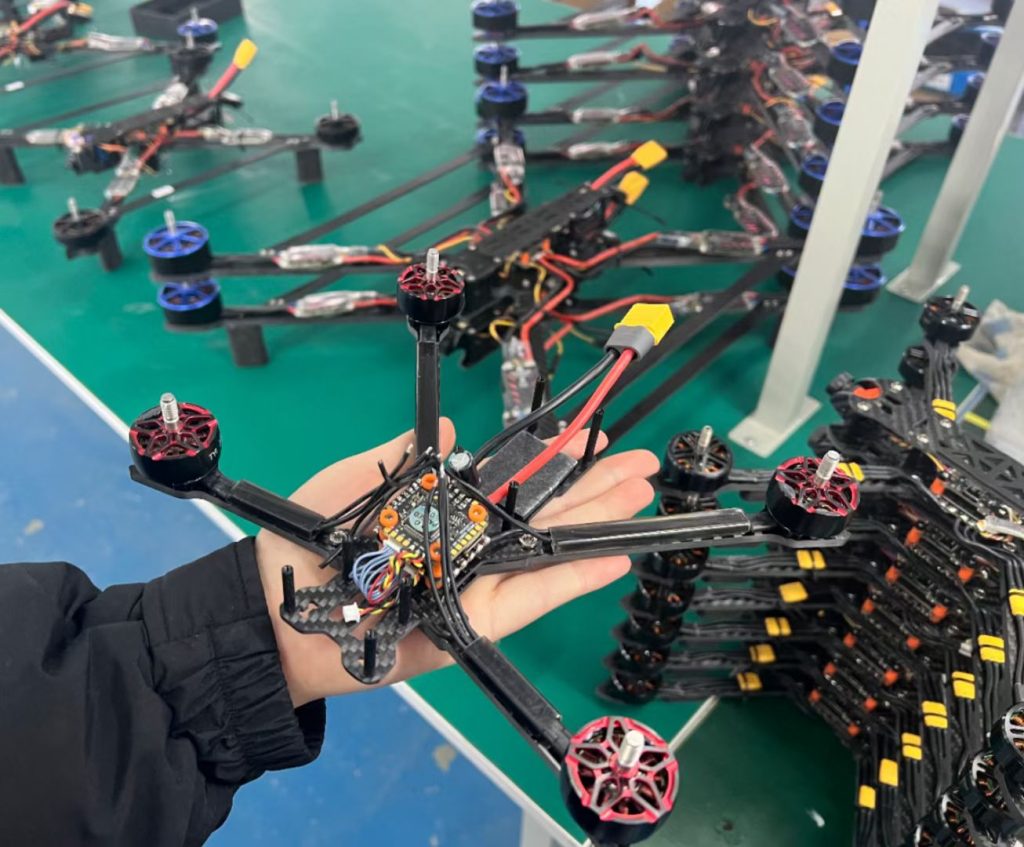


The rapid growth of unmanned aerial vehicle (UAV) technology is transforming many industries, including agriculture, mapping, security, logistics, and scientific research. Among all UAV manufacturing technologies, carbon fiber UAV structures have become the preferred choice for high-performance drones. Carbon fiber provides exceptional strength, lightweight performance, corrosion resistance, and durability, making it ideal for advanced UAV systems.
For universities, research laboratories, and technology institutes, choosing the right carbon fiber UAV factory is critical. These organizations often need reliable drone platforms that support autonomous flight systems, AI algorithms, sensors, and experimental modules. A professional manufacturer can provide flexible OEM and ODM solutions tailored to research needs.
MSOEN is one of the emerging UAV brands focused on carbon fiber drone manufacturing, autonomous flight platforms, and customized research UAV systems. With engineering experience in drone design and production, MSOEN provides reliable UAV solutions for universities, robotics research centers, and technology companies worldwide.
Why Carbon Fiber is Ideal for UAV Manufacturing
Carbon fiber is widely used in aerospace and advanced robotics because of its superior performance compared to traditional materials like aluminum or plastic.
1. Lightweight Structure
One of the most important advantages of carbon fiber is its low weight. UAVs must carry batteries, sensors, cameras, and computing modules, so reducing frame weight significantly improves performance.
A carbon fiber UAV frame can reduce overall aircraft weight while maintaining high strength. This allows drones to achieve:
- Longer flight times
- Greater payload capacity
- Higher maneuverability
- Improved energy efficiency
For research institutions testing autonomous flight algorithms, lightweight drones provide more stable flight performance.
2. High Structural Strength
Carbon fiber has a high strength-to-weight ratio, making it perfect for UAV frames. It can withstand strong vibrations, impacts, and environmental stress.
This is especially important for:
- Long endurance drones
- Autonomous mapping UAVs
- Experimental UAV platforms
- Industrial drones operating in harsh environments
Carbon fiber frames can maintain structural stability even during complex flight maneuvers.
3. Corrosion and Weather Resistance
Unlike metal materials, carbon fiber does not rust or corrode. This allows UAVs to operate reliably in different environments such as:
- Coastal areas
- Agricultural fields
- Desert climates
- Humid tropical regions
For universities conducting long-term outdoor experiments, this durability greatly reduces maintenance costs.
4. Professional Aerospace Appearance
Carbon fiber UAVs also have a professional aerospace aesthetic. For research institutes, aerospace laboratories, and robotics departments, carbon fiber drones present a high-tech and advanced image.
The Importance of Autonomous UAV Platforms for Research
Autonomous flight technology is one of the most important research areas in robotics and artificial intelligence.
Universities and laboratories use UAV platforms to develop technologies such as:
- Autonomous navigation
- AI visual recognition
- Obstacle avoidance algorithms
- Swarm drone coordination
- Precision landing systems
- Environmental monitoring
However, many research teams prefer open and customizable UAV platforms instead of closed commercial drones.
This is where a specialized carbon fiber UAV factory becomes extremely valuable.
MSOEN Carbon Fiber UAV Manufacturing Capabilities
MSOEN focuses on developing high-quality carbon fiber UAV platforms suitable for research, education, and industrial applications.
The company provides flexible manufacturing capabilities including:
Carbon Fiber Drone Frames
MSOEN produces durable UAV frames designed for:
- Quadcopter drones
- Hexacopter UAVs
- Octocopter heavy-lift drones
- Fixed-wing UAV platforms
- VTOL hybrid UAV systems
Each frame is engineered for strength, weight optimization, and modular assembly.
Autonomous Flight Drone Platforms
Many research teams require drones that can integrate with their own flight control systems and AI software.
MSOEN provides open UAV platforms compatible with:
- PX4 flight controllers
- ArduPilot systems
- AI computing modules
- Lidar sensors
- multispectral cameras
- industrial inspection equipment
This flexibility allows research teams to build their own experimental drone systems.
UAV OEM and ODM Services
For companies or universities developing their own drone brands, MSOEN offers professional OEM and ODM drone manufacturing services.
Customization options include:
- Carbon fiber frame design
- Payload integration
- Flight controller installation
- Sensor mounting structures
- Battery system configuration
- Communication modules
These services allow partners to quickly develop professional UAV products.
Carbon Fiber UAV Solutions for Universities
Many universities are now integrating UAV technology into teaching and research programs.
MSOEN works with academic institutions to supply research-grade drone platforms for multiple departments.
Robotics Engineering Programs
Robotics departments use UAV platforms to study:
- control systems
- artificial intelligence
- autonomous navigation
- multi-robot collaboration
A modular carbon fiber drone allows students and researchers to test new algorithms easily.
Aerospace Engineering Research
Aerospace programs use UAVs to experiment with:
- aerodynamics
- propulsion systems
- lightweight structures
- flight control algorithms
Carbon fiber UAVs are particularly suitable for aerospace research due to their structural performance.
Environmental Science Projects
Research teams studying ecosystems often use UAVs equipped with sensors for:
- forest monitoring
- wildlife observation
- climate data collection
- agricultural analysis
Long flight endurance and payload flexibility are essential for these missions.
Custom Carbon Fiber UAV Design Process
Professional UAV factories follow a systematic development process to ensure product reliability.
Step 1: Research Requirement Analysis
The engineering team evaluates the customer’s project requirements, including:
- payload weight
- flight duration
- flight environment
- sensor integration
- autonomous flight capability
This stage determines the basic UAV architecture.
Step 2: UAV Structural Design
Engineers design the drone frame using advanced CAD modeling.
Carbon fiber components are optimized to achieve:
- weight reduction
- structural rigidity
- vibration control
- easy assembly
Step 3: Prototype Development
A prototype UAV is produced for testing and evaluation.
Flight tests examine:
- stability
- endurance
- payload capability
- autonomous navigation performance
Step 4: Manufacturing and Quality Control
After prototype approval, the UAV enters full production.
Quality control includes:
- carbon fiber material inspection
- motor and electronics testing
- flight system verification
- final flight testing
Global Demand for Carbon Fiber UAV Manufacturing
The international demand for UAV technology continues to grow rapidly. Many industries now rely on drones for operational efficiency.
Key global markets include:
Agriculture
Autonomous UAVs are widely used for:
- crop monitoring
- pesticide spraying
- field mapping
Infrastructure Inspection
Drones help inspect:
- power lines
- pipelines
- bridges
- solar farms
Mapping and Surveying
Carbon fiber drones provide stable platforms for high-precision mapping.
Research and Education
Universities worldwide are investing heavily in UAV research programs.
Why Many Buyers Choose Chinese UAV Factories
China has become one of the most important UAV manufacturing hubs in the world.
Several factors contribute to this leadership:
Mature Supply Chain
China has a complete UAV production ecosystem including:
- motors
- flight controllers
- batteries
- carbon fiber components
- sensors
This supply chain enables fast production and competitive pricing.
Engineering Experience
Chinese drone engineers have extensive experience in UAV manufacturing and autonomous flight technology.
Customization Flexibility
Chinese factories often provide OEM and ODM services, allowing international buyers to develop custom drone products.
MSOEN – A Reliable Carbon Fiber UAV Factory
MSOEN is committed to providing professional UAV platforms for global research institutions, universities, and technology companies.
Key advantages include:
- Advanced carbon fiber UAV design
- Autonomous flight platform development
- Custom UAV manufacturing services
- Flexible research drone solutions
- Support for educational UAV programs
Whether a university is launching a robotics program or a technology company is developing autonomous drone applications, MSOEN can provide reliable UAV platforms.
Future of Autonomous UAV Technology
Autonomous UAV systems will continue evolving rapidly in the coming years.
Future innovations will include:
- AI-driven flight navigation
- autonomous drone swarms
- long endurance energy systems
- fully automated logistics drones
- advanced environmental monitoring
Carbon fiber UAV platforms will remain essential for supporting these innovations due to their strength, weight advantages, and design flexibility.
Work with a Professional Carbon Fiber UAV Manufacturer
Choosing a reliable carbon fiber UAV factory is an important step for organizations developing advanced drone technology.
A professional manufacturer can provide:
- stable drone platforms
- custom UAV design
- research-grade drone systems
- scalable production capabilities
MSOEN continues to support global partners with high-quality UAV platforms designed for innovation and performance.
If your organization is looking for carbon fiber UAV manufacturing, autonomous drone platforms, or customized research drones, the MSOEN engineering team welcomes cooperation opportunities and project discussions.


No comments yet