


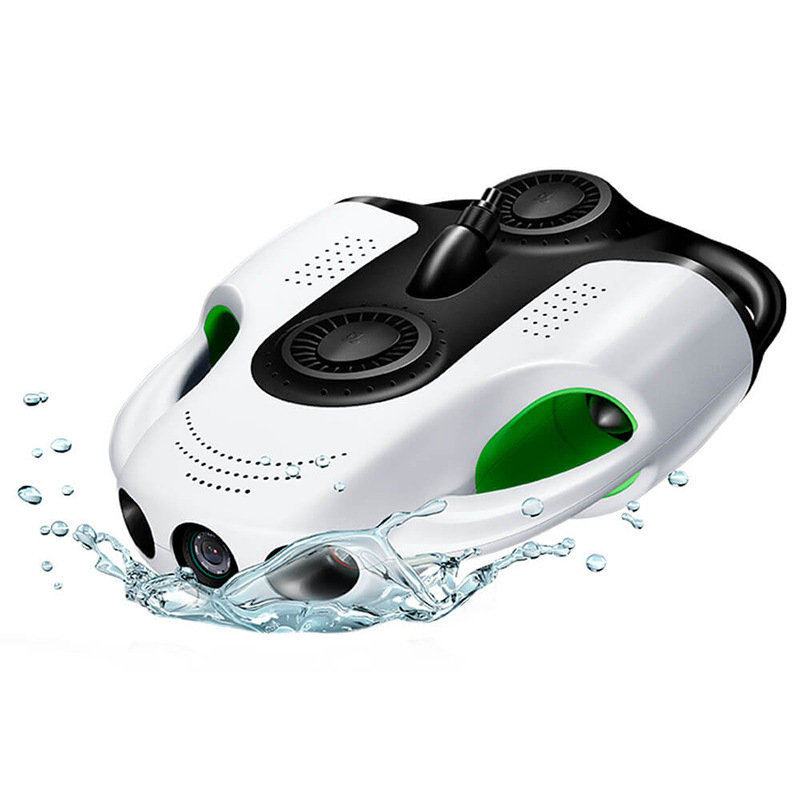
Introduction: When Deep-Sea Technology Becomes Accessible
For decades, underwater exploration and inspection were dominated by expensive, bulky, and highly specialized systems—often accessible only to governments, oil & gas giants, or research institutions. Traditional remotely operated vehicles (ROVs) required large teams, complex deployment logistics, and six-figure budgets.
That paradigm is changing.
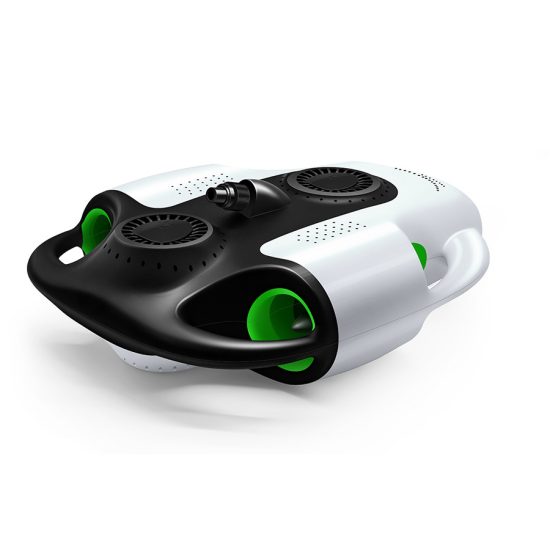
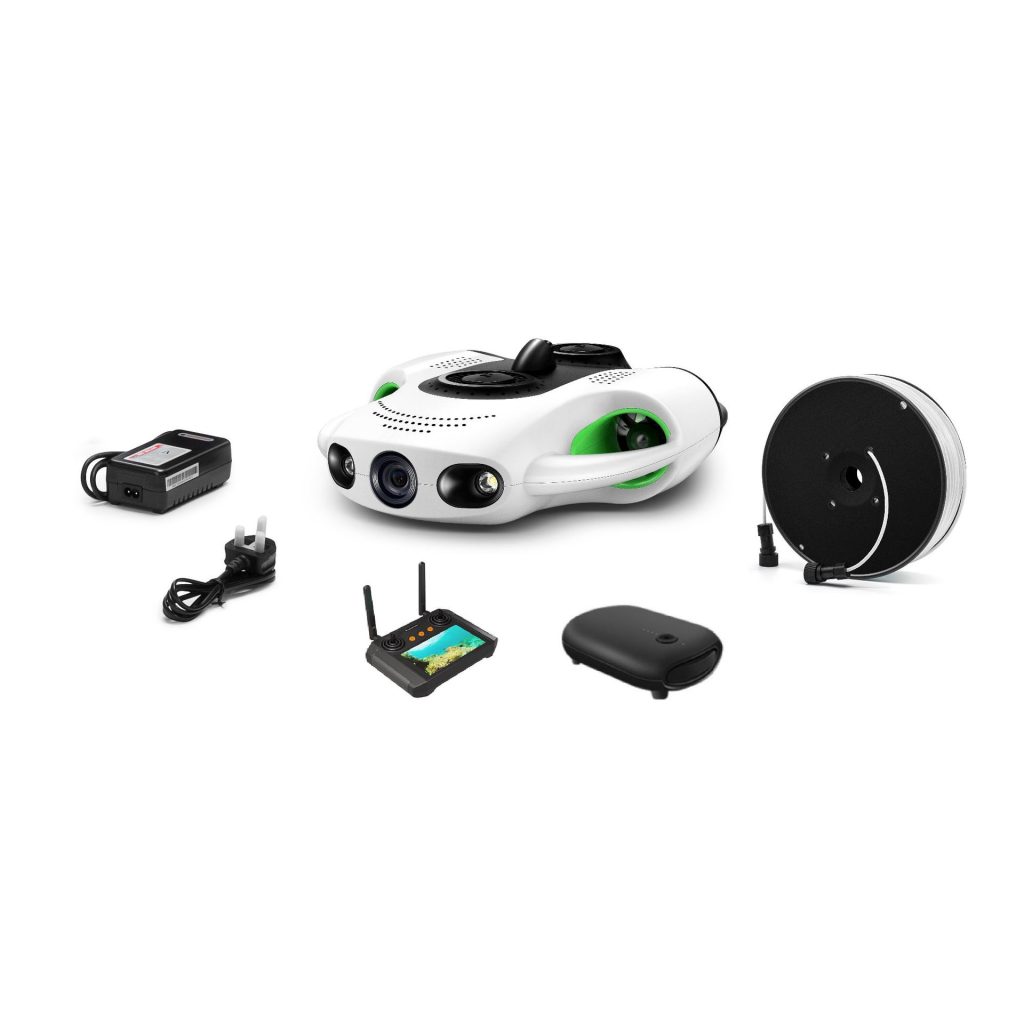
Today, a new generation of lightweight, factory-engineered underwater robots is redefining how industries approach underwater inspection, search, monitoring, and data collection. Among these innovations, the MSOEN underwater robot stands out as what many overseas buyers describe as an “affordable deep-sea submarine”—compact, intelligent, and engineered for real-world deployment rather than laboratory conditions.
This article takes a deep dive into why MSOEN underwater robots are successfully exported worldwide, how factory-level engineering enables cost-performance leadership, and why this technology is reshaping the global underwater robotics market.
From Factory Floor to Ocean Floor: The MSOEN Engineering Philosophy
Built by a Manufacturer, Not an Assembler
Unlike many brands that outsource critical components, MSOEN operates as a full-stack underwater robotics manufacturer, covering:
- Structural design & hydrodynamic modeling
- Thruster system development
- Embedded control systems
- Imaging and transmission architecture
- Pressure-resistant sealing and testing
This vertically integrated approach allows tighter tolerance control, consistent quality, and continuous iteration based on field feedback.
Experience-backed design: Every hardware revision is informed by real deployment data—from aquaculture farms, reservoirs, ports, dams, and offshore facilities.
Compact Does Not Mean Compromised: Industrial-Grade Design
Lightweight Body, Heavy-Duty Capability
The MSOEN underwater robot is engineered around a compact modular pressure hull, typically constructed from:
- Aerospace-grade aluminum alloy
- Reinforced composite polymers
- Multi-layer O-ring sealing systems
Despite its portable size, the system delivers industrial-grade depth ratings and stability.
Key Engineering Concepts Used:
- Neutral buoyancy optimization
- Hydrodynamic drag reduction
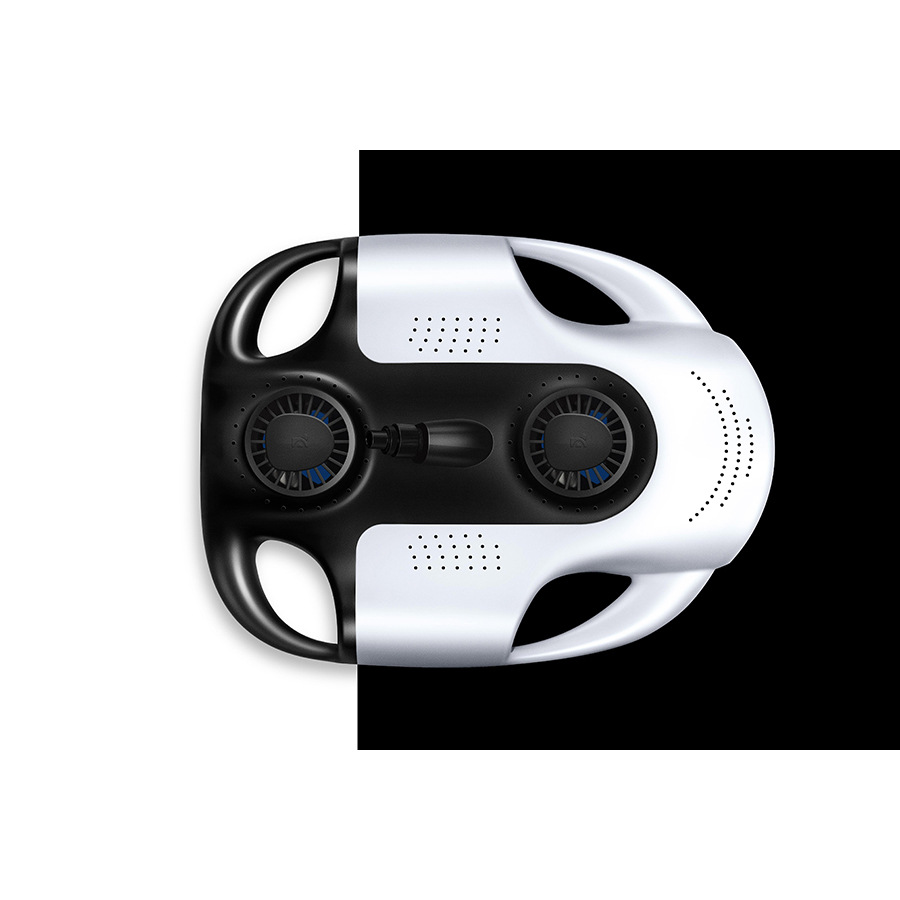
- Six-thruster vectored propulsion layout
- Real-time attitude stabilization (IMU + gyro fusion)
The “God’s-Eye View” Underwater: Advanced Imaging & Perception
Ultra-High-Definition Visual System
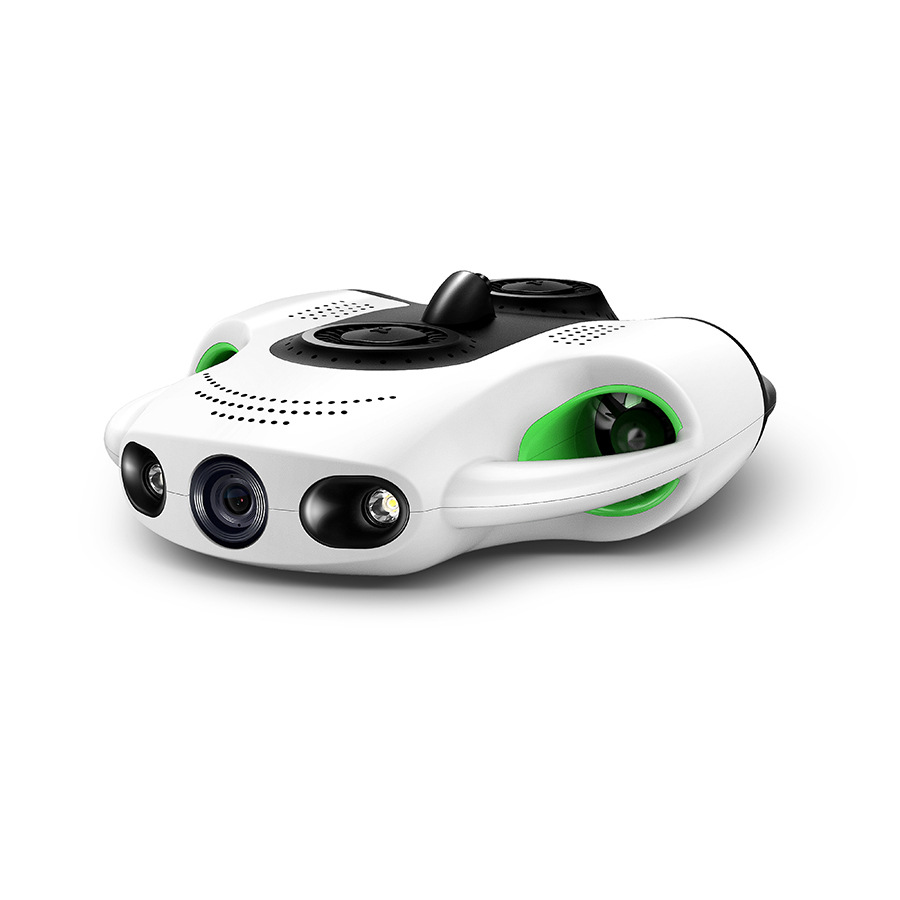
At the heart of MSOEN’s inspection capability is its high-resolution underwater imaging system, engineered specifically for low-light, high-turbidity environments.
Imaging Architecture:
- High-sensitivity CMOS sensor
- Ultra-wide aperture optical lens
- Multi-level digital noise reduction
- Real-time color correction algorithms
This enables operators to identify micro-cracks, corrosion pitting, biofouling, weld defects, and structural deformation that are invisible to conventional underwater cameras.
Zero-Latency Data Transmission: Seeing What Matters, When It Matters
Wired Reliability Over Wireless Guesswork
MSOEN underwater robots utilize a high-strength tethered transmission system, typically integrating:
- Fiber-optic or high-bandwidth copper-core tether
- Real-time uncompressed or lightly compressed video stream
- Bi-directional control and telemetry
This architecture eliminates signal loss, delay, and instability common in acoustic or wireless underwater systems.
Why zero latency matters:
In precision inspection, even milliseconds of delay can cause misjudgment during maneuvering near fragile or critical structures.
One-Person, Five-Minute Deployment: Redefining Usability
Traditional ROV systems often require cranes, boats, and multiple technicians. MSOEN underwater robots are designed for rapid solo deployment.
Deployment Workflow:
- Power-on system check
- Tether connection
- Control console initialization
- Water entry
Total setup time: ≈ 5 minutes
This dramatically reduces operational cost and expands usability to smaller teams, local contractors, and decentralized operations.
One Robot, Many Industries: Application Scenarios
Aquaculture & Fisheries
- Net cage inspection
- Fish health observation
- Sediment monitoring
Dam & Reservoir Inspection
- Concrete surface crack detection
- Sediment accumulation analysis
- Intake structure inspection
Port & Marine Infrastructure
- Pile and quay wall inspection
- Anti-corrosion coating evaluation
- Foreign object detection
Search & Recovery
- Lost equipment localization
- Underwater evidence documentation
- Post-incident assessment
Technical Specification Overview
MSOEN Underwater Robot – Typical Configuration
| Parameter | Specification |
|---|---|
| Max Operating Depth | 100–300 meters (customizable) |
| Camera Resolution | Up to Ultra-HD / 8K optional |
| Field of View | 130°–160° wide-angle |
| Propulsion System | 6 vectored thrusters |
| Max Forward Speed | ≥ 2.0 knots |
| Power Supply | Tether-powered or hybrid |
| Deployment Time | ≤ 5 minutes |
| Operator Requirement | Single-person |
| Operating Temperature | -10°C to 45°C |
| Data Transmission | Zero-latency tethered |
Comparison: MSOEN vs Traditional Underwater Inspection Methods
| Aspect | Traditional ROV | Divers | MSOEN Underwater Robot |
|---|---|---|---|
| Cost | Very High | Medium–High | Controlled |
| Safety Risk | Low | High | Minimal |
| Deployment Speed | Slow | Medium | Very Fast |
| Visual Precision | Medium | Human-limited | Ultra-High |
| Repeatability | High | Low | High |
| Data Recording | Yes | Limited | Full |
Why Overseas Buyers Choose MSOEN
Cost-Performance Ratio
By controlling manufacturing in-house, MSOEN avoids brand premiums and unnecessary complexity.
OEM / ODM Flexibility
- Custom depth ratings
- Camera modules
- Branding & localization
- Software interface customization
Compliance & Testing
- Pressure chamber testing
- Salt spray corrosion testing
- Continuous operation stress testing
E-E-A-T in Practice: Trust Built Through Engineering
- Experience: Field-tested across multiple industries
- Expertise: Developed by engineers specialized in robotics, hydrodynamics, and imaging
- Authoritativeness: Factory-based production with standardized QC
- Trustworthiness: Transparent specs, documented testing, long-term support
Frequently Asked Questions (FAQ)
Is this underwater robot suitable for non-expert operators?
Yes. The control interface is designed with intuitive joystick navigation and real-time visual feedback, allowing new users to operate safely after minimal training.
How does it perform in low-visibility water?
The imaging system uses high-sensitivity sensors and adaptive noise reduction, maintaining usable visibility in turbid or low-light conditions.
Can it replace human divers?
For inspection, documentation, and monitoring tasks—yes. It significantly reduces diver exposure to hazardous environments.
Is customization available for overseas partners?
Absolutely. MSOEN supports OEM, ODM, and regional adaptation projects.
Conclusion: The Democratization of Underwater Intelligence
What once required massive budgets and specialized crews is now achievable with a portable, factory-built underwater robot. By combining engineering rigor, cost efficiency, and real-world usability, MSOEN has transformed the concept of underwater exploration from an elite capability into a practical industrial tool.
This is why buyers across global markets increasingly see MSOEN not just as a supplier—but as a long-term technology partner in the underwater robotics era.
{
  "@context": "https://schema.org",
  "@type": "FAQPage",
  "mainEntity": [
    {
      "@type": "Question",
      "name": "What industries can use MSOEN underwater robots?",
      "acceptedAnswer": {
        "@type": "Answer",
        "text": "MSOEN underwater robots are widely used in aquaculture, dam inspection, port infrastructure, underwater search, and environmental monitoring."
      }
    },
    {
      "@type": "Question",
      "name": "How fast can the underwater robot be deployed?",
      "acceptedAnswer": {
        "@type": "Answer",
        "text": "The system is designed for single-person deployment and can be fully operational within approximately five minutes."
      }
    },
    {
      "@type": "Question",
      "name": "Is the video transmission truly real-time?",
      "acceptedAnswer": {
        "@type": "Answer",
        "text": "Yes. MSOEN underwater robots use tethered high-bandwidth transmission to ensure zero-latency real-time video and control feedback."
      }
    }
  ]
}







No comments yet