

![Image [1]-Agricultural Field Inspection Drone-msoen](https://www.msoen.com/wp-content/uploads/2025/12/aa3f1b38c9203751-768x1024.jpg)
![Image [2]-Agricultural Field Inspection Drone-msoen](https://www.msoen.com/wp-content/uploads/2025/12/5488eb51c4203807-768x1024.jpg)
![Image [3]-Agricultural Field Inspection Drone-msoen](https://www.msoen.com/wp-content/uploads/2025/12/8bd3d721bf203751-768x1024.jpg)
![Image [4]-Agricultural Field Inspection Drone-msoen](https://www.msoen.com/wp-content/uploads/2025/12/702fff2ebf203342-768x1024.jpg)
![Image [5]-Agricultural Field Inspection Drone-msoen](https://www.msoen.com/wp-content/uploads/2025/12/ceeaf14fdc203342-768x1024.jpg)
![Image [6]-Agricultural Field Inspection Drone-msoen](https://www.msoen.com/wp-content/uploads/2025/12/a2749201af203343-768x1024.jpg)
Modern agriculture is becoming more data-driven and technology-oriented than ever before. As farms grow larger and crop management becomes more complex, farmers need efficient tools to monitor field conditions, detect problems early, and make accurate decisions. One of the most effective tools for this purpose is the agricultural field inspection drone.
Traditional crop inspection often requires farmers or technicians to walk through fields manually. This process is time-consuming, labor-intensive, and sometimes ineffective for identifying early signs of pest infestations, crop diseases, irrigation problems, or nutrient deficiencies. In large farms, inspecting every section of the field can take several days, which may delay critical responses to crop issues.
Agricultural field inspection drones provide a faster and more precise solution. Equipped with high-resolution cameras, intelligent flight systems, and advanced sensors, these drones allow farmers to monitor crops from the air and gather valuable information about field conditions within minutes.
For farmers, agricultural companies, research institutions, and drone service providers, agricultural field inspection drones represent a powerful technology that improves productivity, reduces operational costs, and supports precision farming practices.
What Is an Agricultural Field Inspection Drone
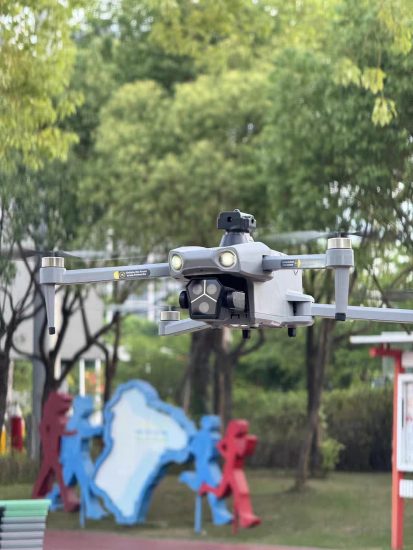
An agricultural field inspection drone is an unmanned aerial vehicle designed to monitor farmland and collect visual data about crop growth, soil conditions, and overall field health. Unlike spraying drones that apply pesticides or fertilizers, field inspection drones focus on observation, data collection, and farm monitoring.
These drones fly over farmland while capturing images and videos that provide a comprehensive view of the entire agricultural area. This aerial perspective allows farmers to identify problems that may not be visible during ground inspections.
Typical agricultural field inspection drones include several advanced components:
- High-resolution aerial cameras
- Intelligent flight control systems
- GPS or RTK navigation technology
- Long-range communication systems
- Stabilized gimbal cameras for clear imaging
- Optional multispectral or thermal sensors
With these technologies, the drone can collect accurate and reliable data that helps farmers understand the condition of their crops and fields.
Why Agricultural Field Inspection Is Important
Field inspection is a crucial part of successful crop management. Farmers must regularly monitor their fields to ensure that crops are growing properly and that potential threats are addressed quickly.
Early Pest Detection
Pests can spread rapidly across farmland and damage crops if not controlled early. Drone inspections allow farmers to detect pest activity in specific areas and respond before infestations become widespread.
Disease Monitoring
Crop diseases often start in small areas before spreading across the field. High-resolution aerial imagery allows farmers to identify unusual patterns in crop growth that may indicate disease.
Irrigation Management
Proper water distribution is essential for healthy crop growth. Drone inspections help farmers identify dry zones, irrigation leaks, or areas with poor water coverage.
Nutrient Deficiency Detection
Crop color changes and growth irregularities often signal nutrient deficiencies. Drone imagery helps farmers locate these problem areas and apply fertilizers more precisely.
Monitoring Crop Growth
Regular aerial inspections allow farmers to track crop development throughout the growing season and evaluate the effectiveness of farming practices.
Advantages of Using Agricultural Field Inspection Drones
Rapid Field Monitoring
One of the biggest advantages of drone technology is speed. A field inspection drone can survey hundreds of hectares in a short time, providing farmers with an overview of the entire farm.
Comprehensive Field Coverage
Manual inspections only cover limited areas. Drones capture images of the entire field, ensuring that no sections are overlooked.
High-Resolution Imaging
Modern drones use high-quality cameras that capture detailed images of crops and farmland. This level of detail helps farmers identify small issues before they become major problems.
Reduced Labor Requirements
Drone inspections significantly reduce the amount of labor required for field monitoring. A single operator can inspect large areas quickly and efficiently.
Improved Decision-Making
With accurate aerial data, farmers can make informed decisions about irrigation, pest control, fertilization, and crop management.
Key Features of Agricultural Field Inspection Drones
Intelligent Flight Planning
Modern agricultural drones include automated flight planning software. Operators simply mark the field boundaries, and the drone generates an optimized flight route.
This ensures consistent data collection and complete field coverage.
Long Flight Time
Professional field inspection drones are designed with efficient power systems that allow longer flight durations. This enables them to inspect large farms in a single mission.
High-Resolution Cameras
Clear and detailed images are essential for accurate crop monitoring. Agricultural inspection drones use advanced cameras capable of capturing high-resolution photos and videos.
GPS and RTK Positioning
Precise positioning systems allow drones to record the exact location of each captured image. This helps farmers map problem areas accurately.
Data Storage and Transmission
Inspection drones can store large volumes of data and transmit images directly to farm management systems for analysis.
Applications in Modern Agriculture
Agricultural field inspection drones are used in many farming sectors and agricultural industries.
Large-Scale Crop Farms
Large farms growing crops such as wheat, corn, rice, and soybeans rely on drones to monitor crop health and identify potential problems quickly.
Fruit Orchards
Orchard managers use drones to inspect tree health, detect pest damage, and evaluate fruit development across large orchard areas.
Plantation Agriculture
Tea, coffee, and palm plantations often use inspection drones to monitor large plantations located in mountainous or remote regions.
Agricultural Research
Research institutions use drones to collect crop growth data, study plant diseases, and analyze agricultural experiments.
Precision Agriculture Programs
Field inspection drones are an essential component of precision agriculture systems that rely on data to optimize farming practices.
How Agricultural Inspection Drones Improve Farm Efficiency
Drone technology improves farm efficiency by providing real-time insights that allow farmers to respond quickly to field conditions.
For example, if a drone identifies a pest outbreak in one section of the field, farmers can target that specific area with pesticide treatments instead of spraying the entire farm.
Similarly, irrigation systems can be adjusted based on aerial observations of soil moisture conditions.
These targeted actions save time, reduce costs, and protect crop health.
Environmental Benefits
Agricultural field inspection drones also support sustainable farming practices.
Reduced Chemical Usage
By identifying problem areas precisely, farmers can apply pesticides only where needed.
Improved Resource Management
Drone data helps farmers optimize the use of water, fertilizers, and other agricultural inputs.
Lower Carbon Footprint
Using drones for field monitoring reduces the need for vehicles and machinery that consume fuel.
E-E-A-T: Expertise, Experience, Authoritativeness, Trustworthiness
When selecting agricultural technology, farmers and distributors want reliable equipment from trusted manufacturers. A professional agricultural drone manufacturer should demonstrate strong expertise and experience in drone design, agricultural applications, and global market support.
Manufacturers with proven experience in agricultural drone production understand the practical challenges farmers face in real farming environments. They design drones that are durable, efficient, and capable of operating in demanding agricultural conditions.
Professional companies also provide technical support, operator training, and long-term service to ensure customers receive reliable products and assistance.
Trustworthy agricultural drone suppliers focus on product quality, safety standards, and continuous innovation to meet the evolving needs of modern agriculture.
Business Opportunities for Agricultural Drone Inspection Services
The use of agricultural drones is expanding rapidly, creating new opportunities for service providers.
Possible business models include:
- Agricultural field inspection services for farms
- Precision agriculture consulting
- Crop monitoring services for agricultural cooperatives
- Drone data analysis for farm management
As more farmers adopt digital agriculture technologies, the demand for drone inspection services continues to grow.
Choosing the Right Agricultural Field Inspection Drone
Selecting the right drone depends on several important factors.
Camera Quality
High-resolution cameras provide better image clarity and more accurate field analysis.
Flight Time
Longer flight time allows the drone to inspect larger areas in one mission.
Data Processing Capability
Integration with mapping and analysis software improves the usefulness of collected data.
Durability
Agricultural drones must withstand outdoor conditions such as dust, wind, and temperature changes.
Technical Support
Reliable after-sales service ensures long-term operation and maintenance.
Future of Agricultural Inspection Drones
Drone technology continues to evolve rapidly. In the future, agricultural inspection drones may include additional features such as:
- AI-powered crop disease detection
- Automated field monitoring systems
- Real-time crop health analysis
- Integration with smart farming platforms
- Swarm drone inspection systems for very large farms
These innovations will further enhance the efficiency and intelligence of agricultural monitoring.
Conclusion
The agricultural field inspection drone is becoming an essential tool for modern farming. By providing fast, accurate, and comprehensive field monitoring, these drones help farmers detect problems early, manage crops more efficiently, and make informed decisions based on real data.
From pest detection and disease monitoring to irrigation management and crop growth analysis, agricultural inspection drones offer significant advantages over traditional field inspection methods.
For farmers, agricultural service providers, and drone distributors, adopting agricultural field inspection drones represents an important step toward precision agriculture and sustainable farm management.
As global agriculture continues to modernize, the role of drone technology will become even more important in helping farmers increase productivity while protecting natural resources.
FAQ
What is an agricultural field inspection drone used for
An agricultural field inspection drone is used to monitor crops, analyze field conditions, detect pests and diseases, and collect aerial data that helps farmers manage their farms more efficiently.
How large an area can a drone inspect in one flight
Depending on the drone model and battery capacity, an agricultural inspection drone can survey dozens or even hundreds of hectares during a single mission.
Are agricultural inspection drones difficult to operate
Most modern drones include automated flight planning and user-friendly control systems, making them relatively easy to operate after basic training.
Can inspection drones help reduce farming costs
Yes. By providing accurate field data, drones allow farmers to apply pesticides, fertilizers, and water more precisely, which reduces waste and lowers operational costs.
Are agricultural drones suitable for all types of crops
Agricultural inspection drones can be used for many crops including grains, fruits, vegetables, plantations, and large-scale commercial farming operations.








No comments yet