



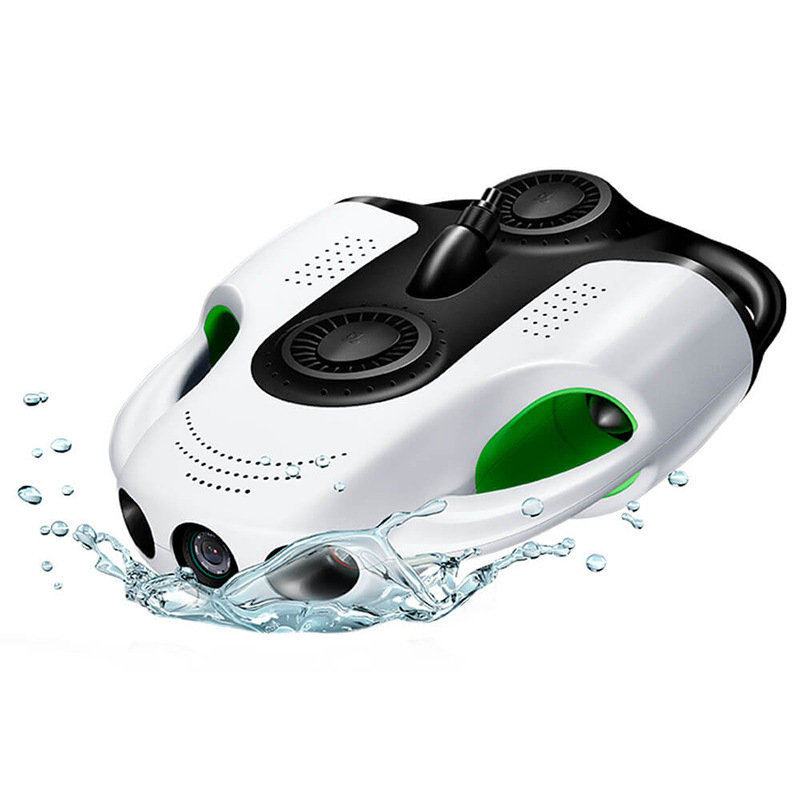
Introduction: Why Image Quality and Transmission Speed Define Modern Underwater Inspection
Underwater inspection has always been limited by two fundamental challenges: visibility and response time. In environments where light is scarce, pressure is extreme, and structural defects can be measured in millimeters, traditional inspection methods often fail to deliver actionable accuracy.
The emergence of 8K ultra-high-definition imaging combined with zero-latency transmission represents a turning point in underwater robotics. This technological leap enables inspectors, engineers, and operators to identify micro-cracks, corrosion patterns, biofouling, and structural deformation in real time—without post-processing delays or visual ambiguity.
This article provides a comprehensive, engineering-level analysis of how 8K imaging and zero-latency transmission empower precision underwater inspection, covering system architecture, technical specifications, performance benchmarks, and real-world application scenarios.
Understanding Precision Underwater Inspection
Precision underwater inspection refers to the accurate detection, documentation, and assessment of underwater assets with minimal margin for error. Typical inspection targets include:
- Offshore pipelines and risers
- Subsea cables and connectors
- Bridge piers and dam structures
- Aquaculture infrastructure
- Ship hulls and underwater appendages
In these contexts, missing a hairline crack or misinterpreting surface corrosion can lead to severe safety risks and financial losses. High-resolution imaging and real-time feedback are no longer optional—they are mission-critical.
The Role of 8K Ultra-HD Imaging in Subsea Environments
What Makes 8K Imaging Different Underwater?
8K resolution delivers approximately 33 million pixels per frame, four times that of 4K and sixteen times that of Full HD. In underwater inspection, this translates into:
- Exceptional edge definition
- Higher pixel density for digital zoom without detail loss
- Improved detection of micro-scale defects
When paired with a large-format CMOS sensor optimized for low-light performance, 8K imaging enables inspectors to visualize subtle material changes that were previously invisible.
Key Imaging Parameters That Matter
Professional underwater imaging is not defined by resolution alone. Critical parameters include:
- Sensor size (larger sensors capture more light)
- Dynamic range (ability to retain detail in shadows and highlights)
- Color depth (accurate color reproduction underwater)
- Signal-to-noise ratio (SNR)
An optimized 8K imaging system balances all of these factors to maintain clarity in turbid or low-illumination environments.
Zero-Latency Transmission: Why Real-Time Matters
The Limitations of Delayed Data
Traditional underwater inspection systems often rely on buffered video transmission. Even a delay of 200–300 milliseconds can result in:
- Reduced maneuvering accuracy
- Missed inspection targets
- Increased collision risk
- Inefficient inspection workflows
For precision tasks such as crack mapping or weld seam inspection, real-time visual feedback is essential.
How Zero-Latency Transmission Is Achieved
Zero-latency transmission in underwater systems is typically enabled by:
- Fiber-optic tether communication
- High-bandwidth Ethernet protocols
- Hardware-level video encoding
- Optimized compression algorithms
By eliminating wireless bottlenecks and minimizing encoding delay, operators receive instantaneous 8K video feeds with frame-accurate synchronization between control input and visual response.
System Architecture of an 8K Zero-Latency Underwater Inspection Platform
Pressure-Resistant Optical Housing
The camera module is enclosed within a pressure-rated housing, often constructed from:
- Marine-grade aluminum alloy
- Hardened optical glass or sapphire lens
- Multi-stage O-ring sealing systems
This design ensures optical stability and leak prevention at depth.
Lighting System for 8K Imaging
High-resolution imaging requires equally capable illumination. Typical lighting specifications include:
- Adjustable LED arrays (8000–15000 lumens)
- High Color Rendering Index (CRI >90)
- Variable beam angles to reduce backscatter
Proper lighting geometry is critical to avoid over-illumination and particulate reflection.
Thruster Stability and Hydrodynamics
Capturing stable 8K footage underwater requires precise positioning. Advanced underwater platforms use:
- Multi-vector thruster layouts (6–8 thrusters)
- Closed-loop attitude control
- Hydrodynamically optimized hulls
These features minimize vibration and drift during close-range inspections.
Technical Specification Table (Reference Configuration)
| Parameter | Specification |
|---|---|
| Imaging Resolution | 8K Ultra-HD |
| Sensor Type | Large-format CMOS |
| Dynamic Range | ≥14 stops |
| Transmission Method | Fiber-optic tether |
| Latency | Near-zero (<10 ms) |
| Maximum Depth Rating | 300 m |
| Thruster Configuration | 6-axis vectored |
| Lighting Output | 12,000 lumens |
| Power System | High-density lithium battery |
| Operating Duration | Up to 4 hours |
| Video Bitrate | Up to 800 Mbps |
| Operating Temperature | −5°C to 45°C |
Performance Comparison: Traditional Methods vs 8K Zero-Latency Systems
| Aspect | Traditional Inspection | 8K Zero-Latency System |
|---|---|---|
| Image Resolution | HD / 4K | True 8K |
| Transmission Delay | Noticeable | Near-zero |
| Defect Detection | Limited | Micro-level |
| Operational Safety | Moderate | High |
| Data Accuracy | Post-analysis | Real-time |
This comparison clearly illustrates why high-resolution, low-latency systems are becoming the new standard in professional underwater inspection.
Key Application Scenarios
Offshore Energy and Subsea Infrastructure
8K imaging allows engineers to identify early-stage corrosion, coating delamination, and weld defects before they escalate into structural failures.
Civil Engineering and Public Infrastructure
Bridge foundations, dams, and underwater tunnels benefit from ultra-clear imaging that supports quantitative assessment and long-term maintenance planning.
Marine Research and Environmental Monitoring
Researchers can document marine habitats with unprecedented clarity while minimizing disturbance through precise maneuvering.
Industrial and Commercial Diving Support
Underwater drones equipped with 8K zero-latency systems reduce diver exposure and provide divers with enhanced situational awareness.
Reliability, Maintenance, and Operational Trust
Professional inspection systems are designed for repeatability and reliability:
- Pre-deployment pressure testing
- Redundant sealing systems
- Modular component replacement
- Continuous firmware optimization
These practices reinforce long-term operational trust and data integrity.
Future Trends: Beyond 8K
As imaging technology advances, future underwater systems will integrate:
- AI-assisted defect recognition
- Real-time 3D reconstruction
- Autonomous inspection routines
- Edge computing for onboard analysis
However, high-resolution imaging and low-latency transmission will remain the foundation of precision inspection.
Frequently Asked Questions (FAQ)
Q1: Why is 8K resolution important for underwater inspection?
8K resolution enables detection of micro-defects and allows digital zoom without significant detail loss, which is critical for precision inspection tasks.
Q2: What does zero-latency transmission mean in practice?
It means the video feed is transmitted with virtually no perceptible delay, allowing real-time control and accurate maneuvering.
Q3: Can 8K imaging work in low-visibility water?
Yes. When combined with high-output lighting and optimized sensors, 8K systems perform effectively even in turbid conditions.
Q4: How deep can such systems operate?
Most professional systems operate between 100 and 300 meters, with specialized designs exceeding this range.
Q5: Is fiber-optic tether necessary for zero latency?
For high-bandwidth, real-time 8K transmission, fiber-optic tethering is currently the most reliable solution.
Conclusion: Making Hidden Risks Visible
8K ultra-high-definition imaging combined with zero-latency transmission represents a new benchmark in underwater inspection technology. By delivering unparalleled visual clarity and immediate feedback, this approach ensures that hidden risks are identified early, accurately, and reliably.
For industries where safety, precision, and accountability are non-negotiable, such systems are no longer an upgrade—they are a necessity.


No comments yet