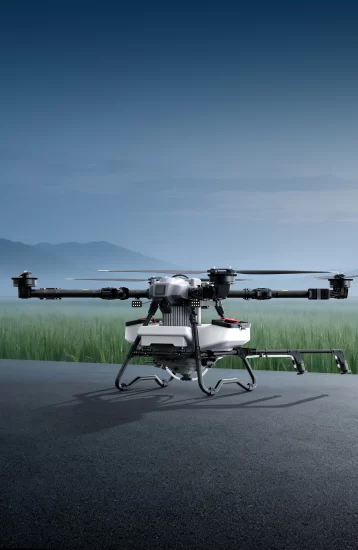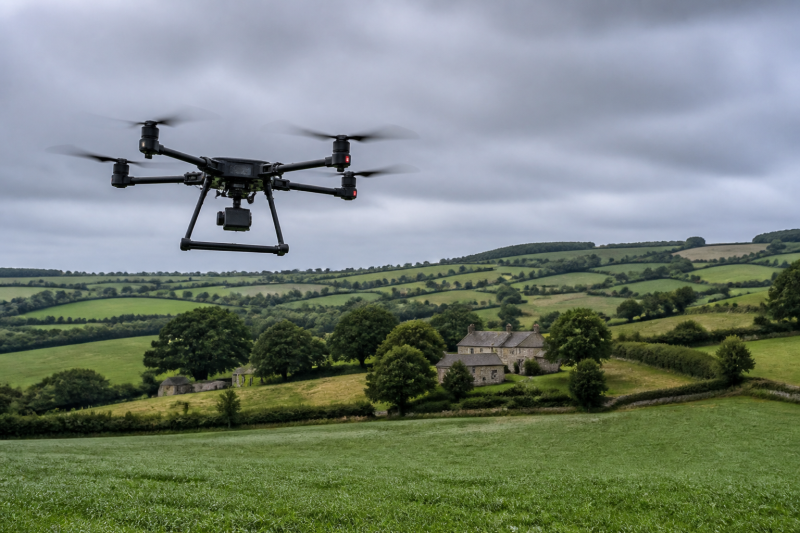


UK farming shows love drones on television. Cereals-week crowds and even Clarkson’s Farm-adjacent coverage have put spray drones on the same grass as tractors. The practical split is less glamorous. In Britain in 2026 you can already use a UAV to look at a crop. You generally cannot use one to apply a MAPP-numbered pesticide as a normal commercial service.
The Health and Safety Executive has been explicit: there are no general commercial authorisations for pesticide application by drone. Work that exists sits under a limited set of Extrapolated Trials Permits, which exist to generate data for future applications. HSE still treats drone pesticide application as aerial spraying, which needs an Aerial Spraying Permit and the rest of pesticide law: labels, operator qualifications, equipment inspection, environmental duties.
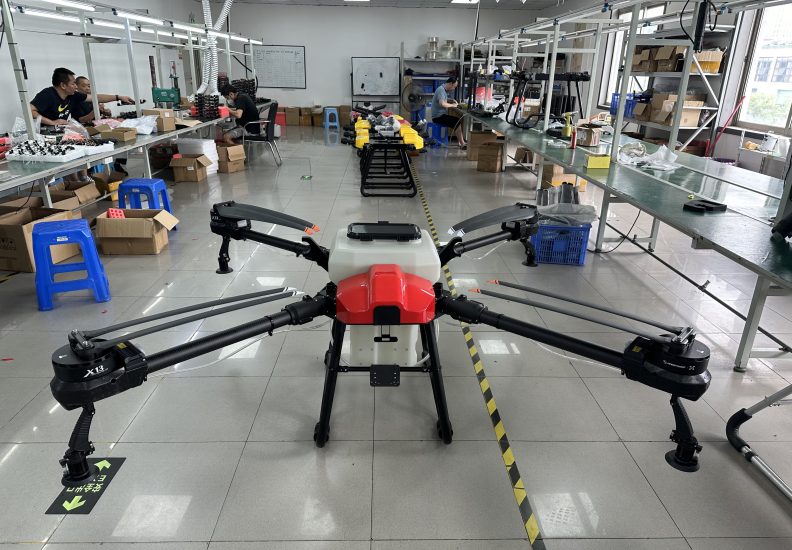
MSOEN manufactures spraying drones every day for markets where aerial application is a ordinary farm tool. We will not tell a UK grower that the same crate can legally replace the sprayer contractor tomorrow. We will tell them what the aircraft is good for now, what the CAA adds when you drop anything from the air, and how to spec a machine so that if trials become a service, the hardware is not the bottleneck.
What is already useful: information flights
Enterprise UAV’s 2026 UK farming briefing lists the jobs that do not require a spray boom: crop monitoring, field mapping, plant-health assessment, drainage and flood checks, livestock and boundary inspection, storm-damage records, woodland and game-cover checks, environmental-scheme evidence, and before-and-after photos for agronomists.
That list is not a consolation prize. It is how UK farms already pay for drones. A mapping flight turns a long walk into a 20-minute circuit. Repeat the same grid after a storm and you have a record for insurance and for the agronomist. Multispectral work can flag stress before the eye sees it, provided someone still walks in to confirm. MSOEN’s spraying airframes are overkill if all you need is a light camera ship — but many of our export customers buy a small scout aircraft and a 16-liter or 20-liter sprayer as a pair, then wait for local rules to catch up on the sprayer.
If your only goal is scouting, do not spend 30-liter money. Buy the sensor and the software workflow. If your goal is to be ready for trials or for a future HSE pathway, buy a spray platform that can produce a calibration file: flow rate, swath, height, droplet class. UK regulators are “open to business,” as specialist operators put it, but they want evidence that matches ground equipment on safety. A factory that cannot print a nozzle chart will not help that file.
Dropping seed or fertilizer is not an Open Category picnic
The UK Civil Aviation Authority says dropping articles from a drone needs an Operational Authorisation. Agricultural, horticultural, or forestry dropping also points toward an Aerial Application Certificate. Spreading cover-crop seed on a wet corner, or putting granules on a bank a tractor cannot climb, may be technically attractive. It is still an authorised aerial application, not a weekend hobby flight.
MSOEN spreading systems used in Asia for rice seed and fertilizer are the same mechanical idea. In the UK they should be quoted only with a compliance conversation: SORA-based operational authorisation in the Specific category, insurance, and a written operations manual. We can provide weight, payload, and failsafe descriptions for that manual. We cannot file your CAA paperwork.
Watering crops by drone is a poor UK use case. One liter of water is one kilogram. Even a large MSOEN tank is a bucket compared with irrigation. Keep that idea in research plots, not in a 200-hectare wheat field.
How this differs from the EU file — and why UK buyers still watch Brussels
The European Union is separately negotiating easier drone spraying inside a food-and-feed omnibus. The United Kingdom is outside that vote. UK pesticide rules run through HSE; aviation through the CAA. A French vineyard derogation does not green-light a Lincolnshire boom replacement.
UK operators still watch EU data. Drift studies, EFSA guidance, and member-state trial results will become the evidence pack HSE is waiting for. MSOEN’s position for British distributors is: sell mapping and training now; keep a spray-capable airframe in the demo shed for trials; do not promise commercial pesticide jobs that HSE has not authorised.
What to buy from MSOEN if you farm in the UK
For most farms today:
- A light mapping UAV, or a service contract with a licensed operator, for scouting and records.
- If you join a trial, a 10-liter to 16-liter MSOEN spraying drone is easier to transport on British lanes and to fly around hedgerows than a 50-liter machine.
- If you are a contractor preparing a SORA file for seed or nutrient work, a 20-liter class platform with RTK, terrain following, and a documented spreading kit is the more professional package.
Ask for English wiring diagrams, a spare propeller set, and a charger that runs on single-phase 230 V without drama. British farm workshops are not three-phase Midwest trailers. Battery logistics will make or break a trial day the same way they make or break a Thai rice day.
MSOEN can OEM a UK distributor’s livery and keep the same airframe. The honest brochure line is: this aircraft is proven on rice and orchards abroad; in the UK it is a mapping companion and a trials platform until HSE says otherwise. That sentence protects the farmer and the factory. Anything louder is a future enforcement letter.
FAQ
Can I legally spray herbicides by drone on a UK arable farm in 2026?
Not as a general commercial service. HSE says there are no general commercial authorisations; work sits under limited trial permits. MSOEN will not sell a UK grower a story that the crate replaces the sprayer contractor this season.
Do I still need CAA permission to spread cover-crop seed by drone?
Dropping articles typically needs an Operational Authorisation, and agricultural dropping points toward an Aerial Application Certificate. Treat seeding as aerial application, not as an Open Category hobby flight. MSOEN can provide mass and failsafe data for the operations manual.
What can a UK farm use a drone for today without a spray permit?
Mapping, crop and livestock inspection, drainage and storm records, and environmental-scheme photos. Those jobs already pay. A light scout aircraft is enough; a 30L MSOEN sprayer is not required for a roof inspection.
If the EU eases drone spraying, does that automatically apply in Britain?
No. UK pesticide rules run through HSE and aviation through the CAA. EU files are useful evidence, not UK law. Watch them; do not fly them.
Which MSOEN payload makes sense for UK hedgerow fields?
A 10L–16L spraying drone is easier on narrow lanes and around trees if you are in a trial. Contractors building a SORA file for nutrient or seed work may prefer a 20L class RTK platform. Match the aircraft to the field and the paperwork.
Can drone watering replace irrigation in British crops?
No. Water is heavy. Even a large tank is a bucket next to a boom irrigator. Keep aerial watering in research plots.
What charger should a UK workshop specify?
Single-phase 230 V is the realistic default. Do not copy a U.S. three-phase trailer spec. MSOEN will kit batteries and a charger that match the farm’s actual supply.
Should I buy a spray drone now just in case HSE changes the rules next year?
Buy it if you have a trial partner, a storage plan, and a mapping use in the meantime. Do not buy it as a legal shortcut. MSOEN would rather keep a demo aircraft honest than strand a grower with an unused 30L tank.
Conclusion
UK drones are already excellent eyes. They are not, in 2026, a general replacement for the crop sprayer. HSE trial permits and CAA dropping rules are the fence around the tank.
MSOEN’s takeaway for British buyers is to fund scouting now, spec a 10L–20L spray-capable platform only with a compliance path, and write manuals as if an inspector will read them. When authorisations widen, the distributor with calibration sheets and 230 V charging will move first. The distributor who promised illegal hectares will not.