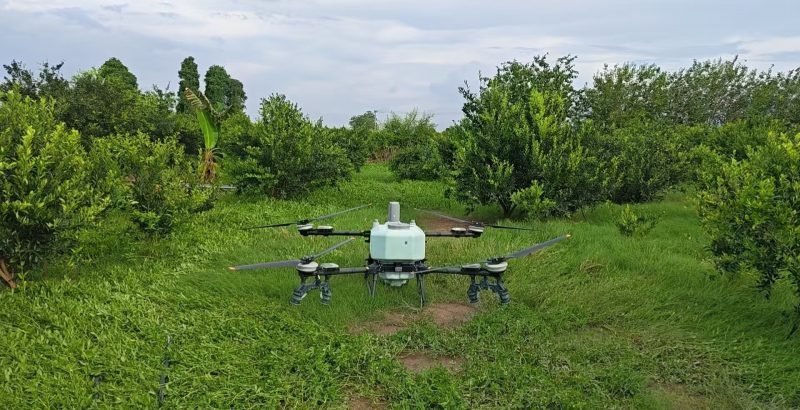



Buying an agricultural spraying drone is a significant investment for farmers, agricultural contractors, distributors, and professional crop-protection companies. The right drone can improve field efficiency and reduce manual labor, while an unsuitable model can result in high operating costs, poor spraying performance, frequent downtime, and difficult maintenance.
Many buyers focus primarily on tank capacity and price. However, a professional purchasing decision should evaluate the complete system, including the drone platform, spraying system, battery, charger, navigation system, software, spare parts, technical support, warranty, and regulatory requirements.
This guide provides a practical checklist for evaluating an agricultural spraying drone before placing an order.
1. Define Your Application Requirements First
Before contacting a manufacturer, clearly define how you intend to use the drone.
Consider:
-
Crop type
-
Total farmland area
-
Field size
-
Terrain
-
Crop height
-
Crop density
-
Required application rate
-
Typical weather conditions
-
Daily operating hours
-
Expected spraying frequency
For example, an open-field operator may prioritize payload capacity and daily productivity, while an orchard operator may place greater importance on terrain following, maneuverability, and spraying performance around crop canopies.
The right drone should be selected according to the actual application rather than simply choosing the largest available model.
2. Check the Payload Capacity
Tank capacity is one of the first specifications buyers usually compare.
However, there is an important difference between:
Tank capacity
and
Recommended operating payload.
A drone may physically hold a certain amount of liquid, but the recommended payload may vary depending on battery configuration, operating conditions, and safety requirements.
Ask the manufacturer for:
-
Tank capacity
-
Maximum takeoff weight
-
Recommended spraying payload
-
Empty drone weight
-
Payload with battery installed
-
Maximum operating altitude
These figures should be clearly documented.
3. Verify Real Flight Time
Do not evaluate a drone only by its advertised maximum flight time.
Ask the manufacturer to provide flight-time information under realistic conditions.
For example:
-
Empty payload flight time
-
Half-tank flight time
-
Full-tank flight time
-
Typical operating flight time
-
Recommended return-to-home battery level
Actual flight time can change depending on wind, temperature, payload, flight speed, terrain, and battery condition.
For agricultural applications, full-payload flight time is generally much more useful than maximum unloaded endurance.
4. Evaluate the Spraying System
The spraying system directly determines application performance.
Check:
-
Pump type
-
Maximum flow rate
-
Number of nozzles
-
Nozzle type
-
Spray width
-
Flow control
-
Filters
-
Pipes
-
Flow sensors
-
Spray pressure
-
Quick-change components
Ask whether different nozzle configurations are available for different agricultural applications.
A good spraying system should provide stable and controllable liquid delivery under normal operating conditions.
5. Inspect the Nozzles
Nozzles are relatively small components, but they have a major impact on spraying quality.
Check:
-
Material
-
Nozzle type
-
Flow rate
-
Spray pattern
-
Replacement availability
-
Cleaning method
-
Expected service life
Ask the manufacturer whether spare nozzles are included in the standard package.
It is also useful to know how quickly a damaged nozzle can be replaced in the field.
6. Check Pump Performance
The pump must provide sufficient and stable liquid flow.
Ask for the pump’s:
-
Maximum flow rate
-
Recommended operating range
-
Power consumption
-
Material
-
Maintenance requirements
-
Replacement cost
If the drone has automatic flow control, ask how the system maintains the target application rate when flight speed changes.
7. Evaluate the Battery System
The battery system should be evaluated as carefully as the drone itself.
Check:
-
Battery voltage
-
Capacity
-
Energy rating
-
Weight
-
Charging time
-
Cycle life
-
Operating temperature
-
Storage requirements
-
Battery management system
Also ask whether the battery is included in the quoted drone price.
Some suppliers may advertise a drone price without including batteries, chargers, spare batteries, or other essential accessories.
8. Check the Charger
A battery is only useful if the charging system can support your operating schedule.
Ask:
-
What charger is included?
-
How many batteries can it charge simultaneously?
-
How long does charging take?
-
What input power is required?
-
Is fast charging supported?
-
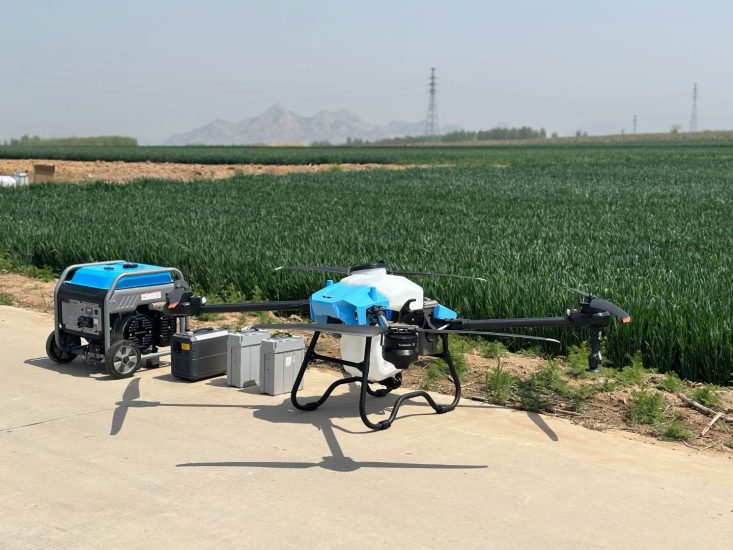
Is a generator compatible?
-
Does the charger have safety monitoring?
For remote agricultural operations, power requirements are especially important.
9. Inspect the Flight Controller
The flight controller is a core component of the drone.
Ask about:
-
Flight stability
-
Automatic route planning
-
Return-to-home
-
Low-battery protection
-
Signal-loss protection
-
Flight-data recording
-
Firmware updates
-
Positioning accuracy
The system should be reliable under the operating conditions where the drone will be used.
10. Check Navigation and Positioning
Modern agricultural drones may use GPS, RTK, and other positioning technologies.
RTK can provide high positioning accuracy when the system is correctly configured and operating with appropriate correction services.
Before purchasing, confirm:
-
Is RTK included?
-
Is an RTK base station required?
-
What correction service is supported?
-
What happens if the RTK signal is interrupted?
-
Can the drone continue operating safely?
-
What positioning accuracy is specified under normal conditions?
Do not assume that the word “RTK” alone guarantees a specific level of field performance.
11. Evaluate Obstacle Detection
Obstacle detection can help improve flight safety.
Depending on the model, sensors may detect objects in different directions.
Ask the supplier:
-
Which directions are covered?
-
What types of obstacles can be detected?
-
What is the effective detection range?
-
Does the system work in low-light conditions?
-
Does it support automatic avoidance?
-
What are the system’s limitations?
Obstacle detection should be treated as a safety aid rather than a replacement for responsible operation.
12. Check Terrain-Following Capability
Terrain following is particularly useful for agricultural fields with changing elevation.
Ask whether the drone can:
-
Follow uneven terrain
-
Maintain a target height above the crop
-
Detect slopes
-
Operate in orchards
-
Maintain stable spraying distance
Also ask for practical demonstrations or operating videos if the function is important to your application.
13. Test the Remote Controller
The remote controller is the operator’s primary interface with the drone.
Check:
-
Screen size
-
Display brightness
-
Control range
-
Battery life
-
Interface
-
Map functions
-
Route planning
-
Flight information
-
Signal status
-
Emergency controls
The controller should provide clear information about battery level, position, flight status, spraying status, and warnings.
14. Check Software Functions
Software can have a major influence on operating efficiency.
Useful functions may include:
-
Automatic route planning
-
Field mapping
-
Boundary recognition
-
Automatic spraying control
-
Flight recording
-
Task management
-
Operation history
-
Remote diagnostics
-
Firmware updates
Ask whether the software is included and whether future updates are free or subject to additional charges.
15. Inspect the Physical Construction
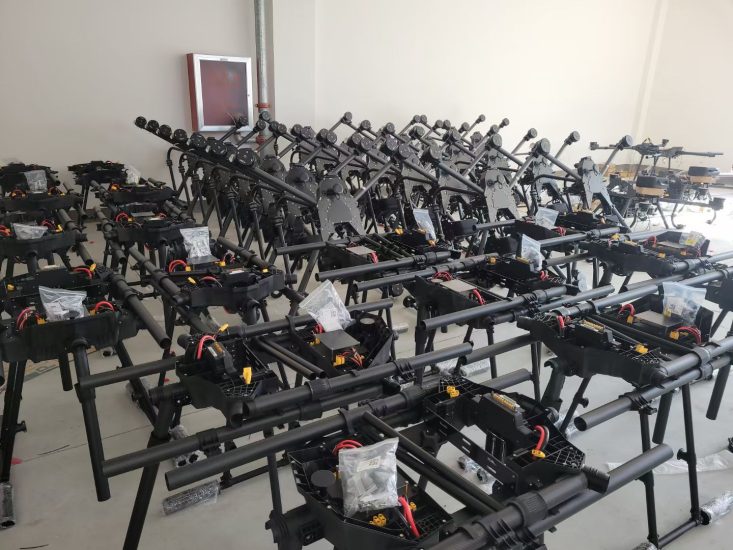
Before purchasing a large quantity, inspect the physical quality of the drone.
Check:
Frame
Look for:
-
Structural strength
-
Material quality
-
Manufacturing consistency
-
Folding mechanism
Motors
Check:
-
Motor model
-
Power rating
-
Sealing
-
Replacement availability
Propellers
Check:
-
Material
-
Size
-
Balance
-
Replacement cost
Landing Gear
Check:
-
Strength
-
Stability
-
Ground clearance
The drone should be designed for repeated agricultural operation rather than occasional recreational use.
16. Test the Spraying System Before Delivery
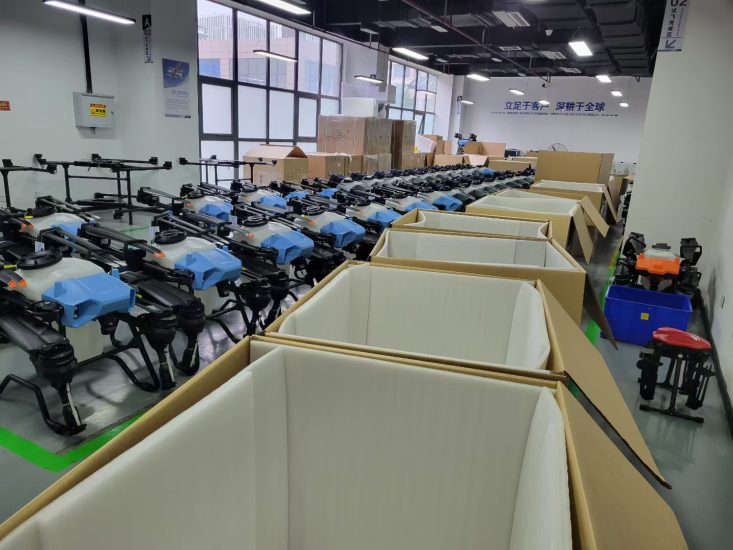
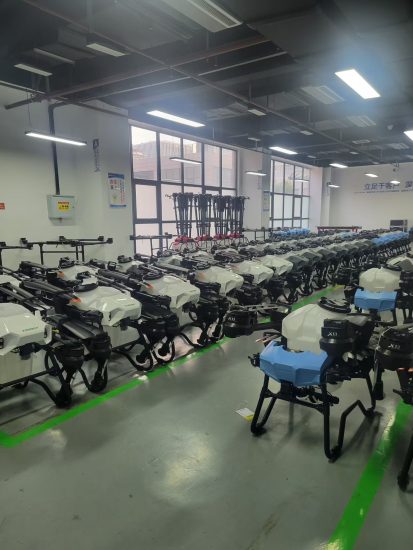
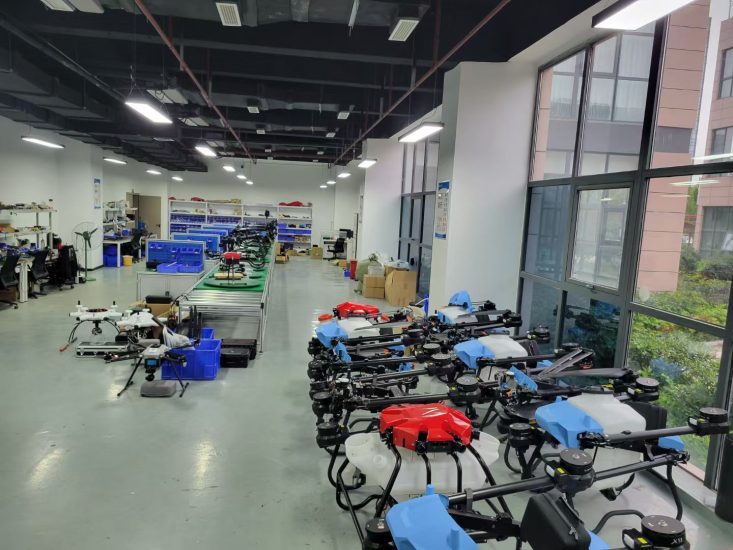
If possible, conduct a factory inspection or sample test before placing a large order.
A practical test can include:
-
Fill the tank with an appropriate test liquid.
-
Start the pump.
-
Check every nozzle.
-
Measure flow rate.
-
Check for leaks.
-
Test the spraying pattern.
-
Test automatic flow control.
-
Verify remote-control commands.
-
Check low-liquid warnings.
-
Record test results.
Testing before shipment can reduce the risk of receiving equipment that does not meet the agreed specifications.
17. Ask for a Factory Inspection
For larger orders, buyers may consider an independent pre-shipment inspection.
The inspection can verify:
-
Quantity
-
Model
-
Serial numbers
-
Accessories
-
Physical condition
-
Battery quantity
-
Charger quantity
-
Packaging
-
Product labels
-
Technical documents
The inspection criteria should be agreed with the supplier before the inspection takes place.
18. Verify Spare Parts Availability
Agricultural drones operate in demanding environments, so spare parts are important.
Ask whether the supplier can provide:
-
Motors
-
Propellers
-
Pumps
-
Nozzles
-
Filters
-
Pipes
-
Flow meters
-
Flight controllers
-
Landing components
-
Batteries
-
Chargers
-
Remote controllers
For distributors, spare-parts availability can be an important factor when building a long-term product business.
19. Evaluate After-Sales Support
Before purchasing, clarify the supplier’s technical-support process.
Ask:
-
Is remote technical support available?
-
How quickly does the supplier respond?
-
Are user manuals provided?
-
Are maintenance videos available?
-
Is operator training available?
-
Are software updates provided?
-
How are warranty claims handled?
-
Can replacement parts be supplied internationally?
A reliable after-sales system can be especially important for international buyers who cannot easily return equipment to the factory.
20. Check the Warranty
The warranty should be clearly documented.
Check coverage for:
-
Drone frame
-
Motors
-
Flight controller
-
Pump
-
Battery
-
Charger
-
Remote controller
Also ask what conditions can invalidate the warranty.
For example, damage caused by improper operation, unauthorized modification, or incorrect charging may be excluded.
Always request written warranty terms rather than relying only on verbal promises.
21. Check Certifications and Market Requirements
Agricultural drones may be subject to different regulatory requirements depending on the destination market.
Before importing or operating the equipment, check applicable requirements related to:
-
Drone registration
-
Pilot qualifications
-
Radio equipment
-
Battery transportation
-
Product conformity
-
Agricultural chemical application
-
Insurance
-
Commercial operation
The exact requirements vary by country and should be verified with the relevant authorities.
22. Compare the Total Purchase Cost
Do not compare suppliers based only on the advertised drone price.
A complete purchasing cost may include:
Drone + Batteries + Charger + Remote Controller + Spare Parts + Software + Packaging + Shipping + Taxes + Training
For international purchases, also consider:
-
Export packaging
-
Freight
-
Customs clearance
-
Import duties
-
Local compliance
-
Replacement parts
-
Technical support
A lower initial price may not necessarily result in lower total ownership cost.
23. Ask for a Complete Product Configuration
Before placing an order, request a written configuration list.
For example:
Item |
Quantity |
Included |
|---|---|---|
Agricultural Drone |
1 |
Confirm |
Spray Tank |
1 |
Confirm |
Flight Battery |
2+ |
Confirm |
Charger |
1 |
Confirm |
Remote Controller |
1 |
Confirm |
Nozzles |
Multiple |
Confirm |
Propellers |
Spare Set |
Confirm |
Pump |
Installed |
Confirm |
Filters |
Set |
Confirm |
User Manual |
1 |
Confirm |
Spare Parts |
Optional |
Confirm |
This avoids misunderstandings between the buyer and supplier.
24. Beware of Unrealistic Performance Claims
Buyers should be cautious about specifications that appear unusually high.
Examples include:
-
Extremely long flight time
-
Very large spray width
-
Very high daily acreage
-
Extremely low price
-
Unlimited operating range
Ask the manufacturer how each figure was measured.
A professional supplier should be able to explain the test conditions and distinguish between theoretical specifications and actual field performance.
25. Test Before Ordering Large Quantities
For distributors or commercial buyers, purchasing one sample unit before placing a large order can be a practical strategy.
The sample can be evaluated for:
-
Flight stability
-
Battery endurance
-
Spraying performance
-
Software
-
Build quality
-
Ease of maintenance
-
Spare parts
-
Technical support
If the sample meets expectations, the buyer can then proceed with a larger purchase.
26. Agricultural Spraying Drone Pre-Purchase Checklist
Before placing an order, confirm the following:
Product
-
Payload
-
Tank capacity
-
Flight time
-
Spray width
-
Flight speed
-
Maximum takeoff weight
Spraying
-
Pump
-
Nozzles
-
Flow control
-
Filters
-
Spray calibration
Battery
-
Capacity
-
Quantity
-
Charging time
-
Charger
-
Cycle life
Navigation
-
GPS
-
RTK
-
Terrain following
-
Obstacle detection
-
Route planning
Support
-
Warranty
-
Spare parts
-
Manuals
-
Training
-
Technical support
Commercial
-
Unit price
-
Minimum order quantity
-
Lead time
-
Packaging
-
Shipping terms
-
Payment terms
Compliance
-
Required certifications
-
Import requirements
-
Battery shipping requirements
-
Local drone regulations
Conclusion
Buying an agricultural spraying drone should be treated as a complete equipment procurement project rather than a simple hardware purchase.
The most important factors include payload capacity, actual flight time, spraying performance, battery configuration, navigation technology, physical construction, spare parts, after-sales service, documentation, and local compliance.
Before placing a large order, request detailed technical specifications, a complete configuration list, warranty terms, spare-parts information, and realistic operating data.
For commercial buyers and distributors, a sample test or pre-shipment inspection can provide additional protection and help verify that the final product matches the agreed specifications.
A carefully evaluated agricultural spraying drone can become a reliable tool for improving agricultural productivity. The key is to compare the complete operating system and long-term ownership cost rather than choosing a product based only on price or headline specifications.
THE END


No comments yet