

10L Agricultural Spraying Drone: Applications, Specifications and Buying Considerations
A 10L agricultural spraying drone is a practical option for farms and agricultural service providers that need an aerial spraying system without moving directly into a large-capacity aircraft.
The 10-liter class can be suitable for operations where maneuverability, transportability, and manageable payload are important. However, tank capacity alone does not determine whether a drone is appropriate for a particular agricultural operation.
Buyers should consider the complete system, including spraying equipment, battery performance, flight control, positioning, operating workflow, and maintenance requirements.
What Is a 10L Agricultural Spraying Drone?
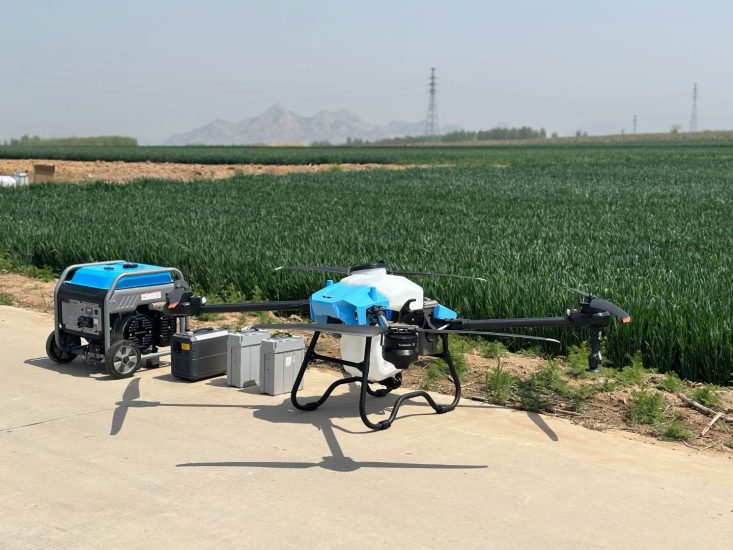
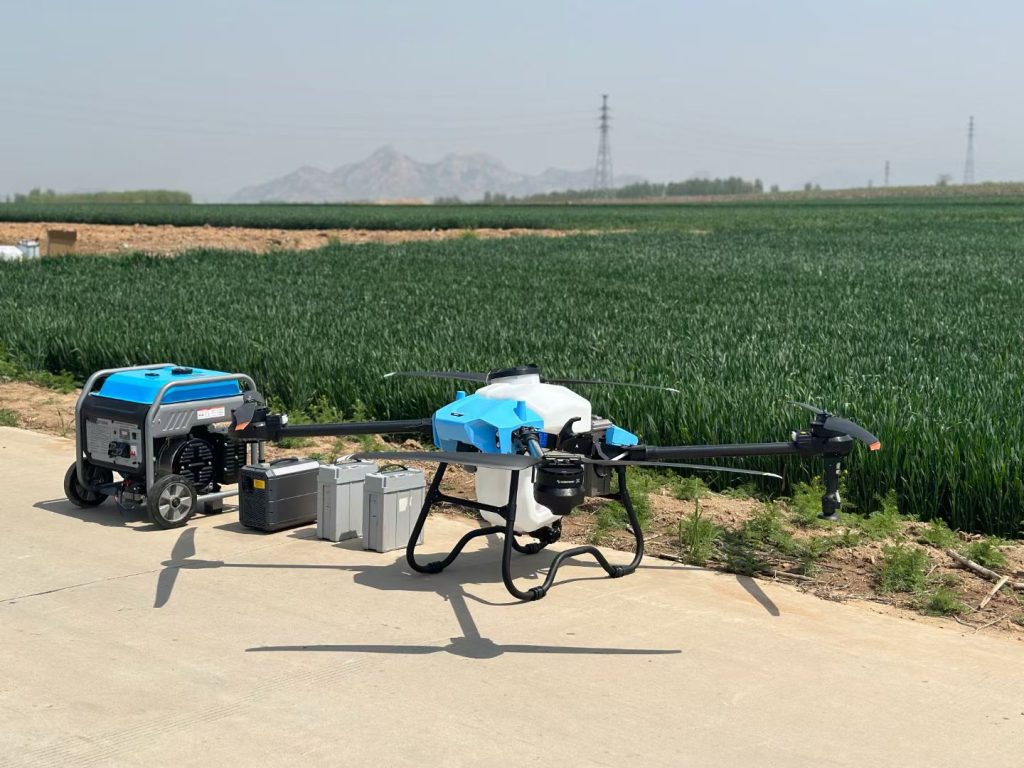
A 10L agricultural spraying drone is an unmanned aerial aircraft equipped with a liquid tank with a nominal capacity of approximately 10 liters.
The system normally includes:
- Aircraft frame
- Liquid tank
- Pump
- Spray nozzles
- Flight controller
- Positioning system
- Battery
- Remote controller
- Power management system
- Spraying control system
Depending on the configuration, additional functions such as obstacle sensing, automatic route planning, terrain awareness, and intelligent flight control may also be available.
The actual working capacity can differ from the nominal tank capacity because operators may not always fill the tank to its maximum level.
Why Choose a 10L Configuration?
A 10L platform occupies a useful position between small agricultural drones and higher-capacity commercial systems.
Its relatively moderate payload can make the aircraft easier to transport and maneuver in applications where a larger platform would be unnecessary.
Potential advantages include:
- Easier transportation
- Manageable aircraft weight
- Flexible operation
- Suitable for smaller agricultural areas
- Easier handling in irregular fields
- Lower liquid volume per flight compared with larger systems
- Potentially simpler battery and refill management
Whether these advantages are meaningful depends on the actual operating environment.
For a very large agricultural service operation, a larger-capacity aircraft may reduce the frequency of refilling. For smaller or more fragmented fields, a 10L configuration may provide greater flexibility.
What Crops Can a 10L Spraying Drone Be Used For?
The appropriate crop depends on the aircraft configuration, spraying system, operating conditions, and local agricultural requirements.
Potential applications can include:
Field Crops
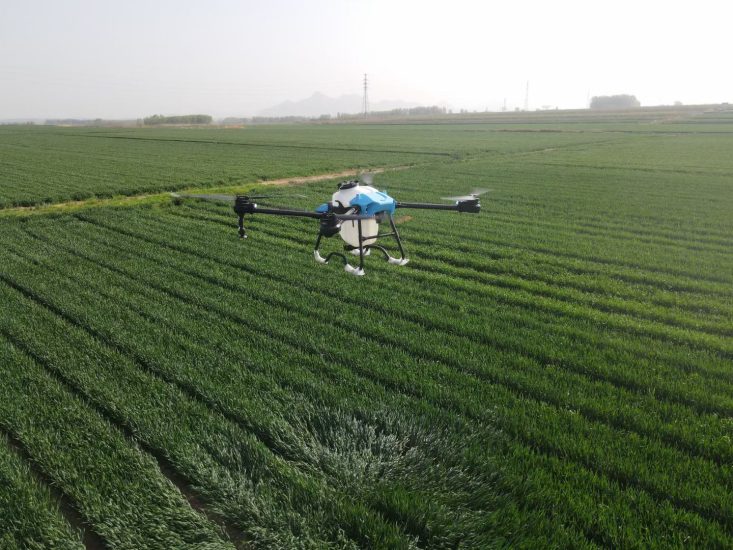
A 10L drone can be used for certain field-crop spraying tasks where the operating area and required application rate are compatible with its capacity.
Orchards
The relatively compact aircraft size can be useful in environments where maneuverability is important.
However, orchard spraying requires careful consideration of tree height, canopy density, terrain, wind, and flight path.
Vegetables
Vegetable production often involves relatively intensive crop management. An aerial spraying platform can provide an additional application method where ground access is inconvenient.
Specialty Crops
Specialty agricultural operations may have irregular field layouts or difficult access conditions. A smaller payload configuration can provide operational flexibility in these situations.
The actual suitability should always be assessed according to the crop and the intended agricultural treatment.
How Much Area Can a 10L Drone Cover?
There is no universal coverage figure for every 10L agricultural drone.
The area covered per tank depends on the application rate.
For example, if an operation requires a higher volume of liquid per hectare, the same 10L tank will cover less area than it would under a lower application rate.
Other variables include:
- Flight speed
- Spray width
- Nozzle configuration
- Terrain
- Wind
- Crop density
- Turning time
- Refill time
A simple calculation can be used to estimate theoretical coverage:
Coverage area = Tank volume ÷ Application rate
For example, if the required application rate is 10 liters per hectare, a 10-liter tank theoretically contains enough liquid for approximately 1 hectare.
This is only a basic calculation. Actual field performance can differ because of route efficiency, residual liquid, terrain, operating conditions, and other factors.
The Spraying System Matters
The aircraft itself is only one part of an agricultural spraying drone.
A 10L platform should also be evaluated based on its pump and nozzle system.
Important characteristics include:
- Pump flow rate
- Number of nozzles
- Nozzle type
- Spray pattern
- Flow control
- Filtration
- Liquid distribution
- Ease of cleaning
The spraying system needs to deliver a consistent application under the intended operating conditions.
Nozzle selection should also correspond to the application requirements. Different agricultural treatments may require different droplet characteristics and application rates.
Battery Performance and Operating Time
Battery performance is particularly important for agricultural drones because the aircraft carries both its own weight and the liquid payload.
Operating time can change according to:
- Payload weight
- Flight speed
- Wind conditions
- Temperature
- Battery condition
- Flight route
- Takeoff and landing frequency
A manufacturer should ideally provide operating information based on realistic payload conditions.
Buyers should avoid comparing flight-time numbers without checking whether the figures were measured with an empty aircraft or under working conditions.
How Many Batteries Are Needed?
The number of batteries required depends on the intended operating schedule.
For occasional farm use, a smaller battery set may be sufficient.
For continuous commercial operation, multiple batteries can allow one set to be charging while another is being used.
A practical battery plan should consider:
- Average flight time
- Charging time
- Number of flights per hour
- Daily operating hours
- Available charging infrastructure
- Battery replacement cost
The goal is to keep the aircraft operating without creating long waiting periods between flights.
Transport and Field Deployment
A spraying drone may need to move between farms, fields, or operating areas.
Before purchasing, consider how the complete equipment package will be transported.
This can include:
- Aircraft
- Propellers
- Batteries
- Charger
- Remote controller
- Spare parts
- Liquid containers
- Maintenance tools
A compact configuration can be advantageous when equipment needs to be transported frequently between different locations.
Flight Control and Positioning
A reliable positioning and flight-control system helps the operator maintain the planned route.
Depending on the model, useful functions may include:
- Automatic route planning
- Fixed-height flight
- Return-to-home
- Route recording
- Position holding
- Low-battery warning
- Emergency landing
- Obstacle detection
The availability and performance of these functions vary between configurations.
Buyers should request technical documentation rather than assuming that every agricultural drone includes the same features.
Maintenance Requirements
Agricultural spraying equipment is exposed to liquid, dust, soil, and outdoor conditions.
Regular maintenance is therefore essential.
After spraying operations, the liquid system should be cleaned according to the applicable equipment and chemical-handling instructions.
Routine checks may include:
- Nozzles
- Filters
- Pumps
- Pipes
- Connectors
- Motors
- Propellers
- Batteries
- Landing components
Keeping these components clean and in good condition can help maintain consistent operation.
Is a 10L Drone Suitable for Commercial Spraying?
It can be suitable for certain commercial applications, but the answer depends on the operating model.
A small agricultural service provider working with fragmented fields may value flexibility and transportation convenience.
A large agricultural contractor covering extensive continuous farmland may place greater emphasis on payload capacity, refill efficiency, battery logistics, and overall hourly productivity.
The best configuration therefore depends on the business model rather than simply the size of the aircraft.
What Should Importers Ask the Manufacturer?
International buyers should obtain complete technical information before placing an order.
Useful questions include:
- What is the actual tank capacity?
- What is the recommended working payload?
- What is the flight time under normal payload?
- What is the spray width?
- What is the pump flow rate?
- Which nozzle configurations are available?
- What positioning system is used?
- What batteries are included?
- What is the battery charging time?
- What spare parts are recommended?
- What technical documents are supplied?
- Can the aircraft be customized?
- Is OEM or ODM production available?
These questions help buyers understand not only the aircraft but also the support system surrounding it.
OEM and ODM for 10L Agricultural Drones
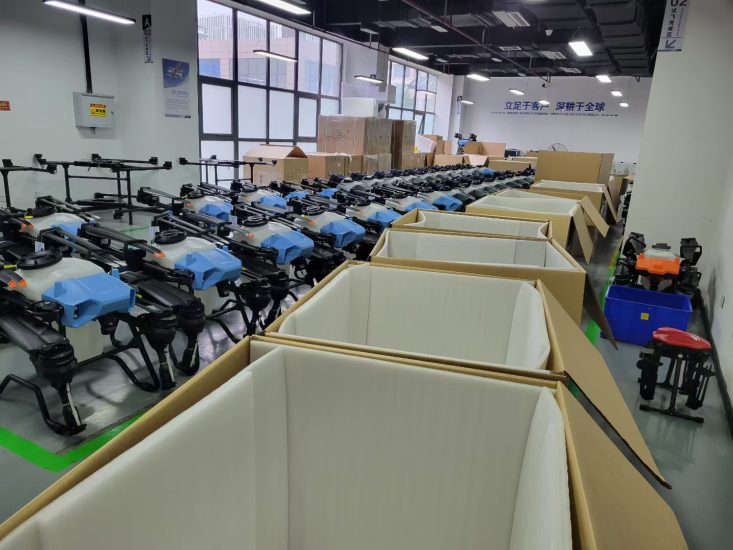
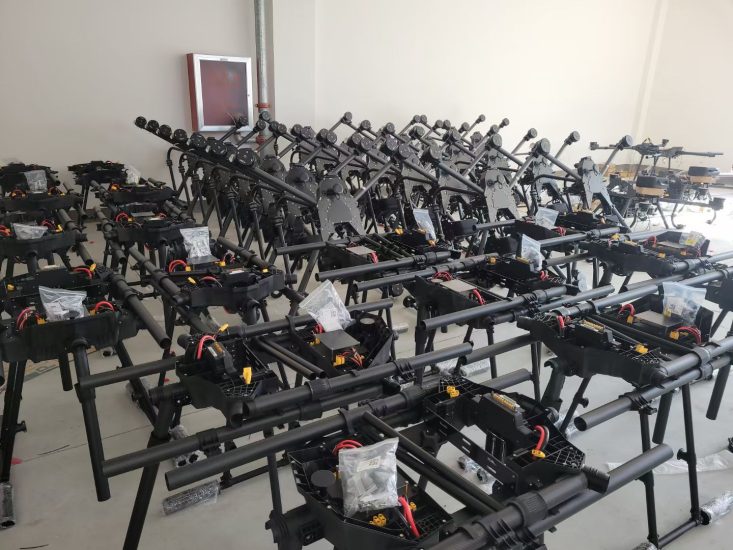
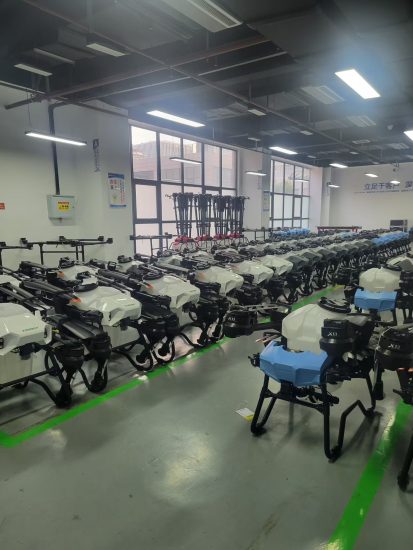
A 10L agricultural drone can also be developed for specific commercial markets through OEM or ODM manufacturing.
Depending on the project, customization may involve:
- Product branding
- Housing design
- Packaging
- Battery configuration
- Tank design
- Spray system
- Controller interface
- Accessories
- User documentation
Customization requirements should be confirmed before production because changes to the aircraft, electrical system, software, or spraying components may affect testing and certification requirements.
For distributors, it is also important to define the target market before customization so that the resulting configuration matches local operating conditions and regulations.
Frequently Asked Questions
Is a 10L agricultural drone suitable for small farms?
It can be suitable when the payload and operating capacity match the farm’s application requirements. Field size, application rate, crop type, and terrain should all be considered.
How much area can one 10L tank spray?
It depends primarily on the required application rate. The basic calculation is tank volume divided by application rate, but actual field coverage can vary.
Can a 10L drone be used in orchards?
It may be suitable for certain orchard applications. The aircraft’s maneuverability, altitude control, positioning system, spraying configuration, and local conditions should be evaluated first.
Does a larger tank always mean better performance?
No. A larger tank can reduce refill frequency but also increases payload weight. The appropriate tank capacity depends on the complete operating workflow.
Can a 10L agricultural drone be customized?
Depending on the manufacturer and project requirements, OEM and ODM customization may be available for areas such as branding, packaging, spraying configuration, and selected hardware components.
Choosing the Right 10L Agricultural Drone
A 10L agricultural spraying drone should be evaluated as a complete agricultural operating system rather than simply as a flying machine with a 10-liter tank.
Payload, spraying performance, battery endurance, flight control, positioning, maintenance, transportation, spare parts, and technical support all contribute to practical performance.
For farmers and commercial buyers, the most useful starting point is to define the actual agricultural operation first and then select the aircraft configuration that matches those requirements.
MSOEN can provide agricultural drone configurations for different spraying applications and discuss payload, spraying systems, battery requirements, customization, and OEM/ODM production according to buyer requirements.


No comments yet