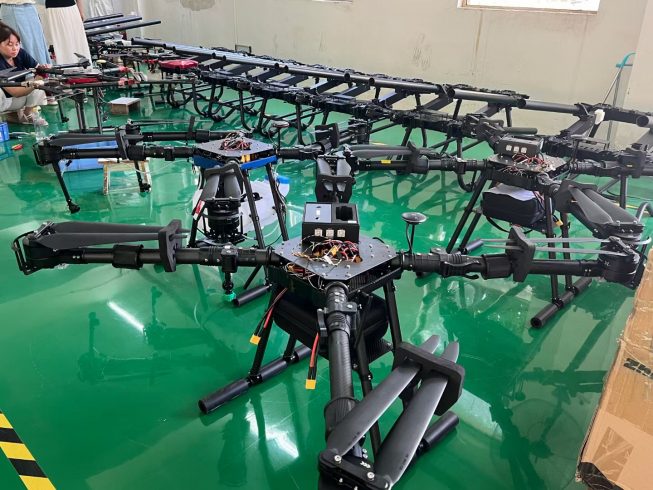


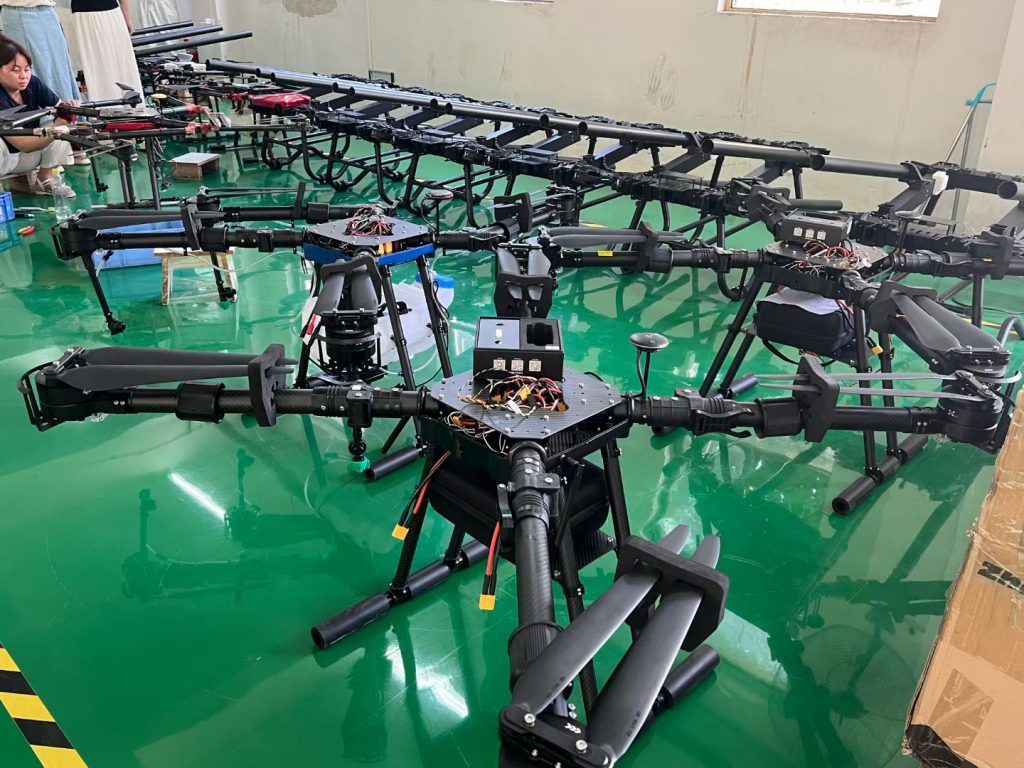
Agriculture, one of the world’s oldest industries, is now embracing high-tech solutions to meet the challenges of a growing population, climate change, and limited farmland. Among the most innovative technologies driving this transformation are spraying drones—advanced unmanned aerial vehicles (UAVs) specifically designed for efficient and precise crop treatment. Our factory specializes in the production of spraying drones, offering solutions that help farmers maximize yield, reduce costs, and practice environmentally responsible agriculture.
What Spraying Drones Bring to Modern Farming
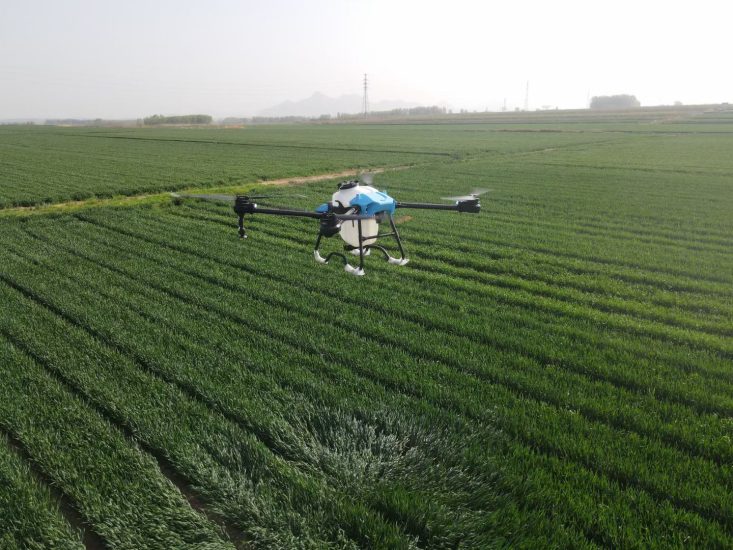
Spraying drones revolutionize crop management by enabling automated application of fertilizers, pesticides, herbicides, and water. Unlike traditional methods, which often involve heavy machinery or manual labor, drones provide precision, flexibility, and speed. They can navigate complex terrains, including hilly or irregular farmland, and reach areas that conventional equipment cannot, ensuring that every plant receives the care it needs.
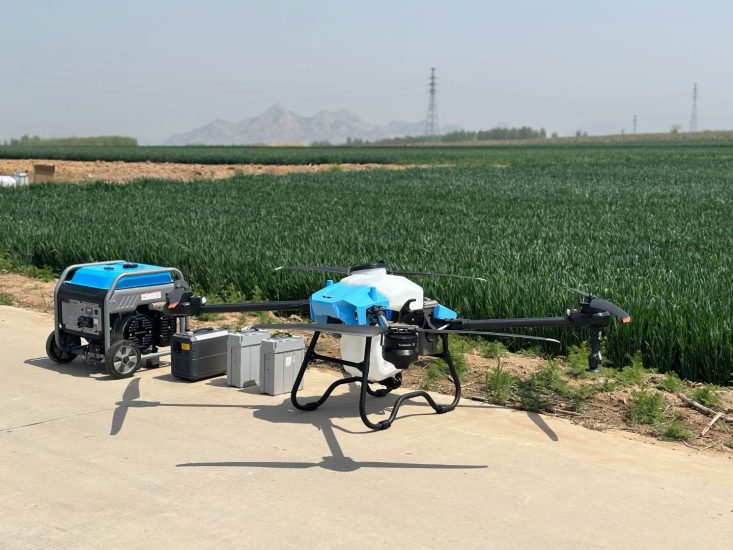
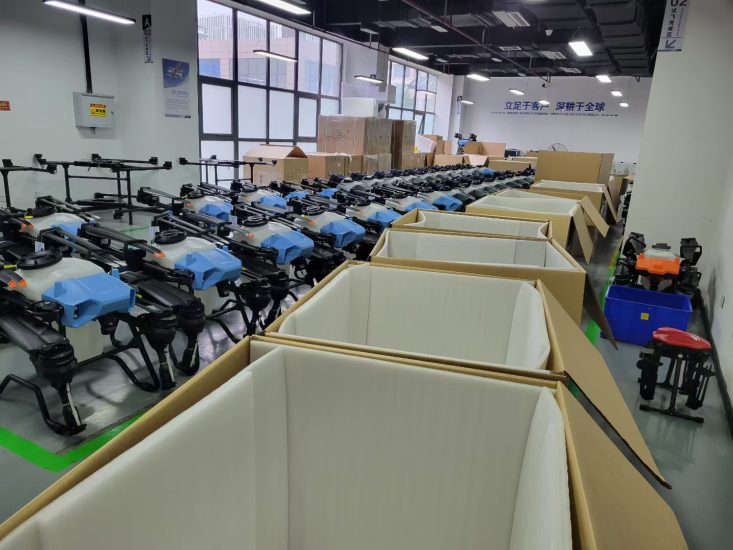
Our drones are engineered for diverse farming operations. Compact models suit small farms and greenhouses, while larger drones are capable of covering hundreds of acres efficiently. Each model is designed with reliability and ease-of-use in mind, enabling farmers to integrate drone technology seamlessly into their daily operations.
Advanced Manufacturing and Key Technologies
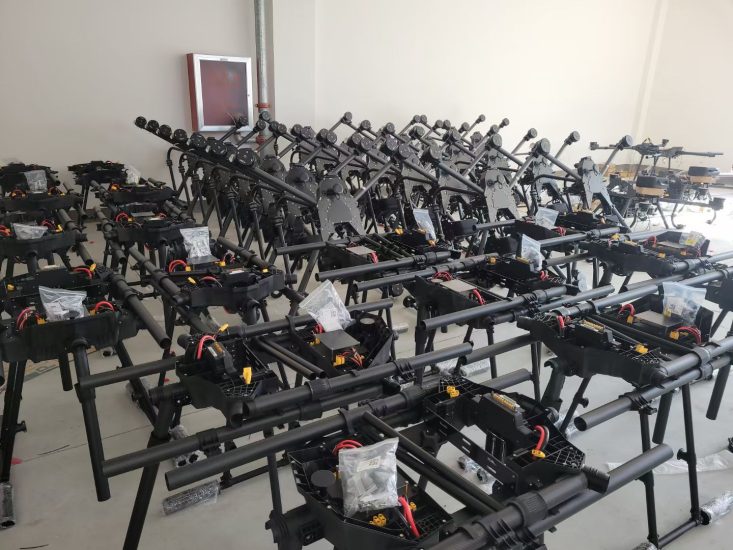
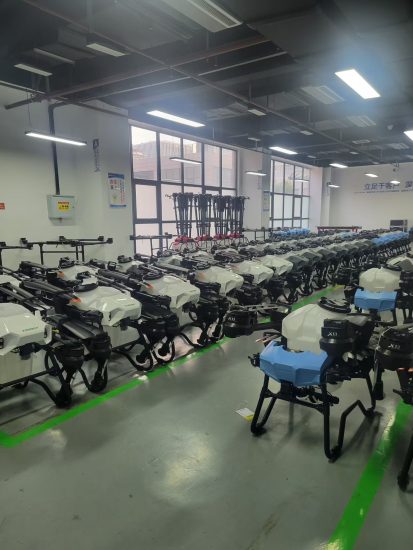
Creating high-quality spraying drones requires a combination of aerodynamics, automation, precision spraying systems, and rigorous safety standards. Our factory integrates these elements to produce drones that meet the demanding expectations of modern agriculture.
1. Innovative Aerodynamic Design
The structural design of a drone directly impacts its stability, efficiency, and payload capacity. We utilize lightweight composite materials to construct durable yet nimble drones. Advanced simulations are used to optimize rotor placement, airframe shape, and weight distribution, reducing turbulence and improving flight stability. This ensures accurate spraying even in challenging environmental conditions.
2. Precision Spraying Systems
Our drones feature high-efficiency pumps, adjustable spray nozzles, and intelligent flow control systems. These systems allow precise control over chemical distribution, reducing waste and ensuring uniform coverage. By combining GPS-guided flight paths and automated spraying algorithms, each drone delivers the exact amount of liquid to the target area, improving crop health while minimizing environmental impact.
3. Intelligent Navigation and Automation
Modern spraying drones are equipped with sophisticated navigation systems. Multi-satellite GPS, obstacle detection sensors, and automated flight planning software allow drones to operate with minimal human intervention. Farmers can upload a field map, and the drone calculates the optimal flight route, adjusting for elevation changes, obstacles, and crop density. Real-time monitoring provides data on flight status, spray coverage, and battery life, enhancing efficiency and safety.
4. Energy Efficiency and Battery Management
Long-duration flights require efficient power systems. Our drones use high-capacity lithium-polymer batteries with intelligent energy management. Swappable battery designs enable continuous operation, while safety features protect against overcharging and overheating. Energy efficiency ensures that drones can cover large areas without frequent interruptions, increasing productivity and reducing operational costs.
5. Durability and Safety
Flying over fields with chemicals demands robust safety measures. Our drones undergo rigorous testing for vibration resistance, waterproofing, and chemical corrosion. Emergency protocols, such as automatic return-to-home, dual GPS modules, and rotor redundancy, ensure safe operations under unexpected conditions. This level of reliability allows farmers to focus on their work without worrying about equipment failure.
Practical Applications in Agriculture
Spraying drones offer numerous advantages in agricultural operations:
- Targeted Pesticide and Herbicide Application: Drones reduce chemical waste and prevent overexposure to humans and animals by applying treatment precisely where needed.
- Fertilizer Management: Precise nutrient delivery ensures plants receive optimal nutrition while minimizing soil runoff.
- Irrigation Support: In areas with inconsistent water supply, drones can supplement irrigation by spraying water directly onto crops.
- Disease and Pest Prevention: Rapid deployment of drones allows immediate response to infestations or disease outbreaks, reducing crop loss.
These applications are particularly valuable for large farms, difficult terrains, and regions experiencing labor shortages. By automating spraying tasks, drones save time, reduce manual labor, and improve overall farm efficiency.
Customization and Integration
Recognizing that no two farms are alike, our factory offers customizable drone solutions. Clients can select tank capacity, spray width, flight duration, and control interfaces based on their specific needs. OEM and private-label services allow distributors and partners to integrate our drones into their product offerings with custom branding and tailored software. This flexibility ensures that every client receives a solution suited to their operational requirements.
Environmental and Economic Advantages
Spraying drones contribute to sustainable farming practices. Precise chemical application reduces runoff into soil and water systems, protecting the environment. Labor costs decrease as manual spraying is replaced with automation, while productivity increases due to faster field coverage. Farms using drones often report higher yields and reduced input costs, demonstrating both environmental and economic benefits.
Industry Trends and Future Outlook
The agricultural drone industry continues to evolve rapidly, with emerging technologies shaping the future of farming:
- AI-Powered Crop Monitoring: Drones equipped with imaging sensors can identify plant stress, pests, and nutrient deficiencies, enabling targeted interventions.
- Drone Swarms: Coordinated drones can cover vast areas quickly, making large-scale operations more efficient.
- Hybrid Energy Solutions: Solar-assisted drones or hybrid battery systems extend flight times and operational efficiency.
- Data-Driven Agriculture: Beyond spraying, drones collect valuable data on crop health, soil conditions, and growth patterns, supporting precision farming decisions.
Our factory is actively involved in research and development, ensuring that each new drone generation is smarter, faster, and more reliable. By integrating cutting-edge technology, we help farmers stay ahead in a competitive agricultural landscape.
Conclusion
Spraying drones represent a significant advancement in modern agriculture. They combine precision, efficiency, and sustainability to transform how crops are cultivated and maintained. As a dedicated manufacturing factory, we are committed to producing high-performance drones that support farmers worldwide. Through innovation, reliability, and customization, our drones empower the agricultural industry to meet the challenges of the 21st century, making farming more efficient, sustainable, and profitable.


No comments yet