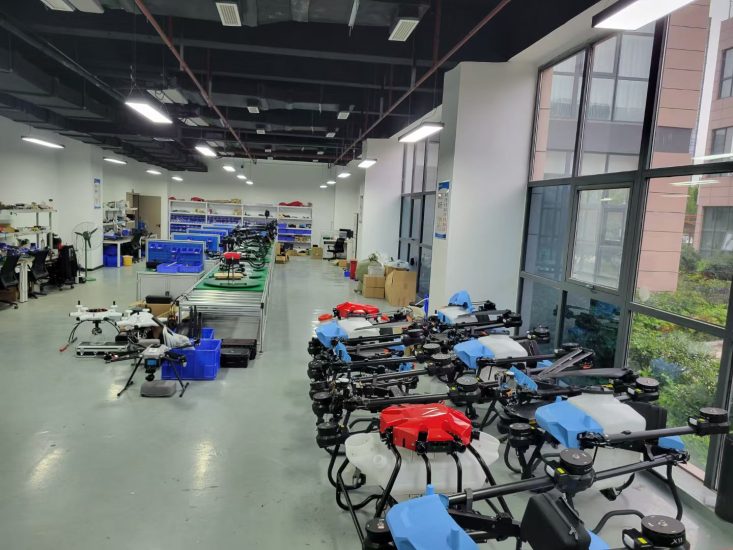


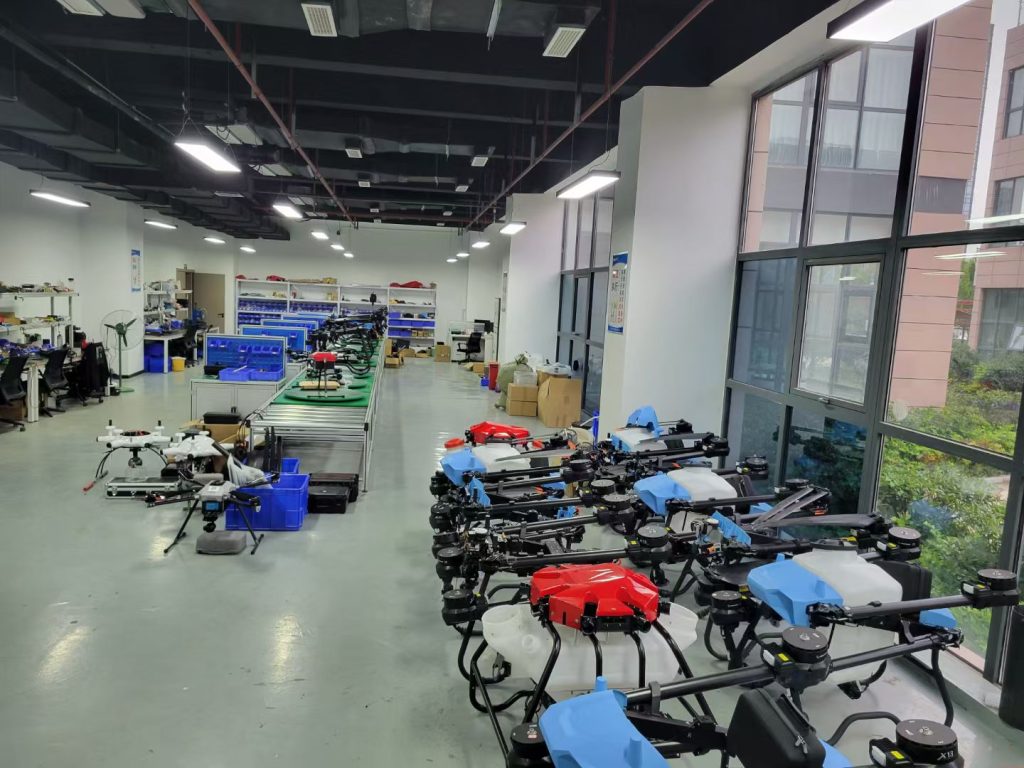
The global agricultural machinery market is creating opportunities for companies interested in developing their own agricultural drone brands. For importers, wholesalers and agricultural equipment distributors, working with an OEM agricultural drone manufacturer in China can provide access to customized spraying drones without having to establish an independent manufacturing operation.
OEM agricultural drones allow businesses to develop products under their own brand identity, with customization options such as aircraft logos, colors, packaging and selected technical configurations.
However, choosing an OEM supplier requires careful evaluation. Product quality, manufacturing capabilities, technical specifications, minimum order quantities, battery systems, production schedules and after-sales support all influence the success of a private-label agricultural drone business.
This guide explains how OEM agricultural drone manufacturing works, available customization options, pricing considerations, technical requirements and how to establish a long-term supply relationship.
1. What Is an OEM Agricultural Drone?
OEM stands for Original Equipment Manufacturer.
In agricultural drone manufacturing, OEM cooperation generally means that a buyer works with a manufacturing supplier to produce equipment according to agreed branding, appearance or configuration requirements.
Instead of selling a standard product under an existing product brand, a distributor may develop its own branded agricultural spraying drone.
For example, an agricultural equipment distributor may request:
- Its own company logo on the aircraft.
- A customized aircraft color.
- Private-label packaging.
- Customized product identification.
- Selected battery configurations.
- Different spraying system options.
- Customized user documentation.
The actual customization scope depends on the manufacturer’s capabilities and the agreed project requirements.
OEM cooperation can help distributors focus on sales, marketing, dealer development and customer service while sourcing the equipment from an established manufacturing supply chain.
2. Why Choose an OEM Agricultural Drone Manufacturer in China?
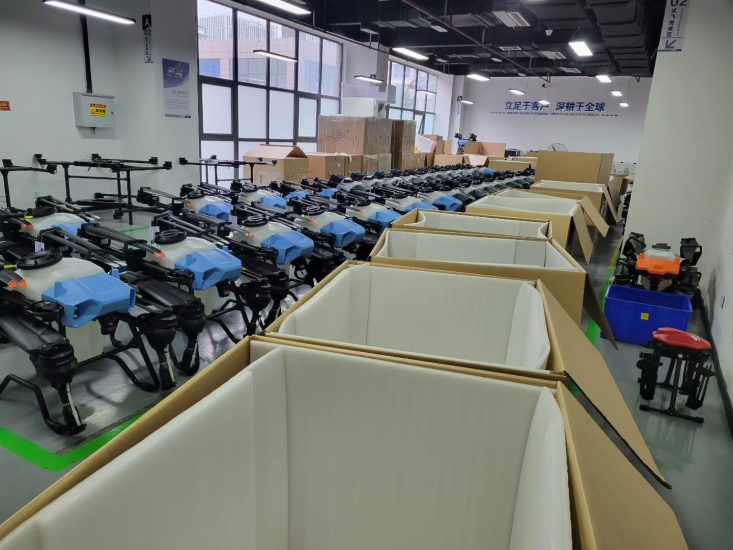
China has an established supply chain for agricultural drone components, including motors, batteries, flight controllers, carbon fiber structures, spraying pumps and electronic systems.
Working with a suitable Chinese OEM supplier may offer several advantages.
Flexible Customization
OEM buyers can discuss product appearance, branding and selected equipment configurations according to their market requirements.
Multiple Product Capacities
Different agricultural markets require different spraying capacities.
Depending on the available product range, distributors may evaluate:
- 10L agricultural spraying drones.
- 20L agricultural spraying drones.
- 30L agricultural spraying drones.
- 50L agricultural spraying drones.
The appropriate model depends on farm size, application requirements and local customer demand.
Direct Technical Communication
Working directly with the manufacturing supplier can make it easier to discuss specifications, product improvements, replacement components and technical requirements.
Wholesale Supply Opportunities
For distributors planning to sell agricultural drones in their local markets, an OEM supply relationship can provide a foundation for repeated orders and long-term product development.
3. What Can Be Customized in an OEM Agricultural Drone?
OEM customization can involve several parts of the product and its packaging.
3.1 Custom Brand Logo
The aircraft can be customized with the buyer’s brand logo according to the agreed design and available application areas.
Possible locations include:
- Aircraft body.
- Spraying tank.
- Product identification labels.
- Packaging materials.
The buyer should provide the logo in a suitable high-resolution or vector format.
3.2 Aircraft Color Customization
Different colors can help a distributor establish a recognizable product identity.
For example, a distributor may request a green, white, black or other agreed color scheme.
Before production, the buyer should confirm the color sample, finish and applicable customization cost.
3.3 Private Label Packaging
Packaging is important for companies developing their own agricultural equipment brands.
Possible options include:
- Customized shipping cartons.
- Branded product labels.
- Customized product identification.
- Private-label packaging design.
- Customized documentation.
Packaging requirements must also consider the protection of electronic equipment and lithium batteries during transportation.
3.4 Battery Configuration
Battery requirements should be discussed before confirming the OEM order.
Important parameters include:
- Battery voltage.
- Battery capacity.
- Battery quantity.
- Charging equipment.
- Battery management system.
- Replacement battery availability.
Buyers should confirm that the selected battery configuration is compatible with the aircraft and charger.
3.5 Spraying System Configuration
Different crops and agricultural applications may require different spraying arrangements.
Possible customization discussions include:
- Pump configuration.
- Nozzle selection.
- Liquid flow rate.
- Spraying width.
- Droplet size.
- Filtration system.
The final configuration should be based on actual crop spraying requirements.
4. MSOEN M50: A 50L OEM Agricultural Drone Solution
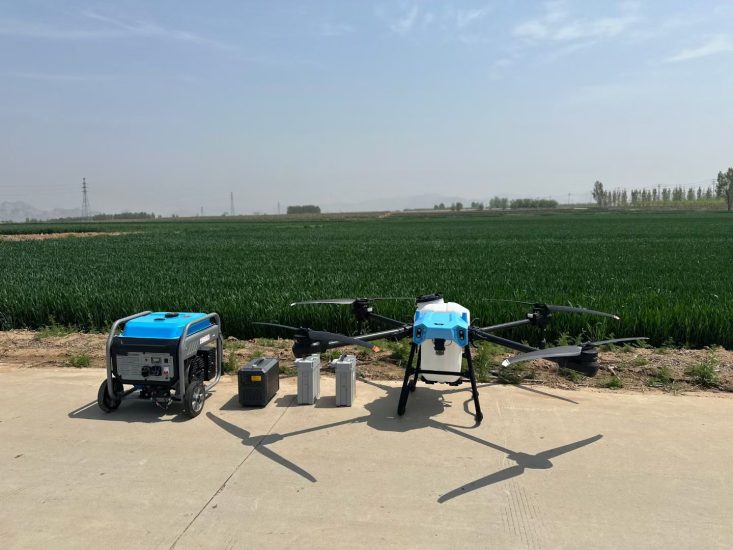
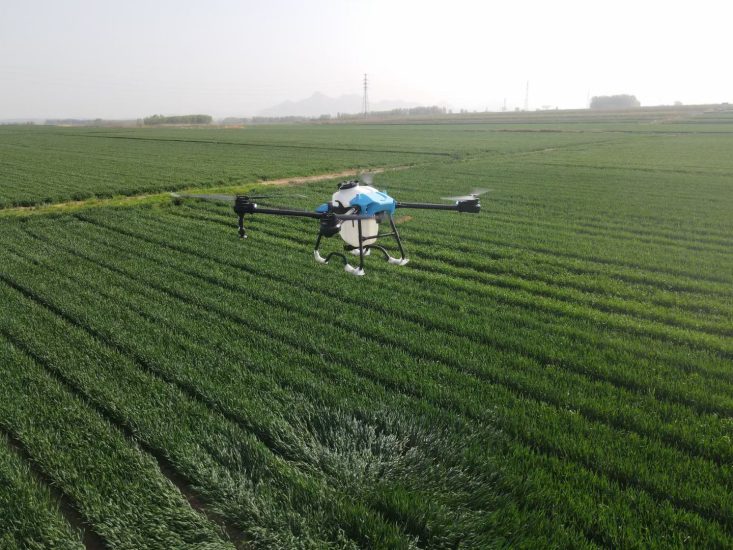
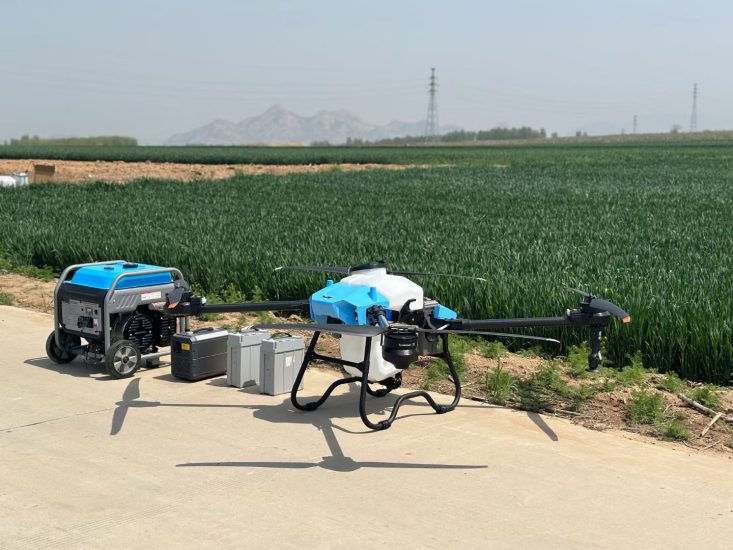
For distributors targeting commercial agricultural operations, the MSOEN M50 50L agricultural spraying drone is a product configuration worth evaluating.
The aircraft is designed for commercial crop spraying applications and offers selected customization options.
Main Technical Specifications
| Parameter | Specification |
|---|---|
| Model | M50 |
| Product Type | Agricultural Spraying Drone |
| Tank Capacity | 50 Liters |
| Spraying Width | 6–10 Meters |
| Flight Time | 10–20 Minutes per Battery |
| Control Range | 1–3 km |
| Positioning | GPS |
| Optional Positioning | RTK |
| Battery Configuration | 14S / 18S |
| Airframe | Carbon Fiber |
| Radar | Available by configuration |
| Application | Agricultural Crop Spraying |
| OEM Customization | Available by agreement |
Actual specifications depend on the final configuration. Buyers should request the detailed technical datasheet before placing an OEM order.
Why Consider a 50L Model?
A 50L tank provides a larger liquid capacity than smaller agricultural spraying drones.
For commercial distributors, this can be attractive when targeting:
- Large farms.
- Agricultural contractors.
- Commercial spraying service providers.
- Agricultural machinery dealers.
- Crop protection service businesses.
However, buyers should also evaluate aircraft weight, loaded flight endurance, battery requirements and transportation arrangements.
5. How Much Does an OEM Agricultural Drone Cost?
OEM agricultural drone pricing depends on product capacity, technical configuration, order quantity and customization requirements.
For reference, the indicative MSOEN M50 50L standard product price range is US$8,500–US$13,000 per unit.
This is a reference range rather than a confirmed OEM quotation.
The final OEM price may vary according to:
| Cost Factor | Description |
|---|---|
| Aircraft Model | 30L, 50L or other available configurations |
| Battery Quantity | Number of batteries included |
| Charging System | Standard or upgraded charging equipment |
| Radar | Optional radar equipment |
| Positioning | GPS or optional RTK |
| Logo | Custom branding requirements |
| Color | Aircraft color customization |
| Packaging | Private-label packaging |
| Order Quantity | Total units ordered |
| Spare Parts | Additional replacement components |
Does OEM Customization Require a Higher MOQ?
Not every customization project has the same minimum order quantity.
A standard product may have different purchasing conditions from a fully customized product.
For example, applying an existing logo design may have different production requirements from developing new aircraft colors and packaging.
Before starting a project, confirm:
- Minimum order quantity.
- Sample order availability.
- Customization fees.
- Production lead time.
- Artwork approval process.
- Payment terms.
- Warranty arrangements.
6. How to Start an OEM Agricultural Drone Project
A successful OEM project requires clear communication between the buyer and supplier.
The following process can help reduce misunderstandings.
Step 1: Define Your Target Market
Identify the country or region where the agricultural drones will be sold.
Consider:
- Main crops.
- Farm sizes.
- Local agricultural practices.
- Import regulations.
- Aviation requirements.
- Customer purchasing budgets.
A product designed for large commercial farms may not be the best choice for smaller agricultural operations.
Step 2: Select the Product Model
Choose the required spraying capacity and aircraft configuration.
For example, a distributor may initially evaluate a 30L or 50L agricultural drone.
Compare tank capacity, maximum takeoff weight, battery endurance, spraying performance and maintenance requirements.
Step 3: Confirm Branding Requirements
Prepare:
- Brand logo.
- Preferred aircraft colors.
- Packaging artwork.
- Product labels.
- User documentation requirements.
The supplier should confirm which parts can be customized.
Step 4: Confirm Technical Specifications
Request a complete technical specification sheet.
Do not rely only on product advertisements.
Important details include motor specifications, battery voltage, spraying flow rate, flight time, radar configuration and maximum payload.
Step 5: Approve a Sample
Where possible, evaluate a sample product before placing a larger order.
Check:
- Aircraft assembly.
- Logo placement.
- Color consistency.
- Spraying performance.
- Battery operation.
- Remote controller functions.
- Packaging quality.
Step 6: Confirm Mass Production
After the sample and technical configuration are approved, confirm the production schedule and quality control requirements.
The supplier should clarify inspection arrangements and the final delivery schedule.
Step 7: Arrange International Shipping
Agricultural drones contain electronic components and may include lithium batteries.
The shipping method must be confirmed according to the battery specifications, transport regulations and carrier acceptance.
7. Important Quality Control Requirements for OEM Agricultural Drones
For distributors, product consistency is essential.
A branded agricultural drone must meet the agreed specifications for every production batch.
Buyers should discuss the following quality control procedures.
Aircraft Structure Inspection
Check the frame, arms, landing structure, fasteners and folding mechanisms.
Motor and Propeller Inspection
Confirm motor operation, propeller installation and relevant mechanical checks.
Spraying System Testing
Check pump operation, liquid flow, hose connections, nozzle performance and leakage.
Battery Inspection
Confirm battery identification, charging functions, electrical safety protections and compatibility.
Flight Control Testing
Check flight control functions, positioning, communication and relevant safety functions.
Final Product Inspection
Before shipment, confirm the aircraft configuration, included accessories, labels and packaging.
For OEM orders, approved samples and documented specifications should be used as references for production consistency.
8. Certifications and Regulations for OEM Agricultural Drones
Agricultural drones are regulated differently across international markets.
An OEM buyer should not assume that one certificate automatically satisfies all destination requirements.
Depending on the country and product configuration, relevant requirements may include:
- Radio equipment compliance.
- Electromagnetic compatibility.
- Electrical safety requirements.
- Battery transportation documentation.
- Aviation registration.
- Drone operating permissions.
- Agricultural chemical application regulations.
Buyers should identify the specific requirements of their destination market before finalizing the OEM design.
Any certification or test report supplied by the manufacturer should correspond to the actual product model and configuration.
9. How to Choose a Reliable OEM Agricultural Drone Supplier
Choosing the right supplier is one of the most important decisions in developing a private-label agricultural drone business.
Consider the following factors.
Product Experience
Evaluate whether the supplier has relevant agricultural drone products and can explain their technical specifications.
Customization Capability
Ask for examples of completed branding and packaging projects where available.
Technical Documentation
Request product manuals, specification sheets, battery information and applicable test documents.
Production and Inspection
Ask how products are assembled, tested and inspected before shipment.
Spare Parts Supply
Confirm the availability of motors, propellers, pumps, nozzles, batteries and chargers.
After-Sales Support
Clarify warranty coverage, technical assistance, replacement procedures and troubleshooting arrangements.
Communication
A suitable supplier should be able to answer technical questions clearly and provide consistent product information.
10. OEM Agricultural Drone Business Opportunities
Developing a private-label agricultural drone brand can create opportunities in several business models.
Agricultural Equipment Distribution
Distributors can sell branded agricultural drones through established agricultural machinery channels.
Wholesale Supply
Wholesalers can supply equipment to regional dealers and agricultural retailers.
Agricultural Spraying Services
Agricultural contractors can purchase equipment for commercial crop protection services.
Regional Private Labels
Businesses can develop products for specific national or regional markets.
Agricultural Machinery Integration
Companies can include agricultural drones in a wider agricultural equipment product portfolio.
The success of these business models depends on local market demand, product suitability, pricing, technical support and compliance with relevant regulations.
11. Frequently Asked Questions About OEM Agricultural Drones
Q1. What is an OEM agricultural drone?
An OEM agricultural drone is a product manufactured or supplied according to agreed customer branding or configuration requirements. Customization may include logos, colors, packaging and selected technical options.
Q2. Can I put my own brand logo on an agricultural drone?
Yes. Logo customization can be discussed for selected aircraft components and packaging, subject to the supplier’s available customization methods.
Q3. Can I customize the color of a 50L agricultural drone?
Custom colors may be available depending on the product structure, production process and order requirements. Confirm color samples before mass production.
Q4. What is the price of an OEM 50L agricultural drone?
The indicative standard MSOEN M50 price range is US$8,500–US$13,000 per unit. The final OEM quotation depends on branding, battery quantity, equipment configuration and order volume.
Q5. What is the MOQ for OEM agricultural drones?
MOQ depends on the selected model and customization scope. Standard products and fully customized products may have different minimum order requirements.
Q6. Can I order one sample before mass production?
Sample orders can be discussed depending on product availability and configuration. Buyers should confirm sample pricing and delivery arrangements.
Q7. Can I customize the battery configuration?
Battery quantity and compatible battery options can be discussed. Voltage, capacity, charger compatibility and aircraft requirements must be confirmed.
Q8. Can OEM agricultural drones support RTK?
RTK may be available on compatible product configurations. Buyers should confirm the positioning system, correction service requirements and additional cost.
Q9. How long does OEM agricultural drone production take?
Production time depends on the product configuration, branding process, order quantity and availability of components. Standard configurations may have an estimated production lead time of approximately two weeks, while customized projects may require additional time.
Q10. Can OEM agricultural drones be exported worldwide?
They can be exported to international destinations subject to transportation restrictions, import regulations, aviation requirements and applicable product compliance rules.
Q11. Can the manufacturer provide spare parts for branded drones?
Spare parts supply should be agreed before the OEM project begins. Buyers should confirm replacement part availability and long-term supply arrangements.
Q12. How do I become an OEM agricultural drone distributor?
Contact the supplier with your target country, intended sales market, preferred model, estimated purchasing quantity and branding requirements. This information helps determine a suitable cooperation arrangement.
12. Start Your OEM Agricultural Drone Project with MSOEN
Are you planning to establish your own agricultural drone brand?
MSOEN welcomes inquiries from international agricultural equipment distributors, importers, wholesalers and companies interested in private-label agricultural spraying drones.
OEM discussions can cover:
- 30L and 50L agricultural spraying drones.
- Custom brand logos.
- Aircraft color customization.
- Private-label packaging.
- Battery and charger configurations.
- GPS and optional RTK systems.
- Spraying system options.
- Spare parts and accessories.
- Wholesale and long-term supply cooperation.
To discuss your OEM project, please provide:
- Your company or brand requirements.
- Target sales country.
- Preferred agricultural drone capacity.
- Estimated order quantity.
- Battery configuration.
- Customization requirements.
Contact MSOEN to discuss OEM agricultural drone manufacturing and request a customized quotation.
Website: https://www.msoen.com/
MSOEN – Agricultural Drone Products and OEM Solutions for Global Markets.


No comments yet