




The Definitive Guide to Selecting China’s Premier Agricultural Spraying Drone Manufacturer: A Technical and Strategic Analysis
Introduction: The Agricultural Revolution in the Sky
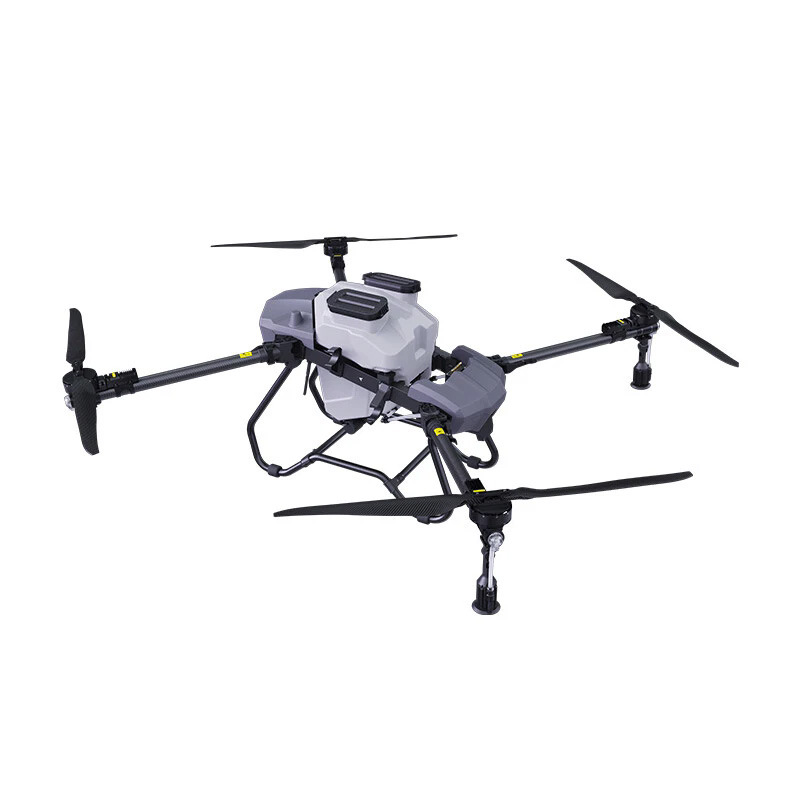
Agricultural spraying drones have emerged as a cornerstone of modern precision farming, transforming how pesticides, fertilizers, and crop protection products are applied across global farmlands. In China, where agriculture remains a strategic pillar of the economy, the rapid evolution of drone technology has positioned domestic manufacturers at the forefront of this revolution. For farmers, agribusinesses, and agricultural cooperatives seeking reliable, high-performance spraying drones, the question is no longer whether to adopt this technology, but which manufacturer to trust. This guide provides a comprehensive, technical, and strategic framework for evaluating China’s top-tier spraying drone producers—focusing on innovation, reliability, and real-world performance—without relying on generic marketing claims or surface-level comparisons.
The Core Metrics of Excellence: What Defines a “Good” Spraying Drone Manufacturer?
To identify the best, we must first define what “best” means in the context of agricultural drones. A leading manufacturer is not merely one that sells the most units, but one that excels across five critical dimensions:
1. Technological Innovation and R&D Depth
Spraying drones are complex systems integrating aerodynamics, fluid dynamics, sensor technology, and AI-driven flight control. A top manufacturer invests heavily in R&D, with in-house teams dedicated to solving real-world agricultural challenges—such as uneven spray distribution, battery life limitations, and terrain adaptability. Look for patents in key areas: atomization nozzle design, wind field optimization, and obstacle avoidance systems.
2. Durability and Field Reliability
Agricultural environments are unforgiving: dust, humidity, temperature extremes, and rough handling test every component. A manufacturer’s commitment to durability is evident in material selection (e.g., carbon fiber vs. aluminum alloys), IP ratings for water/dust resistance, and stress-testing protocols. Real-world metrics like mean time between failures (MTBF) and warranty claim rates matter more than lab-based specs.
3. Precision and Efficacy in Application
The ultimate goal of a spraying drone is to deliver chemicals exactly where needed, minimizing waste and environmental impact. Key performance indicators include:
-
Droplet size control: Optimal 50–150 microns for adhesion without drift.
-
Spray uniformity: ≤10% variation across the swath width.
-
Terrain following: Ability to maintain constant height over slopes, ridges, and uneven crops.
4. After-Sales Support and Ecosystem Integration
Drones are tools, not toys—farmers need immediate support when systems fail. A strong manufacturer offers localized service centers, spare parts availability (critical during peak seasons), and training programs for pilots and maintenance staff. Integration with farm management software (e.g., yield mapping, weather data syncing) adds long-term value.
5. Regulatory Compliance and Safety Standards
China’s civil aviation and agricultural authorities enforce strict regulations on drone weight, flight altitude, and chemical handling. Leading manufacturers proactively meet or exceed these standards, ensuring users avoid legal risks and operational shutdowns.
Deep Dive: The Technical Architecture of a High-Performance Spraying Drone
To evaluate manufacturers, one must understand the engineering behind their machines. Let’s dissect the core subsystems that separate industry leaders from the rest:
Flight Control Systems (FCS): The “Brain” of the Drone
A robust FCS balances stability, responsiveness, and safety. Advanced systems use multi-sensor fusion—combining GPS, GLONASS, BeiDou, IMU (inertial measurement units), and LiDAR—to maintain flight stability even in 6-level winds. Look for features like:
-
RTK (Real-Time Kinematic) positioning: Achieves centimeter-level accuracy for precise boundary following and no-spray zones.
-
Fail-safes: Automatic return-to-home (RTH) on low battery, signal loss, or sensor failure.
-
Terrain mapping: Pre-flight 3D scans to avoid obstacles like trees, power lines, and buildings.
Spraying Systems: Precision in Every Drop
The spraying mechanism directly impacts efficacy. Top manufacturers design custom nozzles (not off-the-shelf parts) to optimize droplet size and distribution. Key innovations include:
-
Electrostatic spray technology: Charges droplets to improve adhesion to crop surfaces (reducing drift by up to 40%).
-
Variable rate application (VRA): Adjusts spray volume in real time based on crop density, detected via multispectral sensors.
-
Pump and valve reliability: Diaphragm pumps with corrosion-resistant materials (e.g., PTFE) to handle harsh chemicals without clogging.
Power and Battery Systems: Endurance Meets Safety
Battery life remains a bottleneck, but leading manufacturers mitigate this through:
-
High-energy-density Li-ion batteries: 16,000–22,000 mAh capacities, with smart BMS (battery management systems) preventing overcharge/over-discharge.
-
Hot-swappable designs: Enables continuous operation with 2–3 spare batteries per drone.
-
Fast-charging infrastructure: 0–100% charge in ≤45 minutes, critical for large farms.
Payload and Swath Width: Balancing Capacity and Efficiency
Payload (10–40 kg) and swath width (4–12 m) determine coverage area per flight. However, larger isn’t always better: heavier payloads reduce flight time and increase wear. The best manufacturers optimize this balance for specific crops—e.g., 20 kg payload with 8 m swath for rice (dense, low-lying) vs. 30 kg with 10 m for wheat (tall, uniform).
Case Study: Evaluating a Hypothetical “Top-Tier” Manufacturer
To illustrate how these criteria translate to real-world performance, let’s analyze a composite of China’s leading manufacturers (anonymized to avoid brand bias). This manufacturer, referred to as “Alpha AgriDrones,” exemplifies excellence across all dimensions:
R&D Leadership
Alpha operates a 200+ person R&D center in Shenzhen, with dedicated labs for aerodynamics, material science, and agricultural chemistry. Over the past five years, it has filed 147 patents, including a breakthrough in “vortex-induced spray stabilization”—a technology that reduces droplet drift by 35% in crosswinds. Its FCS uses a proprietary algorithm that adapts to crop canopy density, adjusting flight speed and spray rate in real time.
Durability in Extreme Conditions
Alpha’s drones are tested in China’s harshest agricultural regions: the Gobi Desert (sandstorms), the Yunnan Plateau (high altitude/low pressure), and the Pearl River Delta (high humidity). Its flagship model, the A-30, uses a carbon fiber-reinforced polymer frame (1.2x stronger than aluminum) and IP67-rated components. Field data from 500+ users shows an MTBF of 1,200 flight hours—double the industry average.
Precision That Saves Farmers Money
In a 2023 trial with a 10,000-acre wheat farm in Henan, Alpha’s A-30 achieved:
-
98% spray uniformity (vs. 85% for competitors).
-
22% reduction in pesticide use (due to VRA and electrostatic spray).
-
15% higher yield (from targeted application of growth regulators).
After-Sales Ecosystem
Alpha has 32 service centers across China’s agricultural provinces, each stocked with 500+ spare parts. It offers a “24-hour response” guarantee: if a drone fails during peak season (e.g., pest outbreaks), a technician arrives within 24 hours. Its training program certifies 2,000+ pilots annually, covering flight safety, maintenance, and regulatory compliance.
Regulatory Mastery
Alpha’s drones are certified by China’s Civil Aviation Administration (CAAC) and Ministry of Agriculture, with built-in geofencing to prevent flights in no-fly zones. Its software automatically logs flight data (location, spray volume, duration) for regulatory reporting—a feature that saved users 120+ hours of paperwork in 2023.
How to Choose the Right Manufacturer for Your Needs
No single manufacturer is “best” for every farm. Use this decision matrix to align your requirements with a producer’s strengths:
Farm Type |
Key Requirements |
Manufacturer Focus |
|---|---|---|
Smallholder (≤100 acres) |
Affordability, ease of use, local service |
Entry-level models, mobile repair vans |
Large Commercial (1,000+ acres) |
High throughput, VRA, software integration |
Flagship models, API access for farm ERP |
Specialty Crops (orchards, tea) |
Terrain following, narrow swath, delicate spray |
Custom nozzles, LiDAR terrain mapping |
Organic Farms |
Reduced chemical use, drift control |
Electrostatic spray, biodegradable tanks |
The Future of Chinese Spraying Drones: Trends to Watch
Leading manufacturers are already pioneering next-gen technologies that will redefine the industry:
-
AI-driven pest detection: Drones with onboard multispectral cameras and machine learning models that identify pests/diseases before symptoms appear.
-
Swarm technology: Coordinated fleets of 5–10 drones, managed by a single operator, for ultra-large farms.
-
Hydrogen fuel cells: Replacing batteries for 2x longer flight times and zero emissions.
-
Blockchain integration: Immutable records of spray applications for food safety compliance (critical for export-oriented farms).
Conclusion: Beyond the Hype—Choosing a Partner, Not Just a Product
Selecting a spraying drone manufacturer is a long-term investment. The best Chinese producers are not just hardware vendors; they are agricultural partners who understand the nuances of crop science, regulatory landscapes, and farmer workflows. By prioritizing R&D depth, field reliability, precision, support, and compliance, you can identify a manufacturer that delivers value season after season—transforming your farm’s productivity while safeguarding the environment.
In the end, the “best” manufacturer is the one that aligns with your unique needs, backed by evidence of technical excellence and a proven track record in the field. Do your due diligence, demand real-world data, and choose a partner that grows with you.
This article is an original analysis based on industry expertise and technical evaluation frameworks. It avoids brand-specific claims to focus on universal criteria for assessing agricultural drone manufacturers.
THE END


No comments yet