


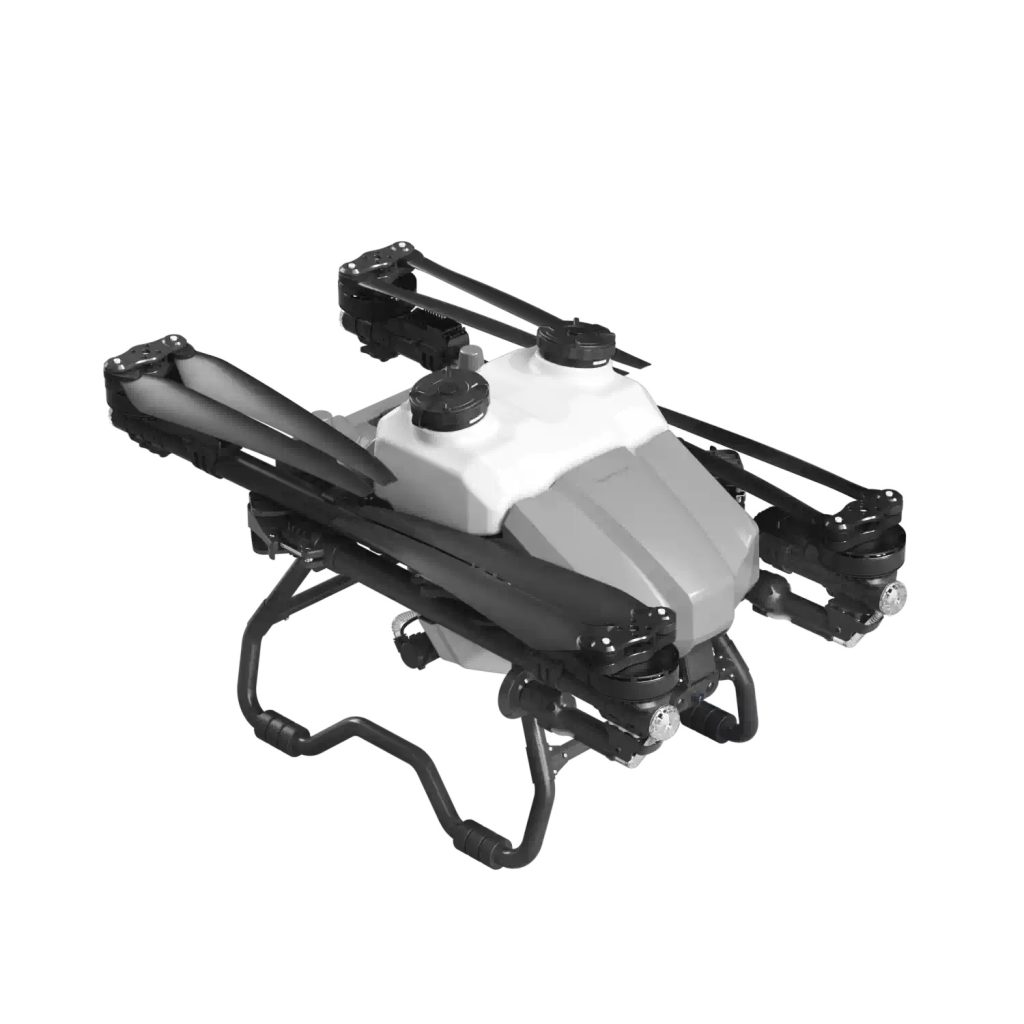
The conversation surrounding agricultural drones in China has evolved. It has moved beyond the rudimentary metrics of payload and flight time, venturing into a more profound territory: resource optimization. As the global population continues its ascent toward 10 billion, the mandate for agriculture is clear—produce more with less. Less water, less land, less labor, and fewer chemicals. Within this context, the Chinese spraying drone industry is not merely manufacturing hardware; it is engineering a new paradigm for precision agriculture.
To understand which manufacturer stands at the pinnacle of this industry, one must look past the aircraft itself and examine the ecosystem of intelligence they provide. The best manufacturers are those that treat the drone not as a standalone product, but as a node in a vast, interconnected data network.
1. The Era of Per-Plant Farming
Traditional spraying is analog; modern spraying is digital. The leap in Chinese drone technology lies in the transition from blanket coverage to targeted application.
Multispectral Synergy:
Advanced manufacturers are integrating multispectral imaging directly into their UAV platforms. Unlike standard RGB cameras, these sensors capture data beyond human vision—specifically in the near-infrared spectrum. This allows the drone to detect plant health (NDVI indices) before the human eye can spot yellowing leaves. A sophisticated manufacturer’s software will take this data, process it on the edge (in real-time), and adjust the spray mixture and volume for specific zones within a field. The result is a “prescription map” executed in real-time, saving millions of liters of water and tons of chemicals annually.
Seedling Stage Penetration:
One of the hardest challenges in agriculture is protecting young crops. Tall drones create too much wind turbulence that can damage fragile seedlings. Elite manufacturers are pioneering low-altitude, high-speed flight algorithms that minimize downwash impact while maintaining spray accuracy. This requires incredibly responsive flight controllers and lightweight airframes, showcasing a manufacturer’s mastery over aerodynamics.
2. The Resilience Factor: Extreme Environment Engineering
China’s geography is diverse, ranging from the high plateaus of Tibet to the humid rice terraces of the south. A drone that works in one region may fail in another.
Thermal Management Systems:
In high-temperature environments, lithium polymer batteries are prone to swelling and failure. Top-tier manufacturers have moved beyond simple passive cooling. They implement active thermal management systems, including heat sinks integrated into the frame and intelligent battery discharge algorithms that prevent overheating during intensive operations.
Corrosion Resistance at the Molecular Level:
Pesticides contain sulfurs and chlorides that are highly corrosive to metals. Standard manufacturers use anodized aluminum, which degrades over time. The best in the industry use specialized coatings, such as electrophoretic deposition (EPD) or ceramic proppant coatings, on critical components like motor shafts and fasteners. This molecular-level protection ensures the drone remains operational across multiple seasons without structural fatigue.
3. The Automation of Labor: From Pilot to Operator
The shortage of skilled labor is a global agricultural crisis. The next generation of drones must be so intuitive that they eliminate the need for highly trained pilots.
Autonomous Swarm Logic:
The cutting edge of Chinese agri-drone tech is swarm intelligence. Rather than managing one drone, a single operator manages a fleet. Advanced manufacturers have developed protocols where drones communicate with each other via mesh networking. If one drone’s battery runs low, another automatically takes over its flight path. This requires a level of software sophistication that few can achieve, focusing on distributed computing rather than centralized control.
Obstacle Avoidance in Dense Orchards:
Flying in open fields is easy; flying in dense orchards is hard. Leading manufacturers utilize LiDAR (Light Detection and Ranging) combined with SLAM (Simultaneous Localization and Mapping) technology. This allows drones to navigate complex 3D environments, avoiding branches while maintaining a consistent distance from the tree canopy to ensure optimal spray penetration.
4. The Circular Economy of Agriculture Tech
Sustainability is no longer a buzzword; it is a business imperative. How a manufacturer handles the lifecycle of their products speaks volumes about their quality.
Battery Second Life Programs:
A drone battery typically lasts 300-500 cycles before its capacity degrades. Instead of discarding them, forward-thinking manufacturers offer recycling or “second life” programs. These batteries are repurposed for solar energy storage on farms, creating a closed-loop economic model that reduces the total cost of ownership for the farmer.
Biodegradable Components:
Some innovative manufacturers are experimenting with biodegradable polymers for non-critical parts like propeller guards or fairings. While not yet mainstream, this research indicates a manufacturer’s commitment to environmental stewardship beyond just reducing chemical runoff.
5. Data Sovereignty and Cybersecurity
As drones collect hyper-detailed maps of farmland, data security becomes paramount. Farmers want to know who owns their field data.
Edge Computing and Offline Operation:
Many rural areas lack robust internet connectivity. A superior manufacturer designs drones that process all sensitive data locally on the device or a local tablet (edge computing), rather than sending it to a cloud server. This ensures that proprietary farm data never leaves the premises, addressing privacy concerns and complying with strict data sovereignty laws.
Conclusion: The Search for the “Unseen” Excellence
When evaluating a Chinese agricultural drone manufacturer, the best choice is often the one you hear the least about in terms of flashy marketing, but the most about in terms of reliability.
Look for the company that:
-
Invests in material science to fight corrosion.
-
Develops software that turns data into actionable insights.
-
Provides logistical support that guarantees uptime during the 2-week critical spraying window.
-
Prioritizes data security and sustainability.
The ideal partner is not just selling you a machine that flies; they are providing a tool that increases your yield per liter of water and per gram of chemical. In the high-stakes game of global food production, that efficiency is the ultimate currency. Choose the manufacturer that understands this alchemy, and you choose the future of your harvest.
THE END


No comments yet