

Tea—one of the world’s most beloved beverages—begins in the mist-wreathed hills of places like China’s Yunnan Province, India’s Assam Valley, or Sri Lanka’s central highlands. These plantations are not just farms; they’re cultural heritage sites, where generations have tended terraced rows of Camellia sinensis to craft the leaves that fuel mornings worldwide. But behind the serenity lies a hidden struggle: tea cultivation is uniquely vulnerable to pests, diseases, and the physical limits of traditional farming. Steep terraces, delicate young shoots, and the need for chemical-free leaves (to meet premium export standards) make spraying—a critical step in protecting crops—both essential and fraught with risk.
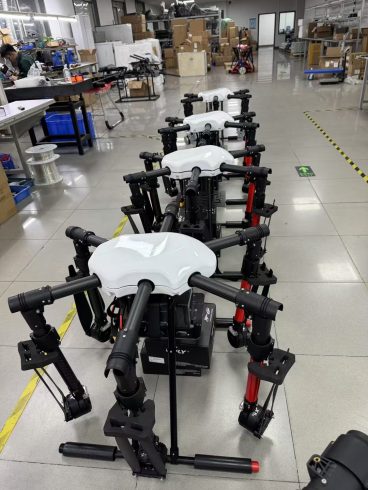
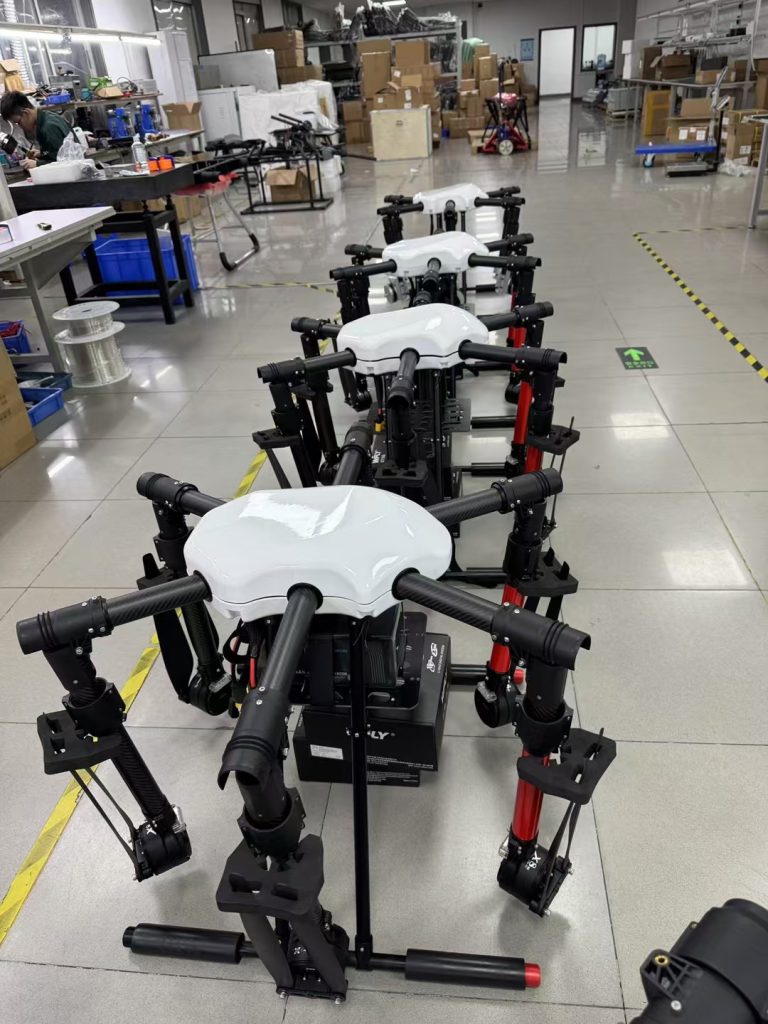
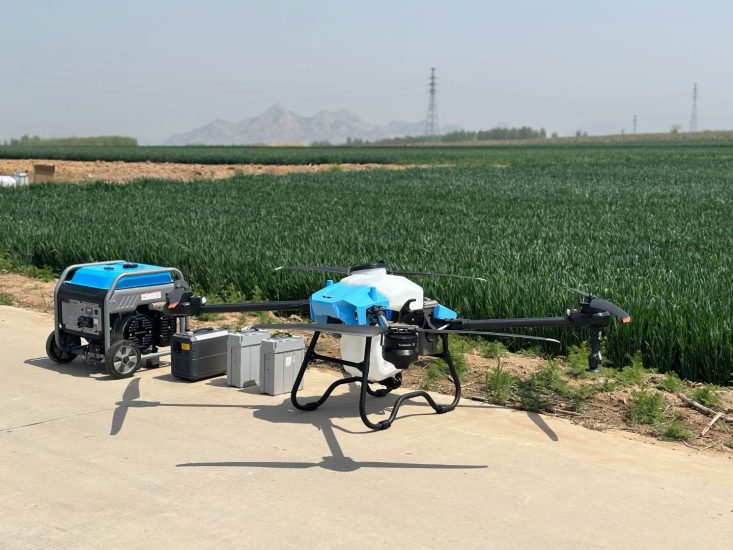
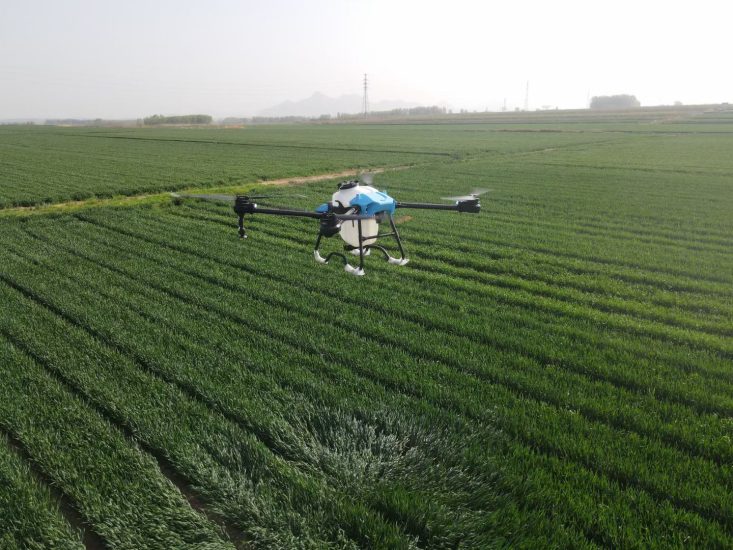
Enter tea plantation spraying drones: unmanned aerial vehicles (UAVs) engineered to navigate the chaos of terraced hills, deliver targeted treatments to delicate tea leaves, and safeguard the quality and livelihoods of the farmers who grow our favorite brew. These drones aren’t just tools—they’re a revolution in how we protect the plants that give tea its flavor, aroma, and cultural weight.
Why Tea Plantations Demand a Specialized Spraying Solution
Tea’s growing conditions create challenges no other crop faces quite like it:
1. Terraced Terrain: Tractors Can’t Climb, Humans Struggle
Most tea plantations are planted on steep slopes (often 25–45 degrees) arranged in narrow terraces. Tractors are useless here—they’d tip over or compact soil, damaging root systems. Manual spraying requires workers to hike up and down treacherous hills, carrying heavy sprayers. This is slow (a single worker can cover just 1–2 acres/day), exhausting, and dangerous: slips on wet terraces are common, and prolonged chemical exposure causes chronic health issues.
2. Delicate Leaves: Over-Spraying Destroys Quality
Tea’s value lies in its young shoots (the two leaves and a bud harvested for high-quality tea). These leaves are fragile—over-spraying with chemicals can burn them, leaving brown spots that ruin the leaf’s appearance and flavor. Traditional boom sprayers or manual methods often overdose healthy leaves while missing pests hiding in the understory.
3. Pests and Diseases: Silent Threats to Yield
Tea is vulnerable to pests like the tea leafhopper (which sucks sap and transmits viruses) and red spider mites (which spin webs and drain leaf nutrients). Diseases like powdery mildew thrive in cool, humid plantation conditions. Left unchecked, these can reduce yields by 30–50%—and since tea is sold by weight and quality, losses hit farmers’ incomes hard.
4. Export Pressures: Pesticide Residue Rules
Premium tea markets (like Europe or Japan) enforce strict limits on chemical residues. Smallholder farmers—who supply 80% of the world’s tea—often lack the tools to monitor residue levels, risking rejection of their harvests. Spraying drones offer a way to use less chemical and ensure even coverage—critical for meeting global standards.
Core Technologies: How Tea Drones Master Terraced Hills and Delicate Leaves
Tea spraying drones are not off-the-shelf agricultural UAVs—they’re customized to solve the unique puzzles of tea cultivation. Here’s what makes them work:
1. Sensing: Seeing the Tea Plantation Like a Grower
Tea plants communicate stress in subtle ways—yellowing leaves, curled buds, or sparse new growth. Drones “read” these signals with:
-
Multispectral Cameras: Capture near-infrared (NIR) and red-edge light to detect early signs of pest infestation (e.g., tea leafhoppers sucking sap) or disease (powdery mildew on leaf surfaces). AI converts this data into canopy health maps, highlighting exactly where to spray—down to the individual plant.
-
LiDAR (Light Detection and Ranging): Creates 3D maps of terraced fields, mapping terrace edges, slope angles, and tea plant density. This lets drones plan flight paths that hug terrace walls without crashing and adjust altitude to avoid damaging upper canopies.
-
Hyperspectral Sensors: For high-end teas, these sensors detect minute changes in leaf chemistry—like elevated levels of chlorophyll (a sign of nutrient deficiency) or terpenes (aroma compounds affected by stress). This helps farmers adjust sprays to enhance quality, not just kill pests.
2. Navigation: Dancing on Terraces
Tea plantations are a nightmare for standard drones—narrow terraces, sudden drops, and unpredictable winds. Tea drones solve this with:
-
RTK-GPS (Real-Time Kinematic Global Positioning System): Provides centimeter-level accuracy, ensuring drones follow pre-mapped “terrace corridors” without drifting off course. For a 10-acre terrace, this means every row is sprayed evenly—no missed spots on steep slopes.
-
Vision-Based Collision Avoidance: Forward and downward-facing cameras let drones “see” terrace edges, tea plants, and even wildlife (like monkeys or birds). They slow to a hover before crossing terrace walls or adjust speed to avoid blowing leaves off plants.
-
Swarm Coordination: Large plantations use fleets of drones that divide terraces into sections. AI assigns each drone a “zone” (e.g., 5 acres of terrace) and coordinates flight paths to avoid collisions—like a synchronized team scaling a mountain.
3. Spraying: Gentle, Targeted, and Effective
Tea leaves are delicate—so drones use spraying systems designed to protect them:
-
Micro-Droplet Nozzles: Produce droplets as small as 50 microns (1/20th the width of a human hair). These tiny droplets stick to leaves without bouncing off or burning delicate buds—critical for preserving tea’s flavor and appearance.
-
Variable-Rate Spraying (VRT): Adjusts chemical flow based on the health map. For example:
-
Infected Zones: 3 L/acre of pesticide to target tea leafhoppers.
-
Healthy Zones: 1 L/acre of preventive fungicide.This cuts total chemical use by 40–60% compared to blanket spraying—reducing residue and costs.
-
-
Directed Airflow: Soft, downward-facing fans push droplets onto leaves without blowing them off terraces. For upper canopies, the fan angle tilts upward to reach hidden pests—something manual sprayers or tractors can’t do.
Transformative Benefits for Tea Growers and Your Cup
Tea spraying drones solve more than just “spraying”—they redefine sustainability, quality, and profitability for the people who grow our tea:
1. Preserve Tea Quality: The Secret to Premium Brews
By targeting only affected areas and using micro-droplets, drones prevent over-spraying. This means:
-
Fewer Defects: No brown spots on leaves from chemical burns—so more leaves qualify for high-grade teas (like Darjeeling or Matcha).
-
Better Flavor: Less chemical residue means the tea’s natural terpenes (which give it aroma) and catechins (which give it bitterness and health benefits) remain intact. A Japanese green tea grower reported a 20% increase in “umami” (savory flavor) after switching to drones—because fewer chemicals masked the tea’s natural taste.
2. Reduce Chemical Use: Safer for Farmers and the Planet
Tea plantations often border streams and forests—over-spraying can contaminate water sources and harm wildlife. Drones cut chemical use by 40–60%, meaning:
-
Less Runoff: Fewer pesticides enter rivers—protecting fish and amphibians that live in plantation watersheds.
-
Safer Work: Farmers no longer mix or spray chemicals—reducing cases of acute poisoning (a major issue in tea-growing regions like Assam).
3. Speed and Scalability: Cover Terraces Before Pests Strike
Tea pests multiply fast—tea leafhoppers can lay 100 eggs/day, and outbreaks can destroy a crop in weeks. Drones act fast:
-
A single drone can spray 50–100 acres of terrace per day—equivalent to 20–40 manual sprayers.
-
In Kenya’s Kericho tea region, drones have cut spraying time for powdery mildew from 2 weeks to 3 days—preventing the disease from spreading to neighboring plantations.
4. Empower Smallholder Farmers: Profitability Without Risk
Most tea farmers own small plots (1–5 acres) and can’t afford tractors or manual labor. Drones-as-a-service (DaaS) models let them pay per acre (8–15)—affordable and scalable. A Sri Lankan smallholder farmer said: “Before drones, I couldn’t afford to spray my 2 acres regularly. Now, I hire a drone service, and my yield is up 18%—because I catch pests early.”
5. Data-Driven Tea Cultivation: Learn to Grow Better
Every drone flight generates data that helps farmers improve:
-
Which areas get sprayed most? → Adjust planting density to reduce pest hotspots.
-
When do outbreaks happen? → Time sprays to coincide with pest life cycles.
-
How does spray timing affect quality? → Optimize for peak flavor compounds.
Real-World Impact: Tea Plantations Transformed
Tea spraying drones are already making a difference in major growing regions:
1. Yunnan Pu’er Tea Plantation, China
A 30-acre terrace plantation growing organic Pu’er tea used drones to target tea tortrix (a moth that damages young shoots). Results:
-
Chemical Use: Down 50% (critical for organic certification).
-
Yield: Up 15%—fewer shoots were eaten by pests.
-
Residue: 40% lower—allowing the farm to sell to European markets at a 25% premium.
2. Assam Tea Garden, India
A 100-acre plantation struggling with red spider mites (which reduce leaf quality) switched to drones. Results:
-
Spray Time: Reduced from 3 weeks to 4 days.
-
Leaf Quality: 95% of leaves were defect-free (up from 70% before).
-
Farmer Income: Increased by $100/acre—due to higher prices for defect-free leaves.
3. Kericho Tea Region, Kenya
A cooperative of 500 smallholder farmers used drones for collective spraying. Results:
-
Cost: Shared DaaS fees cut spraying costs by 60% per farmer.
-
Pest Control: Outbreaks of tea leafhoppers were reduced by 70%.
-
Exports: The cooperative’s tea now meets EU residue standards—opening up new markets in Germany and France.
Challenges: What Stands in the Way?
While promising, tea spraying drones face hurdles specific to plantation agriculture:
1. Regulatory Complexity for Terraced Areas
Many tea-growing countries (like India and Sri Lanka) have strict rules about drone flights in hilly areas. Regulators worry about crashes into terraces or wildlife—so permits for large swarms can be hard to obtain.
2. Battery Life for Steep Flights
Flying up and down steep terraces drains drone batteries faster. Most drones can only cover 5–10 acres per charge—requiring frequent refills for large plantations. Emerging solid-state batteries could solve this—but they’re not yet affordable for smallholders.
3. Training for Traditional Farmers
Many tea farmers are older and unfamiliar with technology. Training programs and local DaaS operators are key—farmers need to learn how to read health maps and operate drone software.
The Future: Smarter, Greener Tea Cultivation
Tea spraying drones are just the beginning. Here’s what’s next:
1. AI-Powered Pest Prediction
Future drones will use machine learning to analyze historical data (weather, pest outbreaks, soil moisture) to predict infestations. For example:
-
If the AI detects a rise in temperature and humidity, it will alert the farmer to check for tea leafhoppers—allowing early intervention before outbreaks occur.
2. Swarm Intelligence for Mega-Plantations
Fleets of 50+ drones will work together to spray 1,000-acre plantations in a day. AI will optimize flight paths to minimize wind interference and ensure even coverage on terraces.
3. IoT Integration for Quality Enhancement
Drones will connect with soil sensors and leaf moisture monitors:
-
Soil Sensors: Detect low nitrogen → drone sprays a targeted nitrogen solution to boost leaf growth.
-
Leaf Moisture Monitors: Detect dryness → drone sprays a fine mist to prevent leaf curl—preserving quality.
4. Sustainability at the Core
Drones will help tea plantations become carbon-negative:
-
Less tractor use → lower fuel emissions.
-
Targeted chemical use → less runoff → healthier ecosystems.
-
Data-driven nutrient delivery → less waste → lower carbon footprint.
Conclusion: Drones Are the Guardians of Your Favorite Tea
Tea plantation spraying drones are more than technology—they’re a lifeline for the people who grow our tea and the planet that sustains it. They solve the unique challenges of terraced hills, delicate leaves, and smallholder farms—preserving quality, reducing harm, and empowering growers.
As a Sri Lankan tea farmer put it: “Before drones, I worried every day—would pests ruin my crop? Would I afford to spray? Now, I spray smart, and my tea tastes better. My family eats better. That’s all I want.”
Tea is more than a beverage—it’s a connection between people, culture, and nature. Drones help keep that connection alive—by protecting the plants that give our cups meaning, one terrace at a time.
THE END


No comments yet