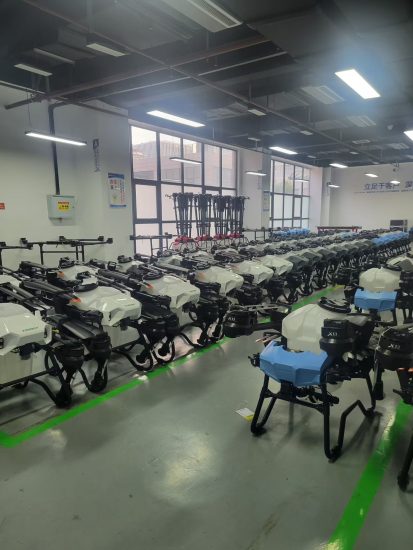


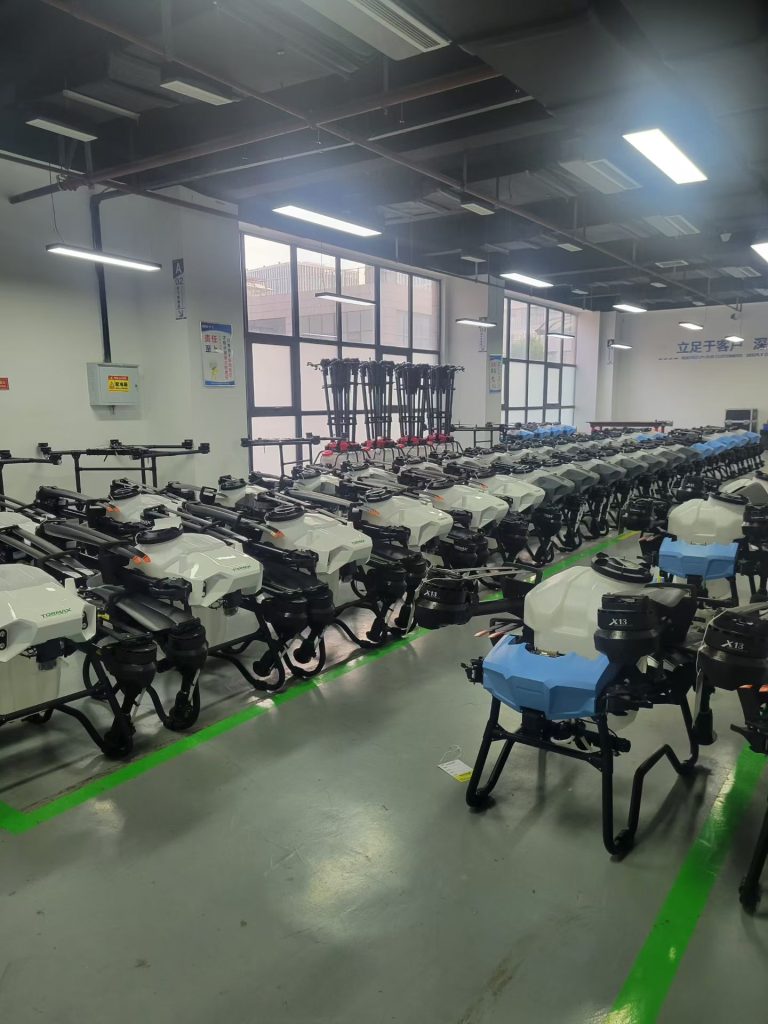
A heavy lift cargo drone is no longer just a large version of a consumer UAV. Once the payload reaches 30 kg, 50 kg, 80 kg or 100 kg, the purchasing decision becomes much closer to buying an industrial transportation system.
The drone has to lift the cargo, remain stable under changing loads, provide predictable flight performance, handle wind and altitude, protect the operator and cargo, and complete repeated delivery missions without excessive battery downtime.
For construction companies, mining operations, emergency-response organizations, utility contractors, logistics companies and industrial suppliers, the most important question is therefore not simply:
“How many kilograms can the drone carry?”
A better question is:
“How much cargo can it safely carry, for how far, under my actual operating conditions, and what will the complete system cost?”
This guide explains how to evaluate a heavy lift cargo drone manufacturer, compare capacity and range, understand realistic operating performance, estimate the purchase price, and prepare a useful RFQ before contacting a factory.
1. What Is a Heavy Lift Cargo Drone?
A heavy lift cargo drone is an industrial unmanned aircraft designed to transport materials rather than primarily capture images or video.
Typical applications include:
-
Construction material delivery
-
Mining-site transportation
-
Power-line and utility maintenance
-
Emergency supply delivery
-
Mountain logistics
-
Oil and gas operations
-
Disaster response
-
Agricultural transportation
-
Remote-site equipment delivery
-
Infrastructure construction
-
Short-distance industrial logistics
Depending on the design, commercial heavy lift drones can range from approximately 20 kg payload systems to more than 100 kg.
However, payload capacity should never be evaluated independently.
A manufacturer may advertise a 100 kg maximum payload, while the practical payload in a particular configuration may be lower because of battery weight, lifting equipment, altitude, temperature, wind, route distance and local regulations.
This distinction is particularly important when comparing different manufacturers.
2. The First Thing to Check: Real Payload Capacity
The advertised payload is usually the first number buyers look at, but it is also one of the easiest specifications to misunderstand.
There are at least four different numbers that can appear in a manufacturer’s quotation:
-
Maximum payload
-
Recommended operating payload
-
Maximum takeoff weight
-
Payload under a specific battery configuration
These numbers are not interchangeable.
For example, DJI’s FlyCart 100 is officially specified for up to 100 kg payload in single-battery configuration and up to 85 kg in dual-battery configuration. DJI also states that its Delivery App recommends loading weight according to aircraft status, environmental conditions and the task, and that the recommended value should not be exceeded.
This is a good example of why buyers should ask the manufacturer to provide payload performance under the exact operating configuration, rather than accepting a headline number.
Questions to ask the manufacturer
Before purchasing, ask:
-
Is the advertised payload net cargo weight?
-
Does it include the hook?
-
Does it include the lifting cable?
-
Does it include the cargo box?
-
Does it include the battery compartment?
-
Is the figure for single or dual battery operation?
-
At what altitude was the payload tested?
-
At what temperature?
-
What wind speed was used?
-
How much flight time remains with the advertised payload?
A serious manufacturer should be able to answer these questions clearly.
3. Payload Classes for Different Industrial Applications
There is no universal “best” heavy lift drone.
A 30 kg drone may be more economical than a 100 kg drone if your average shipment weighs only 15–20 kg.
A useful purchasing classification is:
Payload Class |
Typical Applications |
Approximate Purchase Level |
|---|---|---|
20–30 kg |
Small construction materials, agriculture, emergency delivery |
US$5,000–12,000+ |
30–50 kg |
Construction, utility work, industrial logistics |
US$8,000–20,000+ |
50–80 kg |
Heavy materials, infrastructure, mining |
US$12,000–30,000+ |
80–100 kg |
Heavy construction, industrial cargo |
US$18,000–40,000+ |
Premium 100 kg systems |
Professional delivery and high-end industrial operations |
US$40,000–60,000+ |
Custom 100 kg+ systems |
Special industrial projects |
US$40,000–100,000+ |
These are indicative market ranges rather than fixed factory prices. The actual quotation can change substantially depending on batteries, charging equipment, payload mechanism, navigation system, communication system, spare parts, training, certification and customization.
For example, current Chinese marketplace listings show 100 kg-class heavy-lift UAVs around US$20,000, while other complete-looking 100 kg products are listed around US$25,000–35,000 or US$38,888–59,999.
That large price difference is normal.
The important question is not:
“Why is one drone US$20,000 and another US$50,000?”
It is:
“What exactly is included in each quotation?”
4. Why Two 100 kg Cargo Drones Can Have Very Different Prices
A 100 kg payload rating does not mean two drones are equivalent.
Consider two hypothetical systems.
Drone A
-
100 kg advertised payload
-
Basic remote controller
-
Standard batteries
-
Manual cargo attachment
-
Basic positioning
-
No advanced obstacle sensing
-
Standard charger
-
Limited spare parts
Drone B
-
100 kg payload class
-
RTK positioning
-
Redundant propulsion
-
Radar
-
LiDAR
-
Vision sensors
-
Integrated parachute
-
Automatic weighing
-
Winch system
-
Emergency cargo release
-
High-power charging
-
Dual-battery architecture
-
Fleet-management software
-
Operator training
Both may appear as “100 kg heavy lift drones” in search results.
But they are not the same product.
For commercial operations, the second system may justify a significantly higher purchase price because it is being purchased as an industrial transportation platform, rather than simply as a large UAV frame.
5. Range Is More Important Than Maximum Flight Distance
Manufacturers often advertise a maximum flight distance.
Buyers should be careful with this number.
A maximum distance measured in ideal conditions does not necessarily mean the drone can carry its maximum payload over the same distance.
For example, DJI’s FlyCart 100 specifications list a maximum flight distance of 12 km with dual batteries and 6 km with a single battery under a specified test condition and takeoff weight below 149.9 kg. The manufacturer notes that actual results vary with environment, use and firmware.
Therefore, a buyer should distinguish between:
Maximum flight distance
and
Practical loaded delivery radius.
The second number is much more useful.
6. How to Calculate Practical Delivery Range
Suppose your construction project requires the drone to carry 60 kg of material from a loading point to a worksite.
The route is:
-
3 km outbound
-
3 km return
-
Total route: 6 km
You should not automatically select a drone advertised with a 6 km maximum range.
A safer purchasing calculation considers:
-
Payload
-
Battery reserve
-
Wind
-
Temperature
-
Takeoff altitude
-
Return distance
-
Emergency diversion
-
Battery aging
-
Flight restrictions
A drone that technically flies 6 km may not be suitable for a 6 km round trip with a heavy load.
For commercial work, the manufacturer should ideally provide a performance table showing:
Payload |
Flight Distance |
Battery Configuration |
Wind |
Temperature |
|---|---|---|---|---|
20 kg |
X km |
Dual |
X m/s |
X°C |
40 kg |
X km |
Dual |
X m/s |
X°C |
60 kg |
X km |
Dual |
X m/s |
X°C |
80 kg |
X km |
Dual |
X m/s |
X°C |
100 kg |
X km |
Single/Dual |
X m/s |
X°C |
This is far more useful than a single “maximum range” number.
7. Flight Time With Cargo
Flight time is another specification that is frequently misunderstood.
An unloaded drone may fly for a long period.
A heavily loaded drone consumes substantially more energy.
The manufacturer’s test conditions also matter.
For example, DJI’s FlyCart 100 specification lists a maximum flight time of 14 minutes with dual batteries and 7 minutes with a single battery under a specified test condition and takeoff weight below 149.9 kg. These figures are not equivalent to a guaranteed 14-minute commercial delivery mission with maximum payload.
When requesting a quotation, ask for:
Flight time with 50 kg payload
rather than simply:
Maximum flight time.
Even better, request flight time at several payload levels.
8. Winch System or Fixed Lifting System?
A heavy lift cargo drone may use different delivery mechanisms.
Two common solutions are:
Fixed lifting system
The cargo is attached beneath the drone using a cable, hook or dedicated cargo platform.
Advantages:
-
Simple structure
-
Lower mechanical complexity
-
Suitable for repeated delivery routes
-
Usually easier to maintain
-
Often lighter than a sophisticated winch system
This can work well when the cargo is delivered to open areas.
Winch system
A winch allows the cargo to be lowered from the aircraft.
This is useful when the aircraft cannot land directly at the delivery location.
Typical applications include:
-
High-rise construction
-
Mountain operations
-
Forest areas
-
Emergency rescue
-
Offshore structures
-
Utility maintenance
-
Narrow construction sites
DJI’s FlyCart 100 winch system, for example, supports a cable length of up to 30 meters, active hook control, weighing, automatic balancing and emergency cable-discard functionality.
For buyers, the correct choice depends on how the cargo will actually be unloaded.
9. Cargo Stability Is a Major Engineering Issue
Carrying 100 kg is not simply a matter of generating enough lift.
The cargo must also remain stable.
A suspended load can swing because of:
-
Wind
-
Acceleration
-
Deceleration
-
Sudden changes in direction
-
Uneven cargo weight
-
Long cable length
-
Incorrect attachment points
A swinging load can create additional forces on the aircraft and make precise placement more difficult.
This is why buyers should ask manufacturers about:
-
Automatic load balancing
-
Cable stabilization
-
Real-time weighing
-
Load center-of-gravity requirements
-
Maximum cargo dimensions
-
Maximum cable length
-
Emergency release
-
Cargo attachment points
A good heavy lift drone manufacturer should be able to explain how the aircraft handles an uneven or moving load.
10. Wind Resistance Matters More Than Top Speed
For industrial transportation, top speed is rarely the most important flight-performance specification.
Wind resistance is much more important.
A drone may fly at 20 m/s in a controlled test, but that does not mean it should carry maximum payload at that speed in strong wind.
DJI specifies a maximum wind resistance of 12 m/s for the FlyCart 100 and states that its maximum horizontal speed can reach 20 m/s under specified test conditions.
A procurement team should therefore request:
-
Maximum operating wind
-
Maximum wind with full payload
-
Recommended wind limit
-
Crosswind performance
-
Takeoff and landing wind limits
-
Automatic return behavior
-
Load stability in wind
These specifications are particularly important for construction sites, mountains and coastal areas.
11. Altitude Changes Payload Performance
A heavy lift drone that performs well at sea level may not have the same lifting capability at high altitude.
Air density decreases with altitude, which affects propeller performance and available lift.
DJI specifies a maximum flight altitude of 6,000 m above sea level for the FlyCart 100 but explicitly notes that payload capacity decreases as takeoff altitude increases.
Therefore, a buyer operating in:
-
Tibet
-
Andes regions
-
High-altitude mining areas
-
Mountain construction projects
-
Alpine regions
should not purchase solely based on sea-level payload specifications.
Ask the factory for a payload-versus-altitude performance curve if the drone will operate at high elevations.
12. Battery Configuration
Battery architecture is one of the biggest differences between industrial cargo drones.
A single-battery system can reduce weight and may provide higher payload capacity in certain configurations.
A dual-battery system can improve redundancy and operational flexibility.
However, the additional battery itself adds weight.
DJI’s official specifications show this clearly: its FlyCart 100 can carry up to 100 kg in single-battery configuration, while its dual-battery maximum payload is 85 kg.
This is a good reminder that:
More batteries do not automatically mean more payload.
The complete aircraft weight must be considered.
13. Charging Speed Affects Commercial Productivity
For occasional missions, battery charging may not be a major concern.
For commercial operations, it can become one of the biggest productivity bottlenecks.
Imagine a construction company performing 30 delivery flights per day.
If each flight requires a long charging cycle, the drone may spend more time waiting than flying.
DJI’s C12000 charging system is specified at up to 12 kW with three-phase 380 V input, and DJI states a 30%-to-95% charging time of approximately 9 minutes under specified conditions. Actual charging performance depends on power supply and other environmental factors.
When comparing manufacturers, ask:
-
Charger power
-
Charging time
-
Required electrical supply
-
Generator compatibility
-
Number of batteries included
-
Battery cycle life
-
Battery replacement cost
-
Charging temperature range
The charger should be included in the total-cost calculation.
14. Navigation and Positioning
For heavy cargo operations, positioning accuracy is not a luxury feature.
A 100 kg load being delivered within a few meters of the intended location may be acceptable for some construction operations but unacceptable for others.
RTK positioning can improve precision when suitable GNSS conditions and infrastructure are available.
For example, DJI specifies RTK-enabled hovering accuracy of approximately ±10 cm horizontally and vertically under strong GNSS conditions for the FlyCart 100.
When evaluating a manufacturer, ask whether the drone supports:
-
GPS
-
BeiDou
-
Galileo
-
GLONASS
-
RTK
-
Base station
-
Network RTK
-
Terrain following
-
Waypoint missions
-
Automatic return-to-home
Also ask what happens when RTK or GNSS becomes unavailable.
15. Obstacle Avoidance Should Not Be Treated as a Guarantee
Modern industrial cargo drones increasingly use combinations of:
-
Radar
-
LiDAR
-
Vision cameras
-
FPV cameras
-
Positioning sensors
DJI’s FlyCart 100, for example, uses front, rear and downward radar together with LiDAR, a quad-vision system and FPV. Its official specifications state that sensing range can reach up to 60 m under specified conditions.
But obstacle avoidance does not make a heavy cargo flight automatically safe.
Manufacturers explicitly warn that performance varies with factors such as lighting, rain, fog and obstacle characteristics, and that cargo and lifting cables can create additional risks.
For industrial procurement, sensors should therefore be viewed as risk-reduction systems, not substitutes for trained operators and route planning.
16. Safety Systems to Look For
A serious heavy lift cargo drone should have safety systems appropriate to its payload class.
Potential features include:
-
Propulsion redundancy
-
Battery monitoring
-
Emergency return
-
Automatic landing
-
Emergency cargo release
-
Cable-cut function
-
Parachute
-
Radar
-
LiDAR
-
Vision sensing
-
Warning lights
-
Audible alarms
-
Real-time aircraft monitoring
-
Flight data recording
For example, DJI’s FlyCart 100 integrates a parachute system and multiple sensing technologies. Its specified parachute has a minimum opening height of 100 m and a specified touchdown speed of no more than 7 m/s under stated test conditions.
For other manufacturers, buyers should request actual test information rather than accepting “safety system” as a marketing phrase.
17. What Should Be Included in the Purchase Price?
One of the biggest mistakes in drone procurement is comparing the aircraft price alone.
A complete industrial package may include:
Aircraft
-
Airframe
-
Motors
-
ESCs
-
Propellers
-
Flight controller
Energy system
-
Batteries
-
Battery compartment
-
Charger
-
Charging cables
-
Generator, if required
Payload system
-
Cargo platform
-
Lifting cable
-
Hook
-
Winch
-
Weighing system
Navigation
-
RTK module
-
Base station
-
Remote controller
Safety
-
Parachute
-
Radar
-
LiDAR
-
Warning system
Support
-
Training
-
Spare propellers
-
Spare motors
-
Technical documentation
-
Warranty
A US$25,000 aircraft quotation and a US$45,000 turnkey package may therefore both be reasonable depending on what is included.
18. Current China Market Price Reference
Current Chinese supplier listings demonstrate the broad price range.
One 100 kg heavy-lift UAV listing from Qingdao Zhongfei Intelligent Technology is currently advertised at approximately US$25,000–35,000.
Another 100 kg eight-axis cargo drone from Shenzhen Nereus is listed at approximately US$20,000, with lower unit prices shown at higher order quantities.
A 100 kg hybrid heavy-lift hexacopter from Guangdong Keystar Intelligence Robot is listed at approximately US$38,888–59,999.
These listings should not be interpreted as universal market prices.
The final quotation depends on:
-
Payload
-
Battery quantity
-
Battery capacity
-
Flight controller
-
Motor system
-
Communication range
-
RTK
-
Radar
-
LiDAR
-
Payload mechanism
-
Winch
-
Parachute
-
Charger
-
Spare parts
-
Certification
-
OEM requirements
-
Quantity
For serious procurement, always request a complete configuration sheet together with the price.
19. Manufacturer vs Trading Company
When buying an industrial drone, identifying whether you are communicating directly with the manufacturer can be important.
A trading company may still provide a legitimate product, but buyers should know who actually designs and manufactures the aircraft.
Ask the supplier:
-
Are you the manufacturer?
-
Where is the factory located?
-
What parts are manufactured in-house?
-
Which components are outsourced?
-
How many employees are in R&D?
-
How many heavy-lift aircraft have been delivered?
-
Can you provide factory video?
-
Can you provide a live factory inspection?
-
Can you demonstrate a real payload test?
-
Who provides after-sales technical support?
Do not rely solely on the word “manufacturer” in a marketplace title.
20. How to Verify a Heavy Lift Drone Factory
A practical factory verification process should include four levels.
Level 1: Company verification
Check:
-
Business registration
-
Factory address
-
Company history
-
Export history
-
Product catalog
-
Certification
Level 2: Engineering verification
Ask for:
-
Aircraft drawings
-
Motor specifications
-
Battery specifications
-
Payload system design
-
Flight-control system
-
Communication system
-
Redundancy design
Level 3: Performance verification
Request a video or live demonstration showing:
-
Actual aircraft
-
Actual cargo
-
Weighing scale
-
Takeoff
-
Hovering
-
Loaded flight
-
Delivery
-
Landing
Ideally, the cargo should be weighed on camera.
Level 4: Factory inspection
For high-value orders, consider a third-party inspection or physical factory visit before final payment.
21. Ask for a Payload Test, Not a Product Brochure
A brochure can say:
Maximum payload: 100 kg
A useful engineering test should answer:
How does the aircraft perform with 100 kg under defined conditions?
Request the following information:
-
Actual cargo weight
-
Aircraft takeoff weight
-
Battery configuration
-
Temperature
-
Wind
-
Altitude
-
Flight duration
-
Distance
-
Remaining battery
-
Landing condition
This information allows you to compare manufacturers on an engineering basis.
22. Heavy Lift Drone Cost: Don’t Ignore Total Cost of Ownership
The purchase price is only the beginning.
A commercial operation may have ongoing costs for:
-
Battery replacement
-
Propellers
-
Motors
-
Maintenance
-
Insurance
-
Operator training
-
Transportation
-
Charging infrastructure
-
Spare parts
-
Software
-
Regulatory compliance
For example, a cheaper drone with expensive batteries and difficult-to-source components may cost more over three years than a more expensive system with better support.
A basic TCO calculation can be:
Total Cost of Ownership = Purchase Price + Batteries + Charging Equipment + Spare Parts + Maintenance + Training + Compliance + Logistics
This is especially important when comparing Chinese OEM systems with established global brands.
23. When Does a 100 kg Drone Make Economic Sense?
A heavy lift cargo drone makes the most sense when conventional transportation is inefficient.
Examples include locations where:
-
Roads are unavailable
-
Terrain is steep
-
Cranes are expensive to mobilize
-
Helicopter operations are too expensive
-
Construction sites are difficult to access
-
Materials must be delivered repeatedly
-
The route is short but physically difficult
Suppose a construction project needs to transport 50–80 kg materials to a remote structure every day.
If a conventional truck requires a long detour or a crane must be moved between locations, the drone can potentially reduce transportation time and site-access costs.
However, the economics depend heavily on the number of missions.
A drone performing three deliveries per week has a very different business case from one performing 30 deliveries per day.
24. 50 kg or 100 kg: Which Should You Buy?
Many buyers automatically choose the largest available drone.
That is not always the right decision.
Choose around 30–50 kg if:
-
Typical cargo is below 30 kg
-
You need lower purchase cost
-
You want easier transportation
-
Missions are relatively short
-
Operating infrastructure is limited
Consider 50–80 kg if:
-
Construction materials are heavier
-
You need higher productivity
-
The site is difficult to access
-
Cargo dimensions are increasing
Consider 80–100 kg if:
-
You routinely transport heavy materials
-
Your cargo commonly exceeds 50 kg
-
The project has a high number of daily missions
-
You need to reduce the number of flights
-
The operation can support a larger industrial aircraft
The correct payload rating should be based on your average and peak cargo weight, not the manufacturer’s largest number.
25. A Better Way to Compare Manufacturers
Instead of comparing ten specifications individually, create a procurement scorecard.
Category |
Weight in Evaluation |
|---|---|
Real payload performance |
20% |
Loaded flight range |
15% |
Loaded flight time |
10% |
Safety system |
15% |
Battery/charging system |
10% |
Navigation/RTK |
5% |
Payload mechanism |
10% |
Factory capability |
5% |
After-sales support |
5% |
Total cost |
5% |
The exact weighting can be changed according to your application.
For a mining company, payload and range may be the highest priorities.
For construction, safety and payload delivery precision may receive greater weight.
For a logistics operator, charging speed and daily flight capacity may be more important.
26. Recommended RFQ for a Heavy Lift Cargo Drone
Instead of sending a supplier:
Please send me your best price for a 100 kg drone.
Send a detailed RFQ.
Sample RFQ
Product: Heavy Lift Cargo Drone
Required payload: 80–100 kg
Typical payload: 50–70 kg
Required delivery distance: 5 km one way
Return flight: Required
Operating environment: Construction / industrial site
Terrain: Mountain / flat / mixed
Maximum wind: Please specify
Operating altitude: Please specify
Payload system: Winch preferred / lifting cable
Required features:
-
RTK
-
Real-time weighing
-
Automatic balancing
-
Emergency cargo release
-
Obstacle sensing
-
Parachute
-
Dual battery
-
Remote controller
-
Long-distance communication
Please provide:
-
Aircraft specification
-
Maximum payload
-
Recommended payload
-
Loaded flight time
-
Loaded flight distance
-
Battery capacity
-
Battery weight
-
Charging time
-
Charger specification
-
Motor/propeller configuration
-
Wind resistance
-
Maximum operating altitude
-
Communication range
-
Payload dimensions
-
Empty aircraft weight
-
Maximum takeoff weight
-
Warranty
-
Spare parts price
-
Training
-
Lead time
-
OEM/ODM capability
-
Certification
-
Complete FOB price
-
Shipping package dimensions and gross weight
This type of RFQ normally produces much more useful quotations than asking only for the product price.
27. Questions to Ask Before Paying a Deposit
Before placing an order, confirm these points in writing:
Performance
-
What is the guaranteed payload?
-
Under what conditions?
-
What is the practical range with maximum payload?
-
What is the expected flight time with 50 kg?
-
What is the expected flight time with 80 kg?
-
What is the expected flight time with 100 kg?
Configuration
-
How many batteries are included?
-
How many chargers?
-
Which payload system?
-
Is RTK included?
-
Is the parachute included?
-
Is the remote controller included?
Commercial terms
-
EXW or FOB?
-
Lead time?
-
Warranty?
-
Spare parts?
-
Training?
-
Software fees?
-
Certification?
After-sales
-
Who handles technical support?
-
Are remote diagnostics available?
-
How quickly can spare parts be shipped?
-
Is there a local service partner?
These questions can prevent a low-price quotation from becoming an expensive purchase later.
28. Typical Lead Time
Lead time depends heavily on whether the supplier is offering a standard aircraft or a customized industrial system.
A standard configuration may be available relatively quickly.
A customized aircraft may require:
-
Engineering changes
-
Payload integration
-
Software modification
-
Flight testing
-
Certification
-
Production
-
Factory acceptance testing
Therefore, buyers should request two dates:
Standard production lead time
and
Customized project lead time
rather than accepting a vague “fast delivery.”
29. OEM and ODM Opportunities
China has a large ecosystem of UAV manufacturers capable of OEM and ODM development.
Possible customization areas include:
-
Payload capacity
-
Frame structure
-
Battery system
-
Cargo box
-
Winch
-
Hook
-
Communication module
-
Remote controller
-
RTK
-
Camera
-
Radar
-
Software
-
Branding
-
Packaging
However, OEM customization becomes increasingly expensive as the modification moves from branding into aircraft engineering.
Changing the logo is relatively simple.
Changing the propulsion system, battery architecture or flight-control software is a completely different engineering project.
A professional manufacturer should distinguish between:
Brand customization
and
Engineering customization.
30. What Makes a Good Heavy Lift Cargo Drone Manufacturer?
A strong manufacturer should be able to demonstrate more than a large aircraft.
Look for evidence of:
-
Real flight testing
-
Repeated production
-
Engineering capability
-
Payload testing
-
Battery development
-
Flight-control expertise
-
Safety engineering
-
Quality control
-
Export experience
-
Spare-parts support
-
Documentation
-
Operator training
The most important sign is consistency.
A manufacturer that can repeatedly produce the same aircraft and reproduce its performance is generally more valuable than a company that can build one impressive prototype.
31. Final Buying Checklist
Before selecting a heavy lift cargo drone manufacturer, confirm:
Payload
☐ Maximum payload
☐ Recommended payload
☐ Payload with actual battery configuration
☐ Payload at operating altitude
☐ Payload under expected wind conditions
Range
☐ Maximum range
☐ Loaded range
☐ Round-trip range
☐ Battery reserve
☐ Communication range
Flight
☐ Loaded flight time
☐ Maximum speed
☐ Wind resistance
☐ Operating temperature
☐ Maximum altitude
Payload
☐ Winch or lifting system
☐ Cable length
☐ Cargo dimensions
☐ Automatic weighing
☐ Automatic balancing
☐ Emergency release
Safety
☐ Radar
☐ LiDAR
☐ Vision system
☐ Parachute
☐ Redundant propulsion
☐ Emergency procedures
Commercial
☐ Aircraft price
☐ Battery price
☐ Charger price
☐ Spare parts
☐ Warranty
☐ Training
☐ Shipping cost
☐ Certification
Manufacturer
☐ Factory verification
☐ Real payload test
☐ Export experience
☐ OEM/ODM capability
☐ After-sales support
Heavy Lift Cargo Drone FAQ
What is the typical price of a 100 kg heavy lift cargo drone?
A 100 kg-class heavy lift cargo drone can range from approximately US$18,000 to more than US$60,000, depending on configuration. Some current Chinese marketplace listings are around US$20,000–35,000, while more sophisticated systems are listed around US$38,888–59,999.
A complete professional system can cost more after adding batteries, chargers, RTK, winch systems, parachutes, spare parts and training.
Is a 100 kg payload really 100 kg of cargo?
Not necessarily in every configuration.
The buyer should confirm whether the stated payload includes the hook, cable, lifting equipment or other accessories.
DJI, for example, specifies up to 100 kg payload in single-battery configuration and 85 kg in dual-battery configuration for the FlyCart 100.
How far can a heavy lift cargo drone fly?
It depends on payload, battery configuration, weather, altitude and route.
A manufacturer’s maximum range should not be treated as the practical loaded delivery distance.
For procurement, request loaded round-trip performance under your actual operating conditions.
How long can a 100 kg cargo drone fly?
There is no single answer.
A heavily loaded aircraft generally has much less endurance than an unloaded aircraft.
As an example, DJI specifies a maximum flight time of 14 minutes for the FlyCart 100 under a particular test configuration and takeoff-weight condition, rather than as a universal maximum-payload mission time.
Is a winch better than a lifting cable?
It depends on the delivery site.
A fixed lifting system is generally simpler for open landing or unloading areas.
A winch is more useful when cargo must be lowered from the air without the aircraft landing.
Do heavy lift drones need RTK?
Not every application requires RTK, but it can be very valuable for precision delivery and repeatable routes.
For construction, utility and infrastructure work, RTK can improve positioning accuracy when suitable GNSS conditions are available.
Can heavy lift drones fly in rain?
Some industrial drones have water-resistance ratings, but this does not mean they should be operated in every rain condition.
For example, the FlyCart 100 has an IP55 rating, while the manufacturer also provides specific limitations and cautions concerning rain and propulsion components.
Always follow the manufacturer’s operating limits.
How do I verify a Chinese heavy lift drone manufacturer?
Request the company’s business information, factory address, production evidence, engineering documentation and real flight-test videos.
For a high-value order, a factory inspection or third-party inspection is strongly recommended.
Can a manufacturer customize a 100 kg cargo drone?
Yes, many Chinese UAV manufacturers offer OEM or ODM services.
Typical customization can include the payload system, battery, communication system, RTK, cargo platform, winch, software and branding.
The buyer should distinguish between simple branding customization and genuine engineering modification.
What should I ask for before ordering?
At minimum, request:
-
Complete technical specification
-
Payload test
-
Loaded flight performance
-
Battery specification
-
Charger specification
-
Safety system
-
Payload mechanism
-
Warranty
-
Spare-parts list
-
Lead time
-
Certification
-
Complete commercial quotation
Conclusion
Choosing a heavy lift cargo drone manufacturer is not simply a search for the highest payload at the lowest price.
A professional procurement decision should connect payload, range, endurance, safety, battery capacity, operating environment and total cost.
A 100 kg drone that cannot safely complete your required route is less useful than a 60 kg drone that can perform the mission reliably every day.
For this reason, the best approach is to start with the actual transportation task:
What cargo do you need to move, how heavy is it, how far must it travel, how often will the drone fly, where will it operate, and how will the cargo be unloaded?
Once those requirements are defined, manufacturers can be compared on real operating performance rather than marketing specifications.
For international buyers, the ideal supplier is not necessarily the cheapest factory. It is the manufacturer that can provide verifiable payload performance, transparent specifications, complete configuration pricing, reliable production, spare parts and long-term technical support.
That is the standard that should be used when comparing heavy lift cargo drone manufacturers in China or elsewhere.
THE END


No comments yet