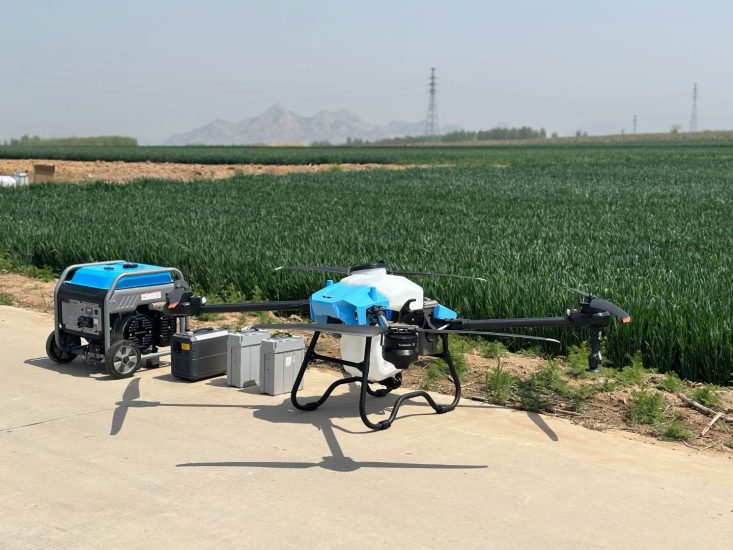


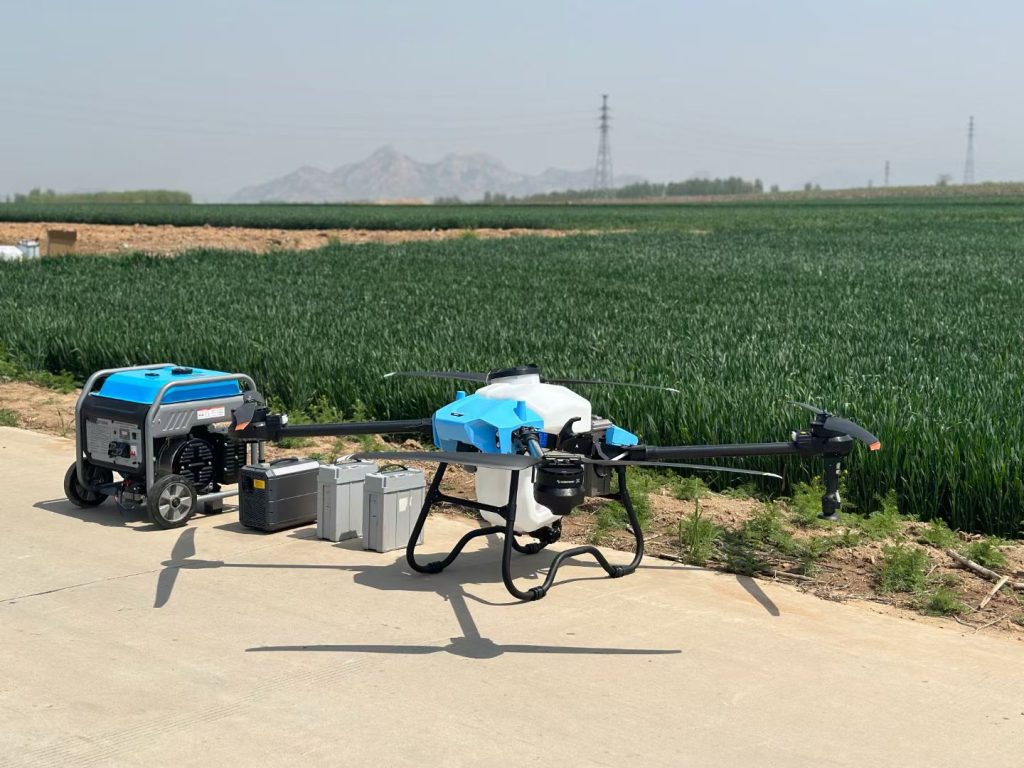
Fertilizer application is one of the most important operations in modern agriculture, but conventional spreading methods are not always suitable for every field. Uneven terrain, wet ground, large fields, narrow access routes, and labor shortages can make traditional fertilizer application more difficult and less flexible.
Fertilizer spreading drones provide another approach.
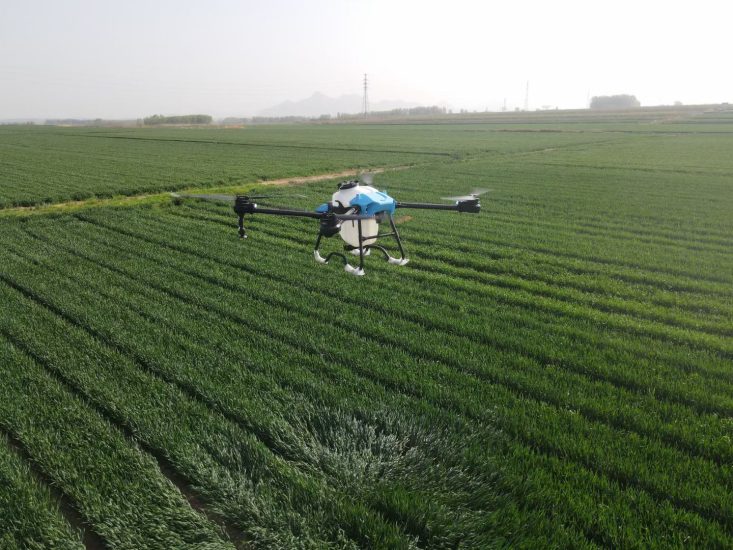
Instead of relying on ground-based agricultural machinery, a drone can carry granular or other compatible materials and distribute them from the air. This can be useful for farmland, orchards, plantations, rice fields, grassland, and other agricultural environments where aerial access provides an operational advantage.
For distributors, agricultural equipment companies, farm operators, and international buyers, selecting the right fertilizer spreading drone manufacturer requires more than comparing payload capacity.
The spreading mechanism, hopper design, control system, battery configuration, flight performance, manufacturing quality, spare-parts support, and customization capabilities all deserve careful consideration.
This guide explains the major factors buyers should evaluate when sourcing fertilizer spreading drones from a manufacturer.
What Is a Fertilizer Spreading Drone?
A fertilizer spreading drone is an unmanned aerial vehicle designed to carry and distribute granular agricultural materials.
Depending on the configuration, the drone may be used for:
-
Granular fertilizer
-
Seeds
-
Agricultural pellets
-
Granular soil amendments
-
Certain compatible agricultural materials
The actual materials that can be used should always be confirmed with the manufacturer and according to the applicable product and agricultural regulations.
A typical fertilizer spreading drone system can include:
-
UAV airframe
-
Motors
-
Propellers
-
Flight controller
-
Hopper
-
Spreading mechanism
-
Motorized dispenser
-
Remote controller
-
Battery
-
Charger
-
Navigation system
-
Control software
The performance of the complete system depends on how these components work together.
Why Choose a Professional Fertilizer Spreading Drone Manufacturer?
A fertilizer drone is agricultural equipment rather than simply a flying platform.
It needs to perform consistently while carrying a changing payload and distributing material at a controlled rate.
A capable manufacturer should therefore understand both:
UAV engineering and agricultural spreading requirements.
When evaluating a supplier, buyers should look for evidence of capability in areas such as:
-
Product development
-
Mechanical design
-
Electrical integration
-
Spreading-system engineering
-
Assembly
-
Quality control
-
Flight testing
-
Product inspection
-
Spare-parts supply
-
Technical support
-
OEM manufacturing
-
ODM development
A supplier that understands the complete system can generally provide more useful technical guidance than a supplier that only sells individual drone components.
How a Fertilizer Spreading Drone Works
The basic principle is relatively straightforward.
The material is loaded into a hopper mounted on the drone. During flight, a controlled dispensing mechanism releases the material.
The spreading system then distributes the material over the target area.
The actual spreading pattern depends on factors such as:
-
Material characteristics
-
Particle size
-
Particle density
-
Hopper design
-
Spreader design
-
Rotor configuration
-
Flight altitude
-
Flight speed
-
Spreading rate
-
Environmental conditions
This is why manufacturers should provide practical operating guidance instead of presenting only a maximum spreading distance.
The Most Important Fertilizer Drone Specifications
When comparing different manufacturers, buyers should evaluate several specifications together.
1. Hopper Capacity
Hopper capacity determines how much material can be carried during one flight.
A larger hopper can reduce the number of refilling cycles, but it also increases the payload.
Therefore, buyers should consider:
-
Hopper volume
-
Maximum payload
-
Recommended working payload
-
Material density
-
Battery consumption
The physical volume of the hopper and its actual material capacity are not always the same.
For example, two fertilizers with different densities can produce very different payload weights even when they occupy the same volume.
2. Maximum Payload
Maximum payload is one of the most frequently advertised specifications.
However, buyers should distinguish between:
Maximum lifting capacity
and
Recommended operating payload.
The maximum figure may represent a specific operating condition, while the recommended payload may be more relevant for regular agricultural work.
Ask the manufacturer how the payload specification was measured.
3. Spreading Rate
Spreading rate indicates how much material the system can distribute over a specific period.
The actual required rate depends on:
-
Fertilizer type
-
Crop
-
Application requirements
-
Field conditions
-
Flight speed
-
Working width
A higher spreading rate is not automatically better.
The important objective is controlled and appropriate application.
4. Working Width
Working width affects potential field productivity.
However, buyers should not compare working width without considering the spreading pattern.
A useful specification should explain:
-
Recommended flight height
-
Recommended flight speed
-
Material type
-
Spreading pattern
-
Environmental conditions
This provides a more realistic understanding of performance.
5. Flight Time
Flight time depends on:
-
Battery capacity
-
Payload
-
Motor efficiency
-
Weather
-
Flight speed
-
Takeoff and landing frequency
-
Spreading operation
A manufacturer should ideally provide working-condition information rather than only a maximum no-load flight time.
6. Battery Configuration
Battery management is particularly important for commercial agricultural operations.
Consider:
-
Battery capacity
-
Voltage
-
Charging time
-
Number of batteries required
-
Charger capacity
-
Replacement cost
-
Battery availability
A drone with excellent flight specifications may still be inefficient if the battery system does not support continuous operations.
Fertilizer Hopper Design
The hopper is a critical component of a spreading drone.
A good design should allow operators to:
-
Load material efficiently
-
Inspect the hopper
-
Clean the system
-
Remove remaining material
-
Perform routine maintenance
Material flow is also important.
Some granular products may flow differently because of:
-
Particle size
-
Moisture
-
Shape
-
Density
-
Storage conditions
Therefore, the hopper and dispensing system should be evaluated according to the intended material.
Spreading System Design
The spreading mechanism determines how material leaves the drone and reaches the field.
Different designs may use different methods of controlling material discharge and distribution.
Important questions include:
-
How is the discharge rate controlled?
-
Can the spreading rate be adjusted?
-
How is material flow monitored?
-
Can the system be cleaned easily?
-
What parts normally require replacement?
-
Can the spreading system be calibrated?
A manufacturer should be able to explain the relationship between flight speed, discharge rate, and application rate.
Why Calibration Matters
Calibration is often overlooked when buyers compare agricultural drones.
A spreading drone does not simply need to release material.
It needs to release an appropriate amount consistently.
Calibration may involve checking:
-
Material flow
-
Dispenser output
-
Spreading pattern
-
Flight speed
-
Working width
-
Application rate
The correct procedure depends on the drone and spreading system.
Manufacturers should provide practical calibration instructions for operators.
Fertilizer Type and Material Compatibility
Not every agricultural material behaves the same way.
Before ordering a fertilizer spreading drone, buyers should provide information about the intended material.
Useful information can include:
-
Material name
-
Particle size
-
Density
-
Moisture characteristics
-
Granular form
-
Intended application rate
The manufacturer can then determine whether the spreading system is appropriate.
This is especially important for distributors who intend to sell the same drone into several agricultural markets.
Agricultural Applications
Fertilizer spreading drones can be used in various agricultural environments.
Rice Fields
Rice fields can present difficult access conditions for conventional equipment, especially when the ground is wet.
Aerial application can reduce the need for heavy machinery to enter certain fields.
Orchards
Orchards can have irregular layouts and limited ground access.
Drone-based spreading may provide another option for applying compatible granular materials.
Large Farmland
Large agricultural areas can benefit from equipment that reduces manual handling and provides repeatable application routes.
The appropriate drone capacity depends on the size and operating requirements of the farm.
Plantation Agriculture
Plantations may contain difficult terrain or restricted access.
The flexibility of aerial equipment can be useful where conventional vehicles are difficult to operate.
Grassland and Pasture
Depending on local regulations and material requirements, spreading drones may also have applications in grassland and pasture management.
The exact suitability should be evaluated according to the material and application method.
Fertilizer Spreading Drone vs. Traditional Application
The correct comparison is not simply drone versus tractor.
Different agricultural operations have different requirements.
A fertilizer spreading drone may offer advantages such as:
-
Reduced dependence on ground access
-
Operation over difficult terrain
-
Flexible route planning
-
Lower equipment footprint
-
Rapid deployment in certain environments
-
Reduced need for some manual spreading tasks
However, drones also have limitations.
These may include:
-
Battery charging requirements
-
Payload limitations
-
Weather sensitivity
-
Operator training
-
Local aviation requirements
-
Material compatibility
A professional manufacturer should explain both capabilities and limitations.
Manufacturing Process
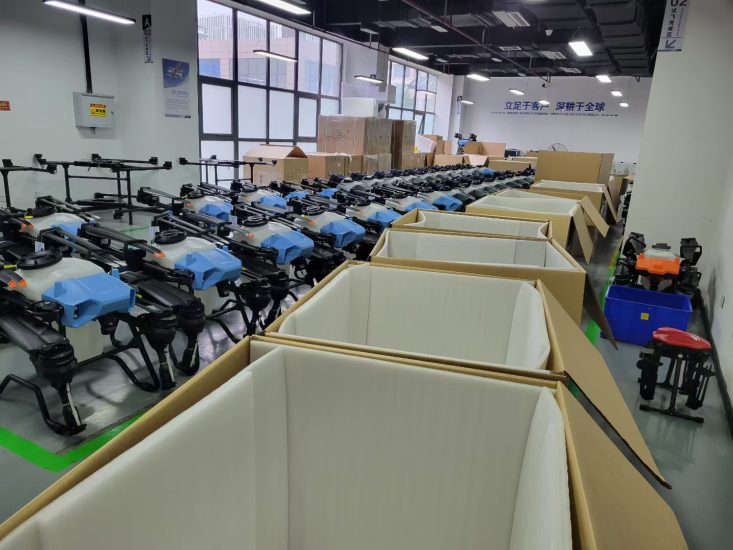
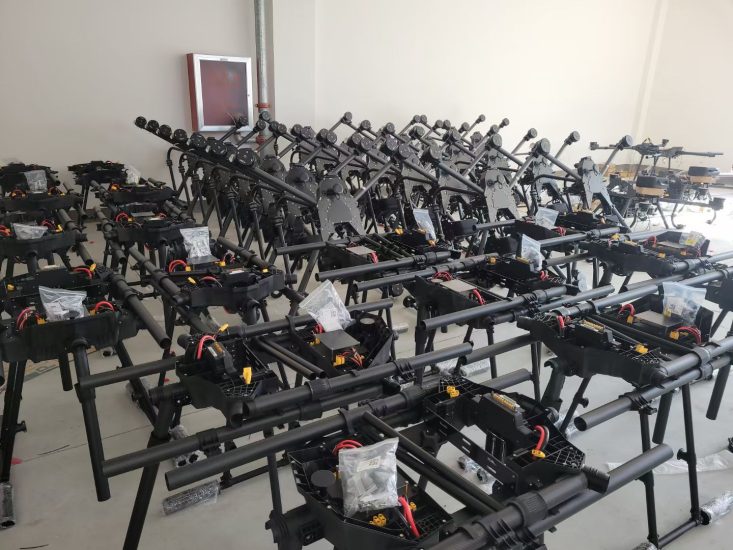
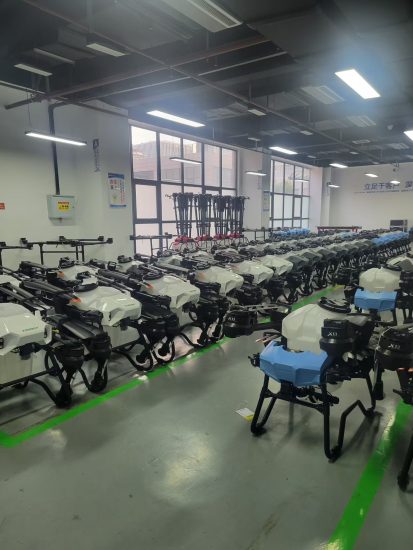
A reliable fertilizer spreading drone manufacturer should have a defined production process.
Product Engineering
Engineers may work on:
-
Airframe structure
-
Motor selection
-
Payload system
-
Hopper design
-
Spreading mechanism
-
Battery system
-
Flight-control integration
Component Inspection
Incoming components can be inspected before assembly to reduce the possibility of defective parts entering production.
Mechanical Assembly
The airframe, motors, landing system, hopper, and spreading components are assembled according to the product configuration.
Electrical Integration
Electrical components are connected and configured, including:
-
Flight controller
-
Motors
-
Power system
-
Controller
-
Battery system
-
Sensors
Spreading-System Testing
The spreading mechanism should be checked for:
-
Material discharge
-
Motor operation
-
Flow consistency
-
Control response
Flight Testing
The finished drone can then undergo flight testing according to the manufacturer’s procedures.
Potential checks include:
-
Takeoff
-
Hovering
-
Flight response
-
Landing
-
Remote-control communication
-
Payload operation
-
Spreading-system operation
Quality Control for Fertilizer Drones
Quality control should cover more than visual inspection.
A comprehensive process may include:
Component Inspection
Important components are checked before assembly.
Assembly Inspection
Technicians verify that components are correctly installed.
Electrical Testing
Electrical connections and systems are checked before flight.
Functional Testing
The complete drone is tested for normal operation.
Flight Testing
The aircraft is evaluated in practical operating conditions.
Final Inspection
The product is checked before packaging and shipment.
For international buyers, it is reasonable to ask the manufacturer what documentation or inspection records are available.
Agricultural Drone OEM Manufacturing
OEM services can be useful for distributors and agricultural equipment companies that want to develop their own branded fertilizer drone product.
Potential OEM services may include:
-
Custom logo
-
Product labeling
-
Packaging
-
Manuals
-
Accessories
-
Product configuration
OEM requirements should be discussed before production.
Important commercial questions include:
-
Minimum order quantity
-
Sample requirements
-
Branding specifications
-
Packaging requirements
-
Production lead time
-
Quality requirements
-
Warranty conditions
ODM Fertilizer Spreading Drone Development
ODM goes beyond simple branding.
An ODM project may involve customization of:
-
Airframe
-
Hopper
-
Spreading mechanism
-
Payload configuration
-
Battery system
-
Controller
-
Software
-
Accessories
For specialized agricultural applications, ODM can allow the manufacturer and buyer to develop a product around a particular operating requirement.
However, deeper customization normally requires additional engineering and testing.
How to Select a Fertilizer Spreading Drone Factory
A supplier’s website alone may not tell you whether it is an actual manufacturer.
International buyers should ask practical questions.
Does the company control production?
Find out whether the supplier directly manages assembly and testing.
Can it provide factory information?
Look for real manufacturing information rather than only product photographs.
Does it conduct flight testing?
A drone should be tested as a complete aircraft.
Can it provide spare parts?
Ask which components are normally stocked or available.
Can it support repeat orders?
If you plan to become a distributor, production consistency matters.
Can it customize the product?
Determine whether OEM and ODM requests are supported internally.
Questions to Ask Before Ordering
Before purchasing a fertilizer spreading drone, ask the manufacturer:
-
What is the recommended operating payload?
-
What is the hopper capacity?
-
What types of material are compatible with the spreading system?
-
What is the adjustable spreading rate?
-
How is the spreading system calibrated?
-
What is the expected flight time under working payload?
-
What battery configuration is required?
-
How long does charging take?
-
What spare parts are available?
-
Is flight testing performed before shipment?
-
Can OEM branding be provided?
-
Can the drone be customized?
-
What technical support is available?
-
What warranty terms apply?
-
What documentation is supplied with the product?
The answers can reveal much more about a manufacturer than a simple product price.
Total Cost of Ownership
Purchase price is only one part of the total cost.
Buyers should also consider:
-
Batteries
-
Chargers
-
Spare propellers
-
Motors
-
Spreading components
-
Transportation
-
Import costs
-
Maintenance
-
Operator training
-
Replacement parts
For distributors, these costs should be incorporated into the final sales strategy.
A slightly higher initial purchase price may be reasonable if the product provides better support and more reliable spare-parts access.
Importing Fertilizer Spreading Drones From China
International buyers should prepare for more than the commercial purchase itself.
Before shipment, confirm:
-
Product configuration
-
Packaging
-
Shipping method
-
Export documentation
-
Destination requirements
-
Applicable drone regulations
-
Battery transportation requirements
-
Customs documentation
Drone regulations vary between countries.
The buyer should verify the requirements in the destination market before importing or operating the equipment.
A manufacturer can provide product documentation, but local regulatory compliance remains an important part of the buyer’s responsibility.
Building a Long-Term Supplier Relationship
For distributors, one successful order is only the beginning.
A long-term relationship can involve:
-
Repeat production
-
Spare-parts planning
-
Product updates
-
OEM branding
-
Technical training
-
New drone models
-
Market-specific configurations
Communication is especially important when products are sold across different countries.
The manufacturer should understand the distributor’s target market and the types of agricultural operations where the product will be used.
Why Factory Capability Matters for Global Buyers
An agricultural drone can become a long-term business product for a distributor.
If customers experience technical problems, the distributor needs a manufacturer that can respond.
Factory capability can therefore influence:
-
Product consistency
-
Delivery reliability
-
Spare-parts availability
-
Technical support
-
Product customization
-
Future development
This is why buyers should evaluate the manufacturer, not just the drone.
A Practical Supplier Evaluation Checklist
Before making a final decision, evaluate the manufacturer using these categories:
Category |
What to Evaluate |
|---|---|
Product |
Payload, hopper and spreading configuration |
Performance |
Flight time and working conditions |
Spreading |
Flow control and application rate |
Battery |
Capacity, charging and replacement |
Manufacturing |
Assembly and production capability |
Testing |
Functional and flight testing |
Quality |
Inspection and quality-control procedures |
Spare Parts |
Availability and delivery |
Support |
Technical assistance |
OEM |
Branding and packaging |
ODM |
Engineering customization |
Export |
International shipping documentation |
Cost |
Total ownership cost |
This approach provides a more complete picture than comparing product prices alone.
How to Buy a Fertilizer Spreading Drone From a Manufacturer
A practical purchasing process can be divided into several stages.
Stage 1: Define the Application
Determine:
-
Crop
-
Farm size
-
Material
-
Required application rate
-
Terrain
-
Expected operating frequency
Stage 2: Define the Drone Requirements
Determine:
-
Payload
-
Hopper capacity
-
Battery requirements
-
Spreading system
-
Controller
-
Required accessories
Stage 3: Contact Manufacturers
Send the same technical requirements to several qualified manufacturers so that their quotations can be compared fairly.
Stage 4: Review the Technical Configuration
Do not compare only the headline specifications.
Review the complete configuration.
Stage 5: Test a Sample
If the product is new to your business, a sample or demonstration can provide useful information before a larger order.
Stage 6: Confirm Commercial Terms
Confirm:
-
Quantity
-
Price
-
Production time
-
Warranty
-
Spare parts
-
Packaging
-
Shipping terms
-
Payment terms
Stage 7: Prepare for After-Sales Support
Before the order is shipped, establish how technical questions and spare-parts requests will be handled.
Final Thoughts
Choosing the right fertilizer spreading drone manufacturer requires a complete evaluation of both the aircraft and the company behind it.
Payload capacity and hopper size are important, but they are only part of the decision.
A professional evaluation should also consider:
Spreading system + calibration + flight performance + battery system + manufacturing + testing + spare parts + technical support + OEM/ODM capability.
For international buyers, the best supplier is usually not simply the one offering the lowest quotation.
The more important question is whether the manufacturer can consistently provide a product that matches the intended agricultural application and continue supporting it after delivery.
For distributors and commercial agricultural businesses, building a relationship with a capable manufacturer can also create opportunities for customized configurations, private-label products, repeat production, and long-term market development.
FAQ
What is a fertilizer spreading drone?
A fertilizer spreading drone is an agricultural UAV designed to carry and distribute compatible granular materials over farmland, orchards, plantations, grassland, or other agricultural areas.
What can a fertilizer spreading drone distribute?
Depending on the spreading system, it may handle certain fertilizers, seeds, pellets, or other compatible granular materials. Material compatibility should always be confirmed with the manufacturer.
What is the most important specification?
There is no single specification that determines performance. Payload, hopper capacity, spreading rate, working width, battery capacity, flight time, and control accuracy should be considered together.
Is a larger hopper always better?
No. A larger hopper can reduce refill frequency, but the additional payload can increase battery consumption and affect flight performance.
How should I compare fertilizer spreading drones?
Compare manufacturers using the same criteria: payload, hopper capacity, spreading system, application rate, flight time under working conditions, battery system, quality control, testing, spare parts, support, and total cost.
Can a fertilizer spreading drone also spray liquid?
Some agricultural drone platforms can support both spreading and spraying configurations. Buyers should confirm whether the specific model supports both functions and how the equipment is changed between operations.
Can fertilizer spreading drones be customized?
Depending on the manufacturer, customization may include branding, hopper configuration, spreading equipment, battery systems, software, accessories, or other product features.
What is the difference between OEM and ODM?
OEM generally focuses on producing a product under the buyer’s brand or with specified configurations. ODM involves deeper product customization or development.
Are spare parts important?
Yes. Motors, propellers, batteries, chargers, spreading components, and other parts may eventually require replacement. Reliable spare-parts access is particularly important for commercial users and distributors.
Should I test a drone before placing a large order?
For a new supplier or new product, a sample order or demonstration can reduce purchasing risk and allow the buyer to evaluate the actual configuration and operating characteristics.
What should I ask a fertilizer drone manufacturer?
Ask about recommended payload, hopper capacity, material compatibility, spreading rate, calibration, flight time under working conditions, battery configuration, testing procedures, spare parts, warranty, technical support, OEM, ODM, and export documentation.
Can I import fertilizer spreading drones from China?
International buyers can source agricultural drones from Chinese manufacturers, but importers should verify the applicable customs, battery transportation, drone registration, aviation, and operational requirements in their destination market before purchasing.
How can I find a reliable fertilizer spreading drone factory?
Look for evidence of actual manufacturing capability, product assembly, quality control, flight testing, engineering support, spare-parts availability, and long-term technical support rather than judging the supplier only by its online product catalog or price.
THE END


No comments yet